Lifestyle & Travel

Celebrating a Simple Passover Seder: a Festival That Even Non-Jews Have Come to Enjoy

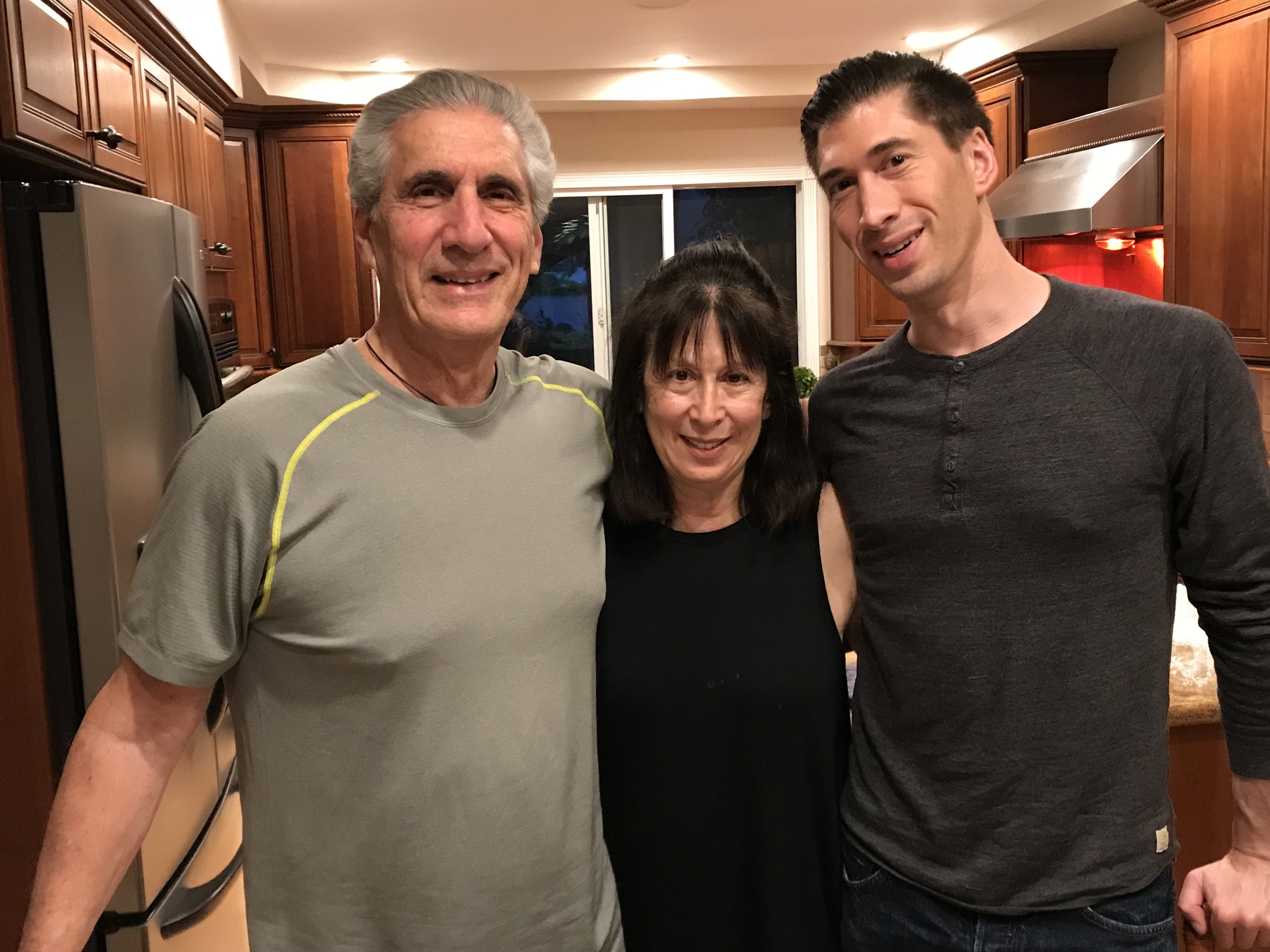
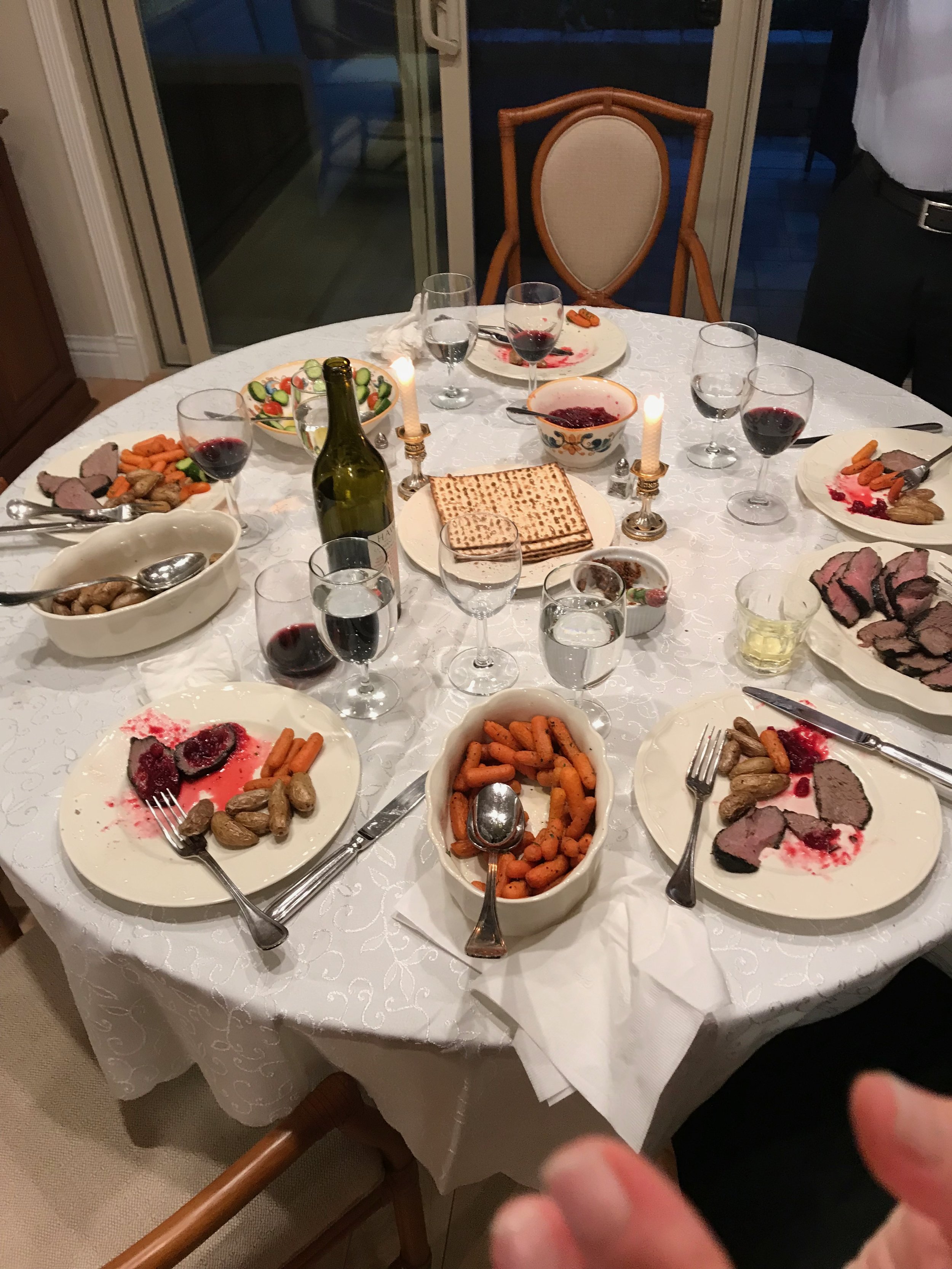
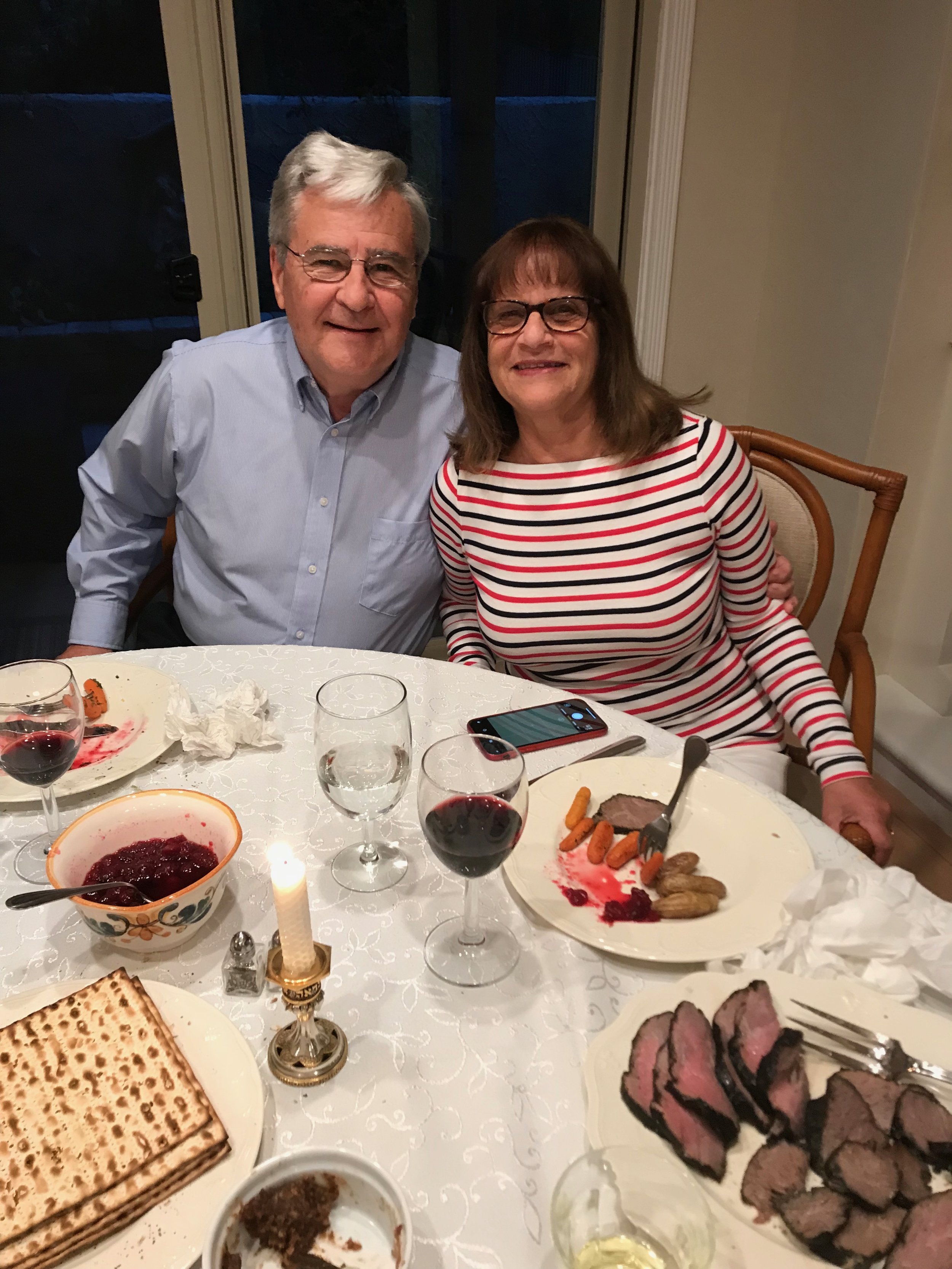
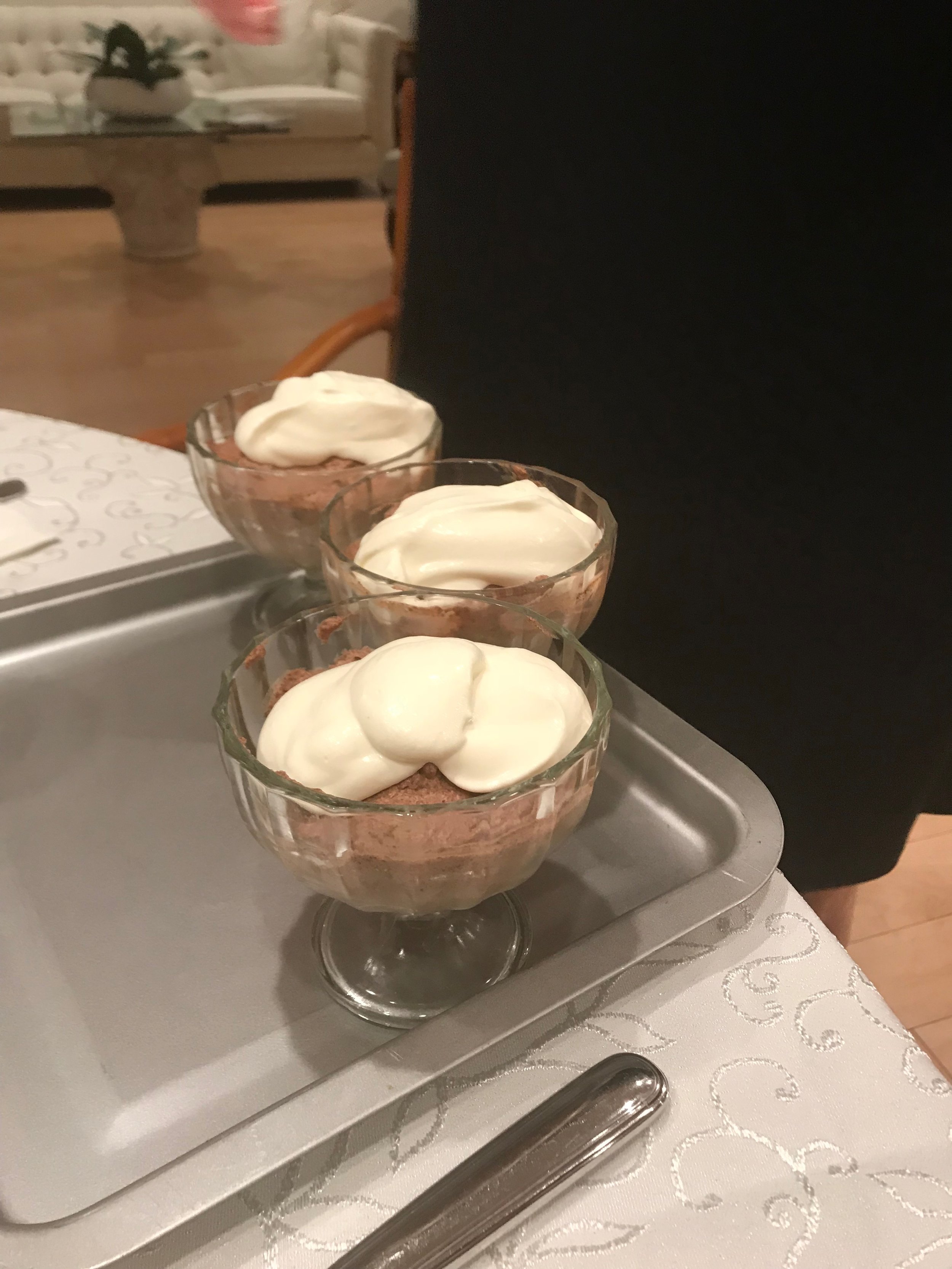
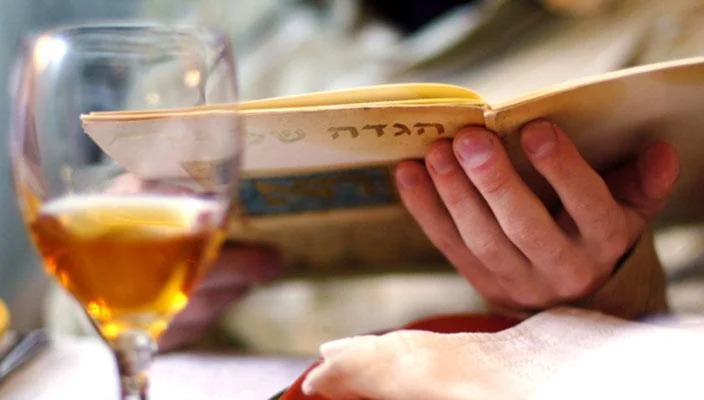
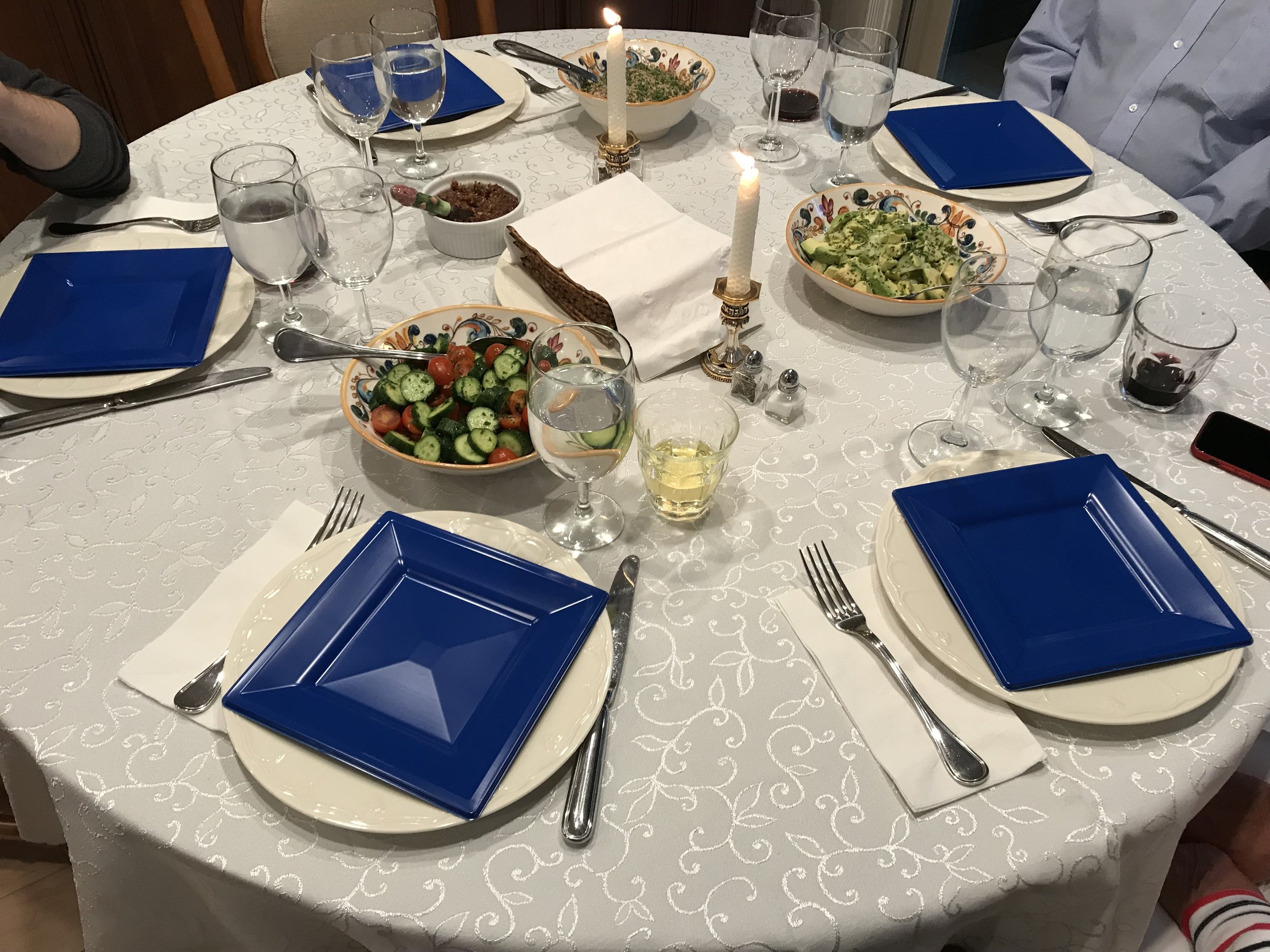
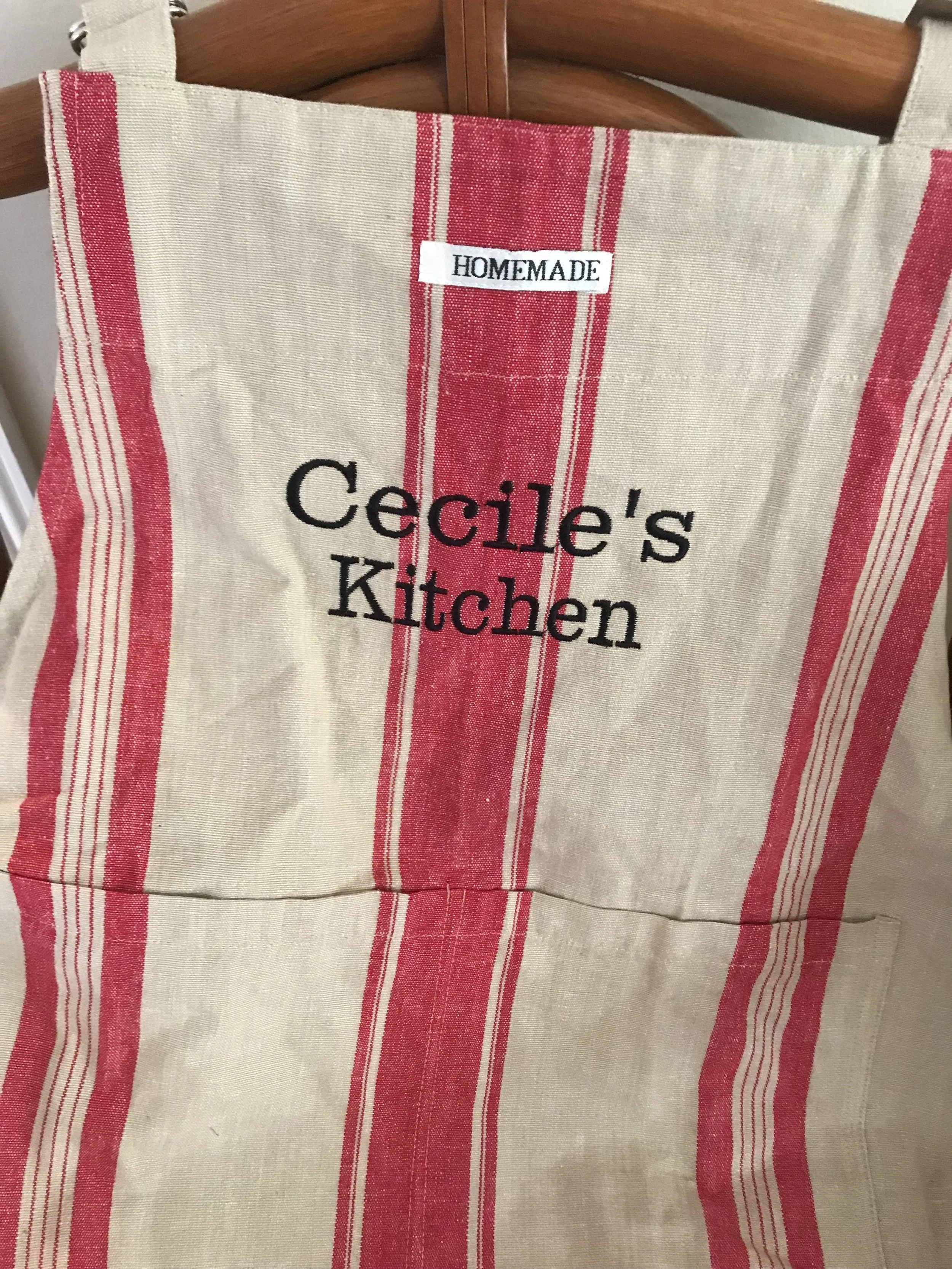
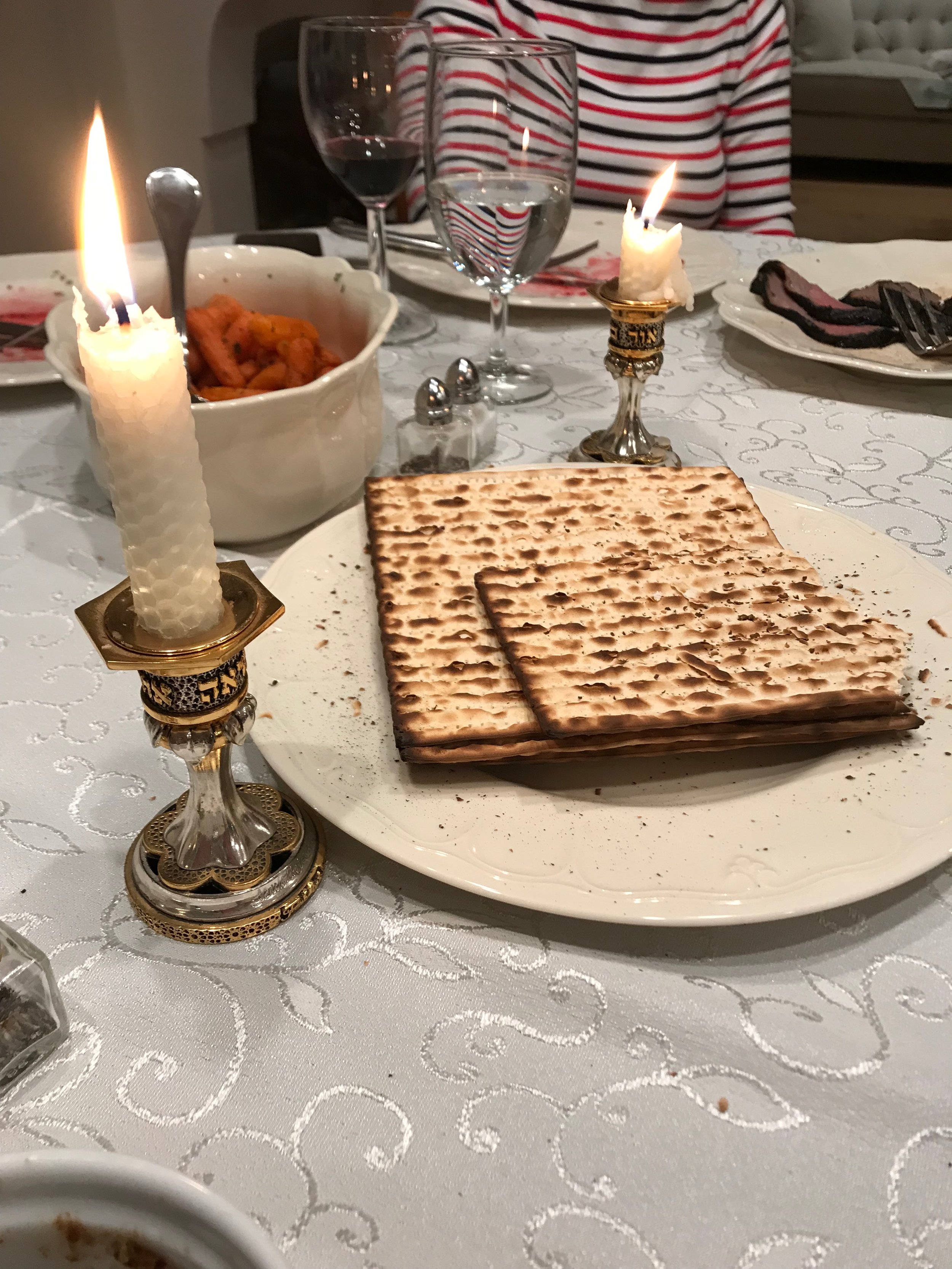
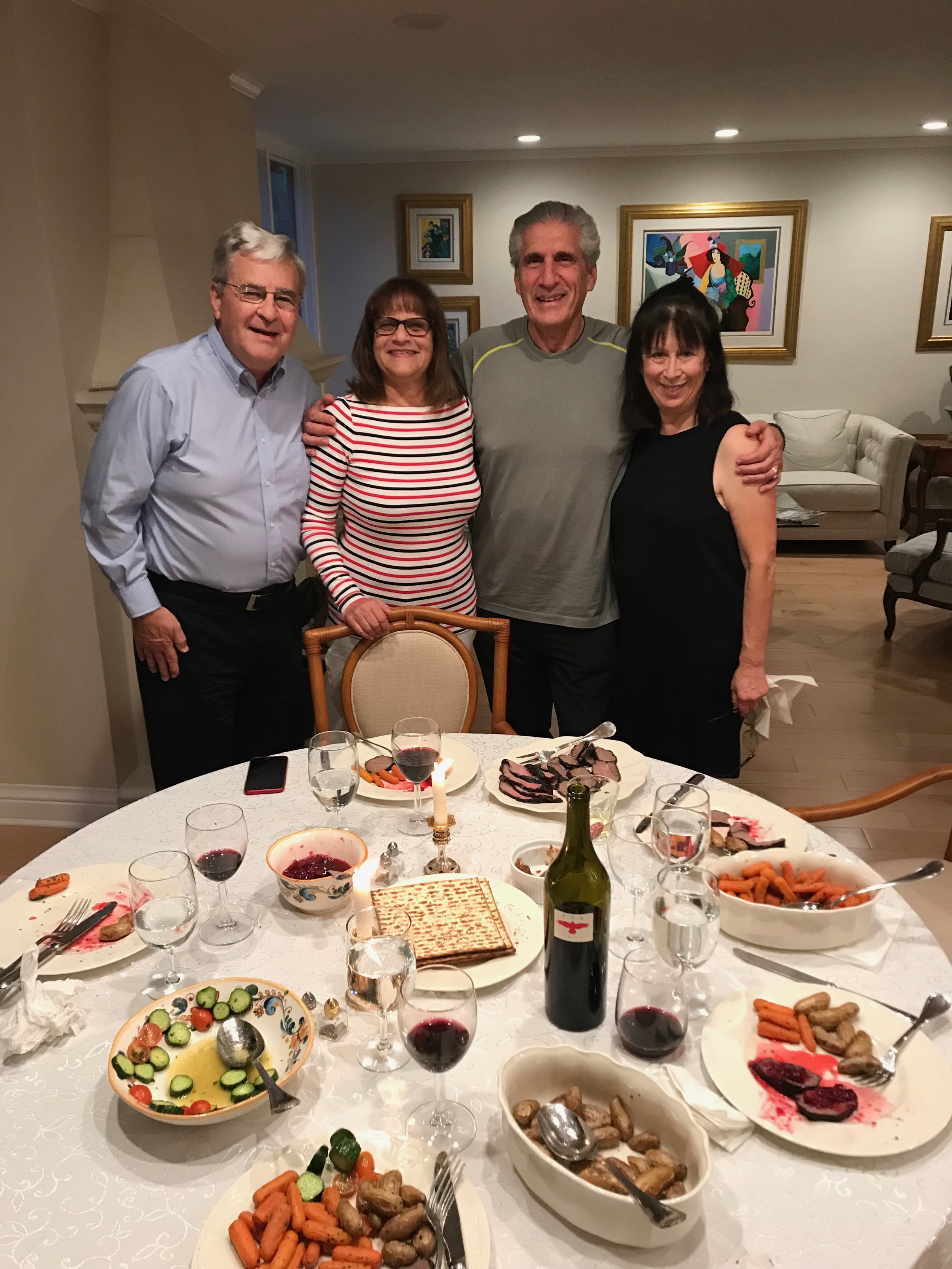
Like every year Cecile wanted to prepare a Passover Seder. It was only going to be her, Jason and myself. Our daughter Michelle and her husband Kyle couldn’t make it this year. We discovered that our friends and neighbors, Susan and Nelson Bye were free and were more than delighted to join us. After the candle lighting blessing, and the blessing over the wine and Matzah (unleavened bread), dinner was served. Cecile prepared a wonderful meal beginning with Charoset (a dark paste of ground dates, raisins and nuts), roasted carrots and potatoes, avocado salad, cucumbers and tomatoes, vegetarian pate and “Fred Steak,” named after a man named Fred who created a special marinade for his roasts over 40 years ago. We finished off with a heavenly home-made dessert of Chocolate Souffle with fresh whipped cream. Yes, folks, it was to die for. 

Unlike other communal religious rituals, Passover’s appeal to both secular and religious Jews as well as non-Jewish guests is that it doesn’t take place in a synagogue, but rather at the dinner table. The common question asked by parents of their children during Passover is “What makes this night different from all other nights?”
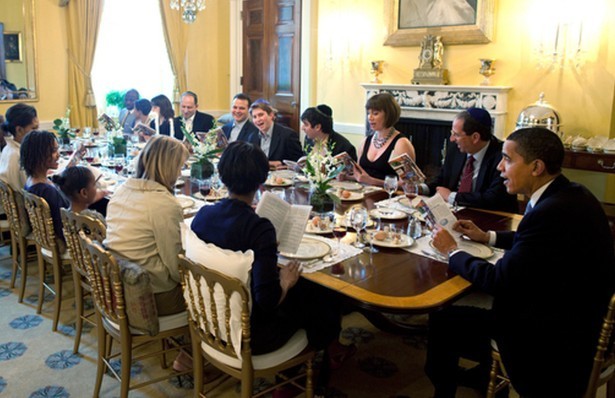
The answer: Passover is an invitation for Jews to relive the liberation of their people (Ancient Hebrews) from slavery in Egypt and believe the story should be passed on from generation to generation. But in modern times the response you might get is that it is a Jewish festival that non-Jews love to attend. It has become chic to invite a non-Jew to a Jewish seder. Even the White House held a Passover seder during Obama’s presidency beginning in 2008 (See Reuters Photo).

Actually there is some precedent for this. Hillel the elder, a famous Jewish religious leader of his time and one of the most important figures in Jewish history could not recall a particular practice relating to Passover the way it has come to be known. It is said that he resolved the matter my saying, “Go out and see what people are doing.” After embracing this challenge, he concluded: “Come to my house, and you’ll see how we do it–with an array of participants. Jews, non-Jews, all are welcome here!

It would be totally understandable if Jews kept their tradition totally to themselves since non-Jews don’t share their lineage. In other words we are not a member of the tribe. Yet, non-Jews of all stripes or colors and sexual orientations that have experienced being oppressed and persecuted can relate to the Passover story. Martin Luther King Jr. alluded to the Exodus story in a speech he gave the day before he was killed. “I’ve been to the mountaintop…I looked over. And I’ve seen the Promised Land. I may not get there with you. But I want you to know tonight, that we, as a people, will get to the Promised Land.” King shared the same vision of Moses, the Jewish prophet at the center of the Passover story, who led the Israelites through the desert but wasn’t able to take that final stretch into the Land of Israel or the Promised Land.

Since Cecile and I met 46 years ago, I have become a fan of this holiday that lasts for 7 days and 8 nights. Of course, as Jews assimilate into mainstream society it’s become common for interfaith couples like Cecile and I and Nelson and Susan to share the traditions of our childhoods. 

Happy Passover, to our family and Jewish friends.

Sources cited:  
Lauren Davidson, The Jewish Holiday of Gentiles, The Atlantic April 14, 2014
Rabbi Peter Schweitzer, Moment Magazine, Saturday, March 31, 2018
Celebrating TIna the Birthday Girl whose Friends Call her the "Bearer of Gifts"

“A grateful and generous heart is like a magnet. When you take the time to acknowledge the abundance in your life and share the wealth, you attract even more blessings and reasons to feel grateful…”
—Cheryl Richardson

No one embodies this aspiration more than our friends Tina and Wayne Levenfeld. The former owners of the Toll house hotel in Los Gatos are on the short list of two of the most generous people we know. 

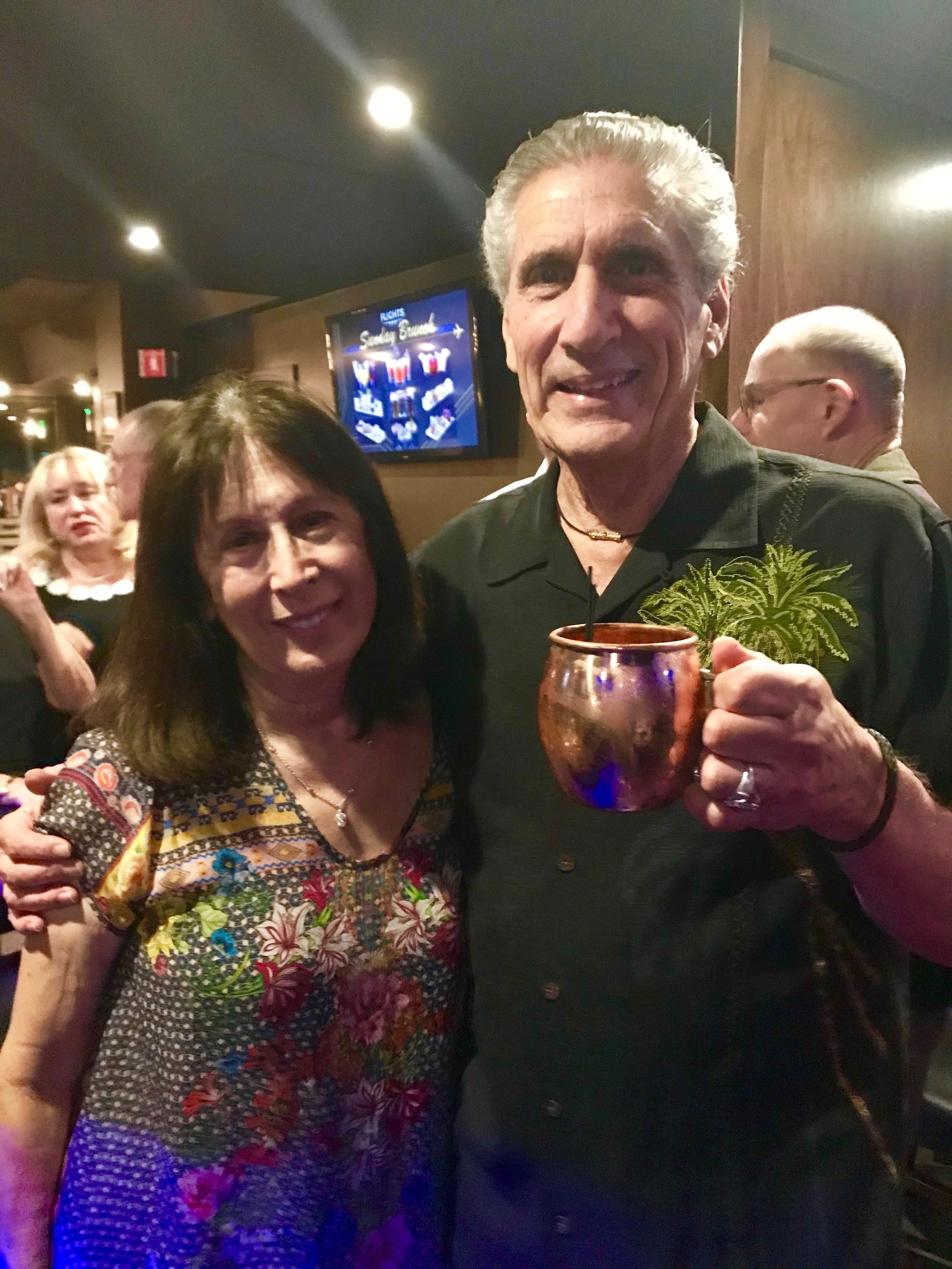
Tina threw a birthday dinner party for herself at Flights (formerly Hults), a tapas style restaurant in the quaint village of Los Gatos (The Cats).
Old school etiquette experts like Miss Manners would say throwing your own birthday celebration is pretentious since the traditional expectation is when you are invited to a birthday party you're expected to buy a gift. Friends of Tina and Wayne would say, “WRONG!”
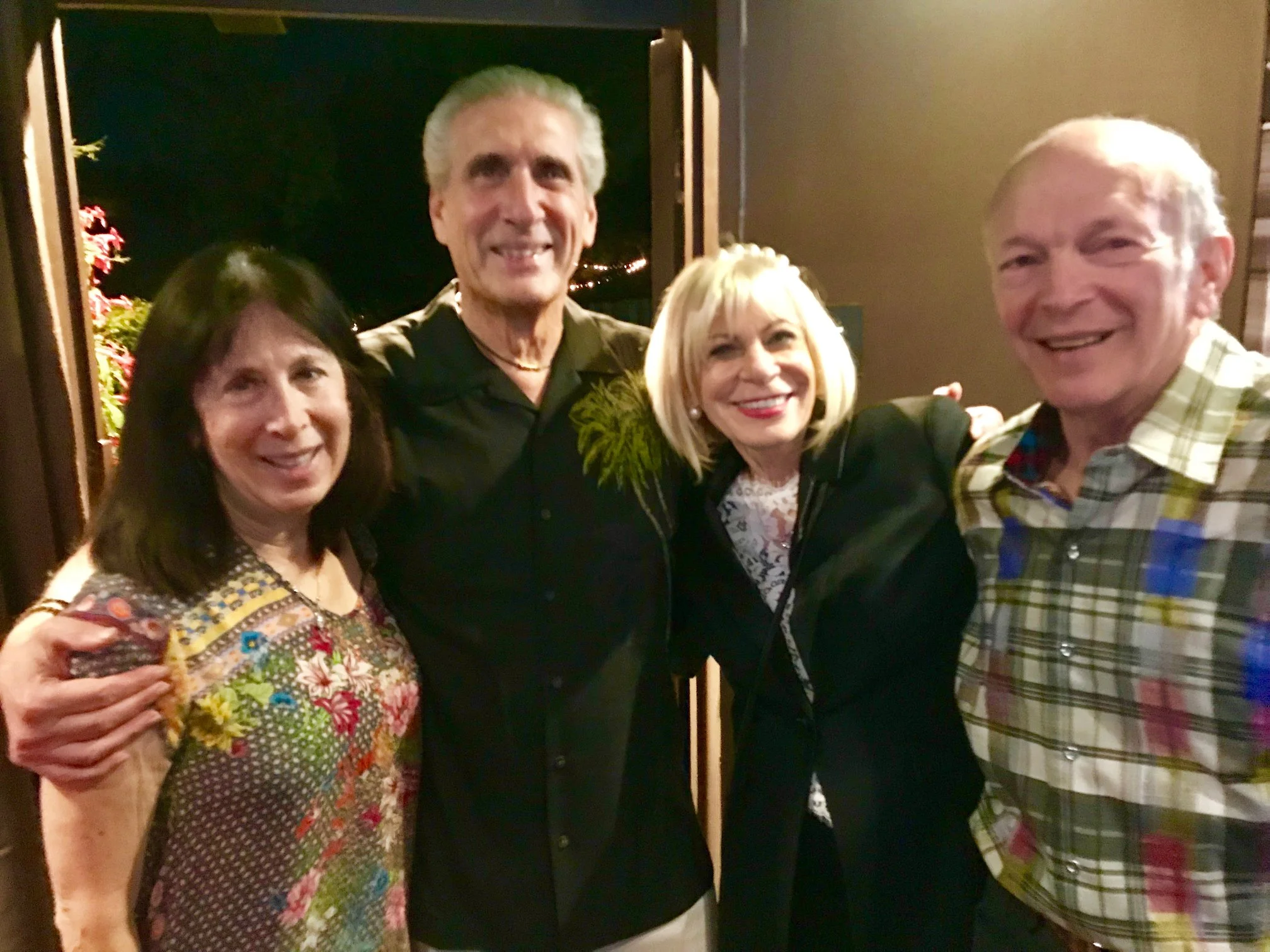
Tina is known in her circle of friends to be kind, loving, inclusive and generous to a fault. Not only did she and her loving and devoted husband Wayne host the dinner but none of Tina’s sisterhood friends left her party without a personalized gift. Yes, you heard that right. She was the “bearer of gifts” at her own birthday party. How sweet is that? At a certain point during the festivities Tina took the time to address the group, thanking us for coming, telling us how much her family and friends mean to her. She is fond of reminding people,“Your presence is my gift.” Need I say more?

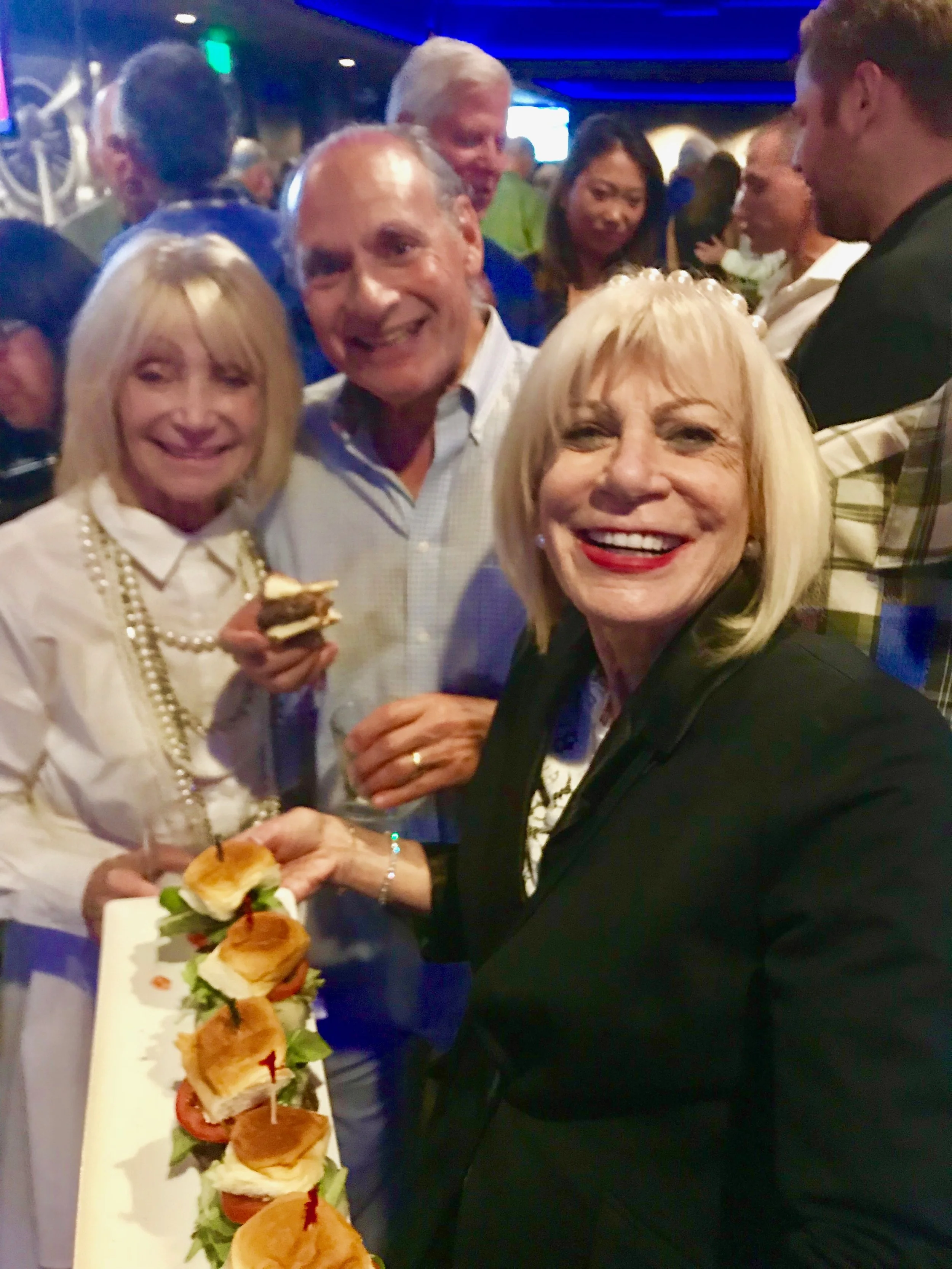
The venue was charming. Flights had a bit of a stylish nightclub feel and the drinks and food kept coming. Just when you thought it was done, there was more food to indulge the most heartiest of appetites. Restauranteur and former hockey player for the San Jose Sharks, Alex Hult and his wife Sarah, Miss Nevada (2011) conceived the idea for their trendy eatery while on vacation in Hawaii in search of the perfect flight of cocktails…Flights is built on the premise of serving comfort food and great cocktails to its customers at a reasonable price and in a casual atmosphere. Everything is served with a trio of different flavors whether it is food, wine, beer, cocktails and desserts like the three Angus beef sliders, three different types of Mac & Cheese, fried calamari, three types of meatballs, and delectable Vanilla Creme Anglais, Chocolate and strawberry Beignets that melt in your mouth. The friendly servers are called “flight attendants,” and it looks like Alex and Sarahs concept restaurant is ready for take off as new locations are on the drawing board.

Happy Birthday Tina and thanks for a wonderful evening! We love you and Wayne!


Celebrating our 41st Wedding Anniversary with the Hurleys at Aldo's Ristorante

"Being deeply loved by someone gives you strength, while loving someone deeply gives you courage."—Lao Tzu

This is dedicated to the one I love—My best Friend Cecile whom I have lived with for 46 years.
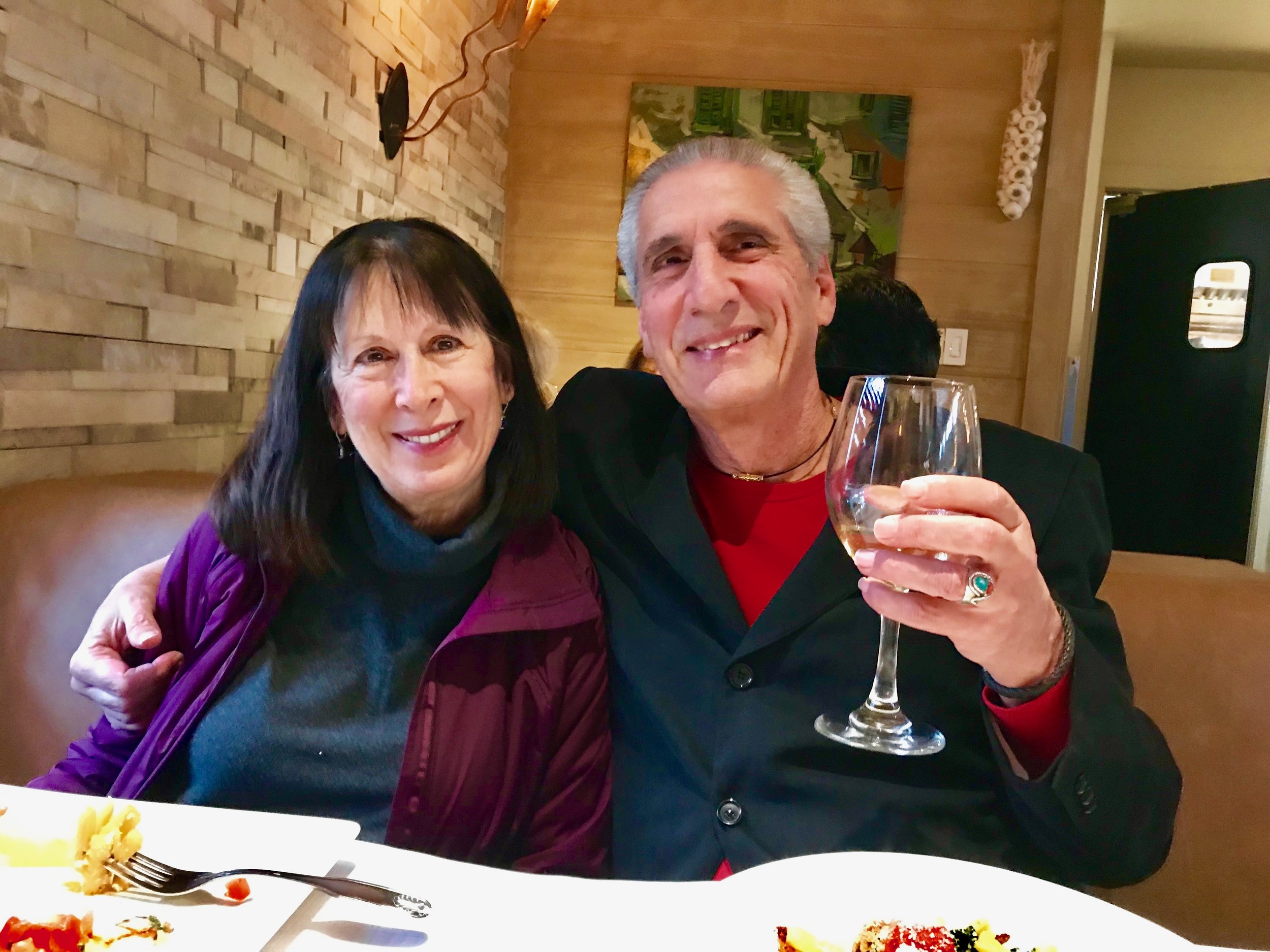
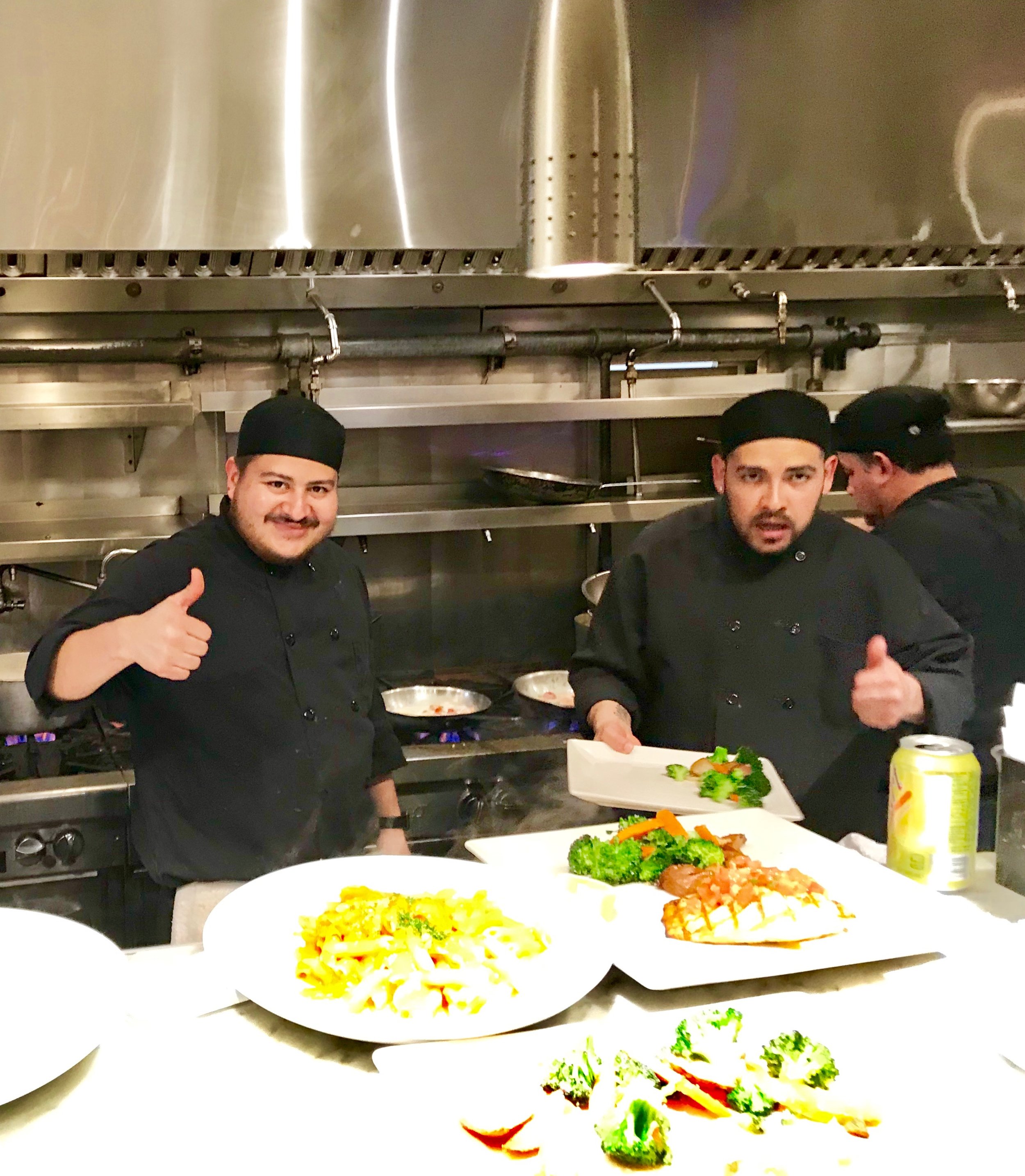
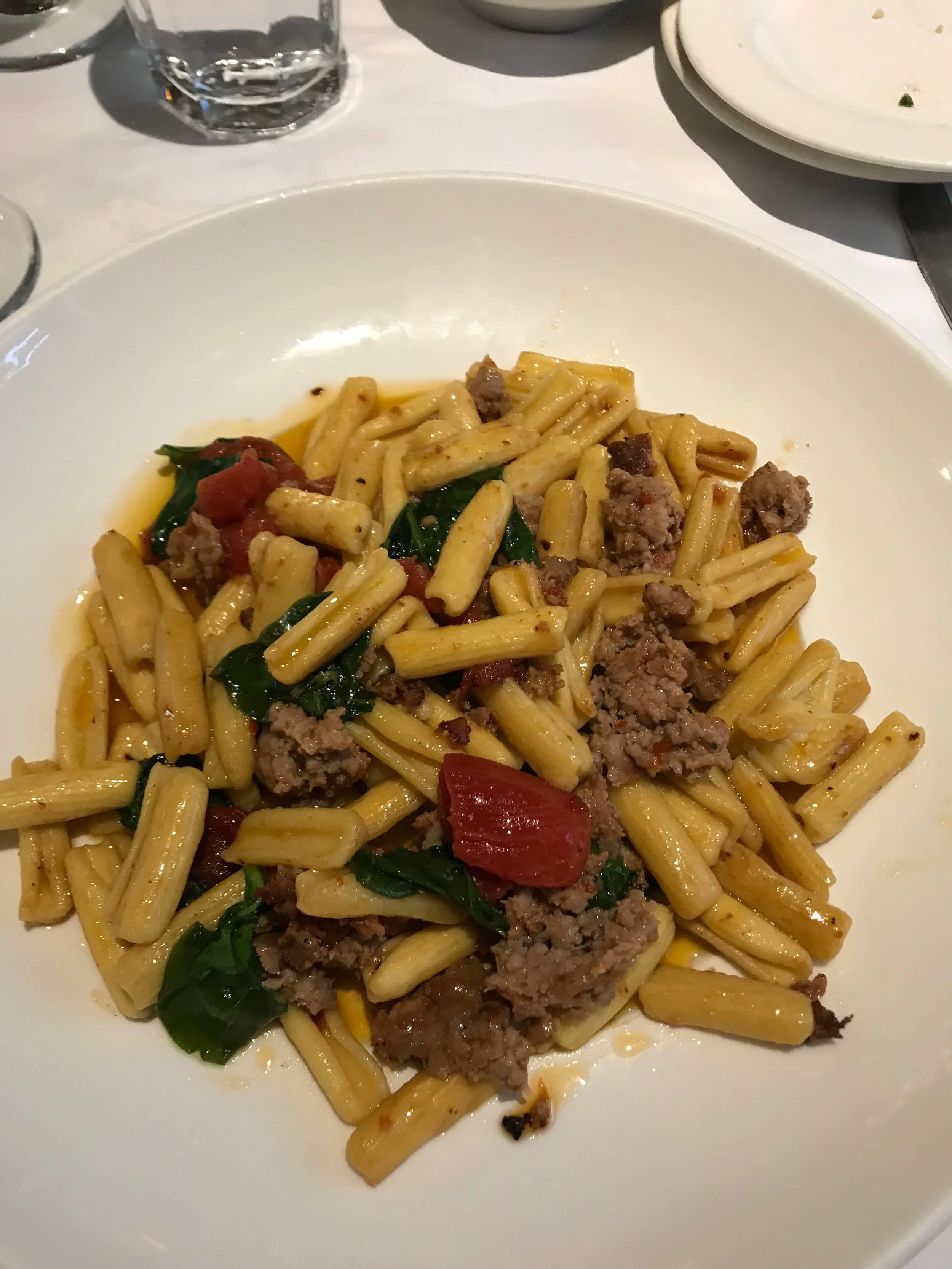
Aldo's, was the perfect venue to enjoy a special evening with our dear longtime friends, Judith and Michael Hurley. The food was extraordinarily good as always. Marco and his assistant waiter seen here provided great service and good cheer.

Reflecting back, It’s so amazing when someone comes into your life and you find yourself afraid to commit. But suddenly, you realize the person in front of you is all you ever needed. When we first met, Cecile, I felt like everything in my life was propelling me towards you: my choices, my fears, my heart aches, my indecisions and my regrets. 
When we began to connect on the heart level I realized my past grievances with myself seemed worth it. Because, had I done anything different our paths may have never crossed. Love isn’t always perfect. Though we certainly had our many, many peak moments, it wasn't always a fairytale. Love is overcoming obstacles, facing challenges, accepting our differences fighting to be together, holding on and never letting go. It is a short word, easy to spell, difficult to define and impossible to live without. Love is work but most of all it's realizing that every second, every minute every hour and every year was worth it. And, with two great kids (Jason and Michelle who have gone on to become self fulfilled adults, who can ask for anything more. Happy Anniversary sweetheart!

Sip, Sip Hooray: Free Wine & Beer and Delicious $3.00 Tacos To Go at Bay Club Courtside

“It’s all about good, old-fashioned hospitality, and a good atmosphere.”—Kevin Burns

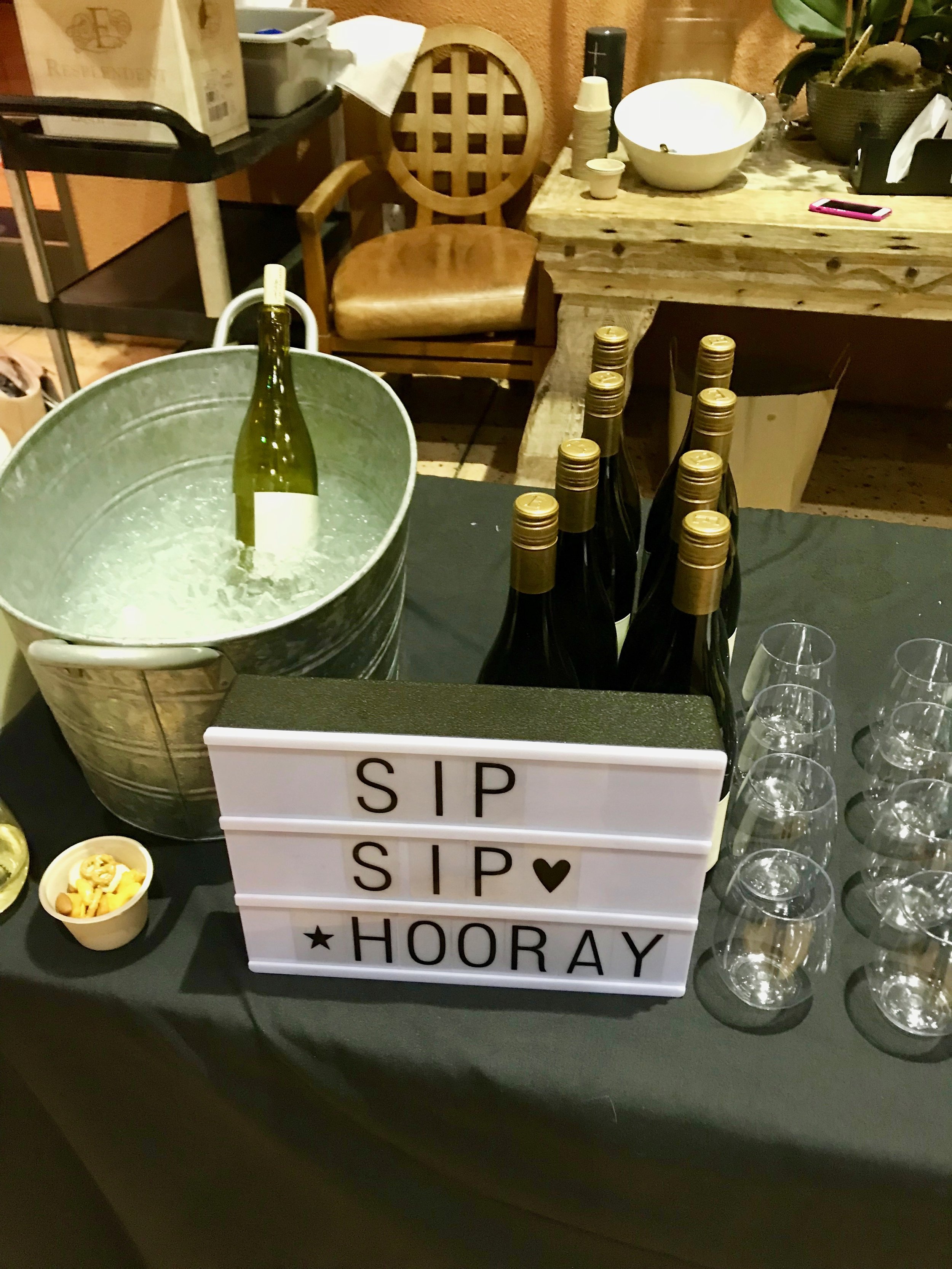
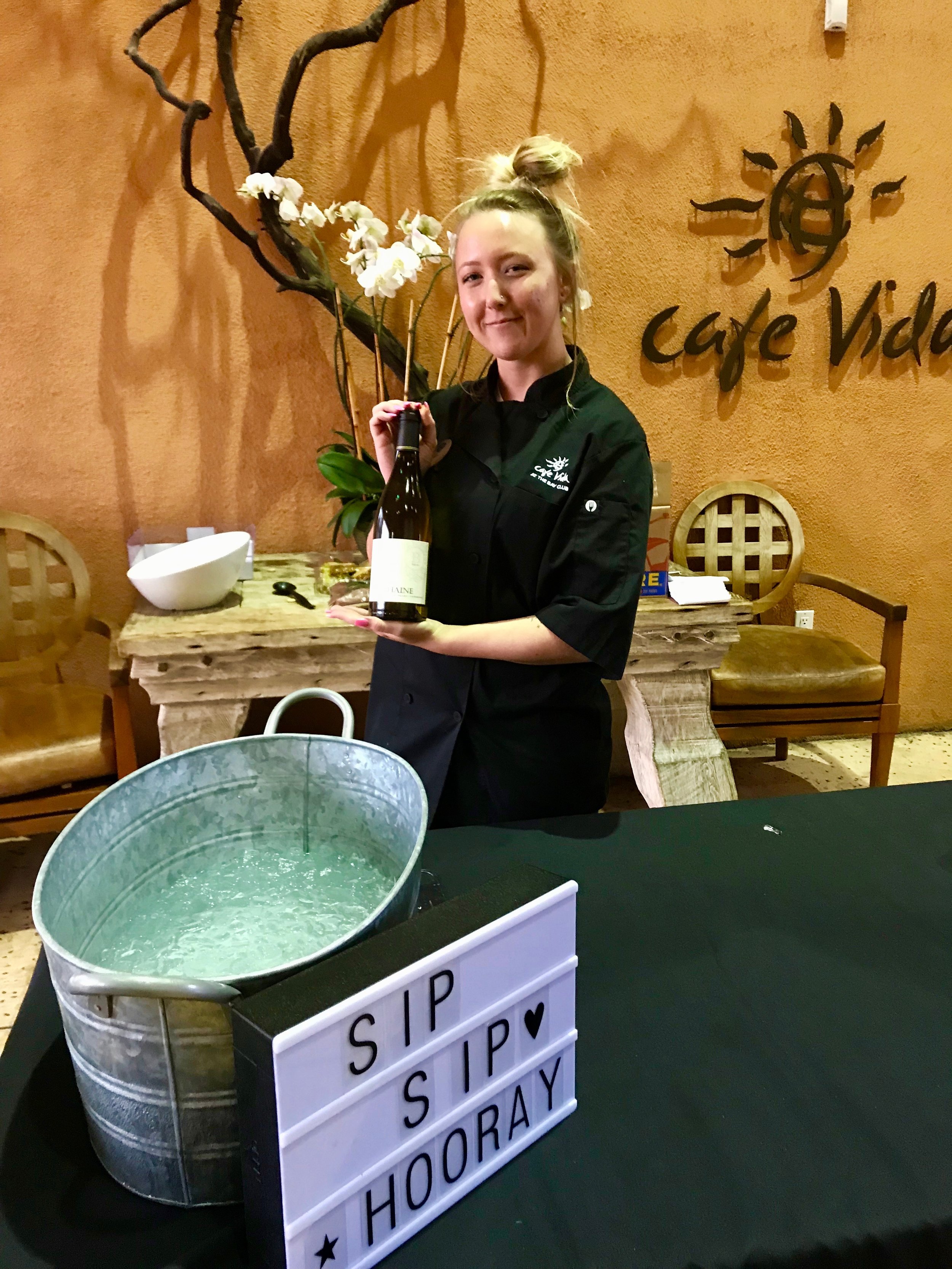
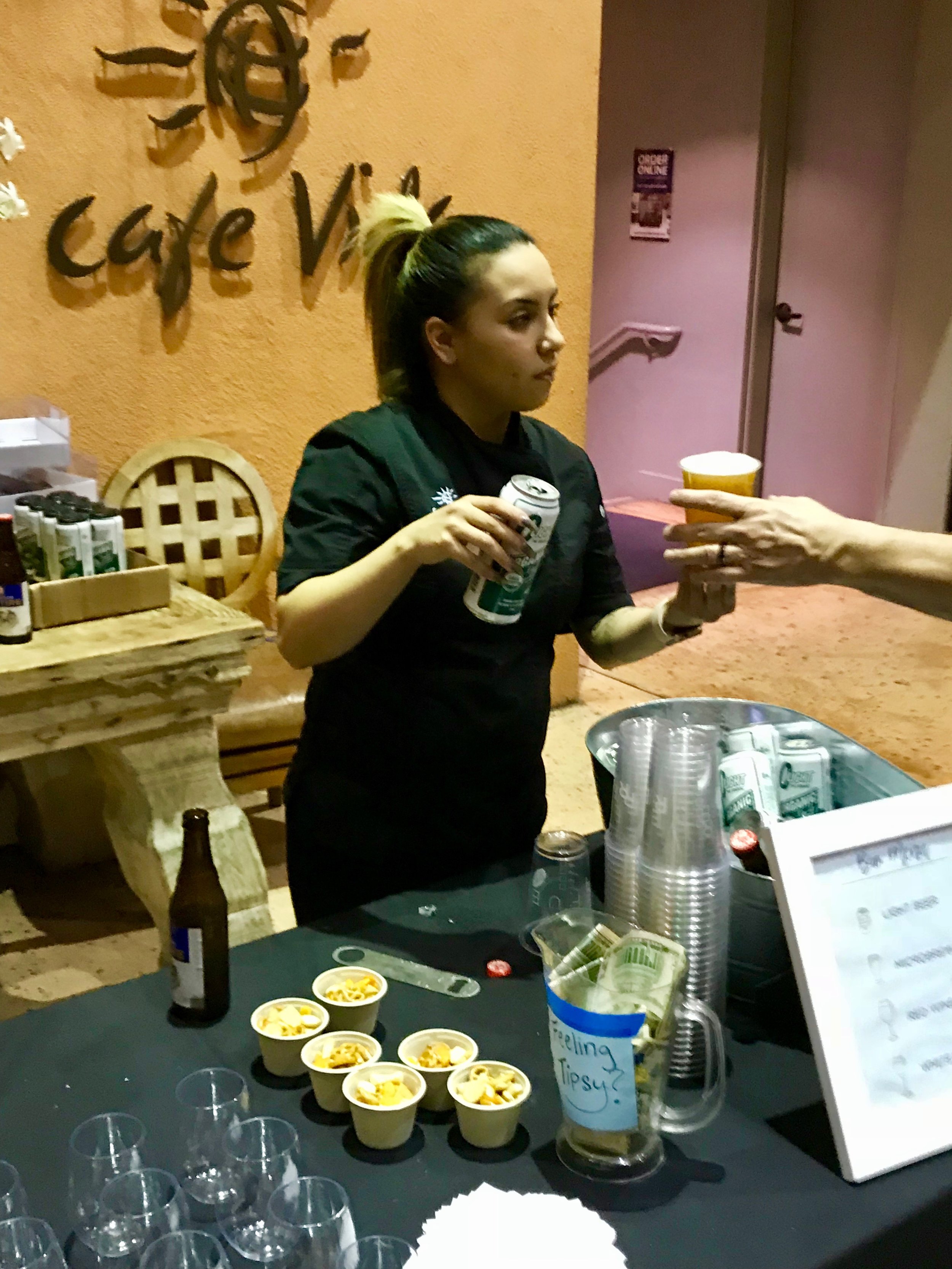
After an early evening yoga class at Bay Club Courtside recently I spotted a sign in the lobby outside the trendy indoor gourmet eatery called Cafe Vida that read: “Sip, Sip Hooray.” There was wine and beer being poured. I asked Christina, a young enthusiastic staff member with the dark pony tail doing the pouring, if it was complimentary? She promply answered yes! Of course, in the back of my New Jersey mind I’m thinking what’s the catch? Was it sponsored by a Wine and Beer Club or something? I discovered that the special treat for members was going on every evening for a month and due to its popularity rumor has it that it may be extended after that to a couple of days a week until the end of Memorial Day weekend. 

This reminded me of the good old days, when the wineries in Napa Valley used to have free, wine tastings. How was it being received by members? Judging by the crowd and the tip bowl, it was getting a very warm reception. Haley, another staff member who was doing the pouring the following evening, said it is the club’s way of giving back to its members and creating an atmosphere where people could mingle.

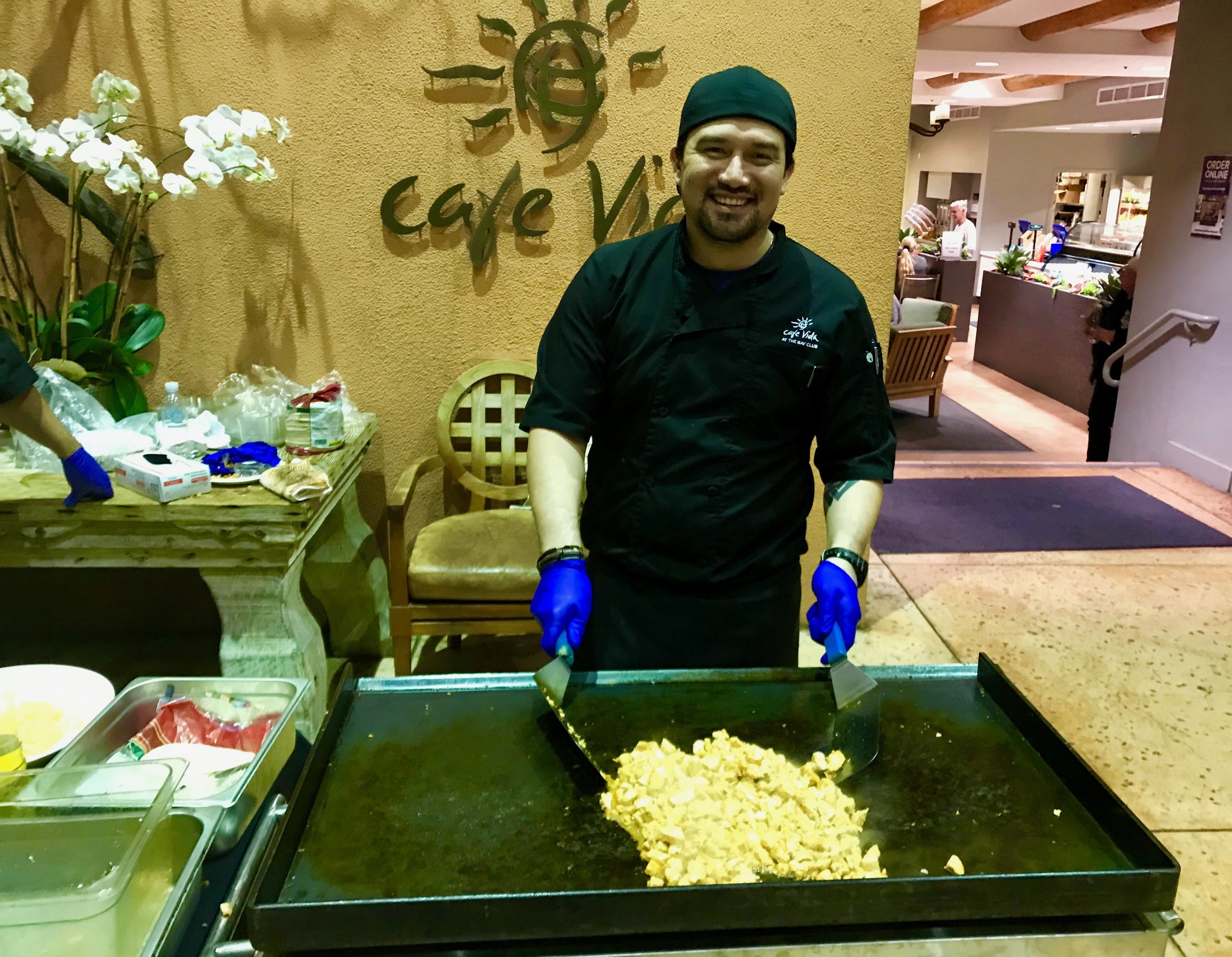
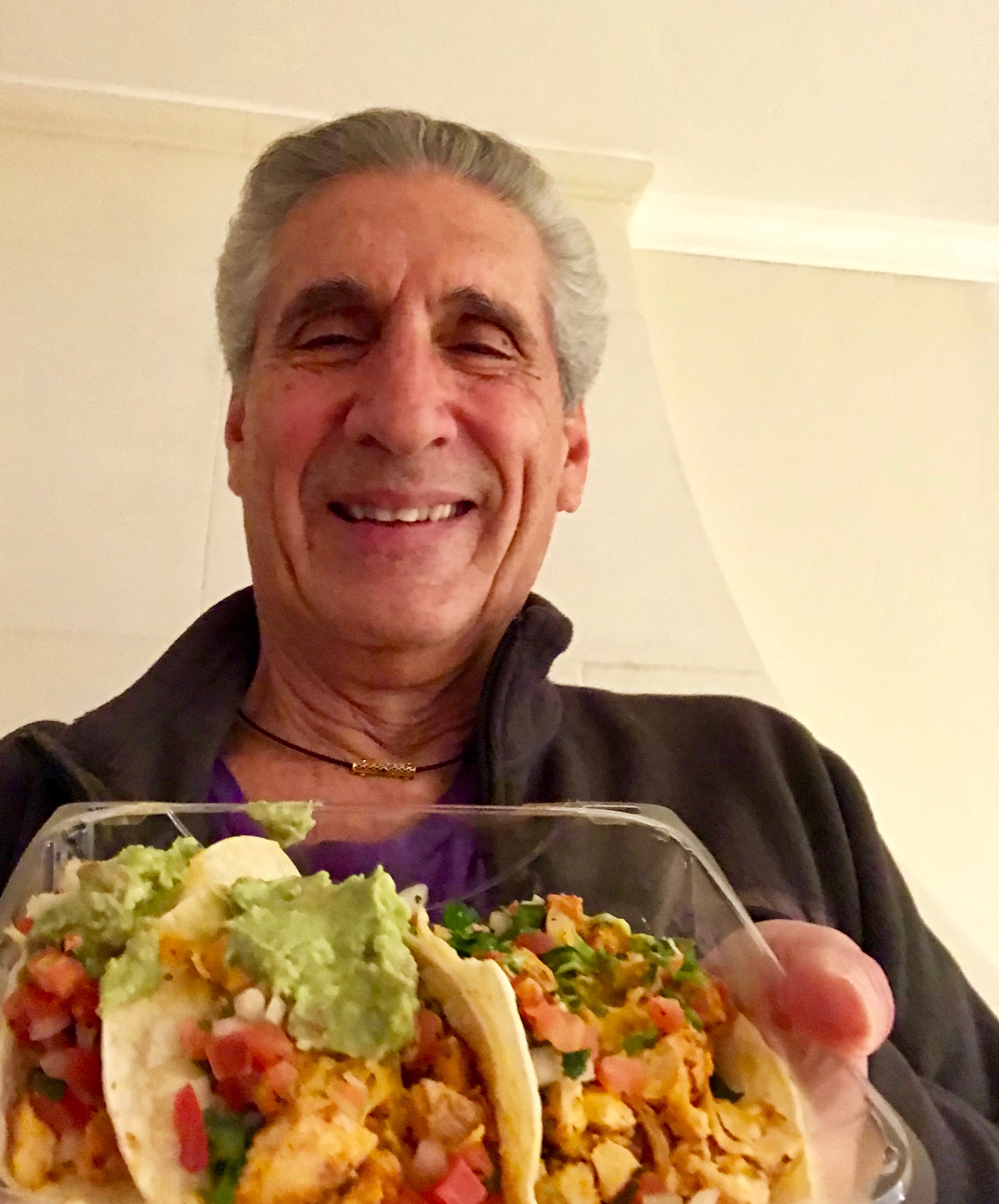
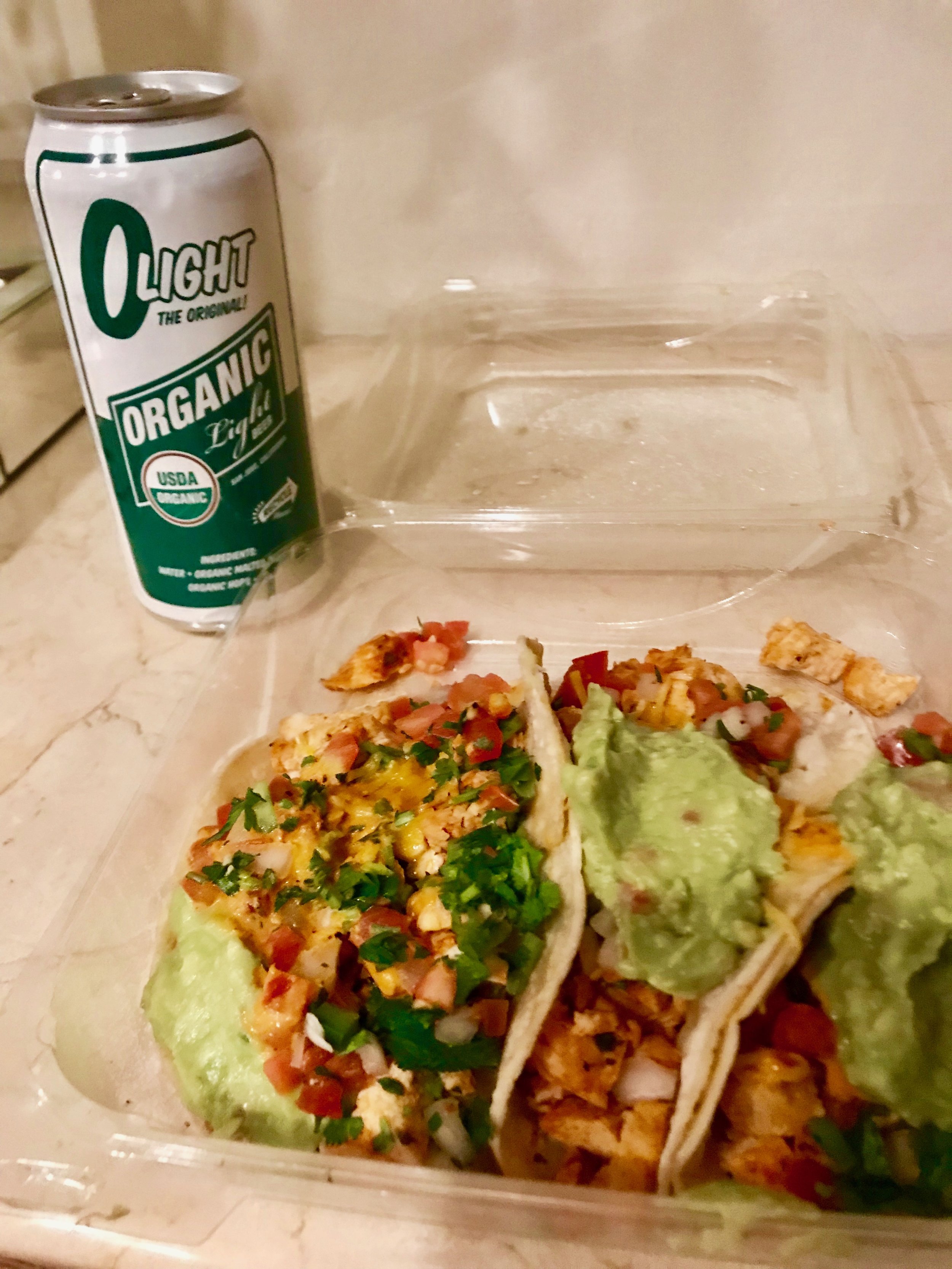
It was also Taco Thursday. A long table and grill were set up right next to the free booze. Grab and go tacos with fresh healthy ingredients were made right on the spot. At $3.00 a taco, it was a deal. After finishing my glass of wine, and complimentary, small cup of pretzel snacks that came with it, I bought three tacos to go and a can of Organic Light beer.

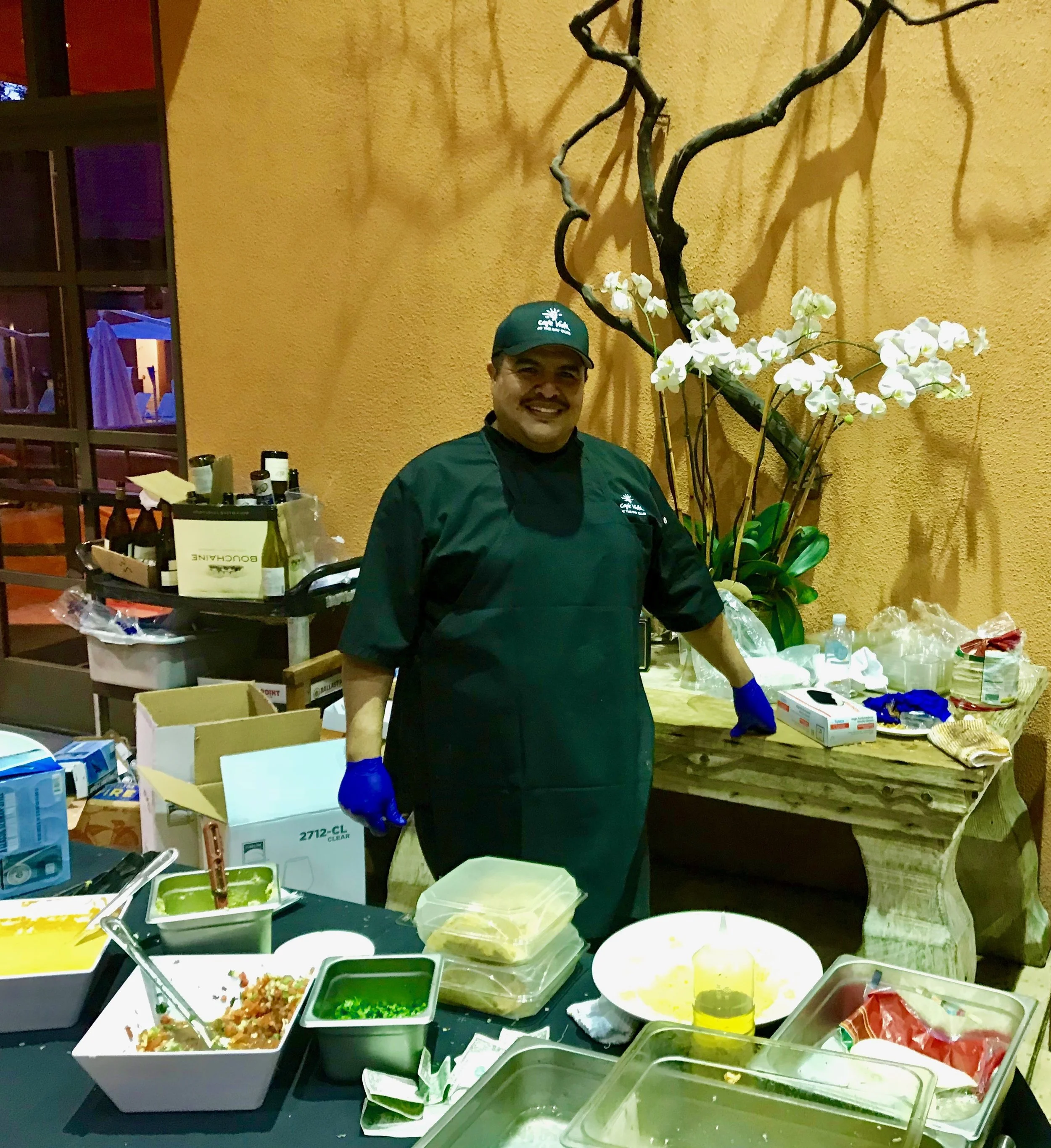
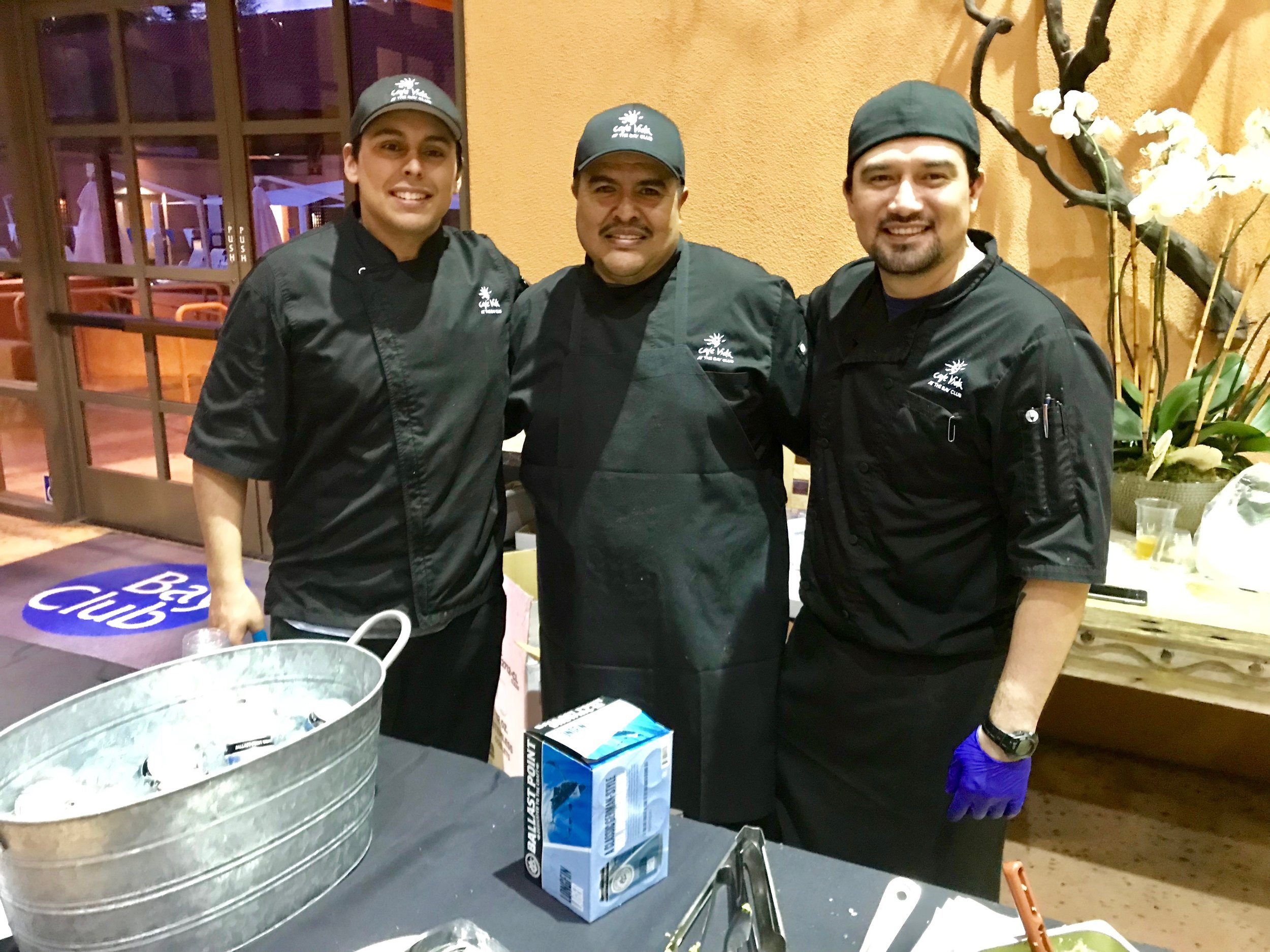
I had done a blog post on the very colorful grand opening of Cafe Vida last August and got acquainted with Jose’, the ever friendly, hardworking food service coordinator seen here grilling the chicken for the tacos. The other hard working members of the staff I photographed with Jose’ are Juan and John. It was John’s last day. He's leaving for Florida to study to become a commercial airline pilot.

Bay Club is always surprising and delighting its members by introducing new food and drink themes, organizing parties, and events like Margarita night, Sunday breakfast burritos to go, or to eat on the outdoor patio dining area around the fire pit and overlooking the family pool. Most National holidays are celebrated including the 4th of Juloy so members and their families have another opportunity to bond with one another. Their exemplary hospitality makes members feel right at home and I am grateful for the extra touches they employ to make us happy. 

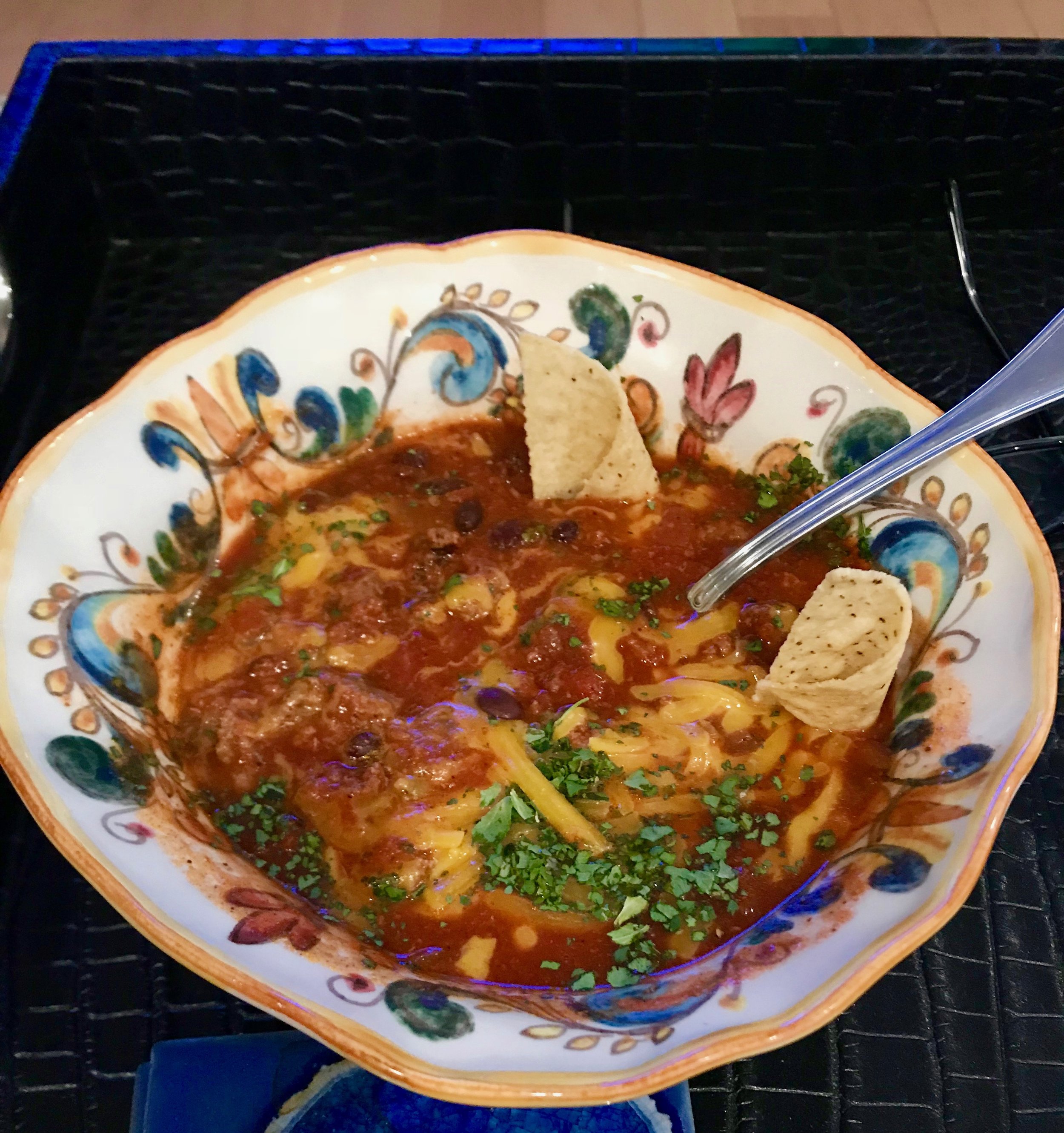
I also have to give props to my loving wife Cecile, who continuing the Mexican theme made a killer Mexican Chile Casserole (last photo) a few days later for our son Jason and I. Es muy delicioso!

A Toast to My Paisano the Saint on St. Patrick's Day! Say What? Read On!

During yoga today, our substitute yoga teacher named June was wearing green for St. Patrick’s Day. As she looked around the yoga studio she said, “I am going to have to pinch you for not wearing green.” 
But, St. Patrick and his followers, would have had to deal with being pinched since back in the day they wore "St. Patrick’s Blue.” In fact, so did the Irish military. The color green became popular after it was linked to the Irish Independence Movement in the late 18th century. It made me think of other myths associated with this popular holiday.

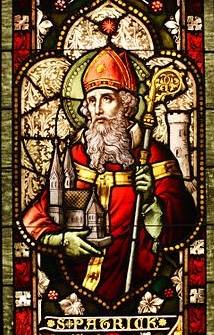
Though St. Patrick is considered the patron saint of Ireland for making his mark by introducing Christianity to Ireland in 432 AD, he wasn’t even born in Ireland. Historians believe that he was born in Kilpatrick, near Dumbarton in Scotland which was technically part of Britain at the time. His parent’s Calpurnius and Conchessa were Italian and lived on a British estate. So, as my late father Frank—who
loved to read religious history and was a Catholic seminarian for a year would say, "technically St. Patrick was Italian.” Yes, we all laughed and thought he was off his rocker. But, do yourself a favor folks, do a Google search! It is not uncommon for common day myths to collide
with history. It happens all the time. This saintly guy is my “paisano,” the equivalent of “homie” to Italians and Italian Americans. It appears that the common saying: “everyone is a little Irish on St. Patrick’s Day” requires a bit of revision. 

Another example is that Irish folklore states that St. Patrick gets the credit for driving all the snakes our of Ireland. But, scientists point out that according to the fossil record, Ireland was going through an Ice Age and was too cold to host any reptiles. Mythologists believe it as a metaphor for getting rid of the pagans who were referred to as "snakes."

Drinking was prohibited on March 17, St. Patrick’s Day for most of the 20th century because it was deemed mostly a religious holiday in Ireland. This changed when it was converted to a national holiday. Since 1762, when Irish soldiers serving in the English military marched through the streets of NYC proclaiming their connection with their Irish roots, over a quarter of a million people have marched on Fifth Avenue on St Patrick’s Day. 

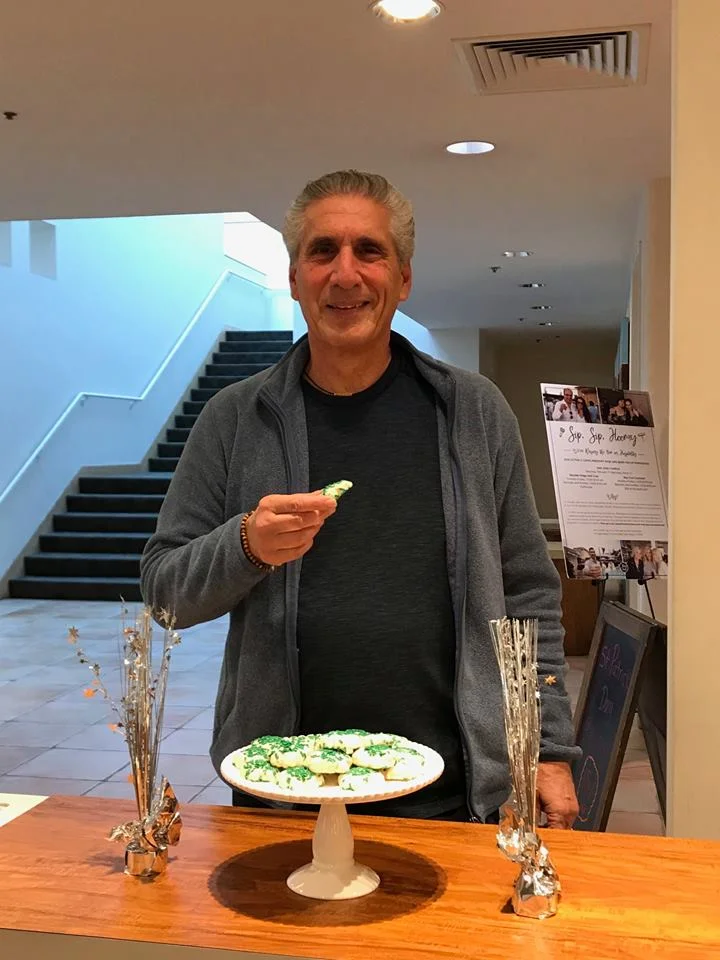
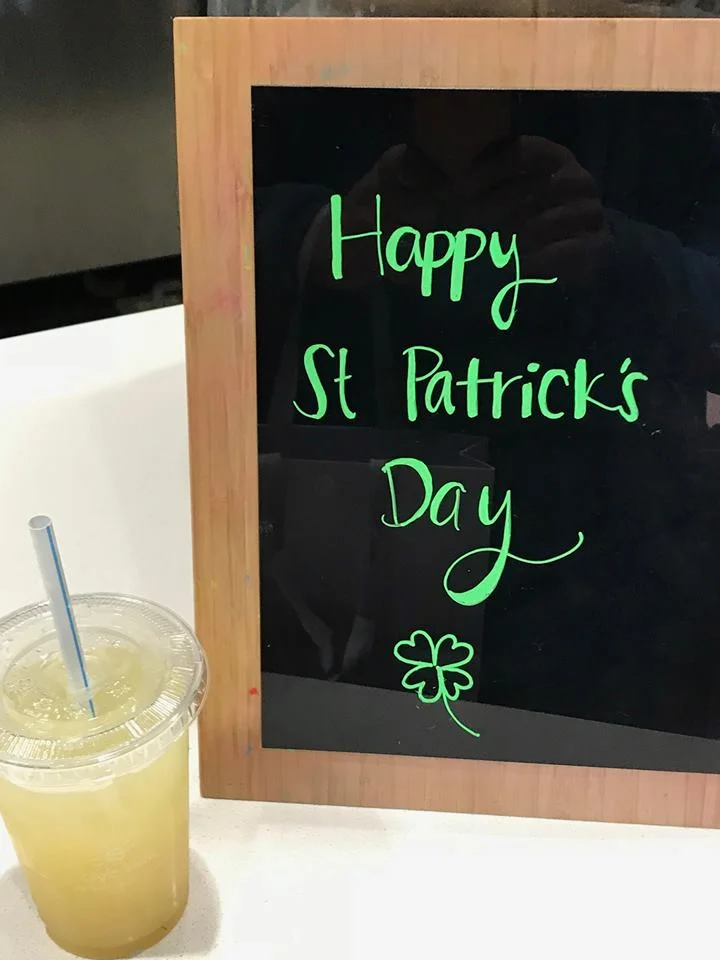
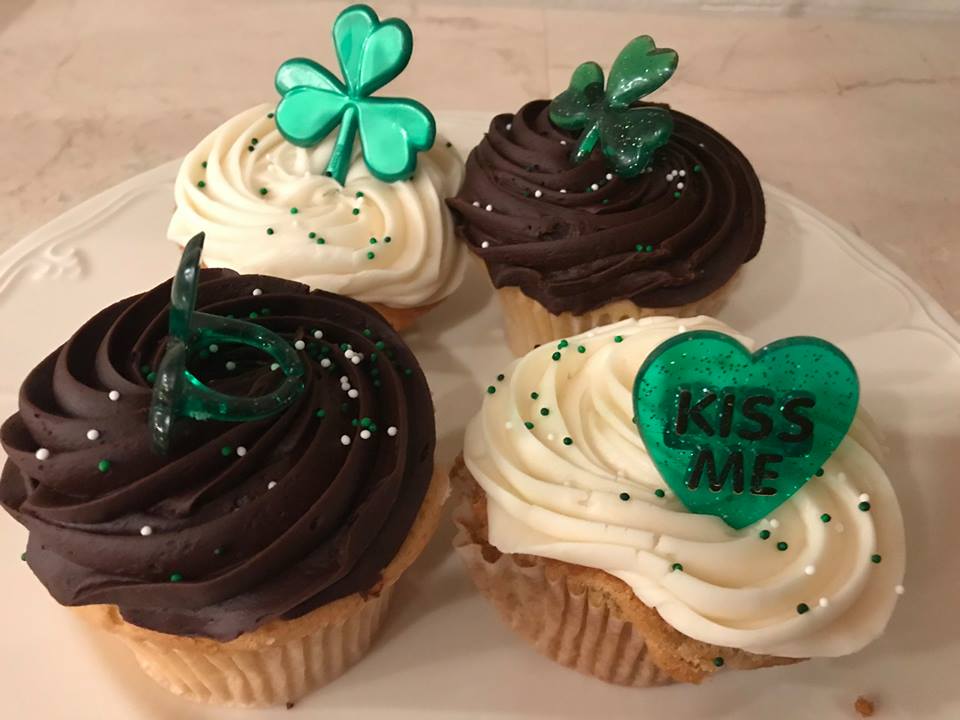
Photos: The delicious chocolate and banana cupcakes with the 3 leaf clovers and that say kiss me were bought at the iconic “Icing On the Cake” after my dental hygiene appointment. A cute young Asian vendor at the Farmers Market with the green antenna hair clip. Eating Irish green sprinkled cookies and drinking a non-alcoholic lemonade and fresh ginger (I know boring but good:-)


Feeding, Riding & Bathing an Elephant on the Left Bank of the Mekong RIver in Laos

Feeding, Riding & Bathing an Elephant on the Left Bank of the Mekong RIver in Laos

“To me, the word wisdom means ancient knowledge…the kind you not only see but feel when you look into the eyes of an elephant or stop…to marvel at the deep wrinkles on its skin, both of which contain the truths learned from each intentional step their…feet and those of their ancestors have placed on the earth.”—Molly Friedenfeld

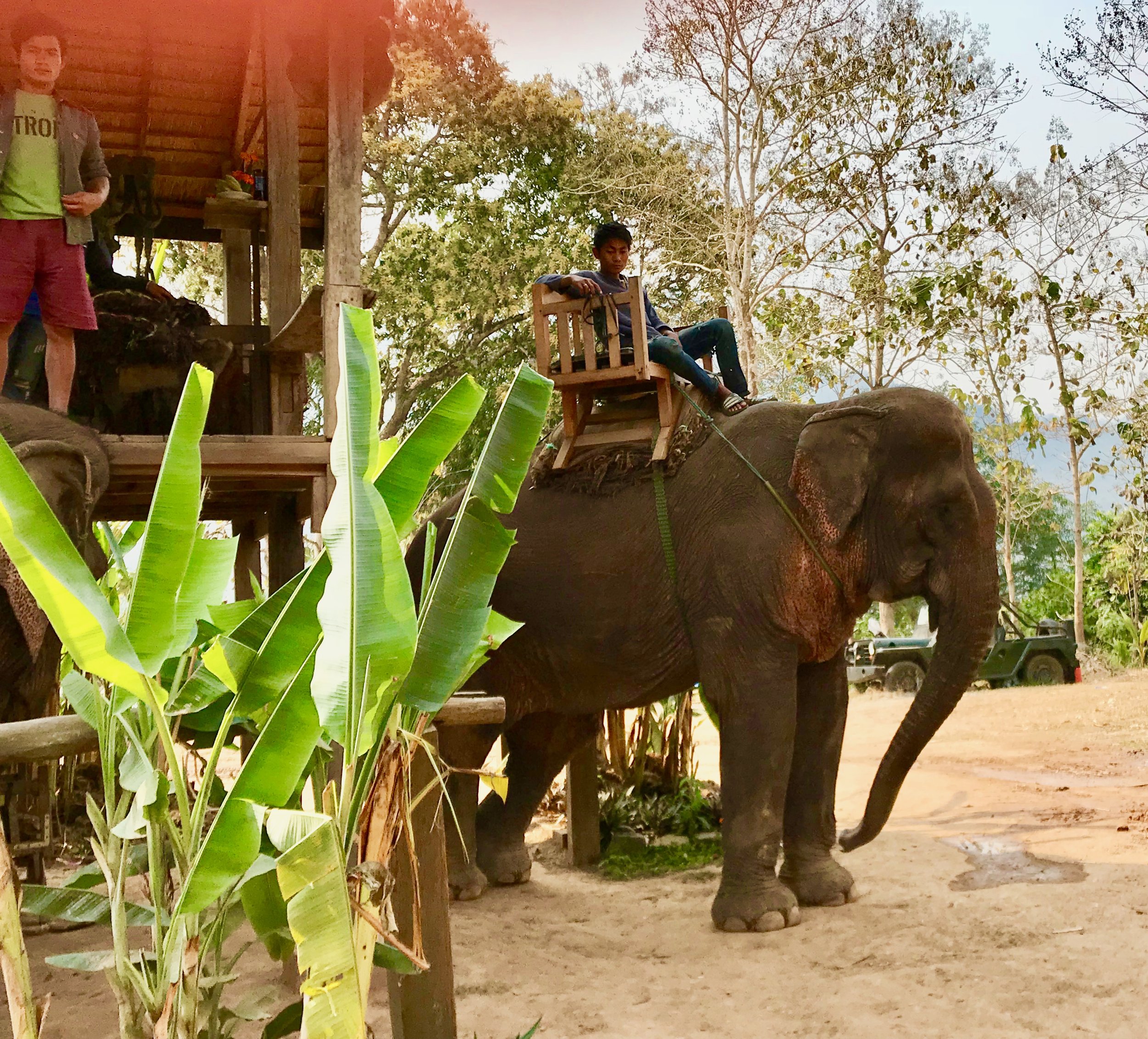
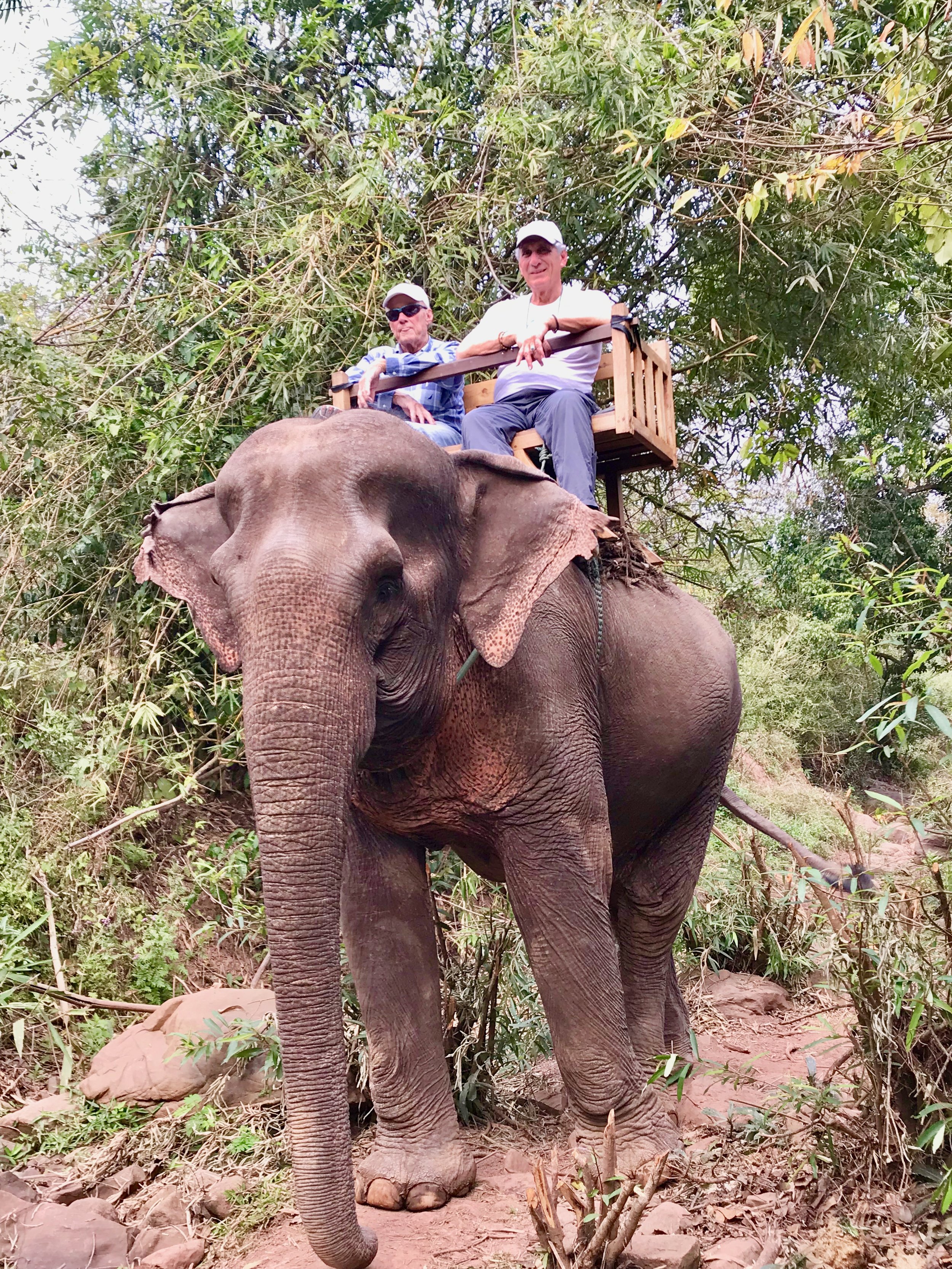
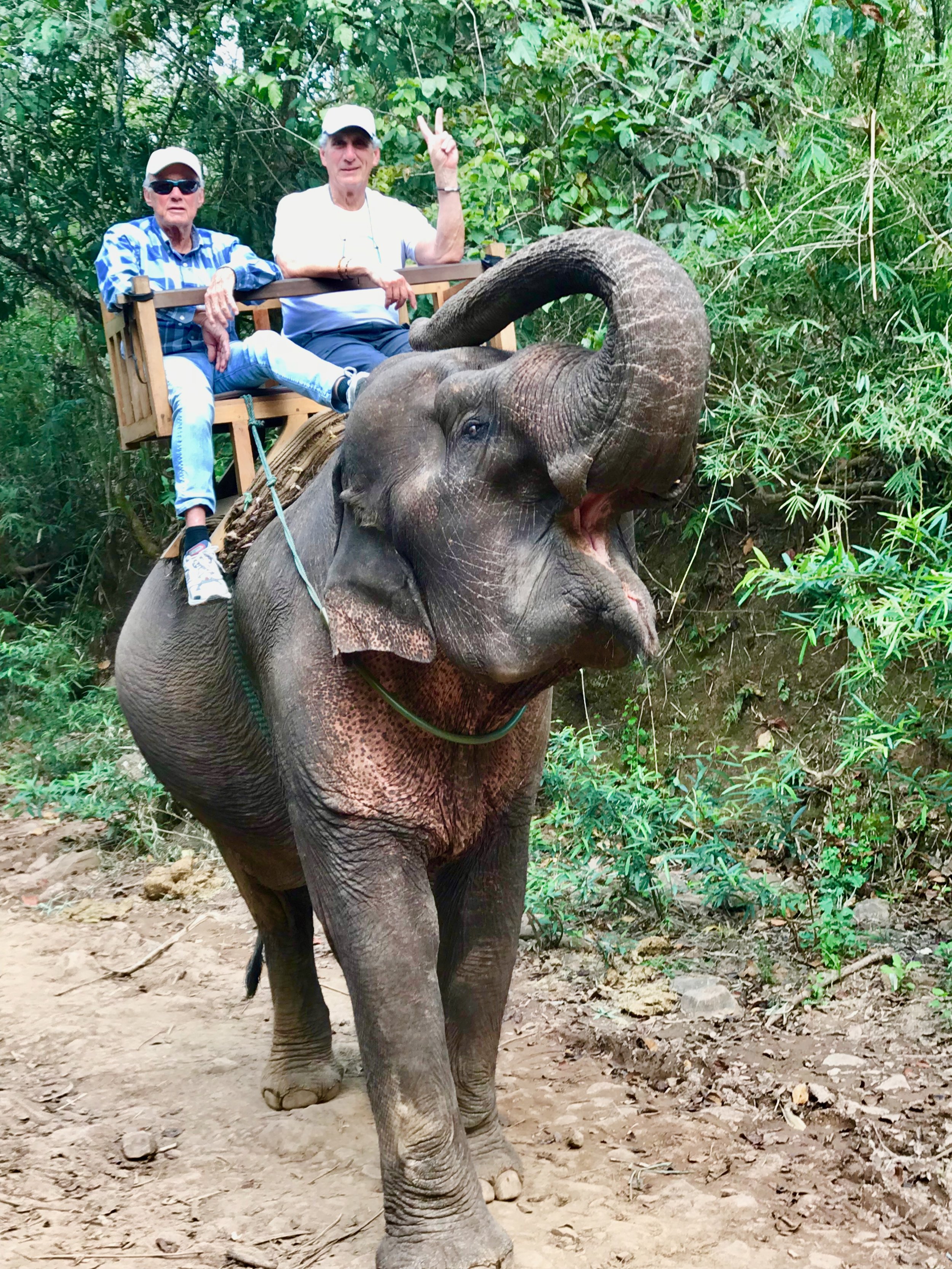
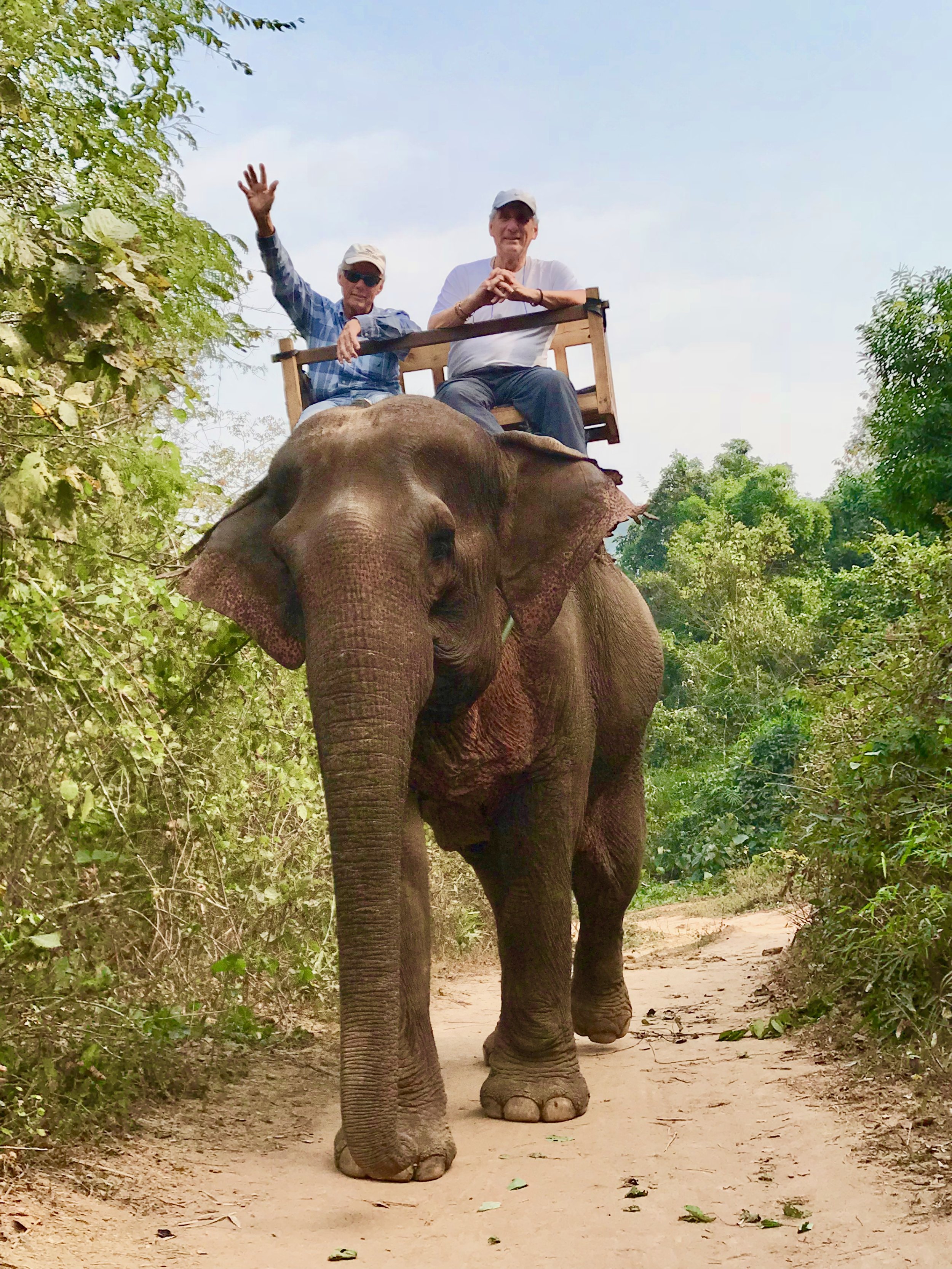
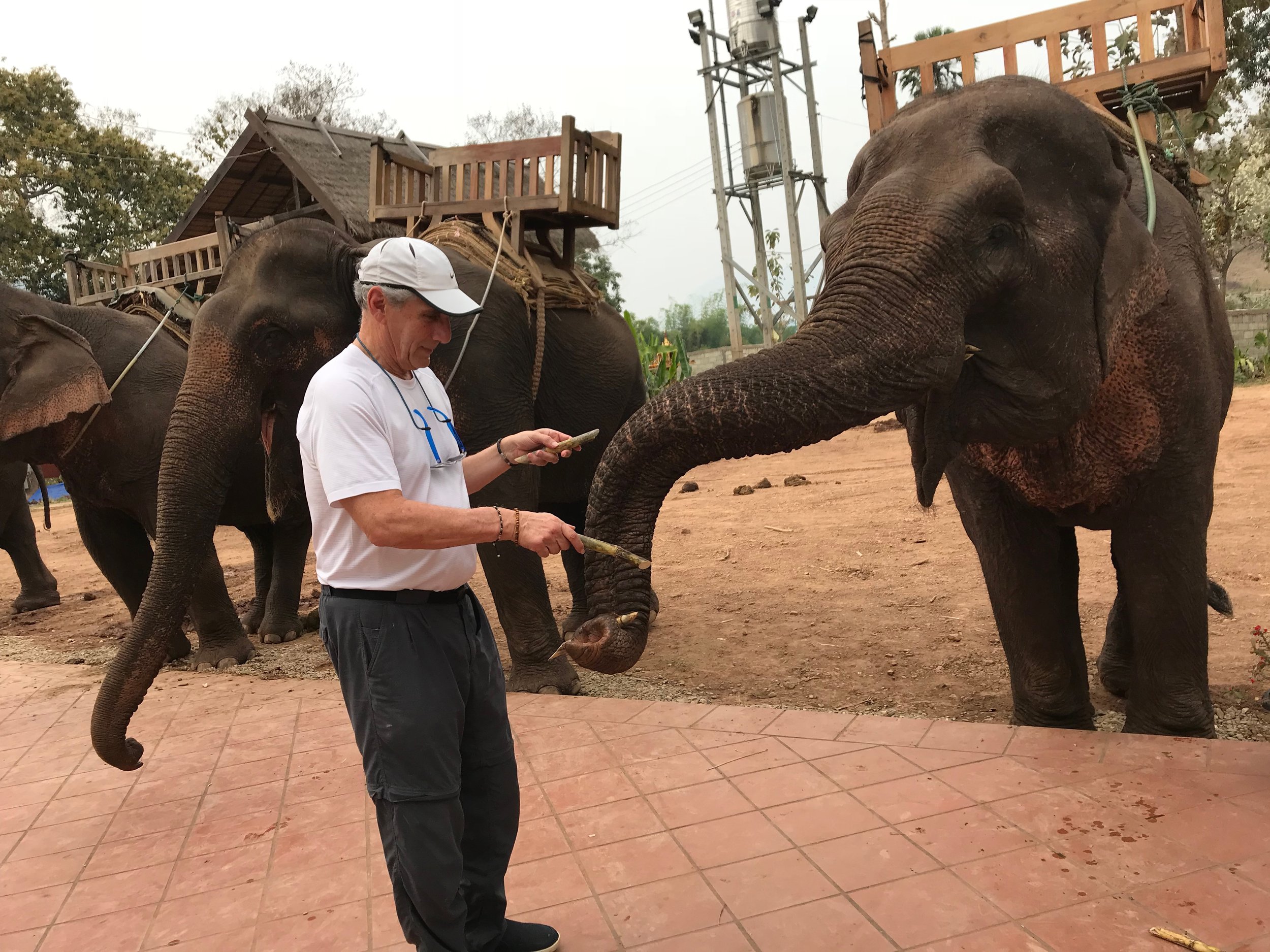
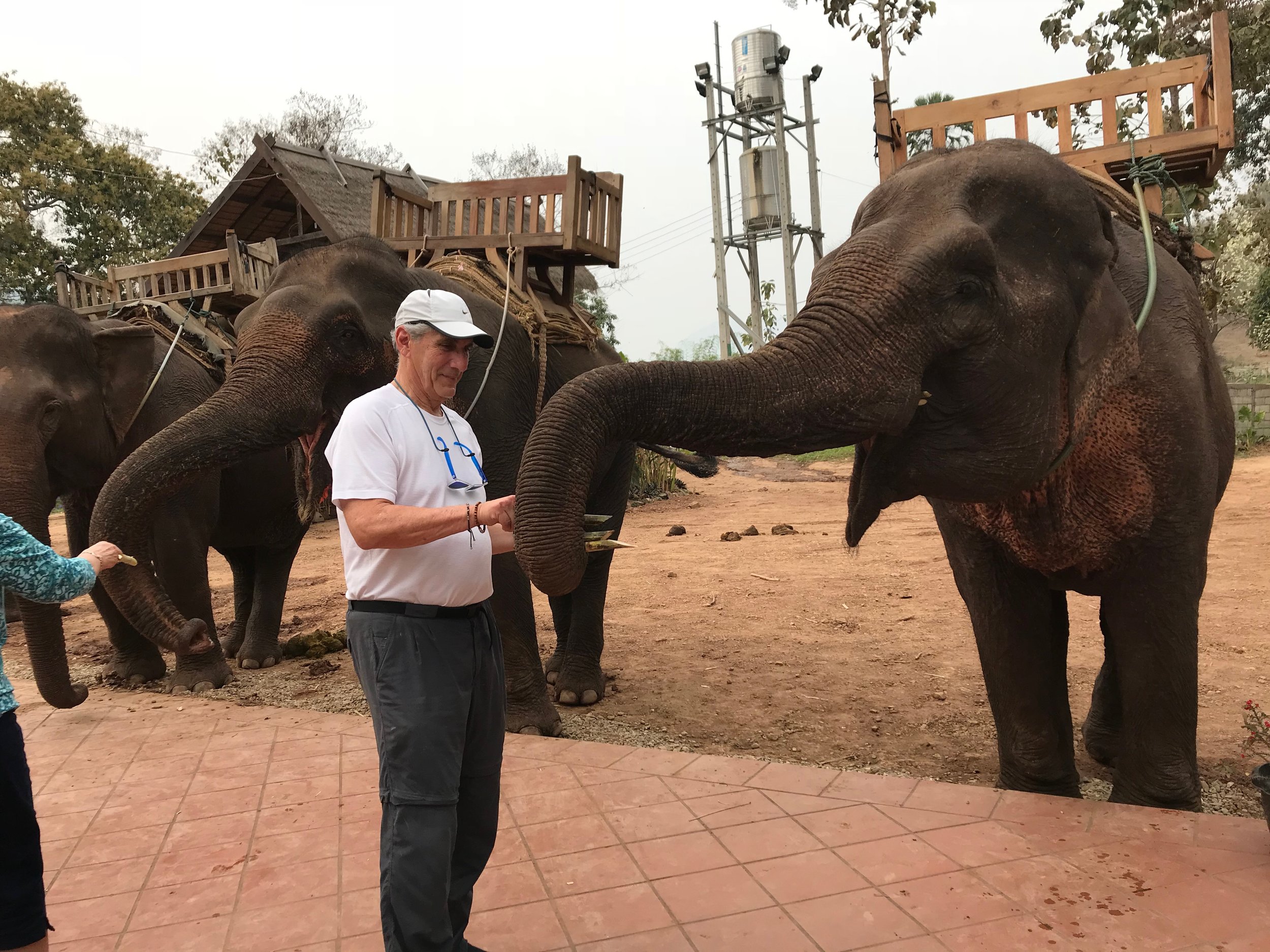
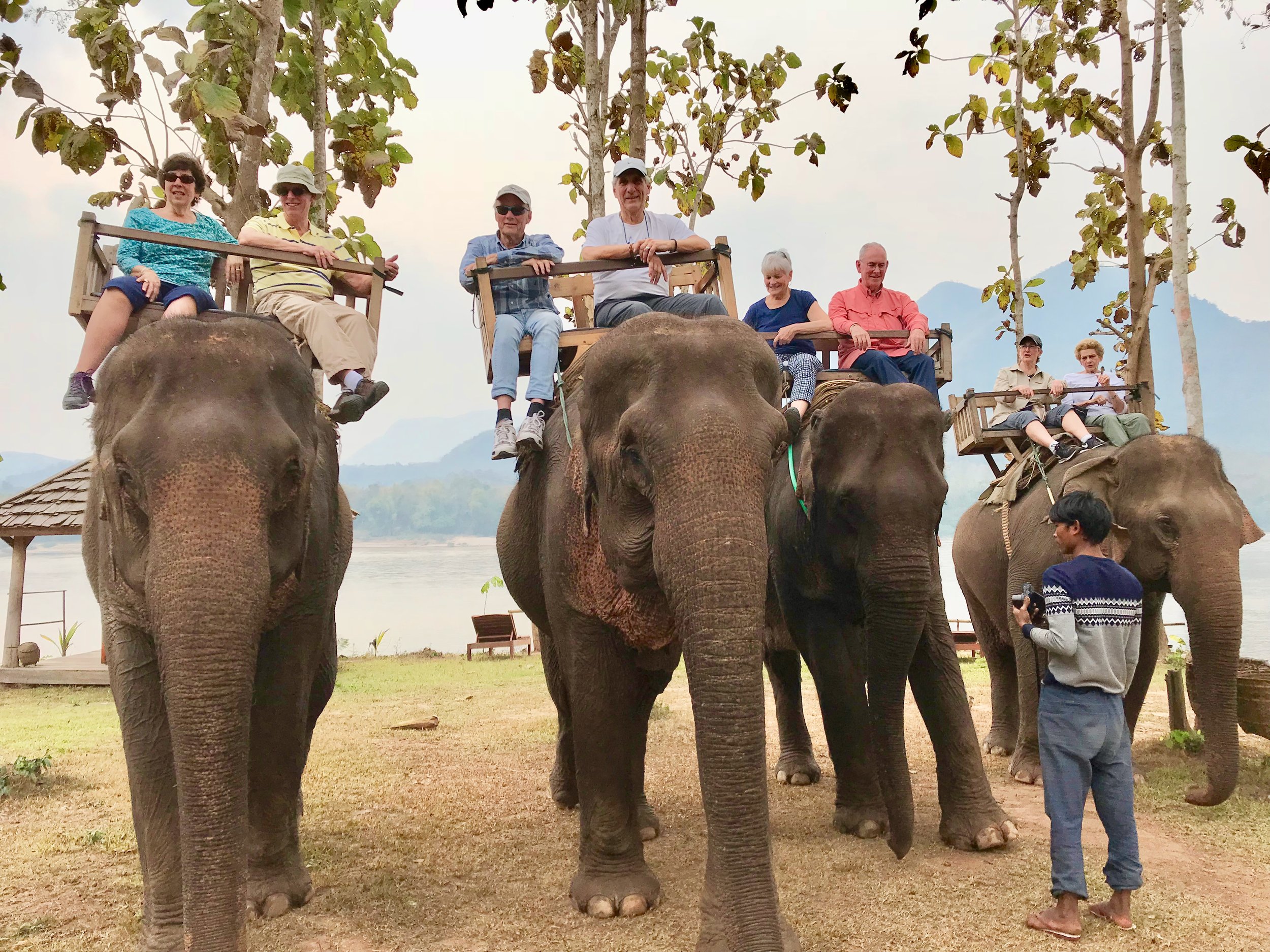
Eight of 16 in our tour group were driven to the elephant conservation center Ban Xiang Hai situated on the left bank of the Mekong River, north of Luang Prabang, Laos. It was an optional tour offered by Overseas Adventure Travels (OAT). I partnered up with Ed from Colorado. The elephant we were assigned was 32 years old and she weighed 7,495 pounds. She is a vegetarian and eats a variety of food at the camp and in the rain forest and jungle that includes bananas, sugar cane and pineapple. She consumes 551 pounds of food and drinks 17 gallons each day. She swims at Mekong River 4 or 5 times daily. She has lived at the camp for three years and enjoys the company of the other elephants and appeared to enjoy interacting with us throughout our visit. According to its mahout (elephant keeper and trainer) before arriving at the camp she had a difficult life working in servitude for the logging industry, forced to put in up to 12 hours a day—every day. This was the logical argument given as a reason to allow leading tourists on elephant rides.

When we got to the elephant camp we saw the high wooden mounting platform that makes it easier to mount the elephant. After the mahout secured us in place on the wooden howdah (bench) that was placed over a stack of blankets to protect its skin, we were given cut sugar cane to feed the elephant as a way to bond with it. Back in the day I had ridden elephants in India and Thailand (with my son Jason) but never got to feed them. It was a amazing how our elephant would arc its trunk up and over its head in a circular fashion and wait until we placed the food in the curled end of her trunk where she would grasp it securely. But, one wasn’t enough. She would wait patiently until we placed 4 or 5 sugar canes in her grasp before placing it in her mouth. This eating ritual was playfully repeated several times.

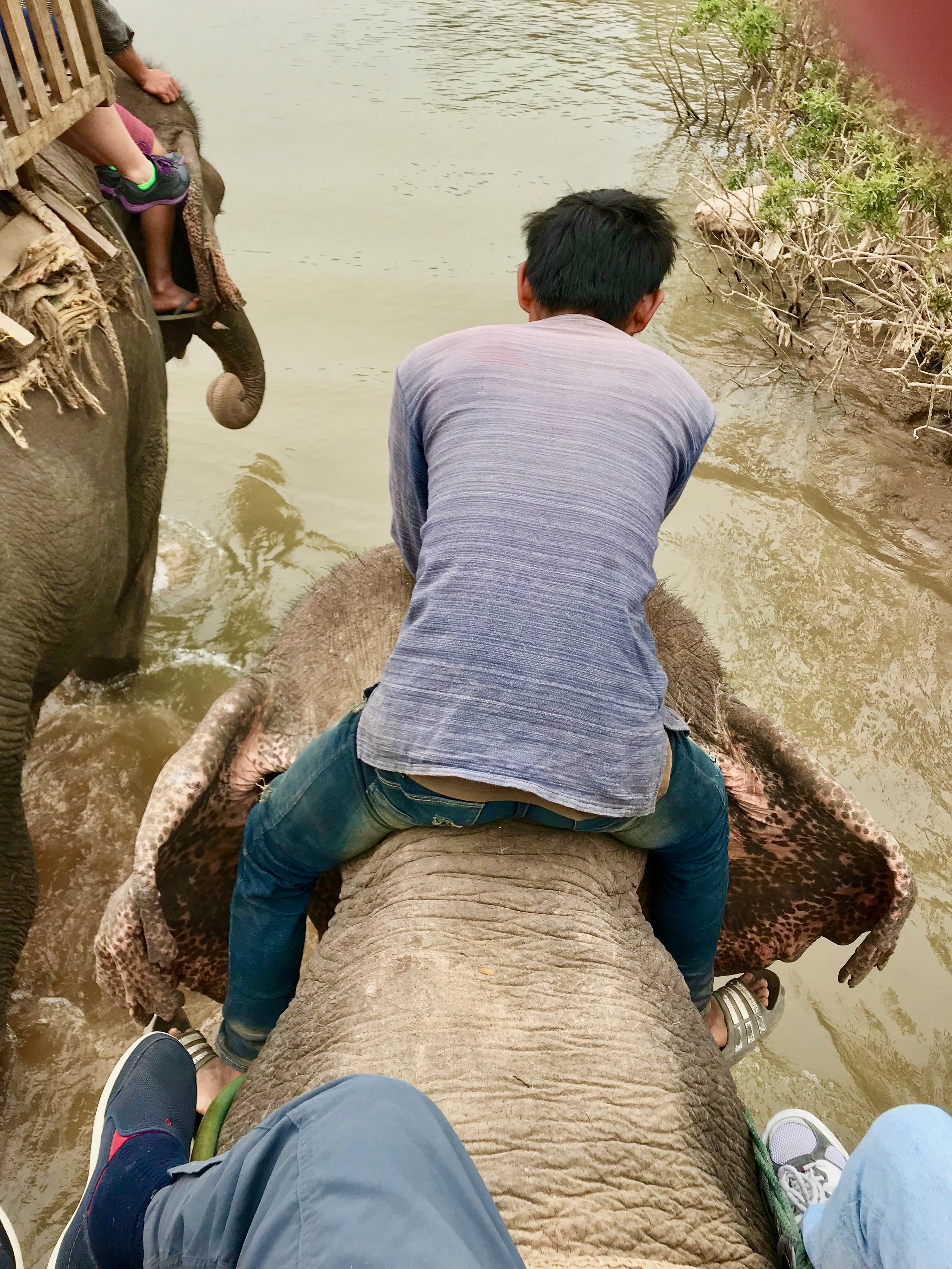
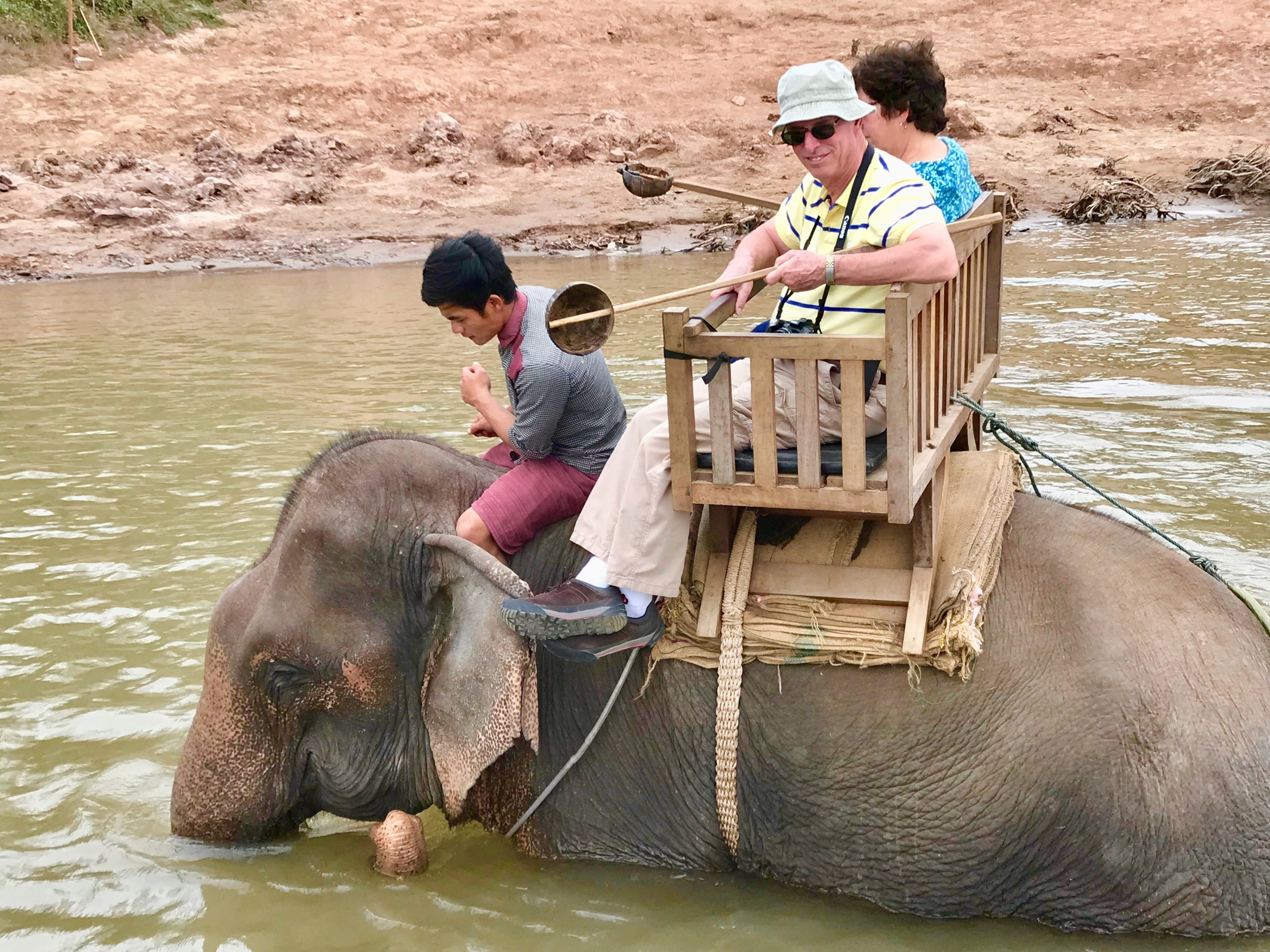
The mahout walked in front of the elephant whispering gentle commands as we cantered side to side with each step of this gentle, intelligent creature. From the beginning of the ride, we witnessed the mahout treating the elephant with absolute compassion and kindness. Toward the end of our ride, the young elephant handler gracefully hopped up from a stack of quarry rock and sat on top of the neck of the elephant and led it to the river. He handed Ed and I a long stick and scooper at the end and directed us to repeatedly scoop the water up and pour it over the neck of the elephant. He then gently massaged the water into its neck to help relax it and cool it down. When we made our way back to the elephant conservation camp, we dismounted and the howdah was removed from the elephant’s back and we got to feed it again, this time from ground level. Later, the mahout took it to the Mekong river to get it cleaned and hydrated.

Historically, Laos was once known as the Land of a Million Elephants. Regretably, there are only 800 of these majestic trunk-swingling creatures left, or half of what dwells in the wild. In the 1980s there were an estimated 4000 elephants in Laos, meaning the population has plummeted by more than 75% in the past 30 years. I learned that elephants have no stomach, whis is why they require a lot food and drink a lot of water. They only require 3-4 hours of sleep per day and can live upwards of 90-100 years.

An elephant can carry 30% of its weight. They claim that placing two tourists on a howdah is less than 440 pounds and presents no problem for the elephant. That being said, riding elephants is controversial. The ideal would be for elephant camps like the one our daughter Michelle and husband Kyle visited in Chiang Mai, Thailand last October that is a pure elephant sanctuary that doesn't offer rides. But the sad and harsh reality is that most remaining mahouts would not be able to handle the upkeep of maintaining their elephants without it. The alternative is engaging the elephant in the illegal logging industry or selling them to questionable Chinese sources that would place them in zoos, entertainment venues or farmed, so that their ivory can be harvested. It is a sad but true reality with no easy answers.
Notes: Aside from Ed and I, the folks to our left are Jane and Wayne, and to our right, Mary and Tom and Debbie and Karen.

Cherry Blossoms (Sakura) and Stormy Sunsets

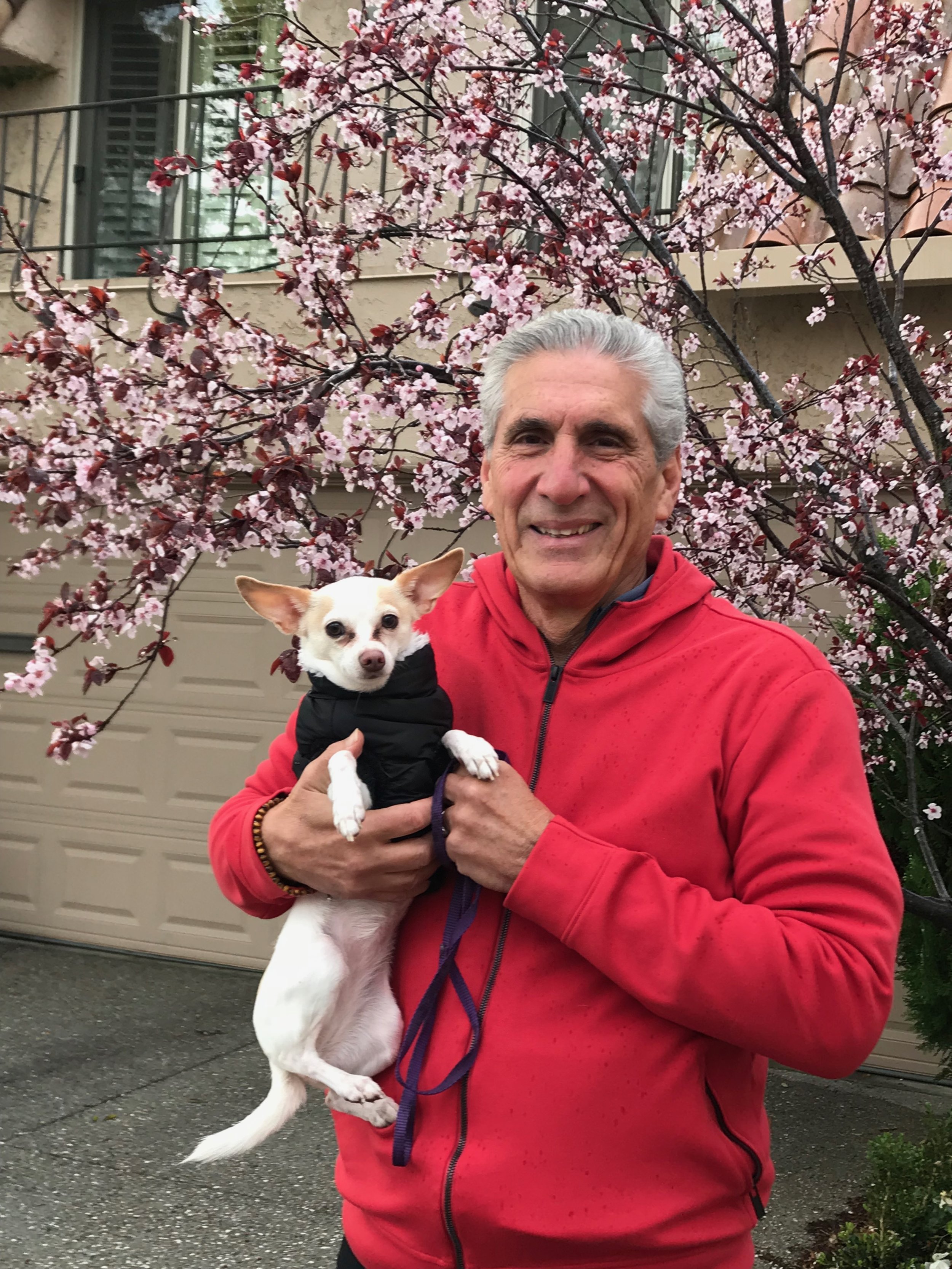
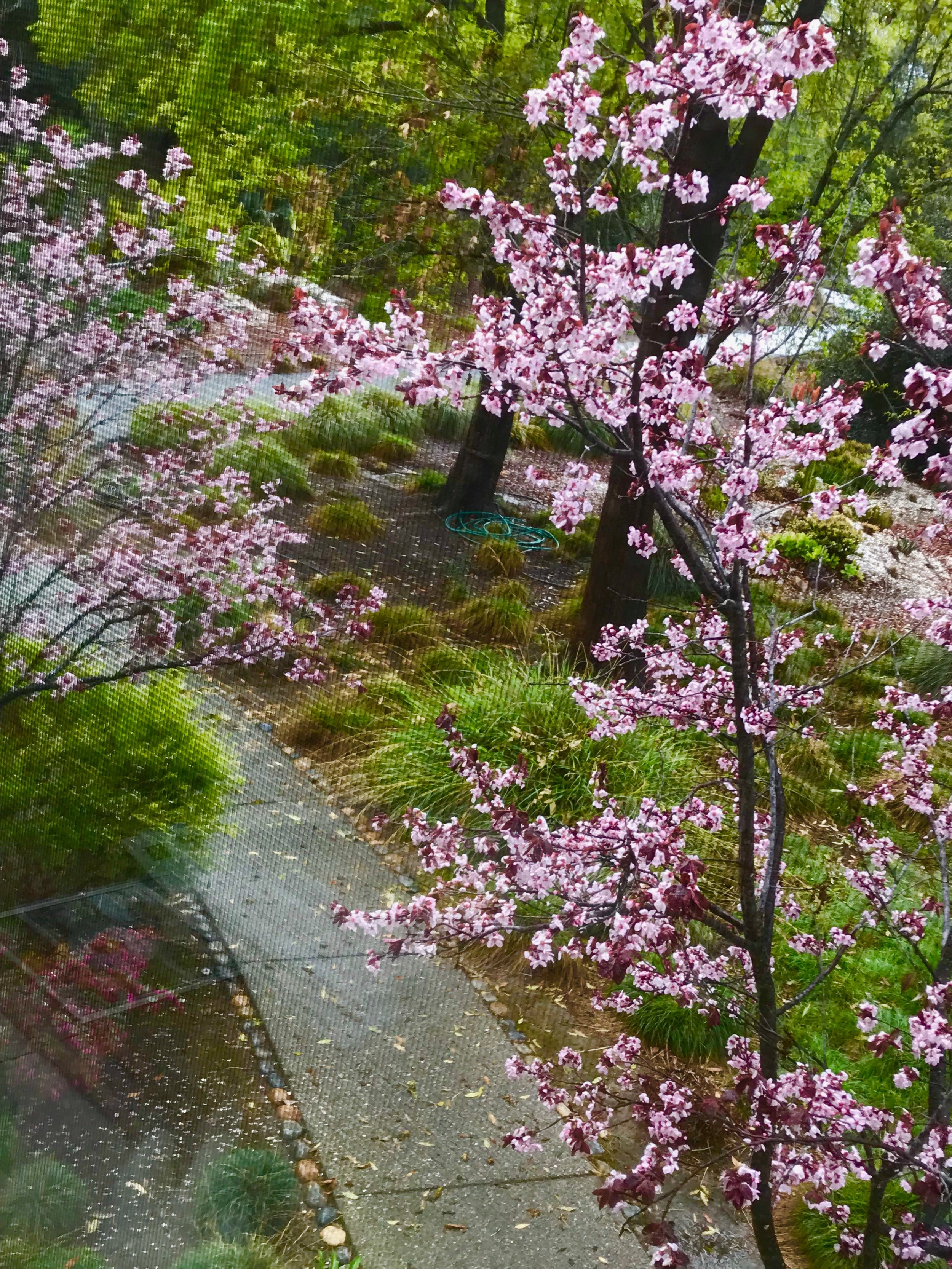
After almost five glorious sightseeing weeks touring Southeast Asia we have been hanging low waiting patiently for the jet lag to pass. While it is always a real treat to experience the natural beauty of other countries, it is also a joy to view it from your own window or the walking paths. In this case, the elegant Cherry blossoms. The other day the sun was bright and full against a blue sky and last evening the sunset was bright and shrouded by mysterious-looking storm clouds that ushered in a day of rain that has continued today as the morning unfolds. Though the photos hint of early Spring it is bone chilling cold out here in California. Even our son Jason's dog Daisy was feeling the chill and we had to put her insulated rain-resistant puffer vest on.

In Japan a cherry blossom is called Sakura. It is a popular name for girls. Many schools in Japan plant sakura on their grounds. When they are at their peak, businesses vary their trading hours to give their staff time to enjoy them.
It is called “Hanami” which in Japanese literally means “flower viewing.”

While Cecile and I have experienced the majestic beauty of the Cherry Blossom season in Japan some years ago,
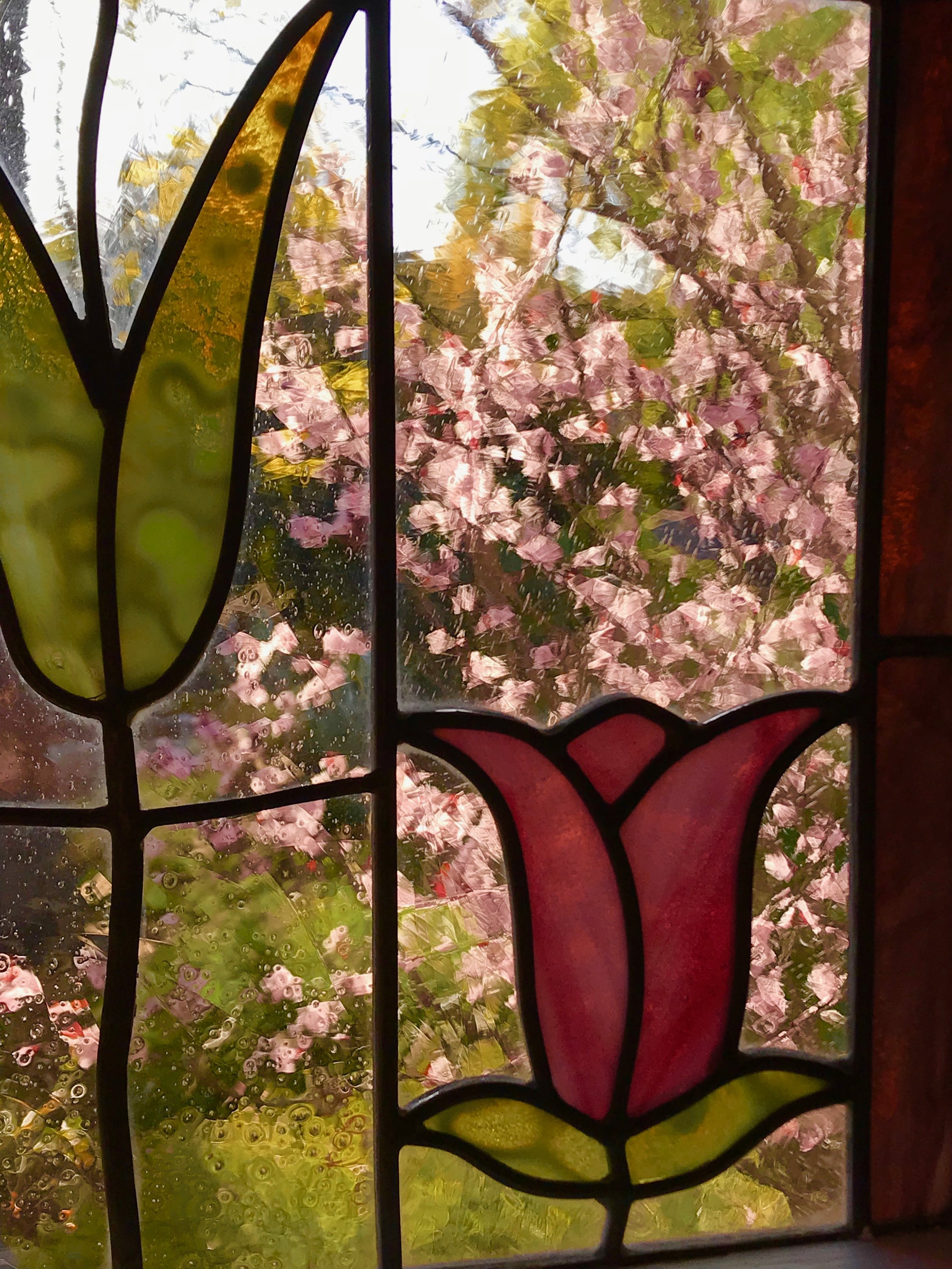
I feel blessed that they appeared outside our stain glass window and outside my home office window. 
I never waste time doing something society deems important or "productive" when I can stop for a spell and enjoy the transient beauty of the cherry blossoms. 

Here are two poems that pay tribute to the joyful flowering of cherry blossoms and full moons nestling in amidst the storm clouds:

Sakura

Soft, Delicate, Small, Fragrant
Pink and white
Flutter to the ground
To form a gentle blanket
That gently rustle
In the cool spring breeze
I watch in awe
At your beauty…
Oh majestic
And delicate one
Whose name is
Sakura
—Semerian Perez 

"Though outwardly a gloomy shroud,
The inner half of every cloud
Is bright and shining [more so by the setting sun]:
I therefore turn my clouds about  
And always wear them inside out
To show the [silver lining]."
—Ellen Thorneycroft Fowler


Final Goodbye Images of Bangkok Before our Journey Home

“Travel opens your mind as few things do. It is its own form of hypnotism, and I am forever under its spell." —Libba Bray

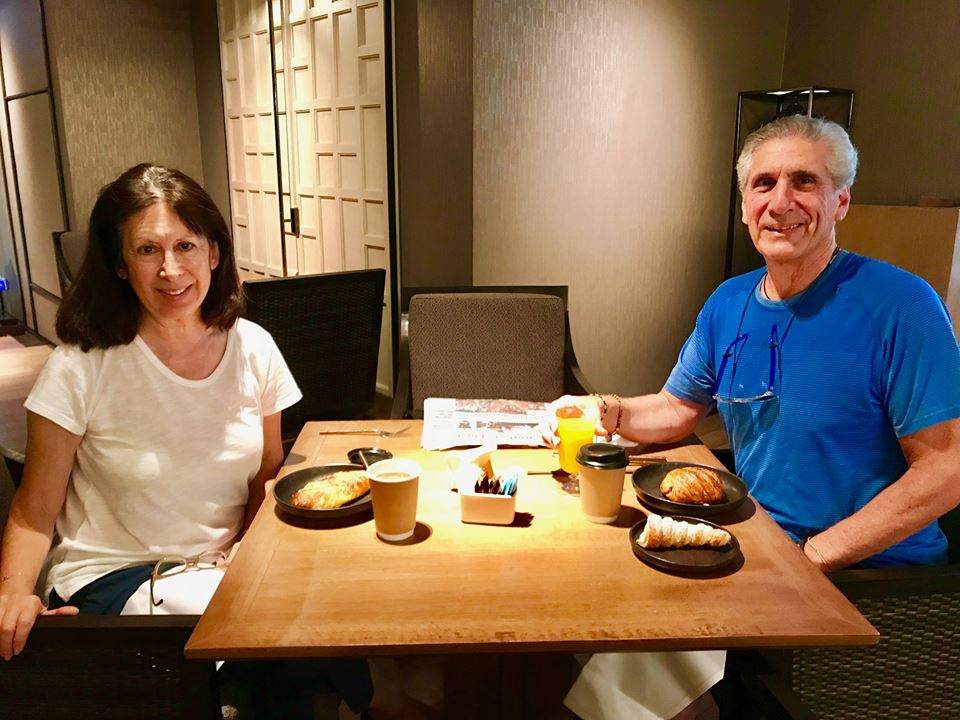
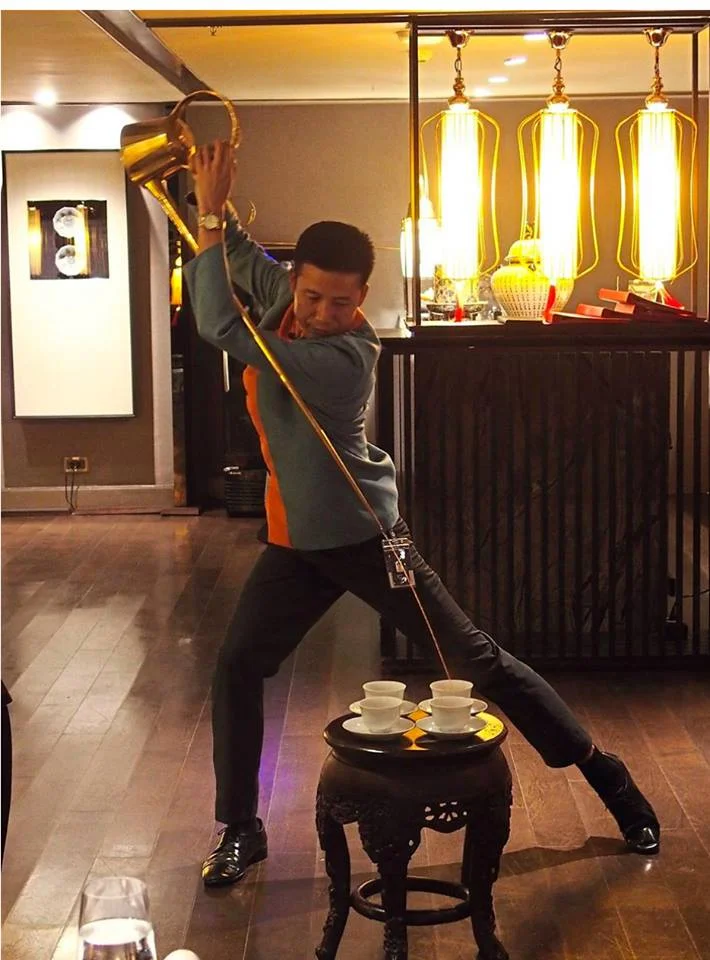
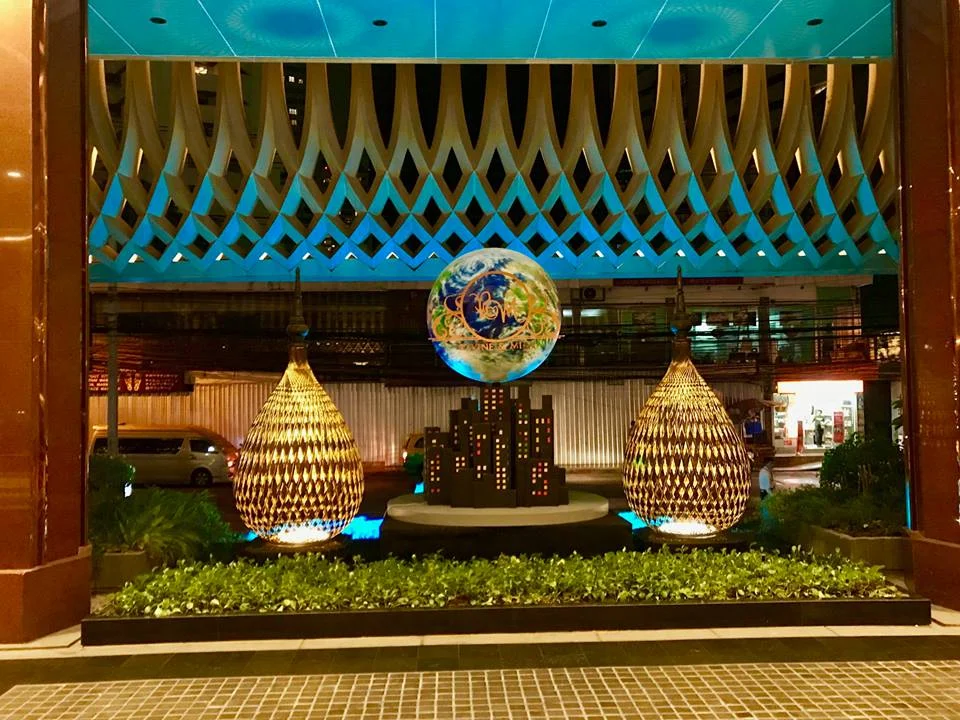
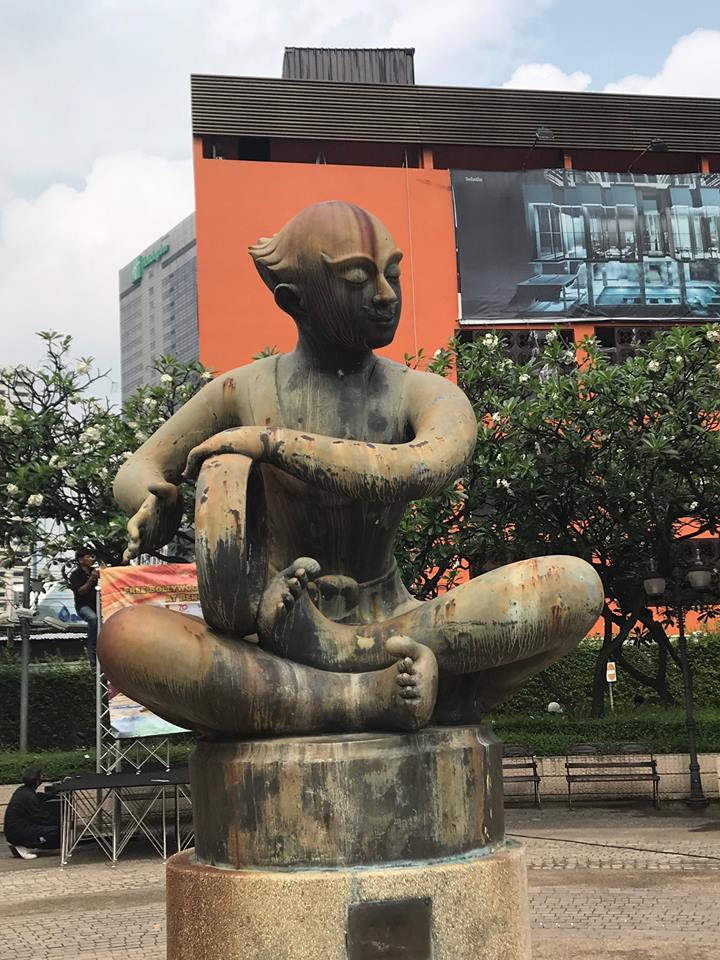
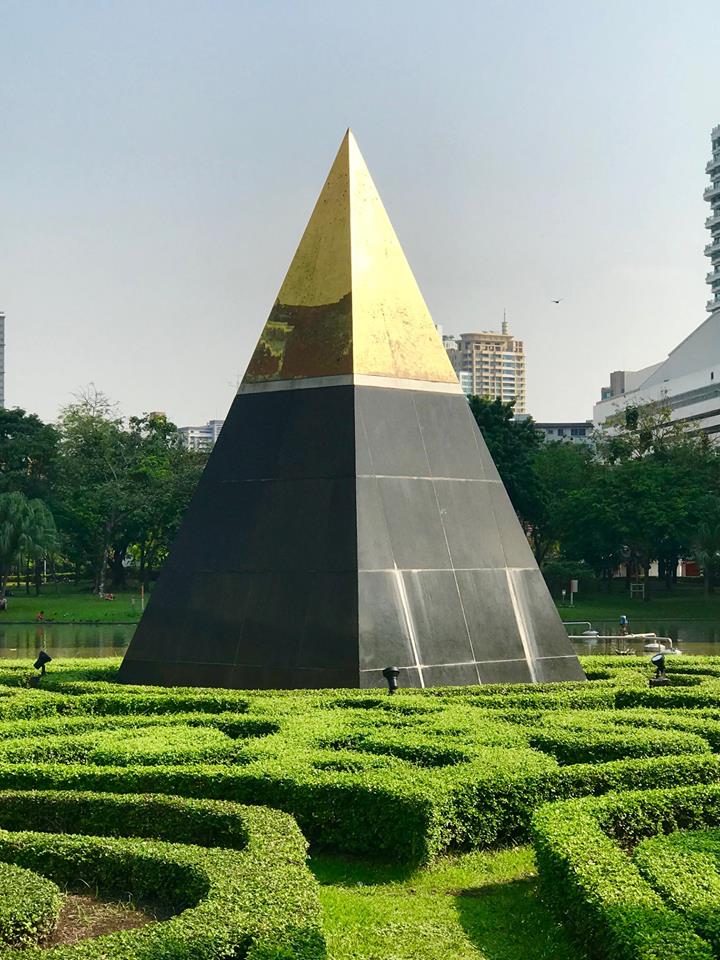
What was supposed to be a 4 day layover before returning home to California became a joyful surprise in and of itself. The five star Marriott Marquis in Queen's Village was truly a delight at a reasonable cost. We had a birds eye view of the cityscape from our 36th floor room. The food was superb, the service was beyond peer and a return to Benchasiri Park 20 feet from the back entrance to the hotel was well worth a return visit. The pyramid and topiary maze and the sculpture of a musician playing his drum was magical. The black 3 faced statue is a Hindu Shrine in front of the Marriott was unexpected. We missed the Kung Fu tea master, but here is a photo image of him performing his art form. Finally, the Swedish massage at the hotel's Quan Spa left me transported to another universe. Just what I needed before our long trip back home. That said, all good things must come to an end and we were excited to return to California. Goodby Southeast Asia, you were a delight! Thank you for the cultural, esthetic and spiritual experience of a lifetime!

Farewell Lunch, Drinks and Dinner with our Tour Group & Cecile and I are Back to Thailand for 4 More Days

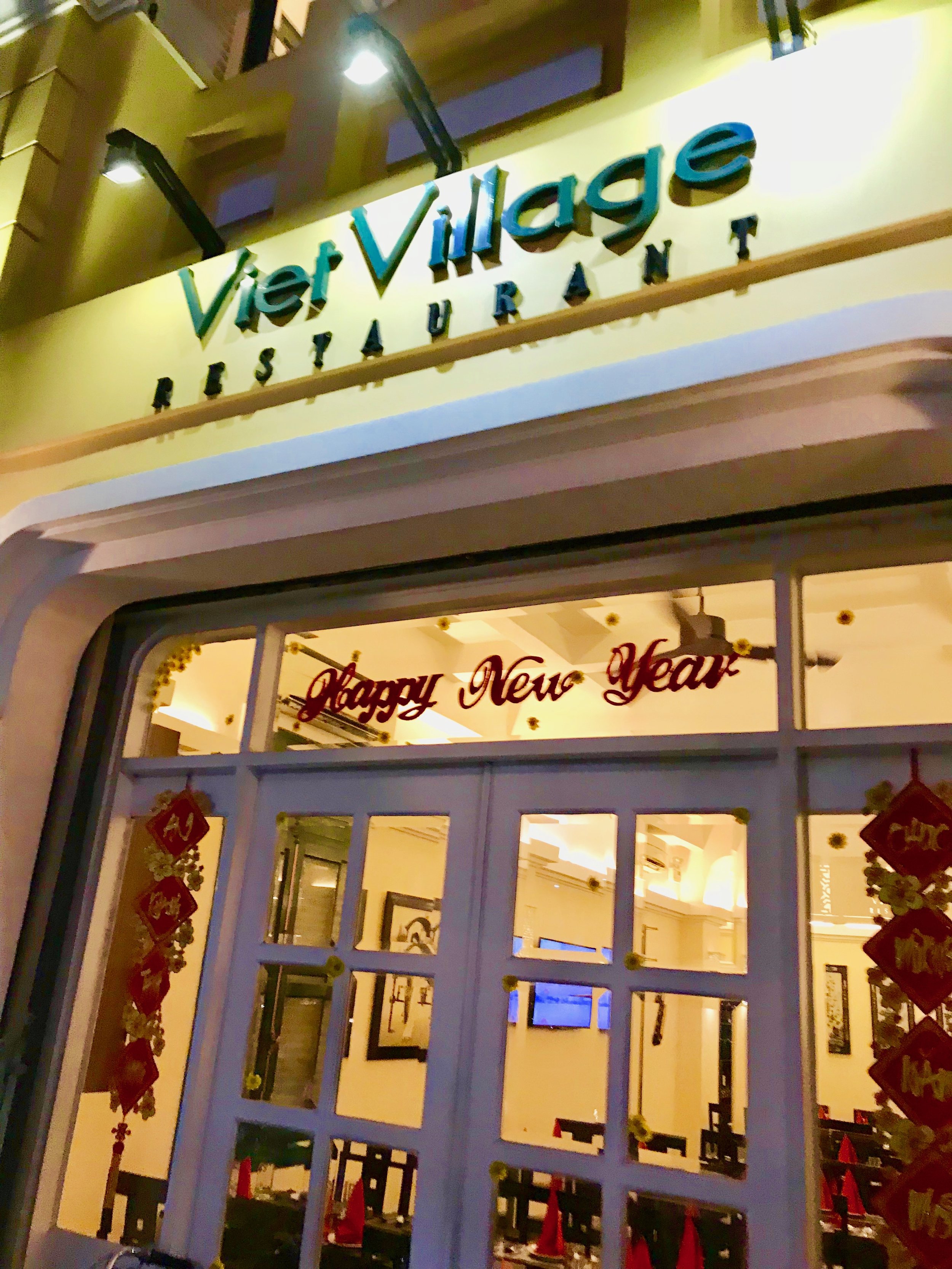
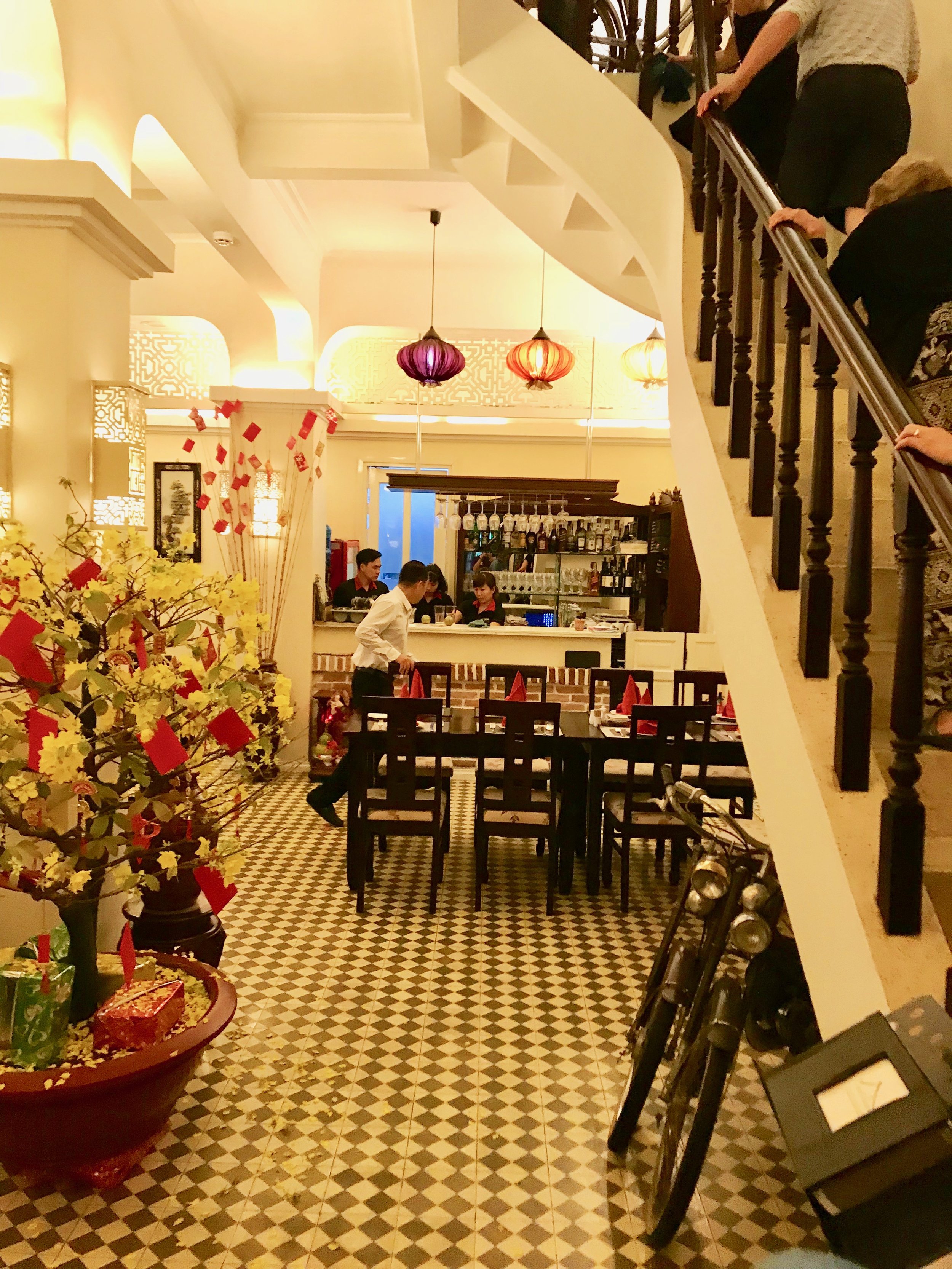
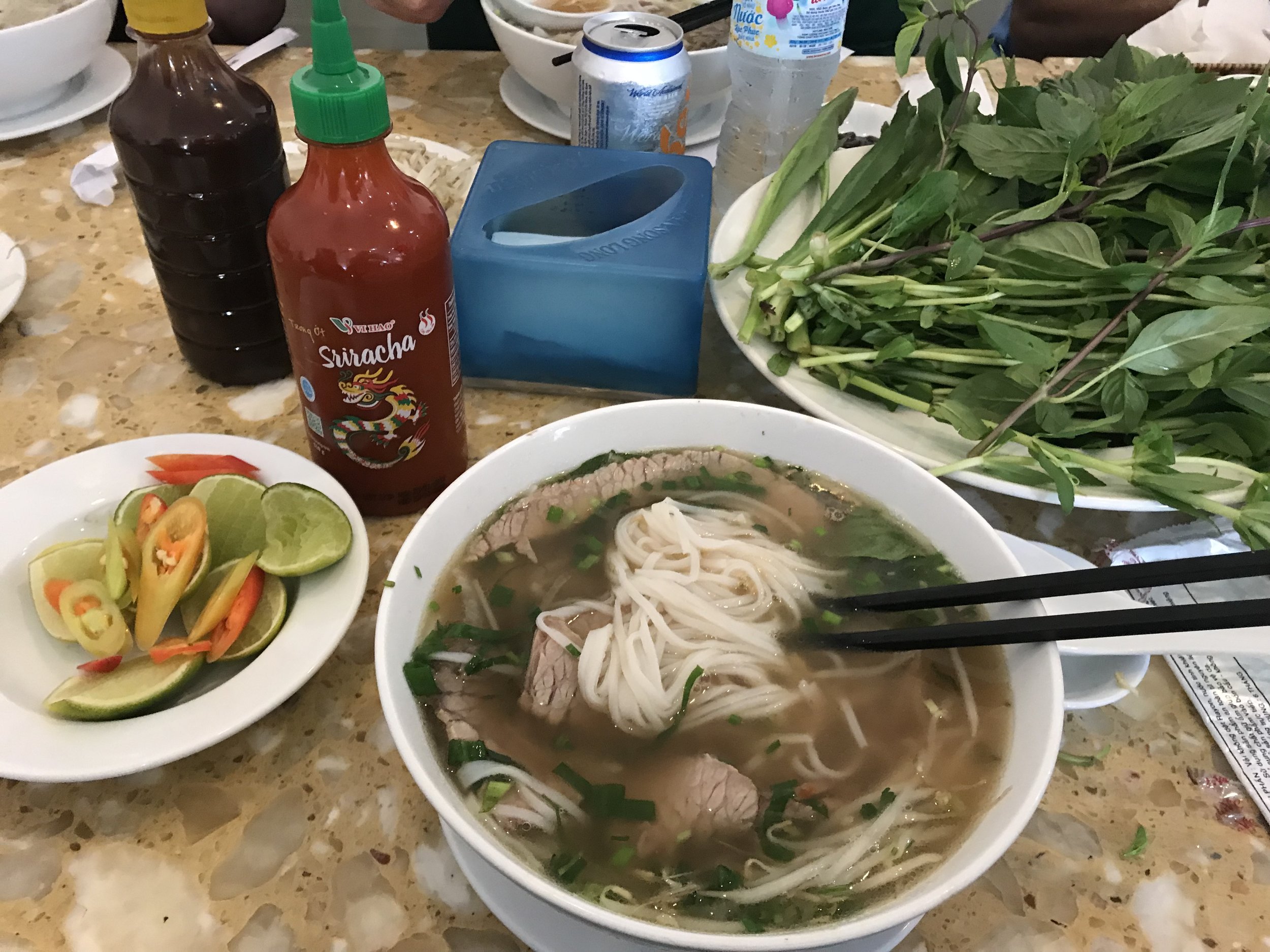
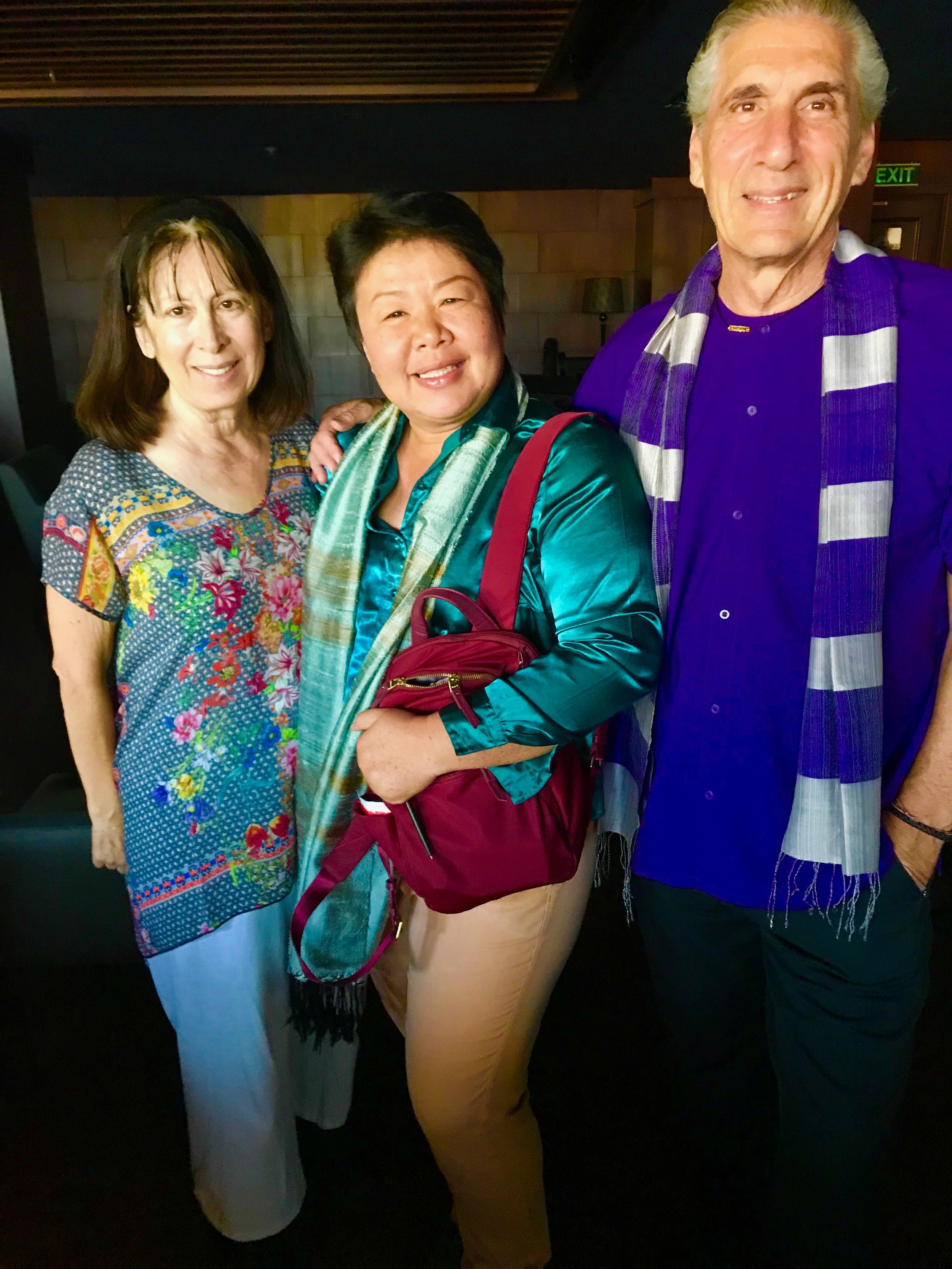
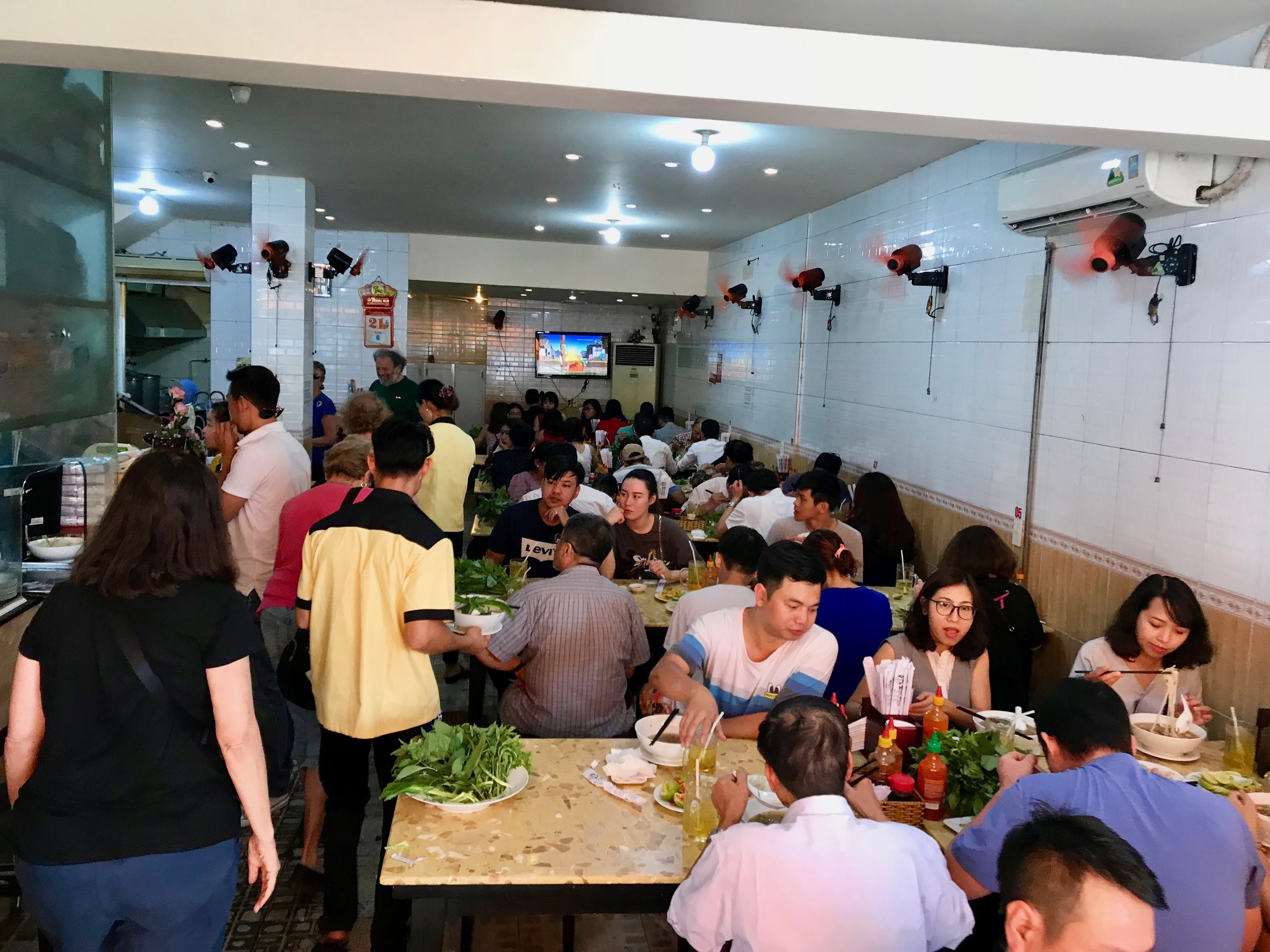
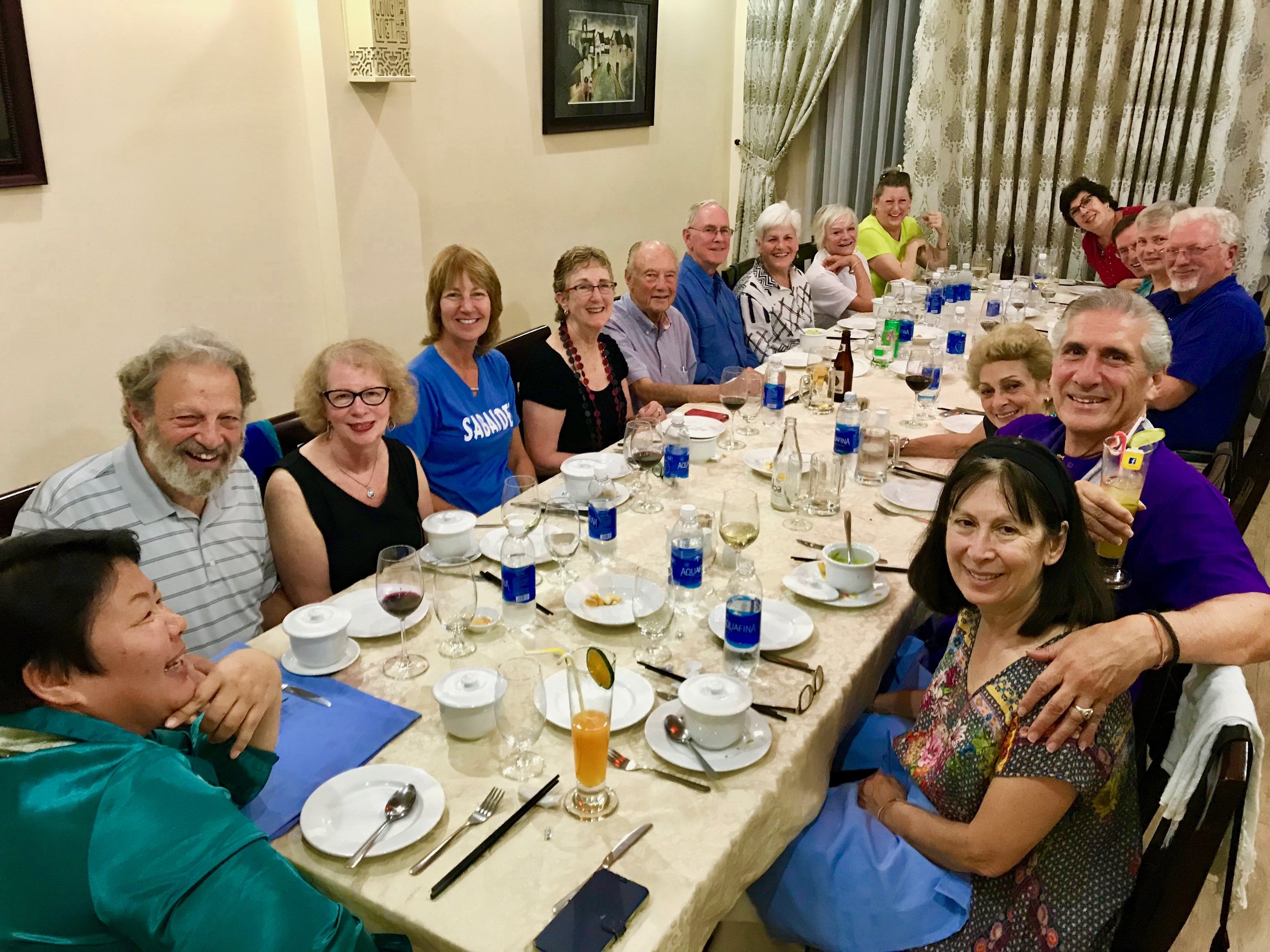
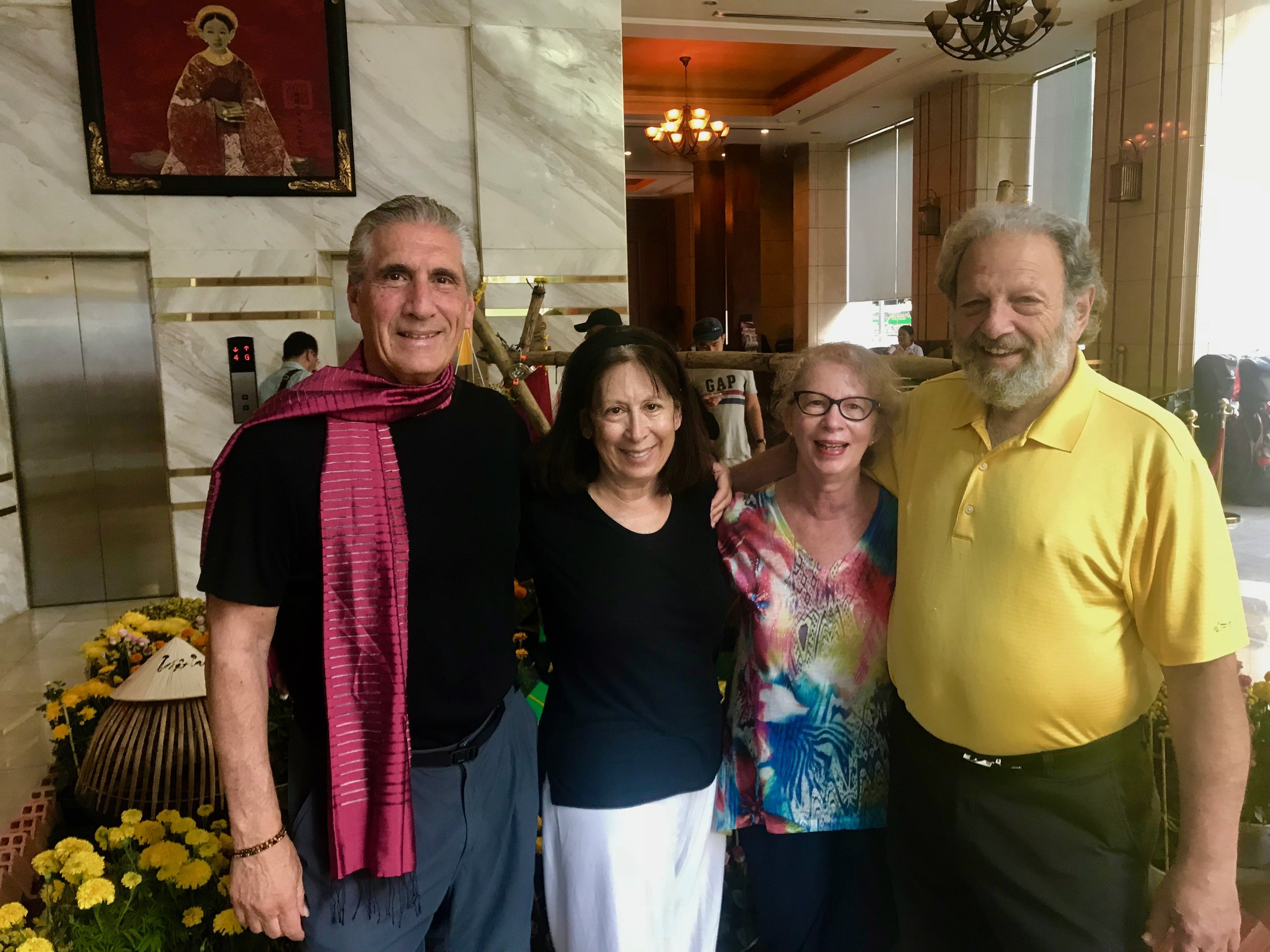
Cecile and I and our small congenial tour group had our final lunch at Pho Hung, cocktails on the top floor of our hotel and a farewell dinner at Viet Village Restaurant in Saigon with Lin, our main guide, from Overseas Adventure Travels OAT). Together we toured and learned about the Ancient Kingdoms of Thailand, Laos, Cambodia and Vietnam. Arthur, our local guide was also present. Together with our pre-Trip to Myanmar (Burma) that Cecile and I did on our own, we have been out of the country for one month and I have to say even though the time passed quickly, the memories will last a lifetime. We are currently back in Bangkok, Thailand for four nights at the Marriott Marquis where we are going to relax by the pool, do some leisurely shopping and hopefully hook up with a friend before heading back home to California.

This was our first trip with OAT and I have to say we have been very impressed with the first hand knowledge and insight of the trip leaders. They made the history and culture come alive. They bent over backwards to anticipate our every need. They displayed unbridled enthusiasm, caring personalities, and with respect to Lin, a wickedly funny sense of humor. They demonstrated an ability to bring a diverse groups of travelers together and provide an atmosphere of shared experiences that made it possible for our group to bond together. Finally, they introduced us to unique culinary experiences we never thought we'd ever be a part of. Southeast Asian countries are known for their gracious hospitality and along the way we were touched by it many times. Throughout our journey, Lin made it clear that we would not only going to witness and experience the beauty and the spirituality of these countries, but we would be exposed to the poverty and the dark side of history as well. Yet, to be fair all countries have a darker side including our own, and life goes on. Our experience in this area made me think about a quote by L.R. Knost who once said: “Do not be dismayed by the brokenness of the world. All things break. And all things can be mended. Not with time, as they say, but with intention. So go. Love intentionally, extravagantly, unconditionally. The broken world waits in the darkness for the light [you bring to it].”


Exploring the Underground Bunkers of the Vietnamese Communist Forces and Shaking Hands with a Viet Cong Veteran who Lost his Arm During Battle

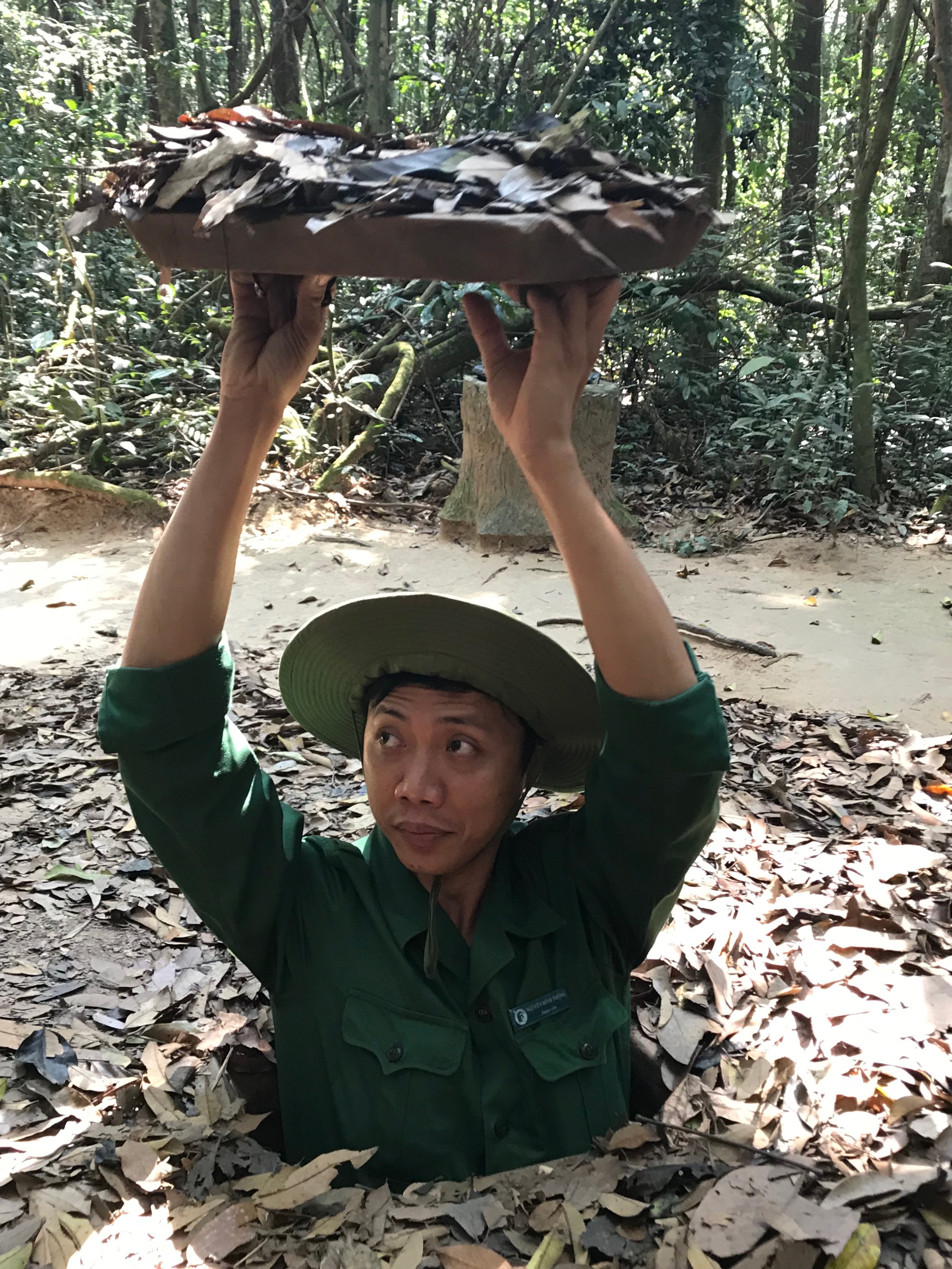
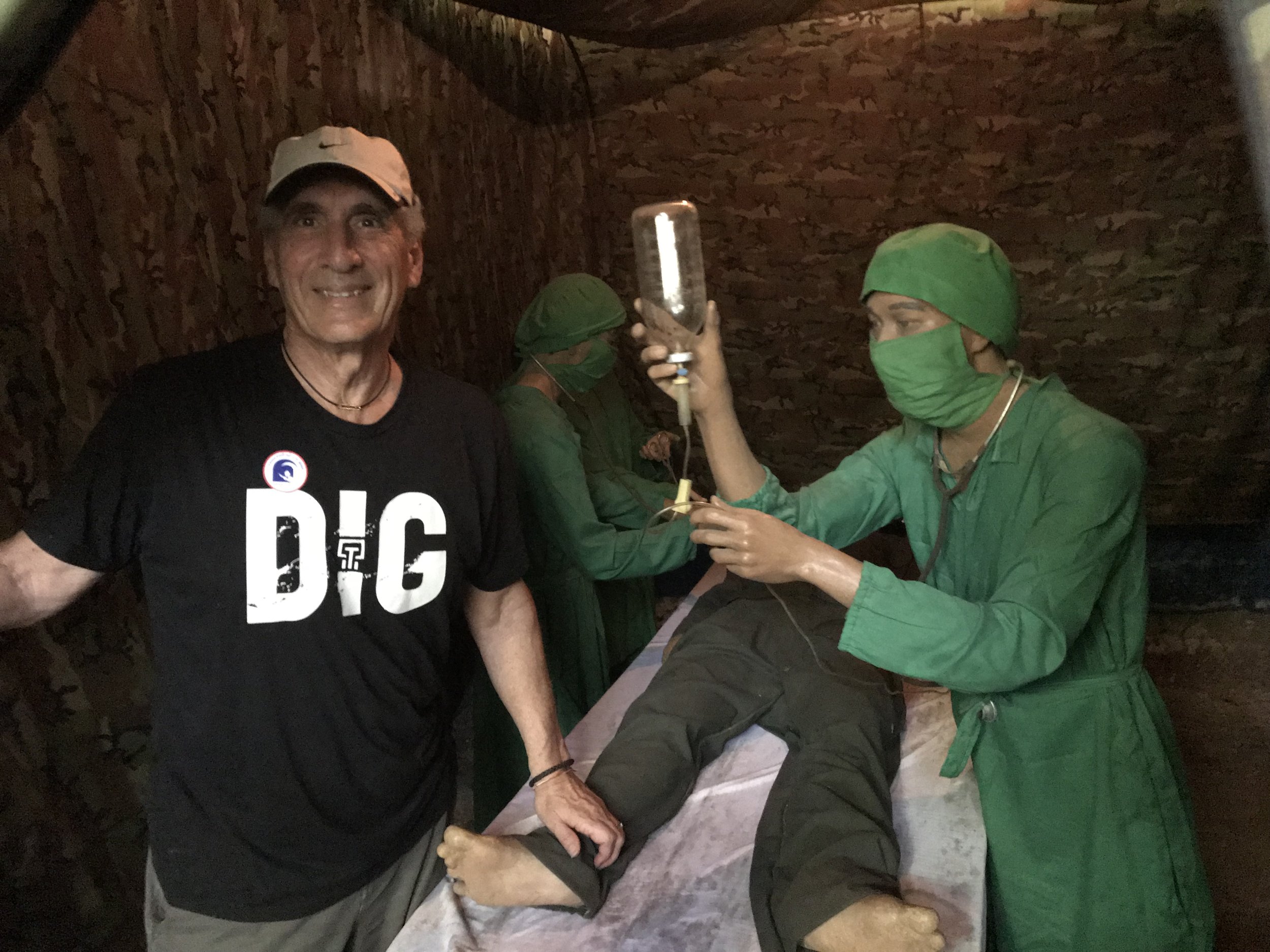
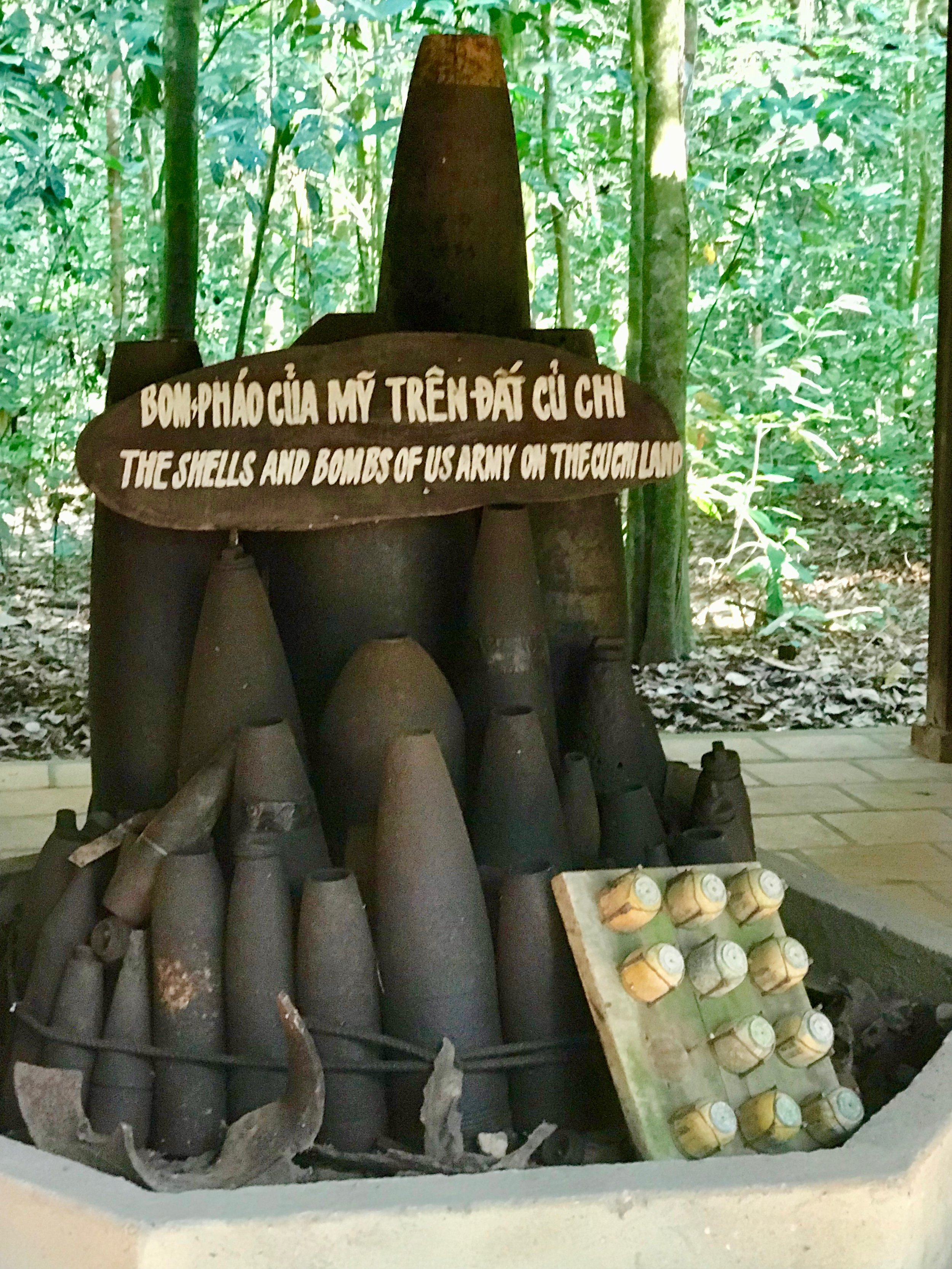
After breakfast today, our tour bus driver drove us to the Cu Chi Tunnels—a mile-long underground maze where thousands of fighters and villagers hid and fought during the Vietnam War, referred to by locals as the “American War.” The conflict began in 1955-1975. The South Vietnamese Communists, or Viet Cong, built an elaborate and vast network of tunnels in and around the district of Cu Chi and worked continually over the years to expand the multi-level network. The tunnels include mess halls, meeting rooms, an operating theater, tiny cinema, small factories, and vast ammunitions stores, allowed the Viet Cong to control large areas of Saigon. Today, Cu Chi Tunnels provide invaluable insight into the war era. 

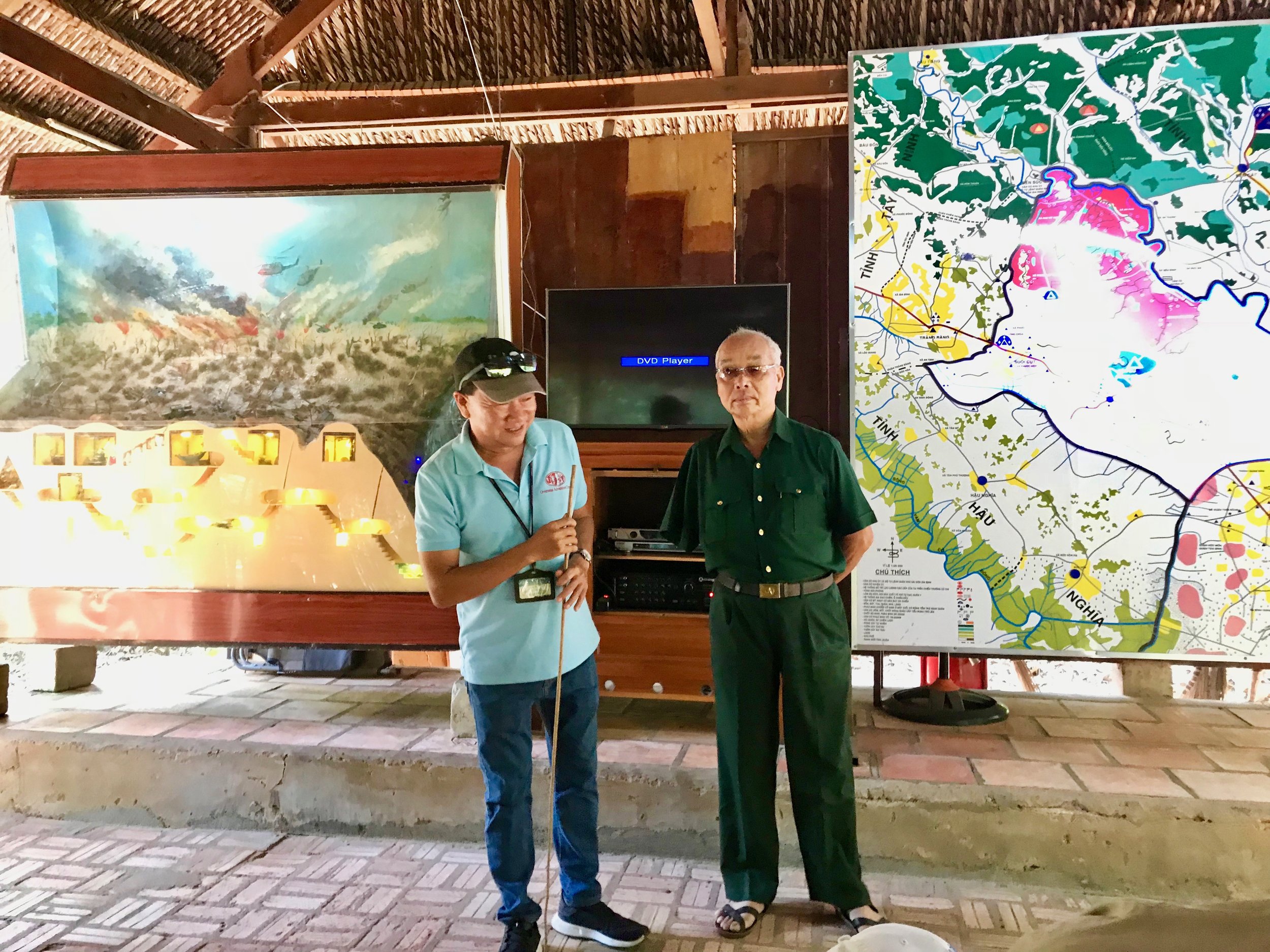
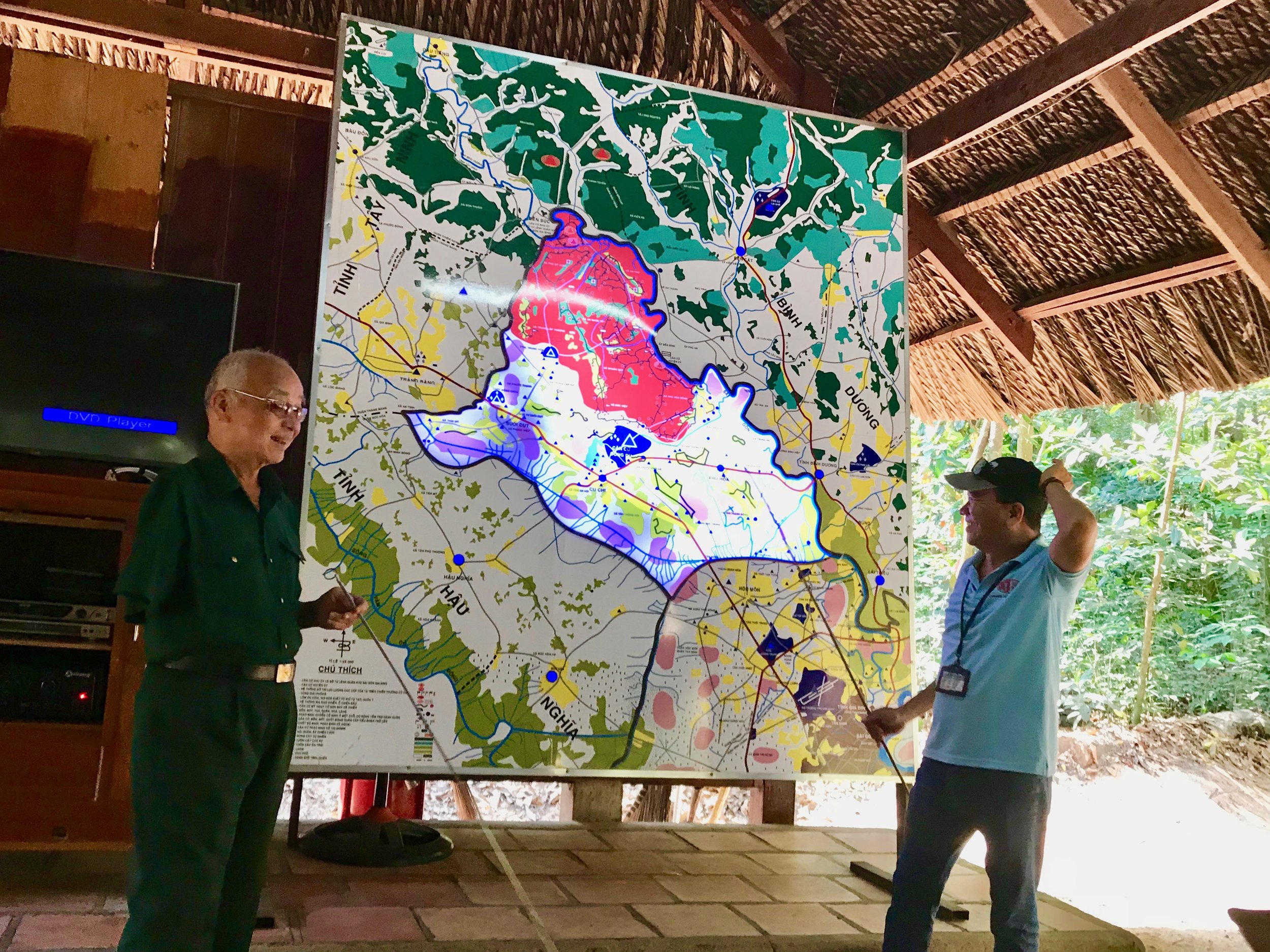
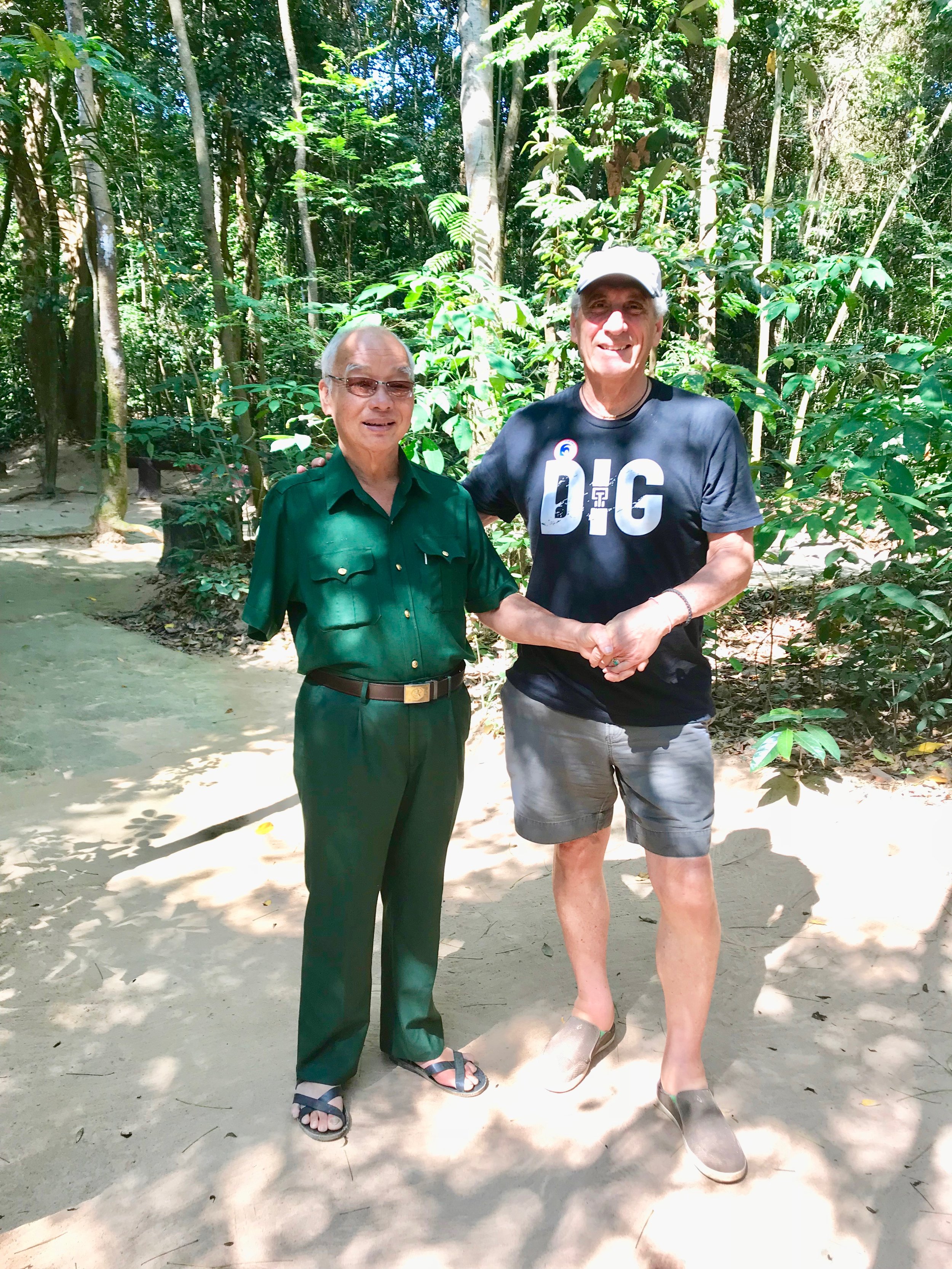
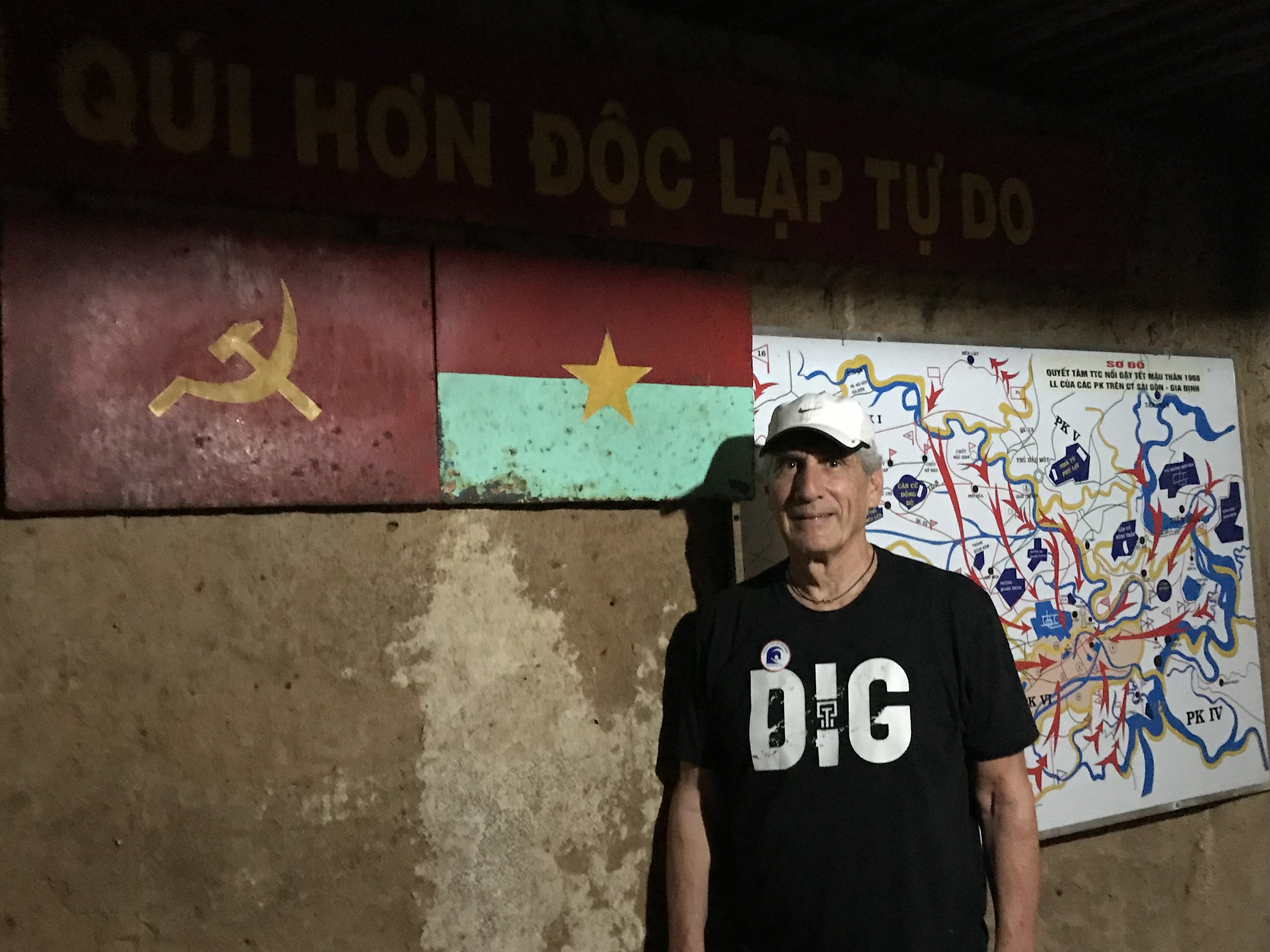
We had the unusual opportunity to meet a retired Viet Cong Veteran named Chia who was invited by Overseas Adventure Travels (OAT) to meet with our group to answer any questions we had about the tunnels. Chia is married, has four kids and seven grandkids. After taking down an enemy tank in November 1, 1967, a second tank fired back and shot his right arm off. He collects about $195 a month which is sufficient for his living standards and he and his family get free education and health care. He told us that the underground bunker was capable of holding twelve thousand soldiers but normally accommodated an average of 2500-3000. The main problem was getting enough oxygen, so they created “air holes,” which made it easier for the soldiers to breathe. When asked how he decided to join the communists he said he was merely following family tradition. They began building the tunnels in 1954 which allowed Ho Chi Minh to defeat the French. He said no one wins in war and seemed to harbor no bitterness towards the American people. He said it was very apparent that most US citizens were against the war. Afterwards, a few of us took photos with him. While standing by his side I placed my arm around his back and I was moved when he took his "only" hand and gently placed it in mine.

Chia thanked us for coming to Vietnam and invited us to tell our friends to come visit his country.
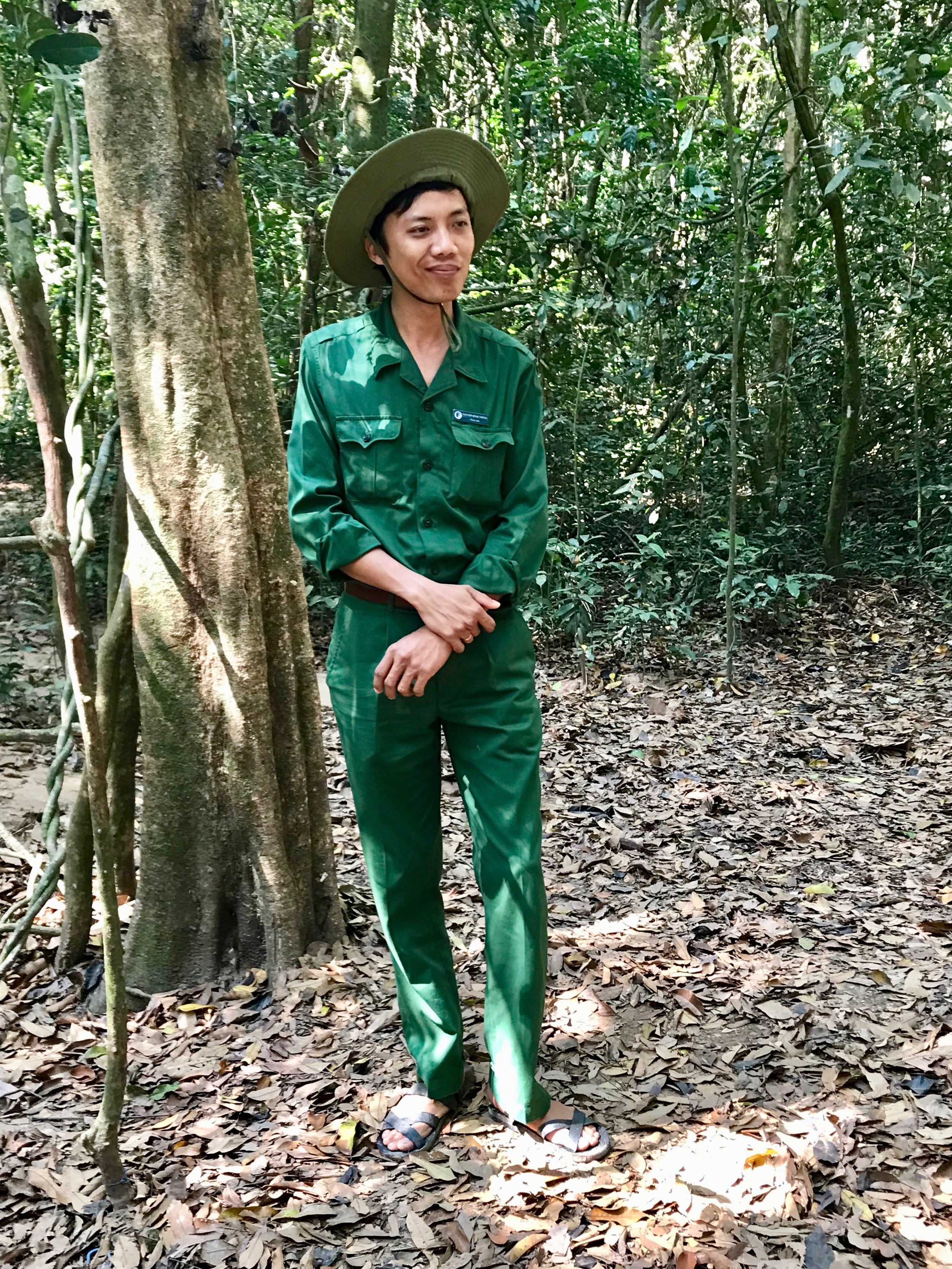
We were then assigned a young soldier to show us the underground bunkers and how to enter into them for those who were willing. It was an amazing experience moving from descending into one tunnel and getting out through another. Our Vietnamese guide, Arthur demonstrates the tool soldiers used to dig out the tunnels.

On the bus ride home, our Thai tour guide Lin led us in singing the iconic 60s lyrics to the anti-war protest song: “Where Have All The Flowers Gone,” by Peter, Paul and Mary which essentially is a meditation on the horrors and losses of the Vietnam war which begged the answer to the question from our government, “When Will They Ever Learn?”

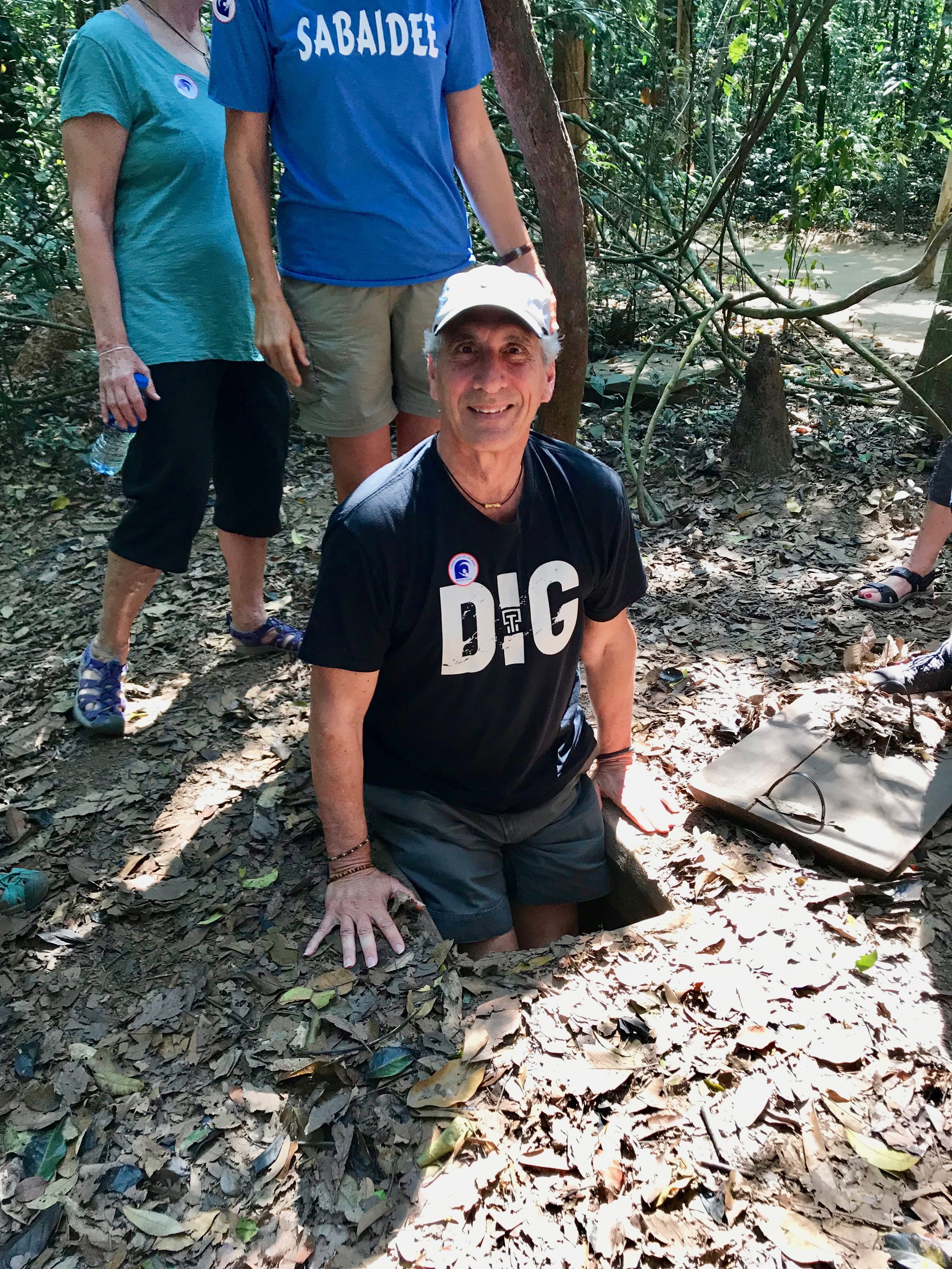
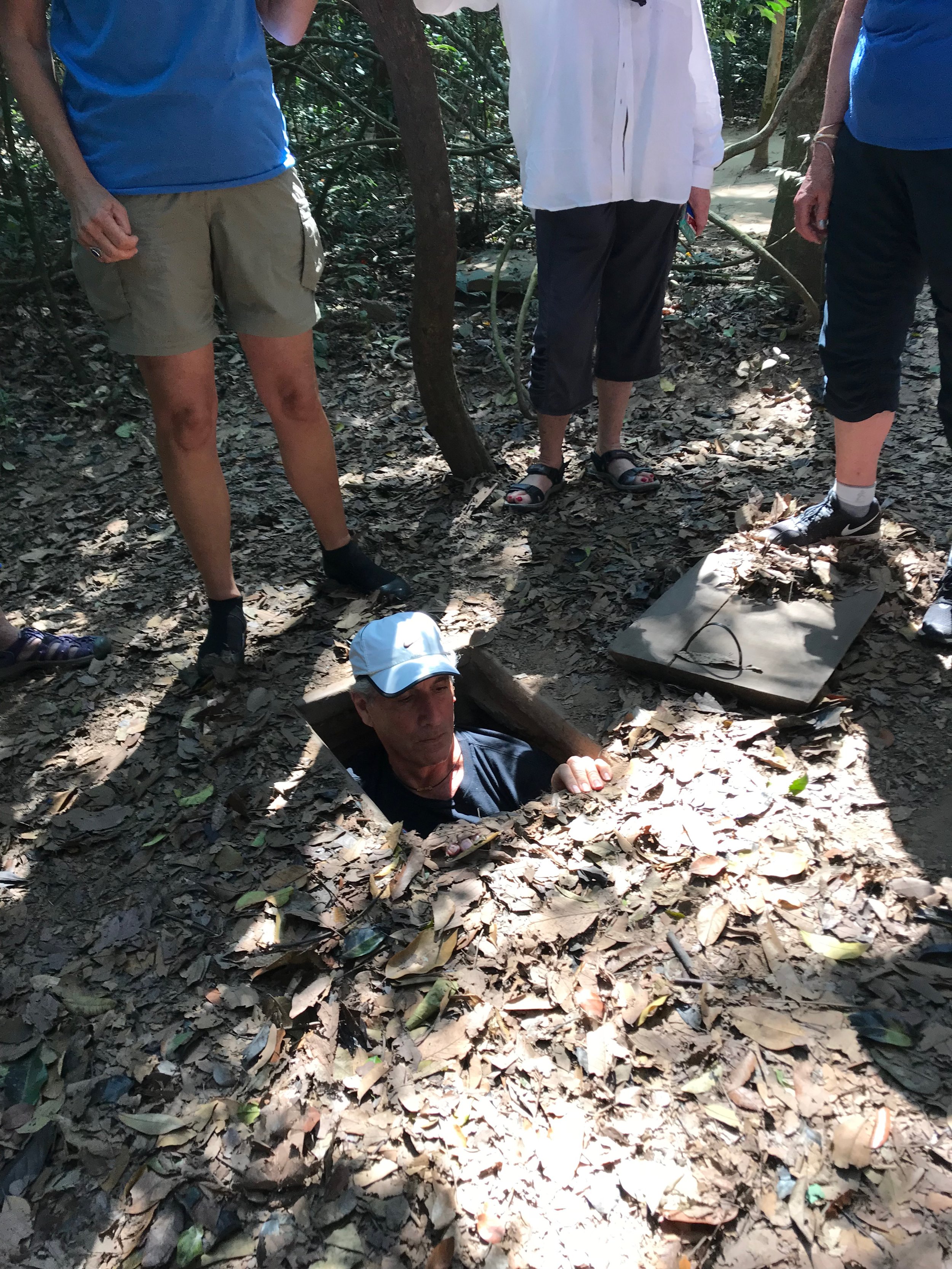
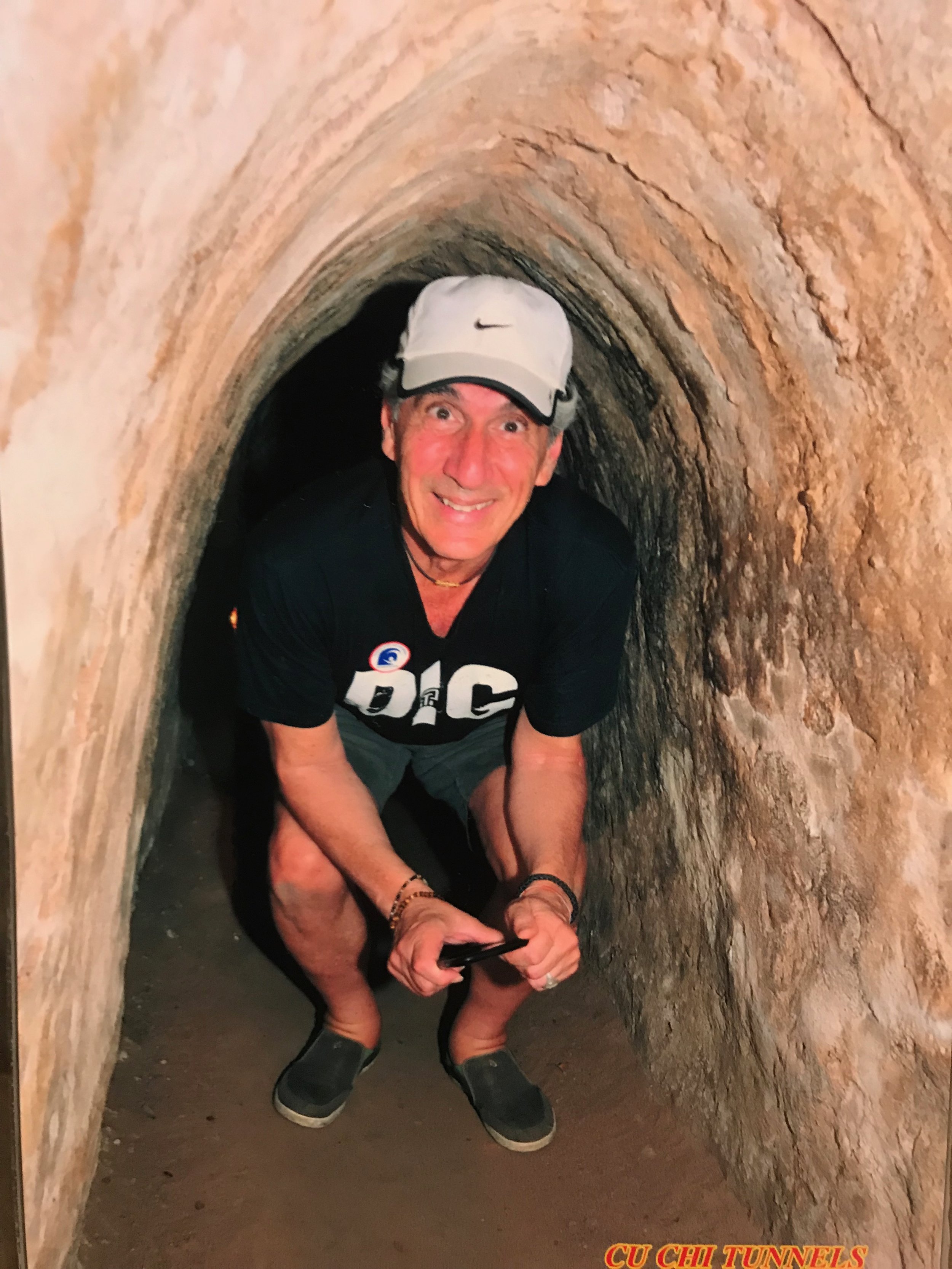
After the tour of the tunnels it was so nice to come out to the other side and be greeted by the parents of three beautiful young children who were only too eager to take a photo with us (see photo). The last photo of me duck walking out of the tunnel was unexpectantly taken by an enterprising photographer.

Exploring the Famous & Scenic Mekong Delta on Sampans & Paddle Boats, A lunchtime Feast & Dancing the Night Away

"Southeast Asia has a real grip on me. From the very first time I went there, its was a fulfillment of my childhood fantasies of the way travel should be."
—Anthony Bourdain

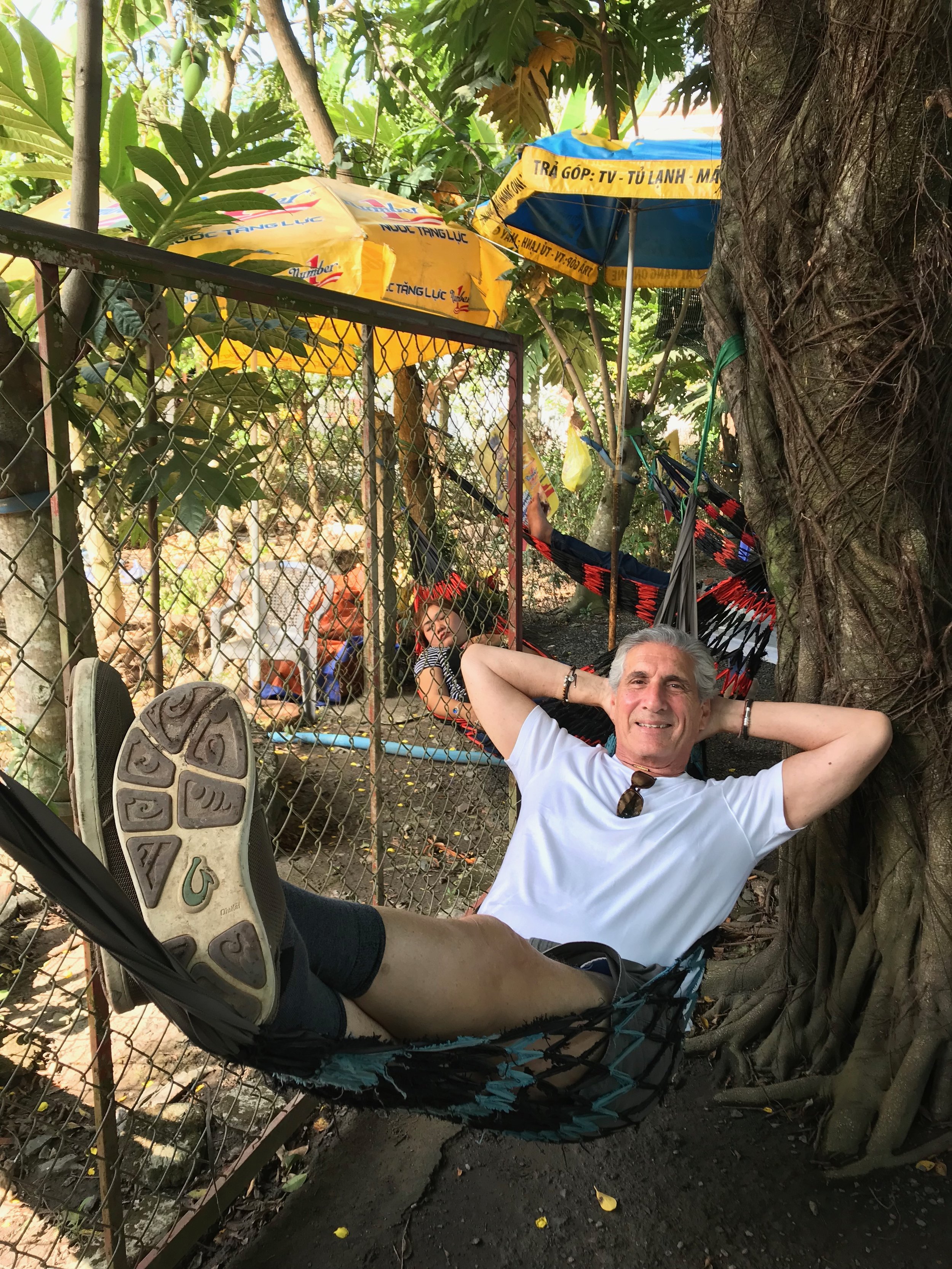
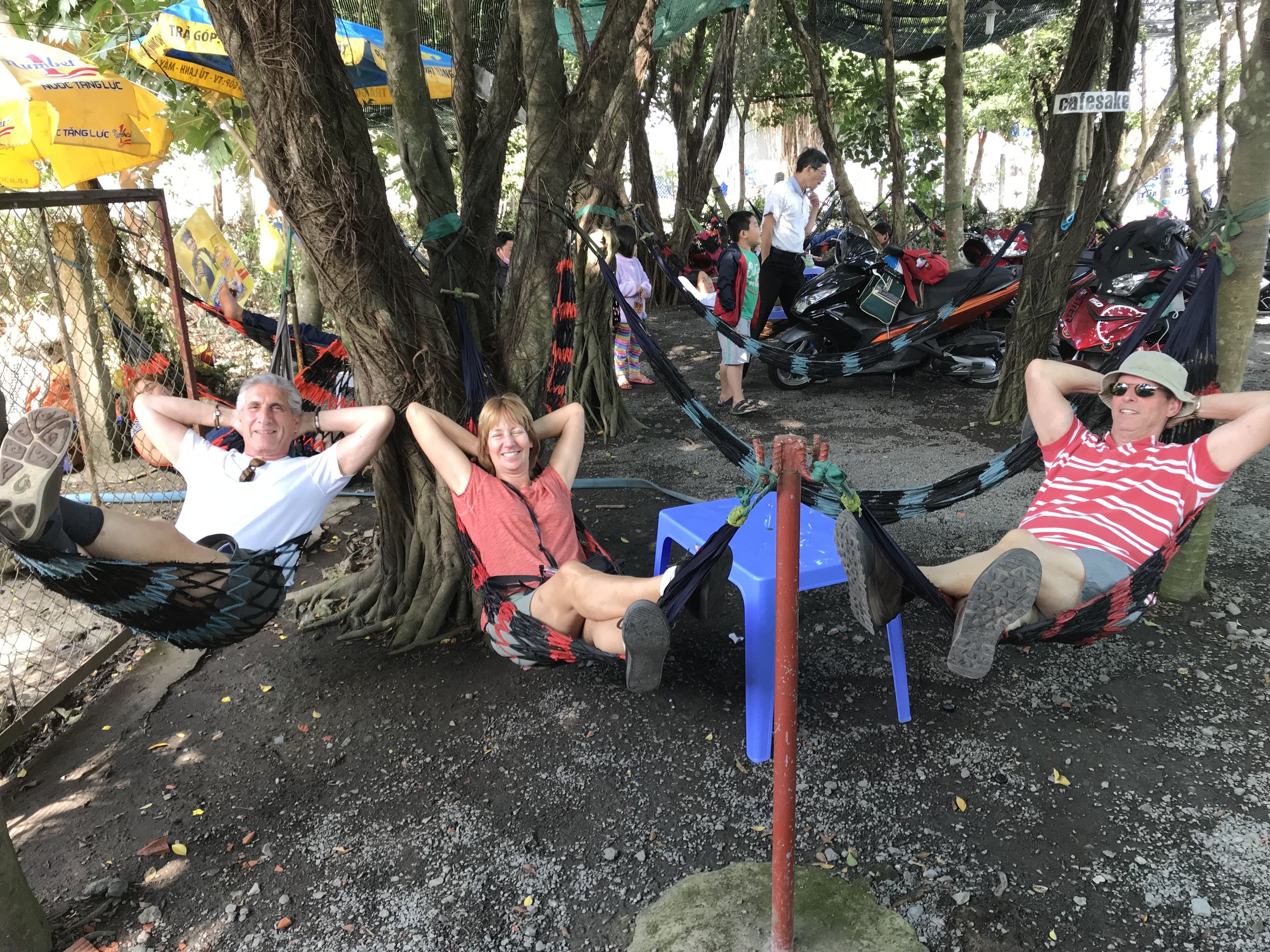
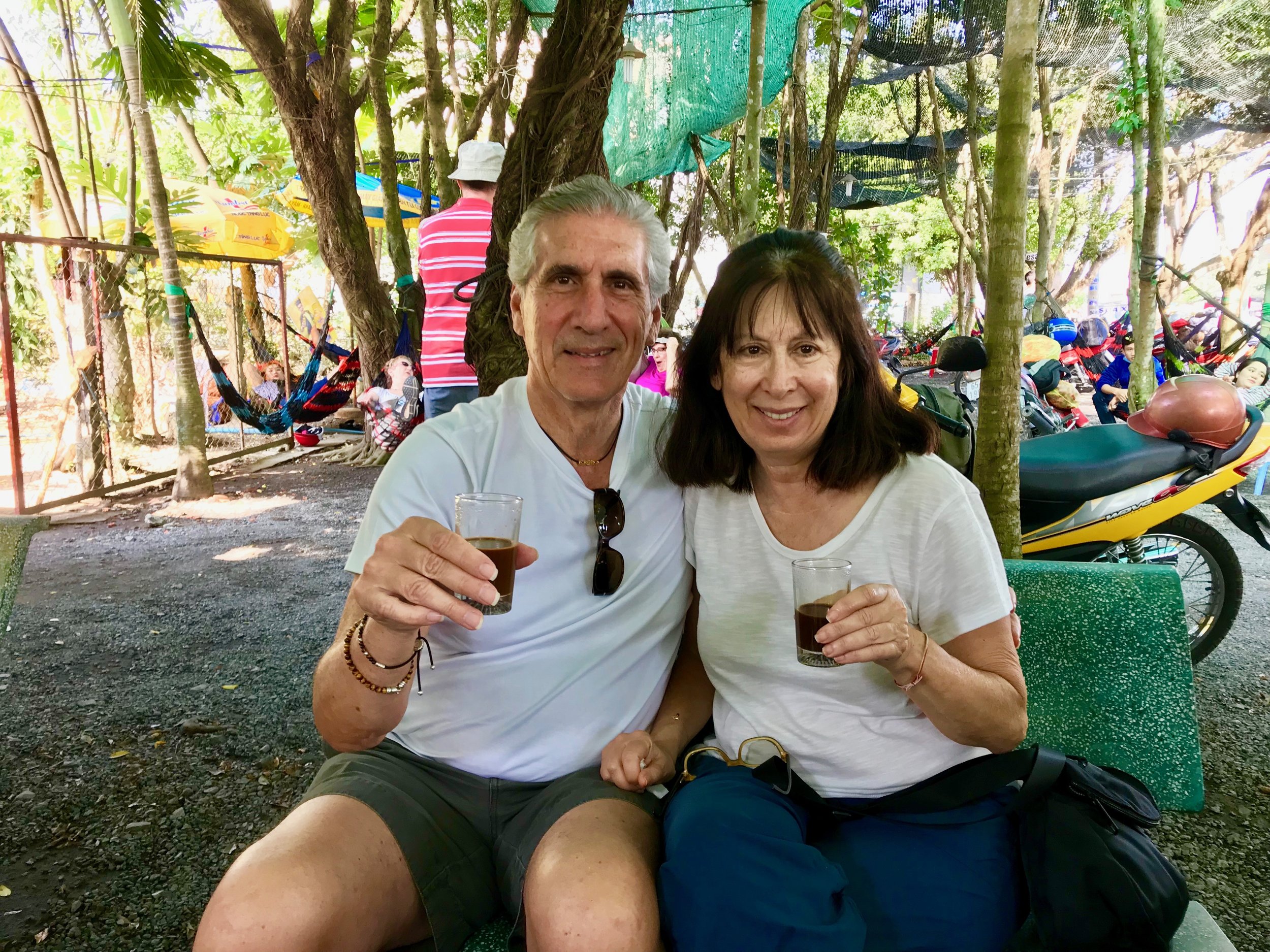
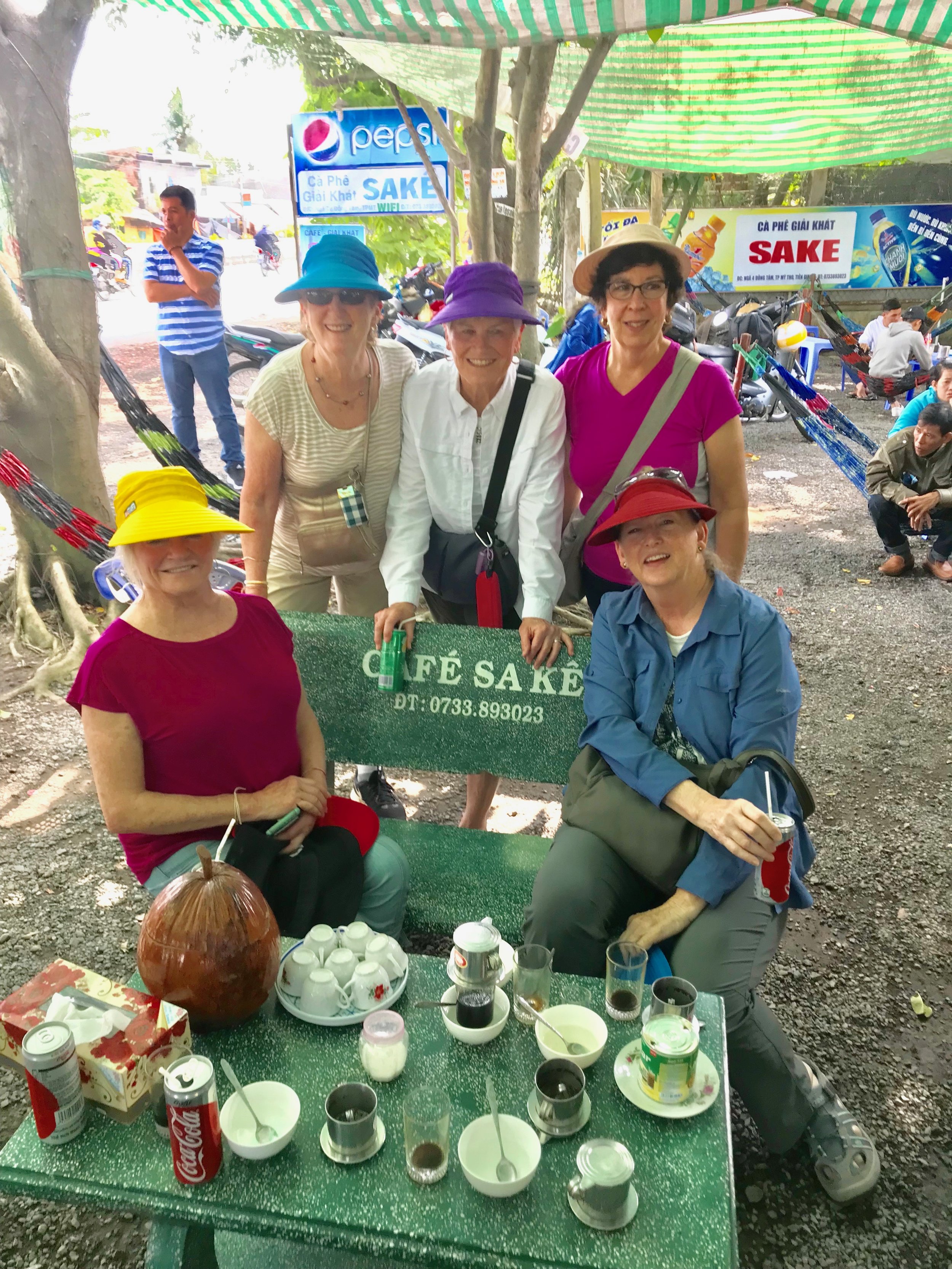
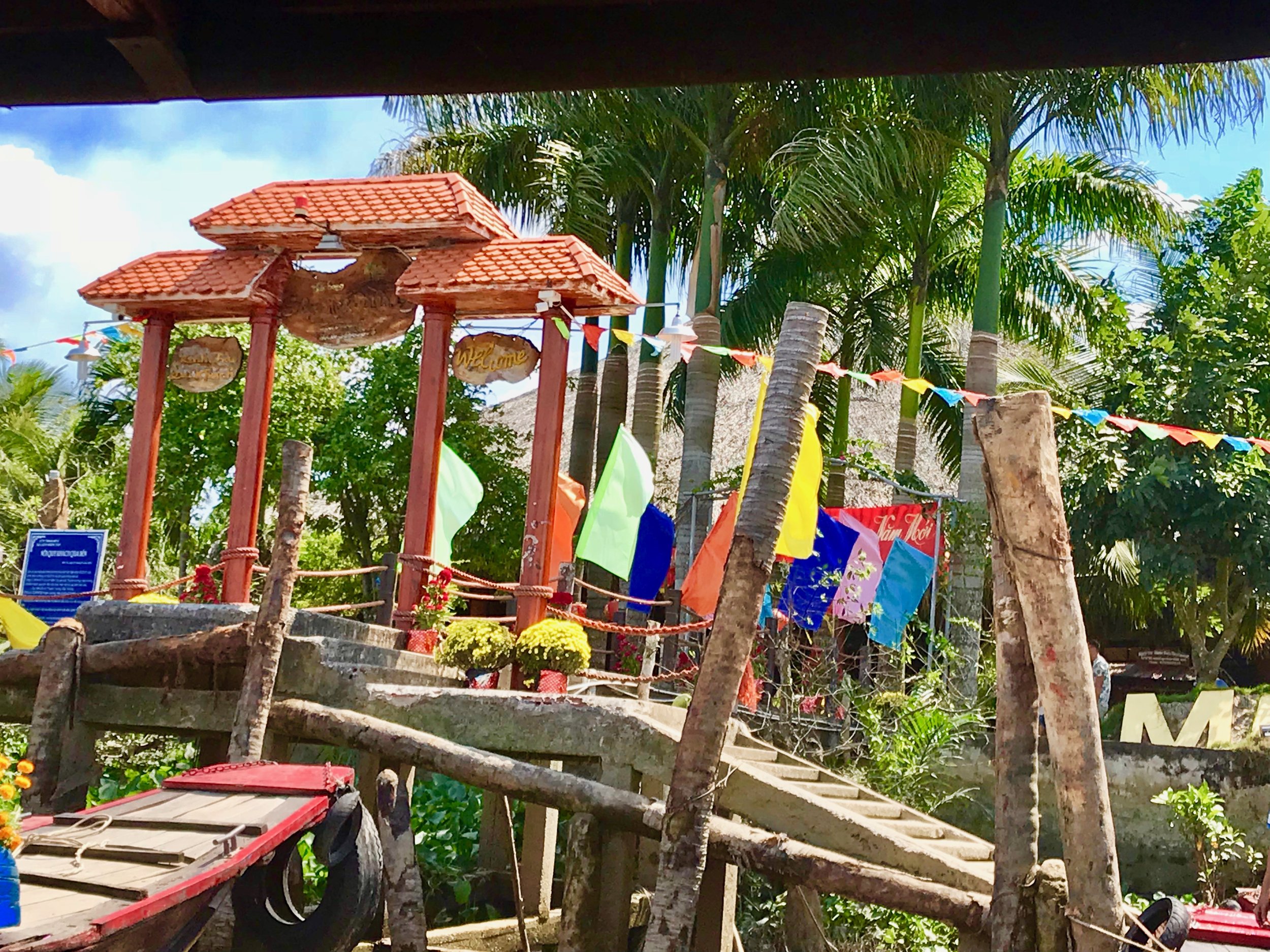
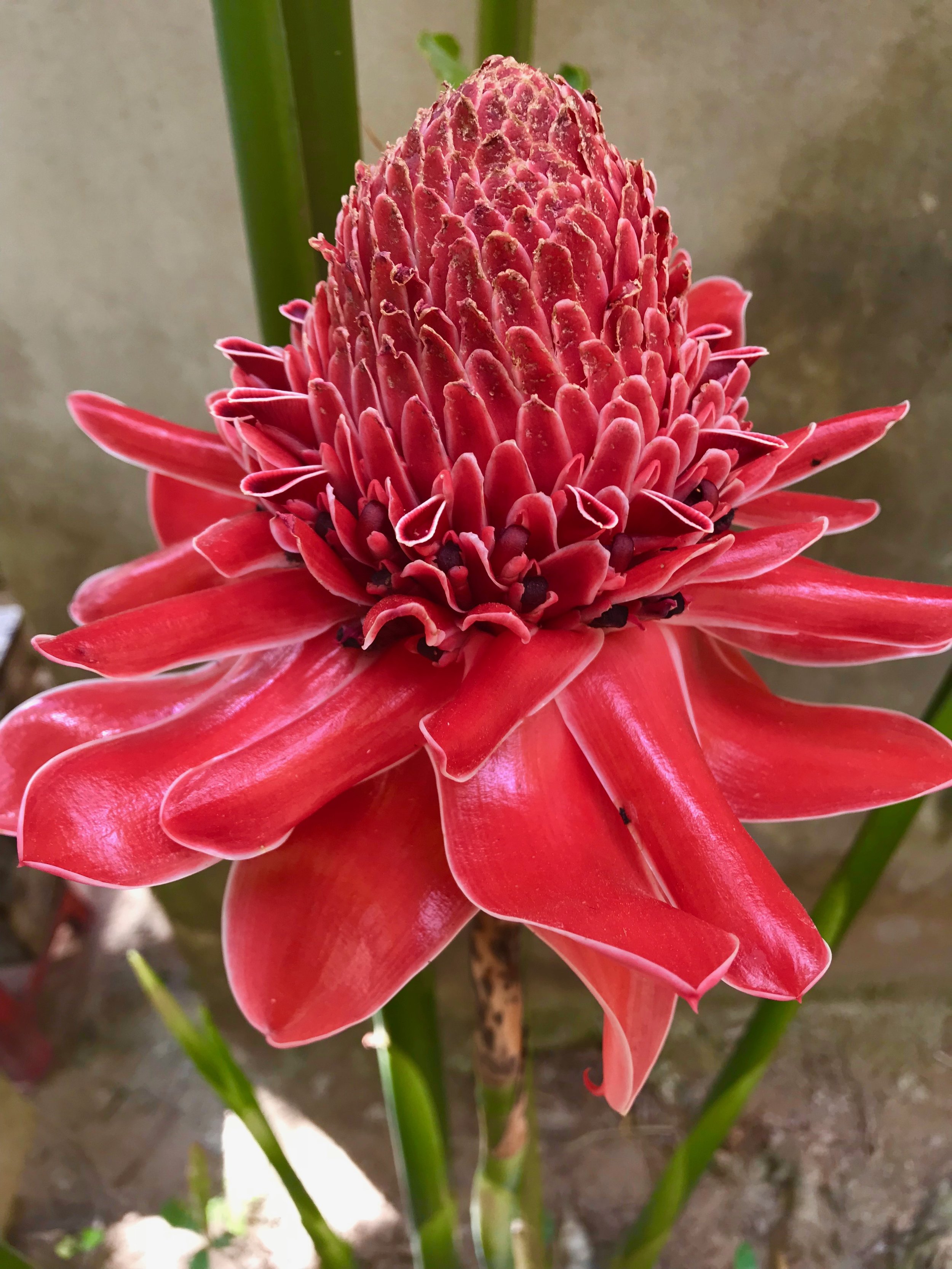
We journeyed outside of Ho-Chi-Minh City to Vietnam’s famous Mekong Delta. We stopped at Cafe Sake for a bathroom break and coffee and relaxed on some hammocks, before continuing on to the picturesque province of Ben Tre near where our local guide Arthur’s family is from. Our group walked through the village along the canal which also serves as the areas irrigation system. People move to this area to escape the fast pace and noise of Ho-Chi-Min City. I can see why. We hardly saw a soul and it was so serene walking through the coconut plantations and passed quiet homes this area is known for. We saw a beautiful Torch Ginger Flower seen in one of my photos, Pomelo fruit, and Longan (Lychee type fruit).

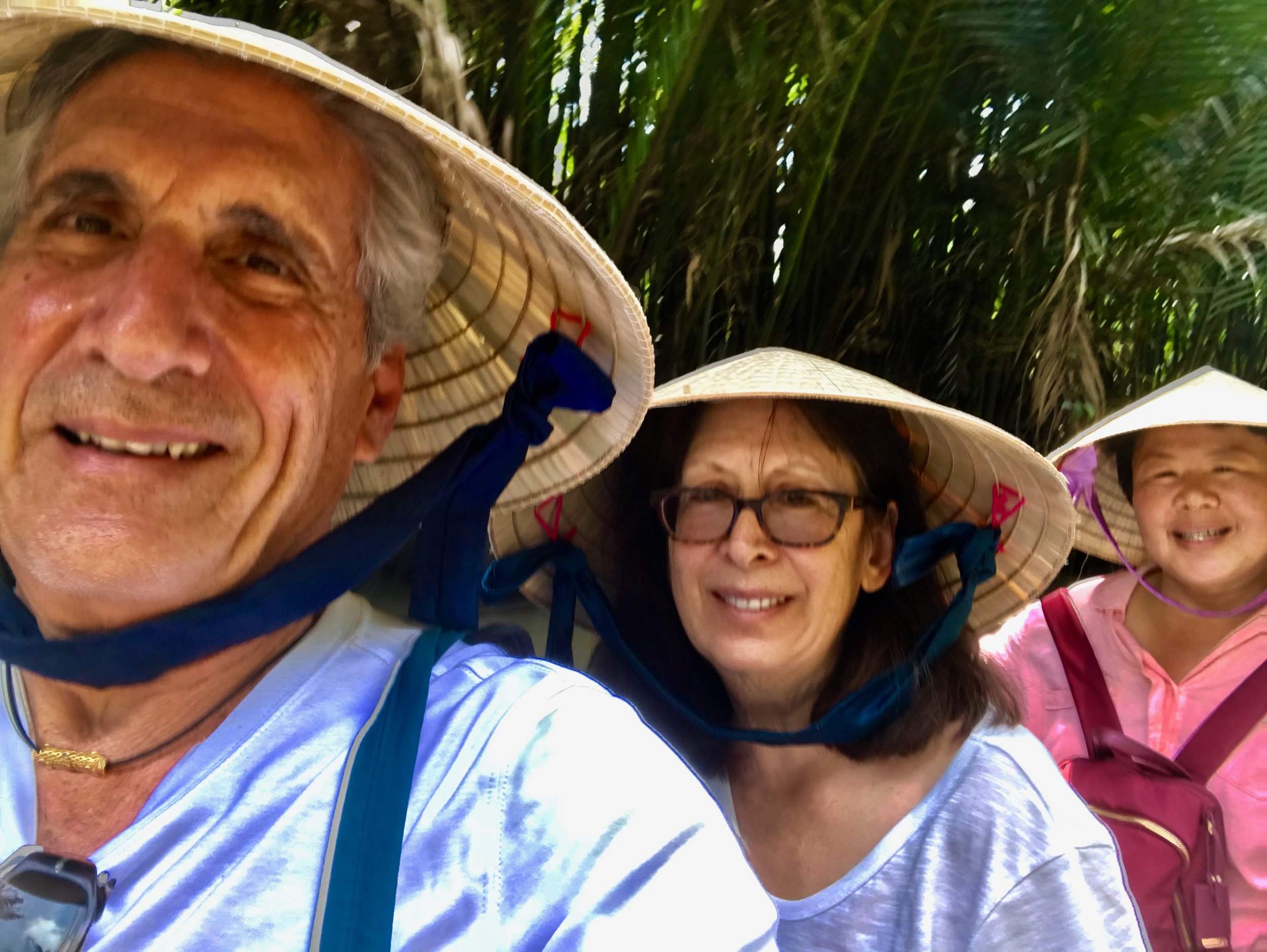
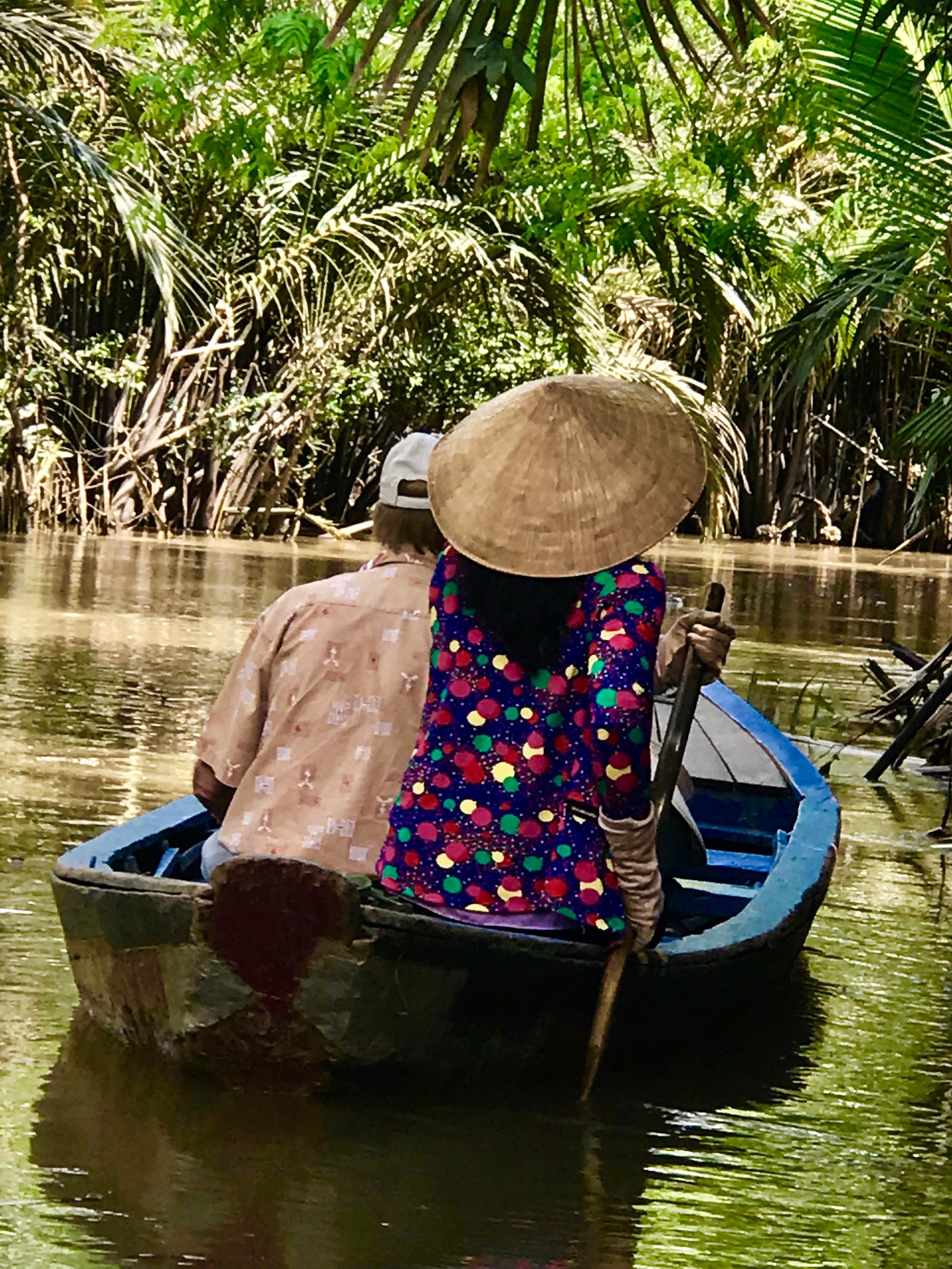
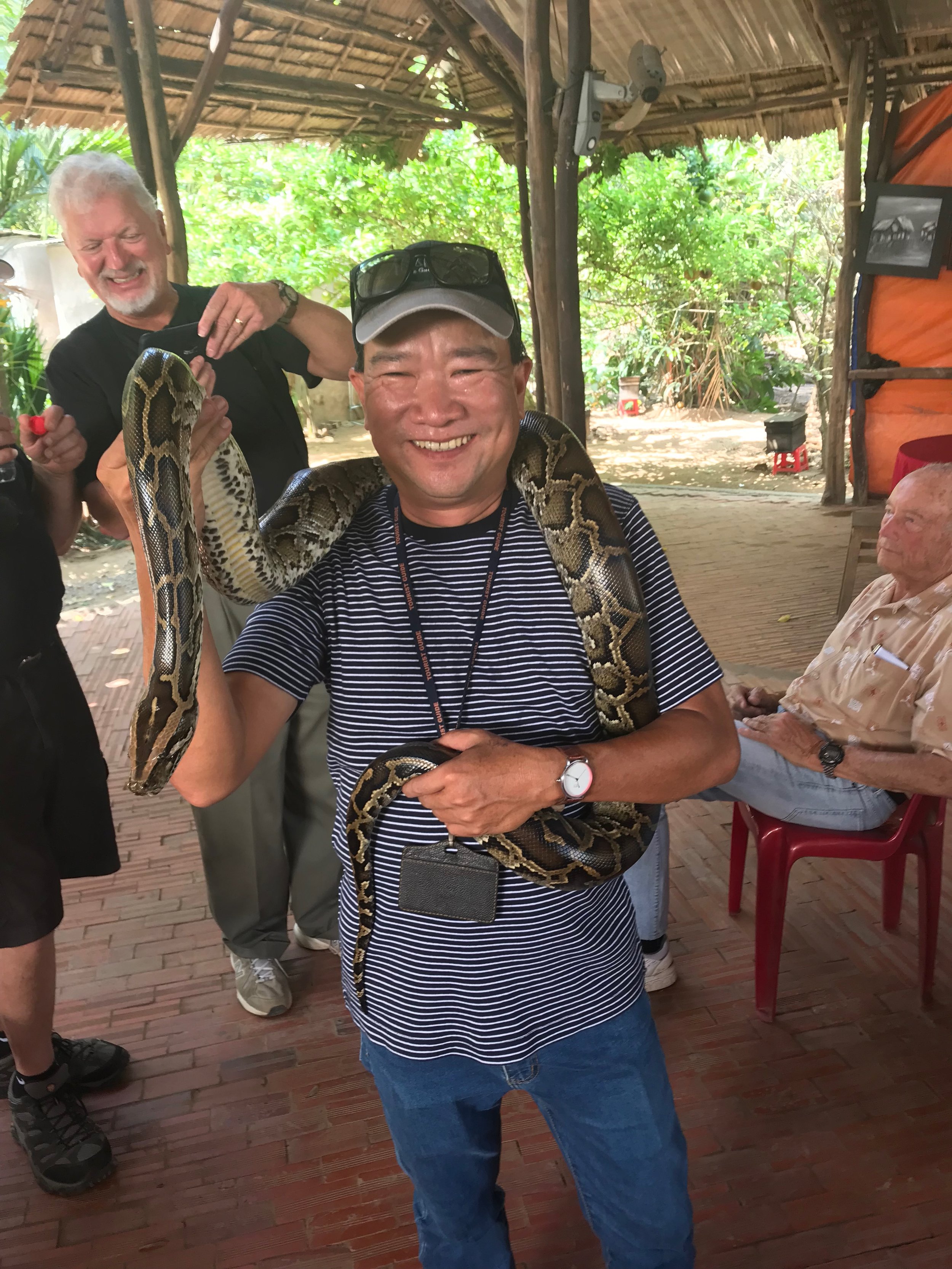
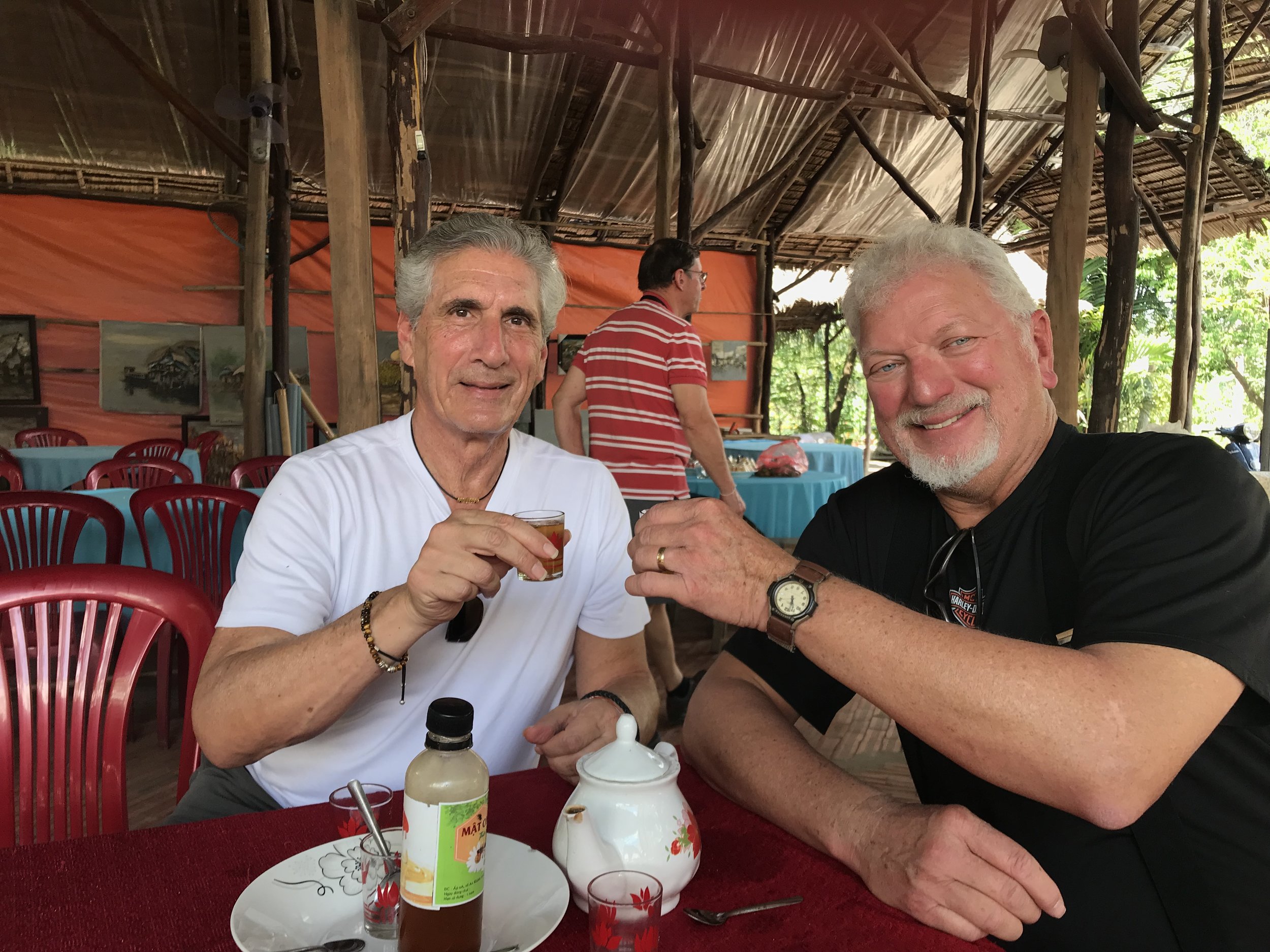
At the end of our walk we climbed into a skinny sampan boat and was handed a conical hat to put on our heads. We cruised the canals and quiet waterways of the Delta. Cecile and I were accompanied by Lin, our intrepid, guide from Overseas Adventures Travels (OAT) who has been with us from the beginning of our tour and of course the oarsman who propelled us through the groves of water based coconut trees. We were taken by the simple living and the quiet scenic beauty of this part of Vietnam. We stopped at a village factory to learn how they make the sticky, toffee-like coconut candy. We were offered shot glasses of tea with honey and cumquat as seen by the photo of me and fellow traveler, Charlie from Florida. We were also shown how they break a coconut to get the juice out and tasted the coconut fruit. We cruised to nearby Phoenix Island where Arthur told us about a religion started by Ong Dao Dua, known as the Coconut Monk, after engaging in meditation at Chau Doc’s Sam Mountain. It was a fusion of Buddhism and Christianity. Toward the end of our visit we tried on a live Python on our shoulders as demonstrated by Arthur, and I was invited to have a beer and fresh fruit with a group of local guys from the village.

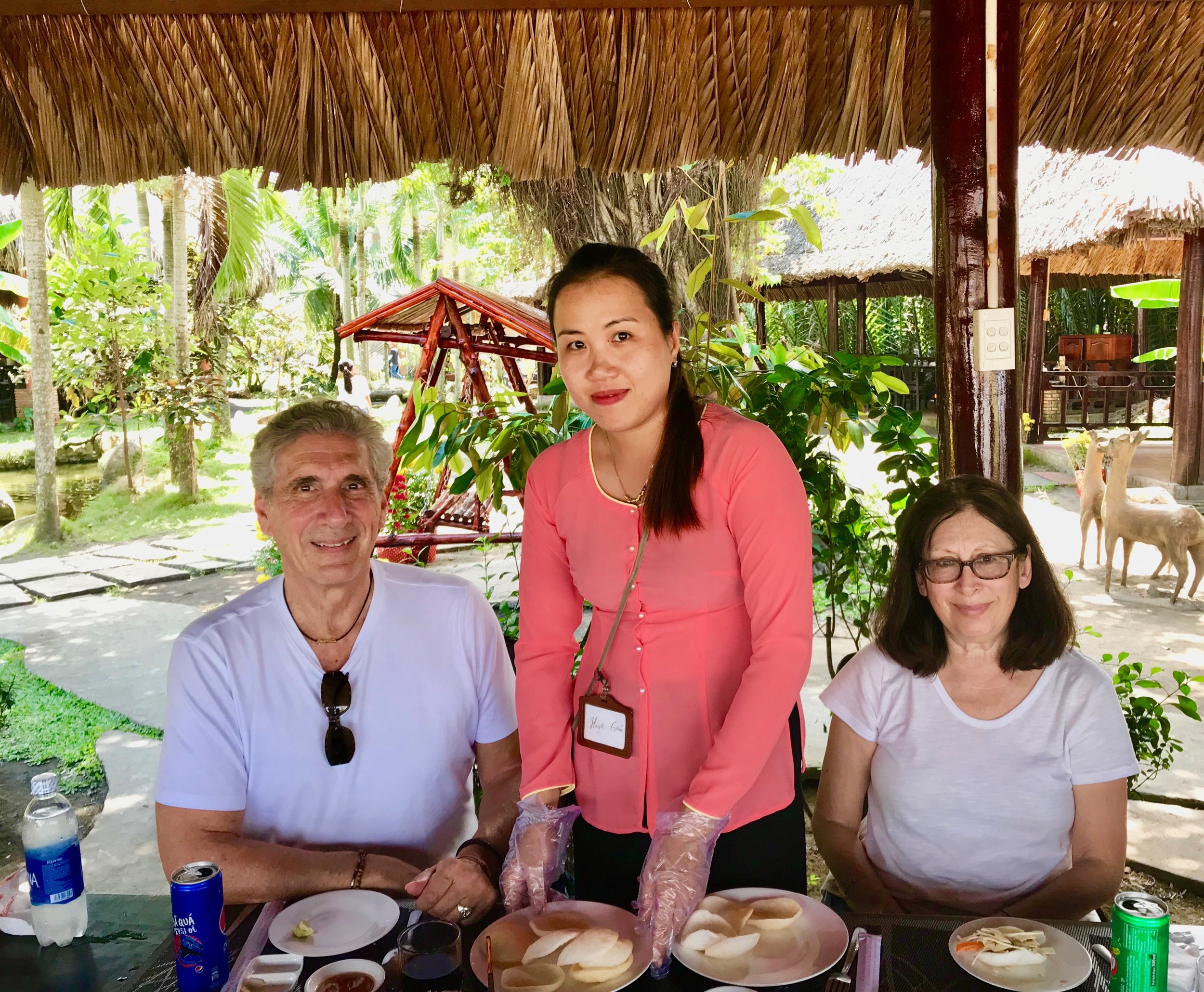
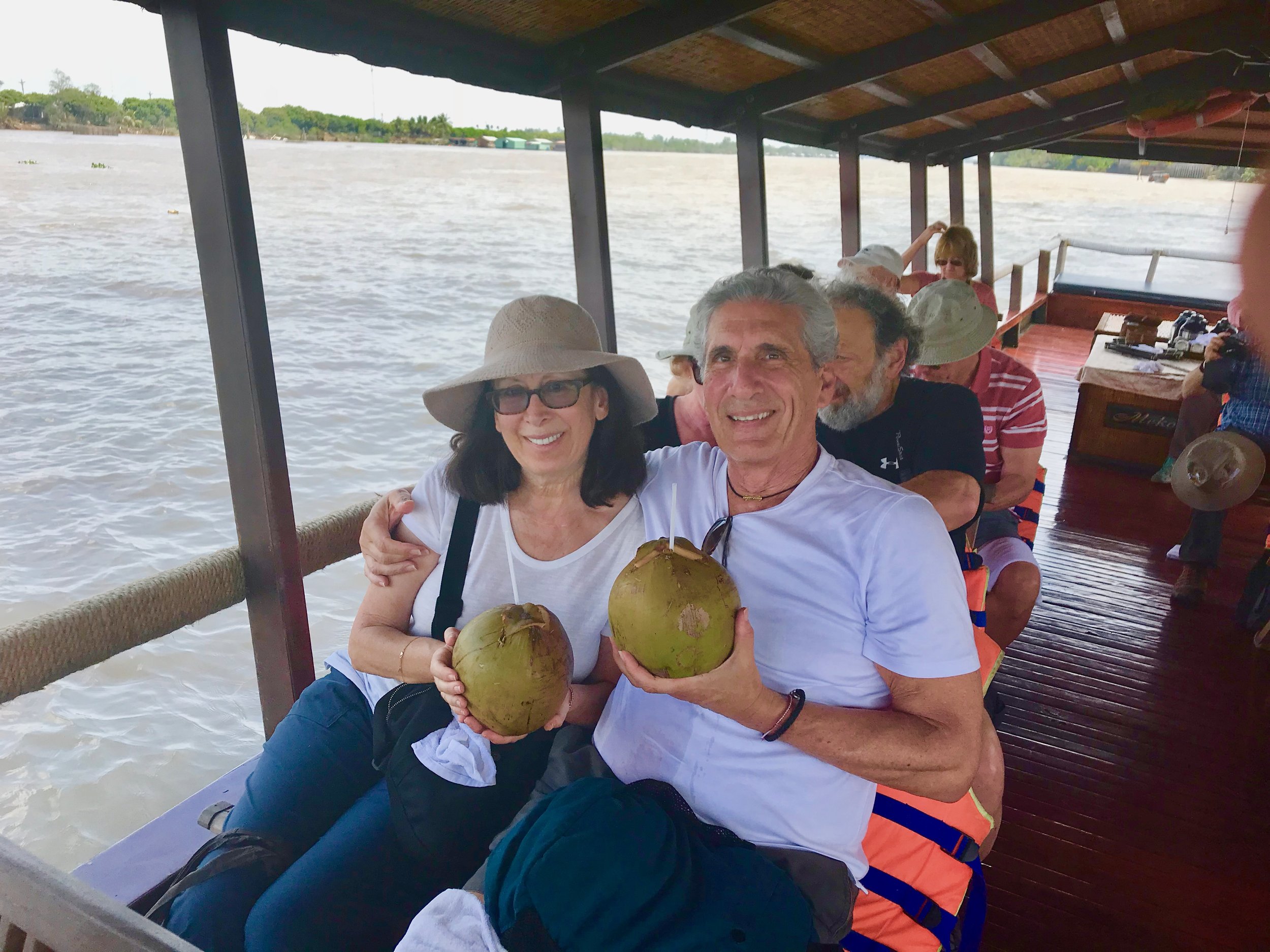
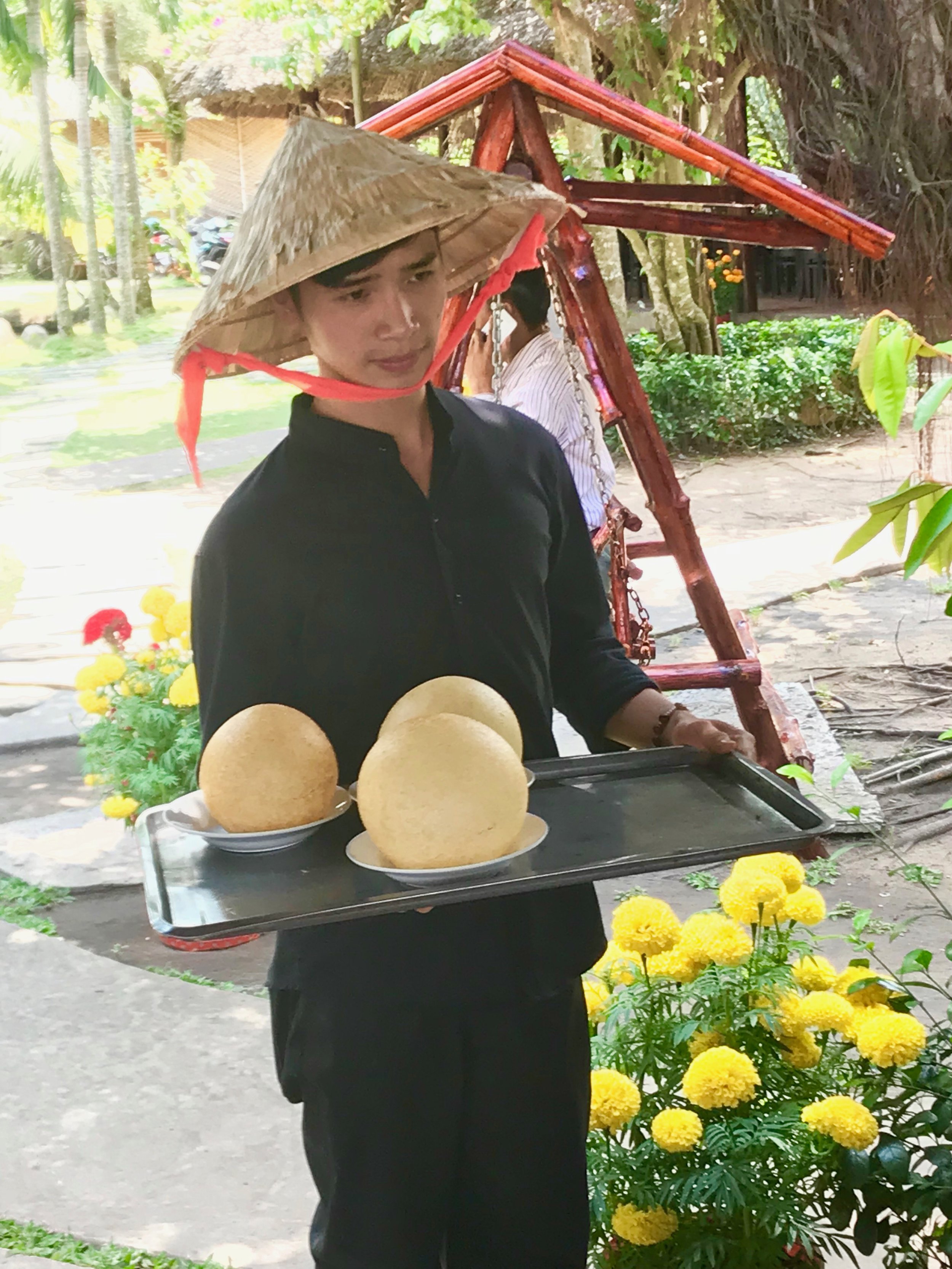
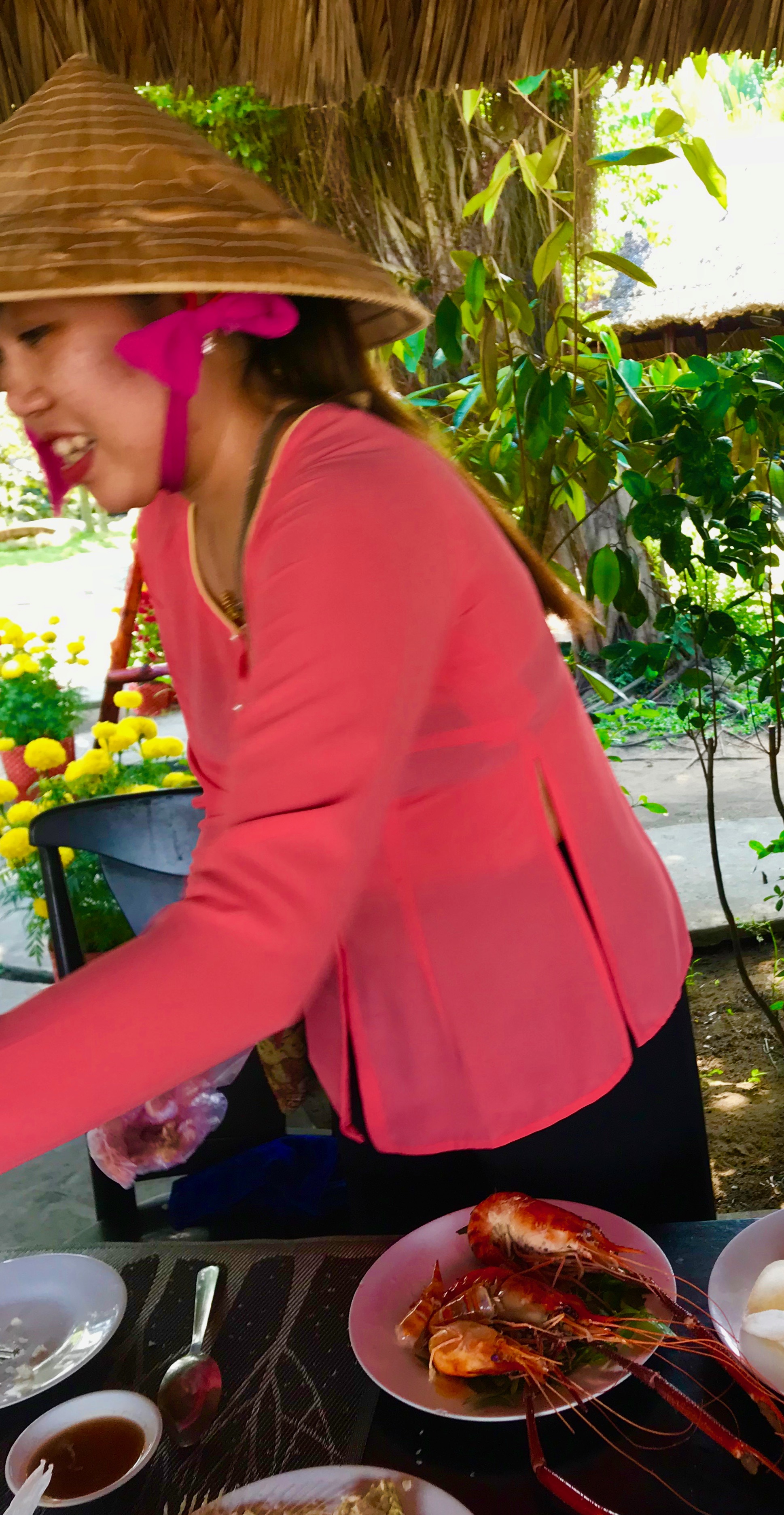
We switched off to a large paddle boat, enjoyed sipping fresh coconut juice and pulled onto a dock of a local plantation style restaurant for an elaborate six course meal that included sticky rice globular bowls cut into sections, vegetables, a crepe type dish, and a full large whole fish called Gourami that the staff deboned and prepared for us. 

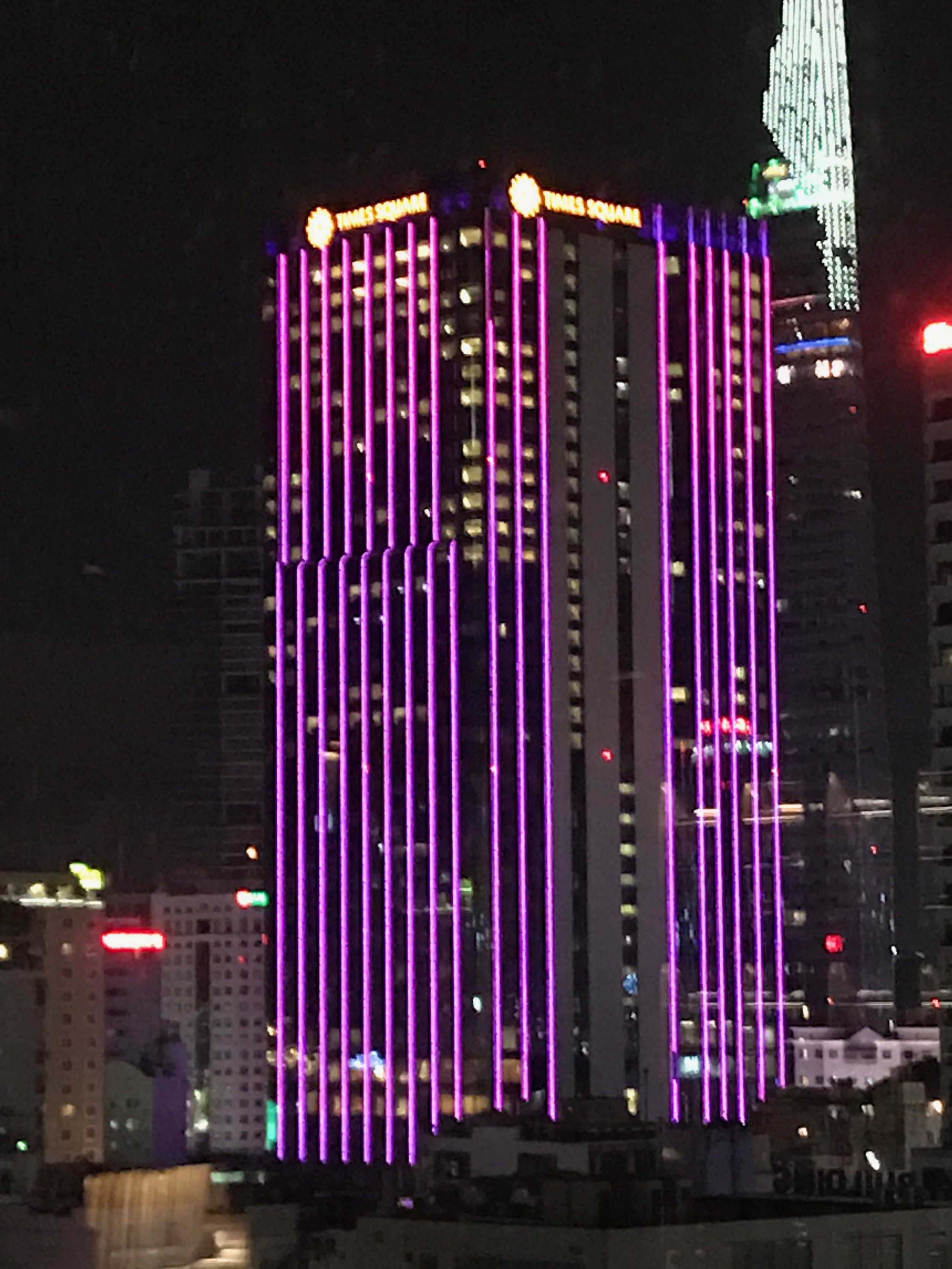
When we returned on our bus for our one and half hour bus ride back to our hotel, we napped and had our own private party, singing and dancing on the top floor of the hotel, overlooking Ho-Chi-Minh City's version of a Times Square building that was changing colors every few seconds. Our guide Lin had a playlist that got us rocking the night away. We then had pizza and pasta with newly made friends Eileen and Jerry from Buffalo, NY, before calling it a night.

Good Morning & Good Evening Vietnam! A Local's and Tourist Paradise of Fun Activities During TET

Touring the Presidential Palace, Participating in a Lion-Dragon Ceremony, a Water puppet Show and a Cyclo Ride through Ho-Chi-Minh City were just some of the activities in store for us.

After breakfast at our hotel we set out to tour the grounds and interior of the Presidential Palace (aka The Reunification Center), the former office of the residence of South Vietnam’s president during the Vietnam War. The communist Vietnamese won its independence in 1975, right after the tank crashed through the palace gates, symbolizing the “Fall of Saigon.” The tank still graces its front lawn. Even though the city is officially called Ho-Chi-Minh City, many people still call it by its cooler name Saigon.

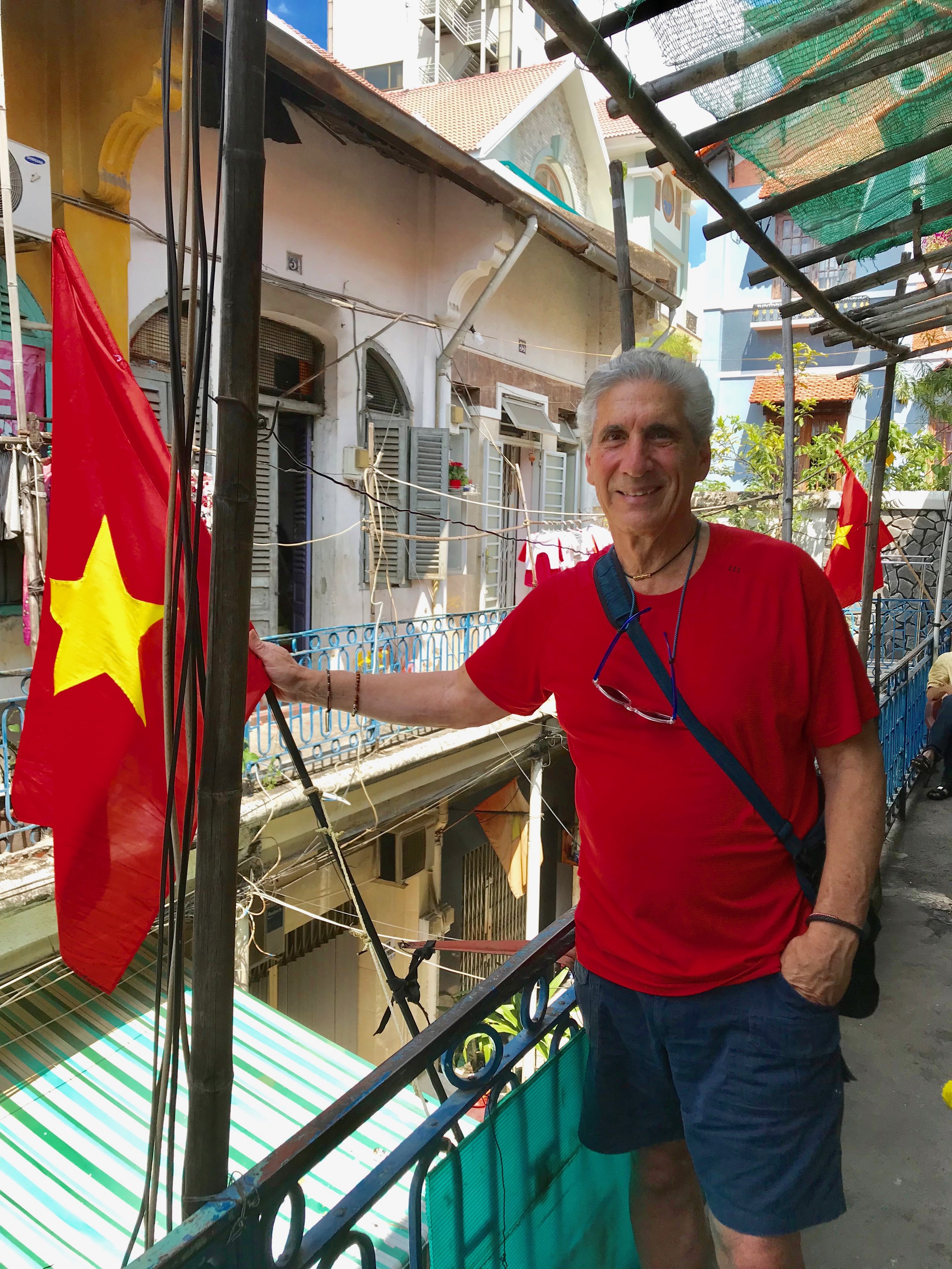
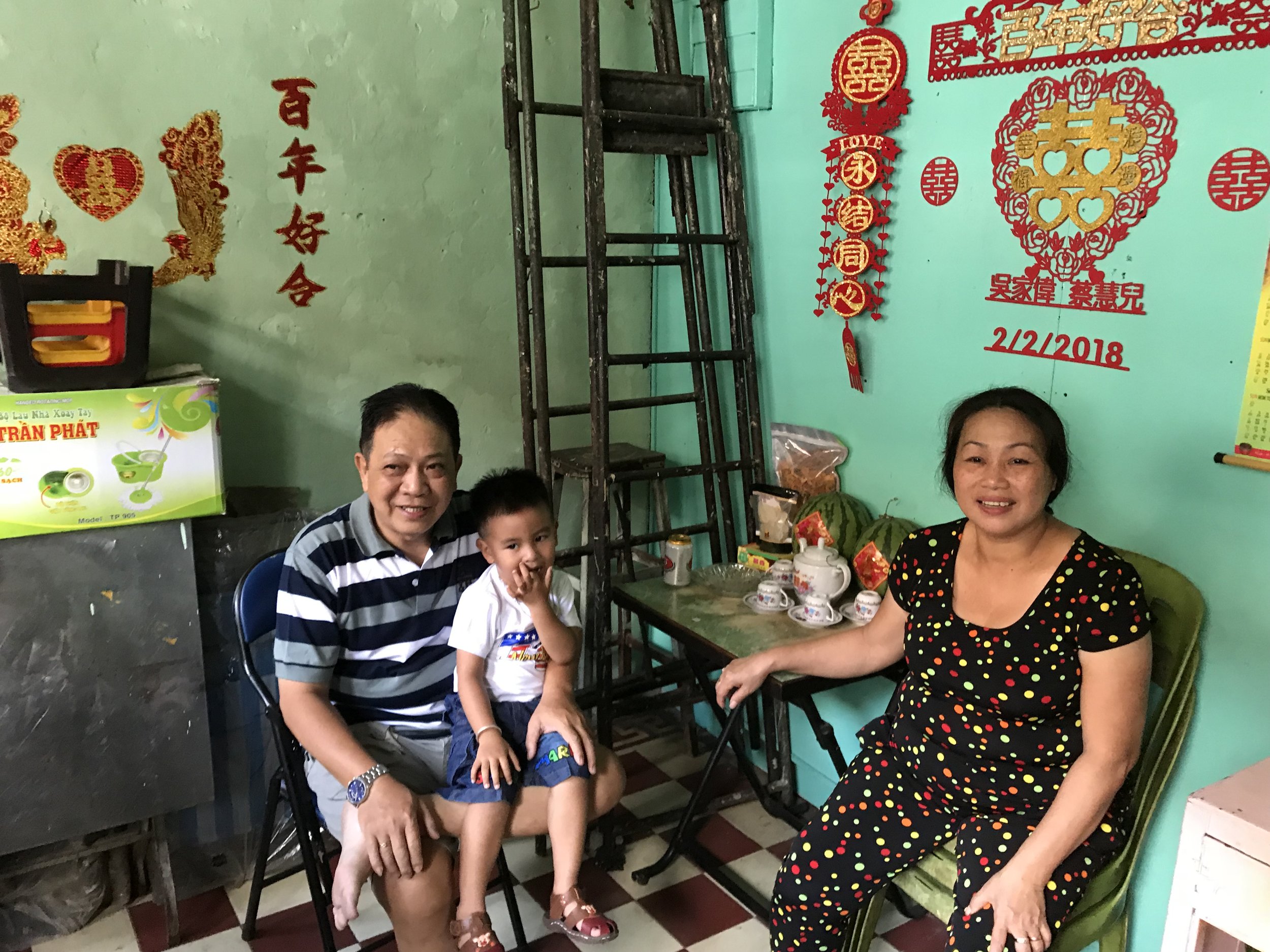
After the Palace, we visited a day in the life of local residents in a poor section of the city. One couple with their son welcomed us into to their cramped flat to see how they live, knowing that comparatively speaking we all had a much higher standard of living in the US. Two symbols that stood out throughout the neighborhoods we visited: The red flag and five pointed yellow star is the National flag of Vietnam and symbolizes the history of Vietnam’s anti-colonial struggle and later becoming a communist state. The red refers to the “red blood,” of resistance fighters and “yellow skin.” The hammer and the sickle is the symbol of the Communist Party of Vietnam.

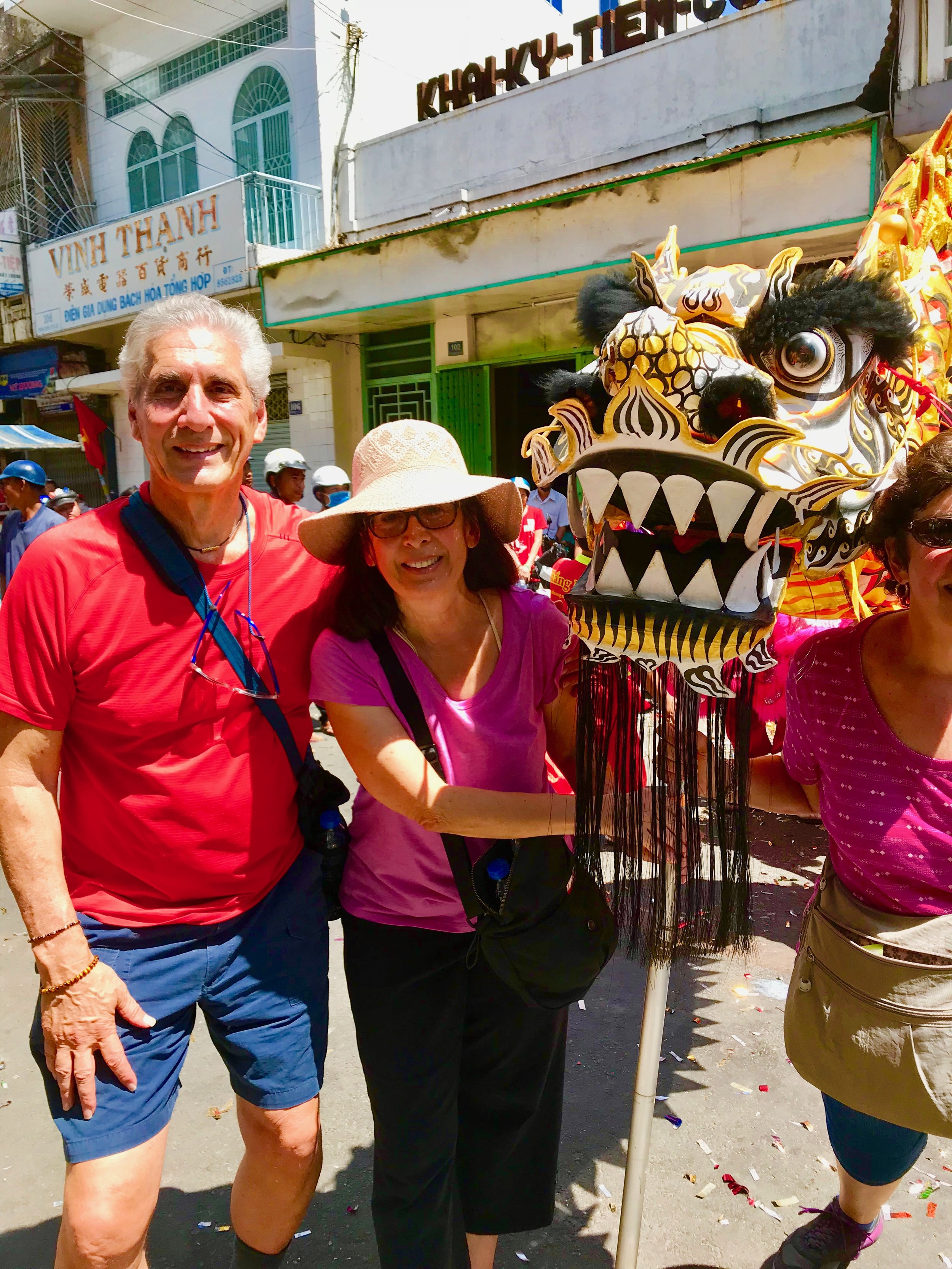
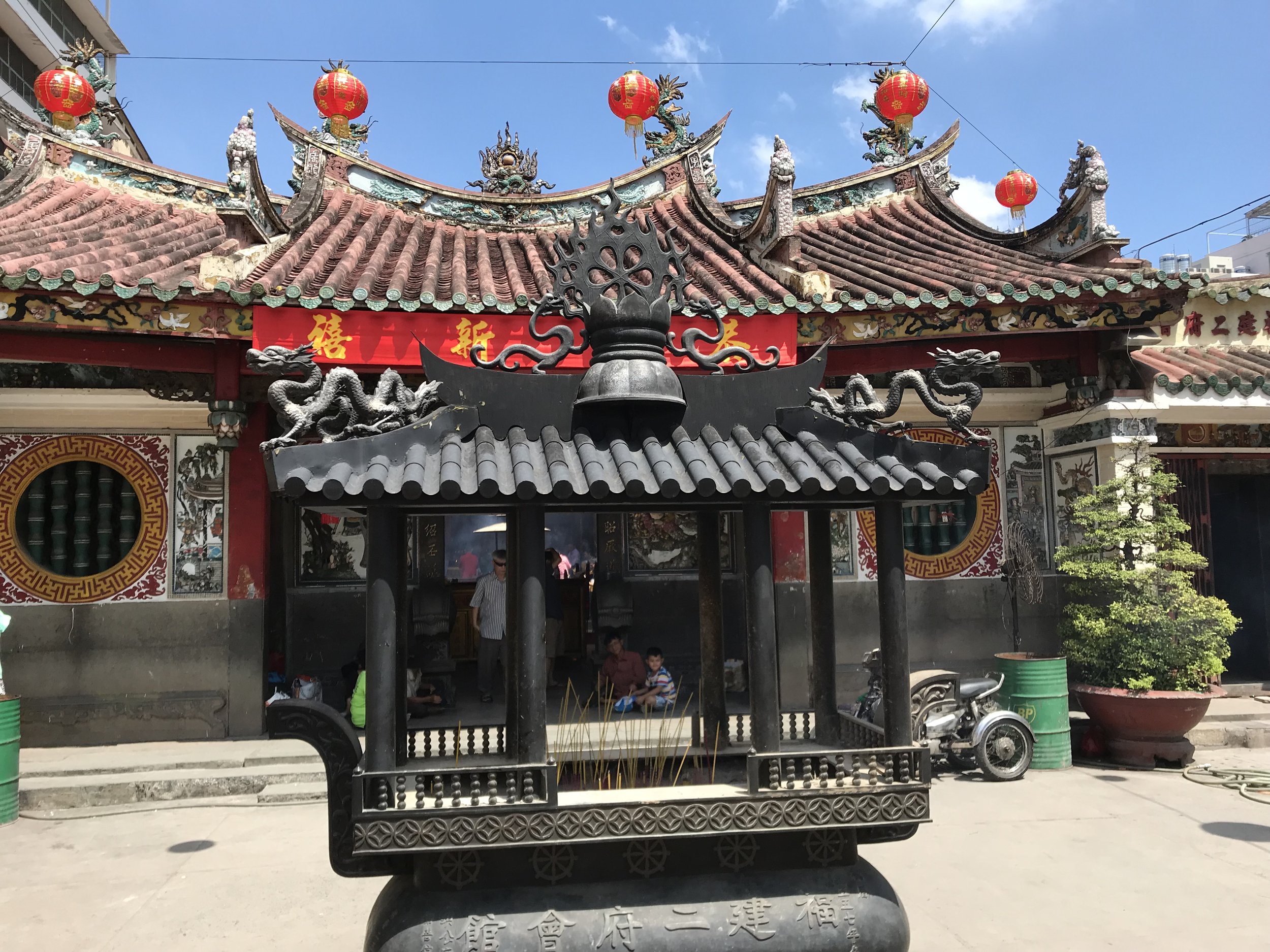
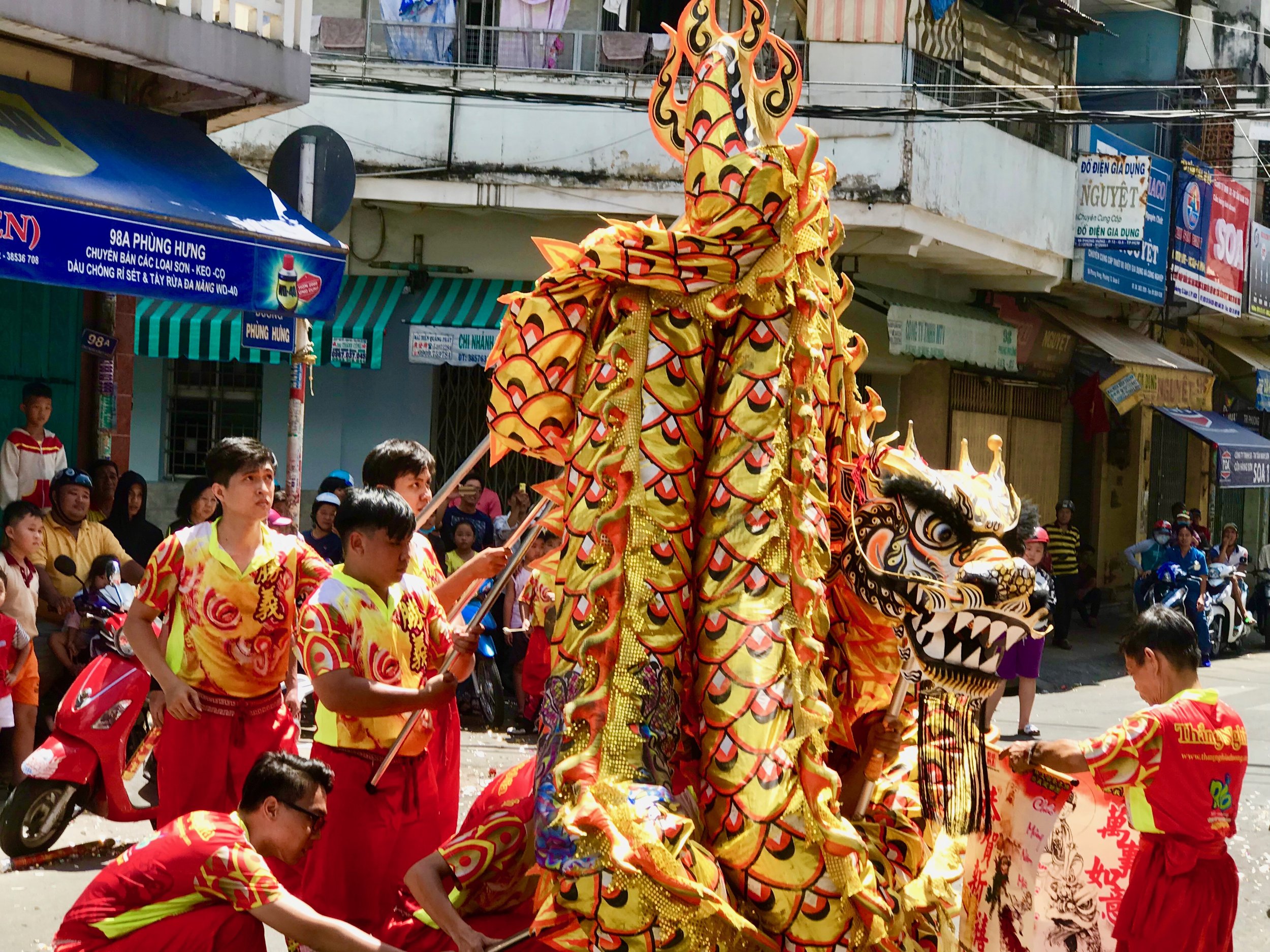
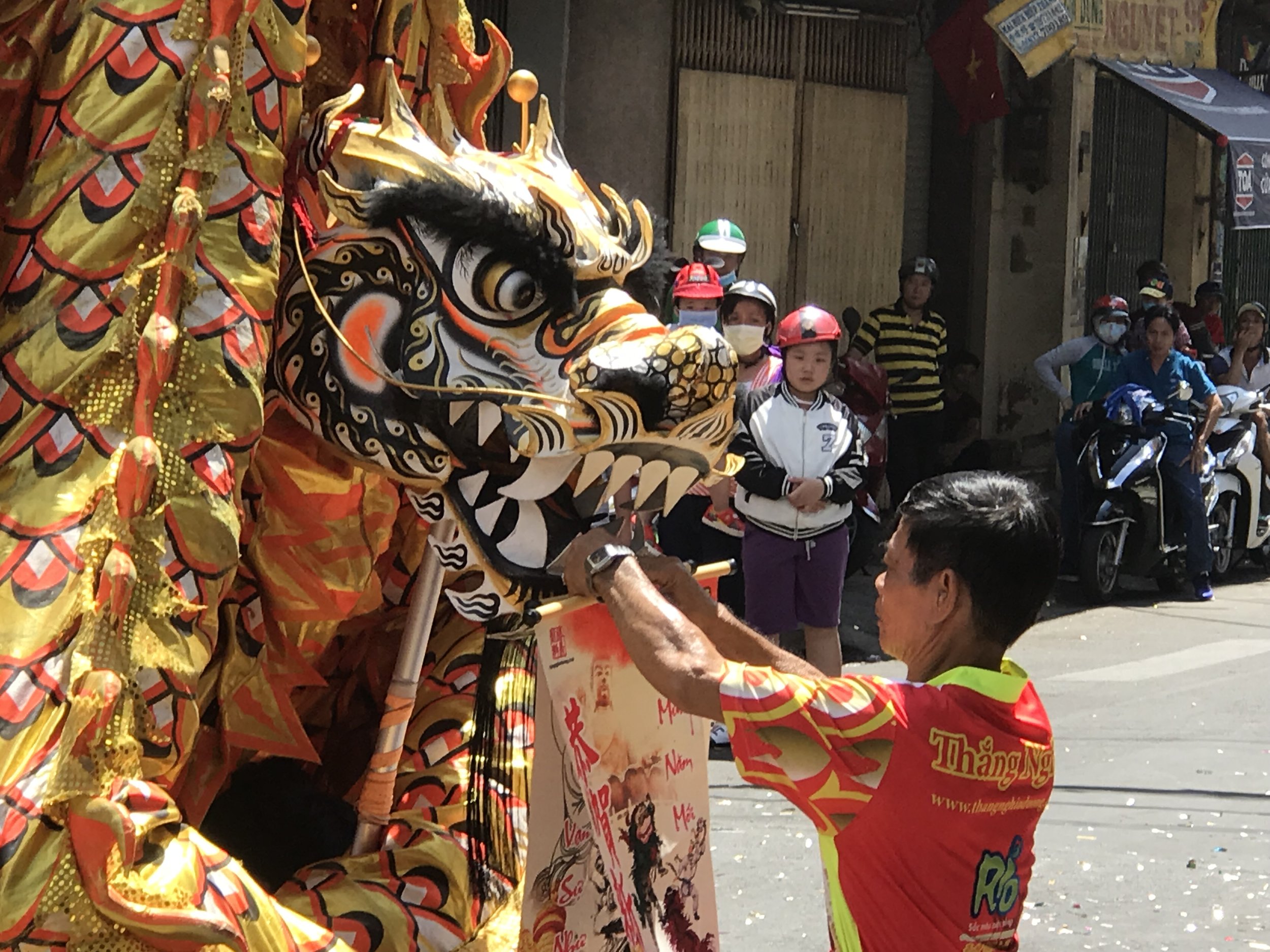
We visited a Chinese temple in Cho Lon, Saigon where people were lighting incense sticks and offering to the gods and their ancestors. One of our group heard what appeared to be a drum beating and Lin, our general tour guide for the trip said lets go across the street to see the Unicorn/Lion/Dragon dance. Boy, was that a great call. This Vietnamese traditional custom is usually performed on major festivals and major occasions, especially on Tet (Lunar New Year). The belief is that the dance dispels evil spirits, and brings about good luck for the rest of the year. There was a young dance and musician group performing. Apparently, a local English-speaking business owner sponsored the event and by the coaxing of our guide allowed us to participate with him, his family and the neighborhood. The young performers are paid for their participation. 

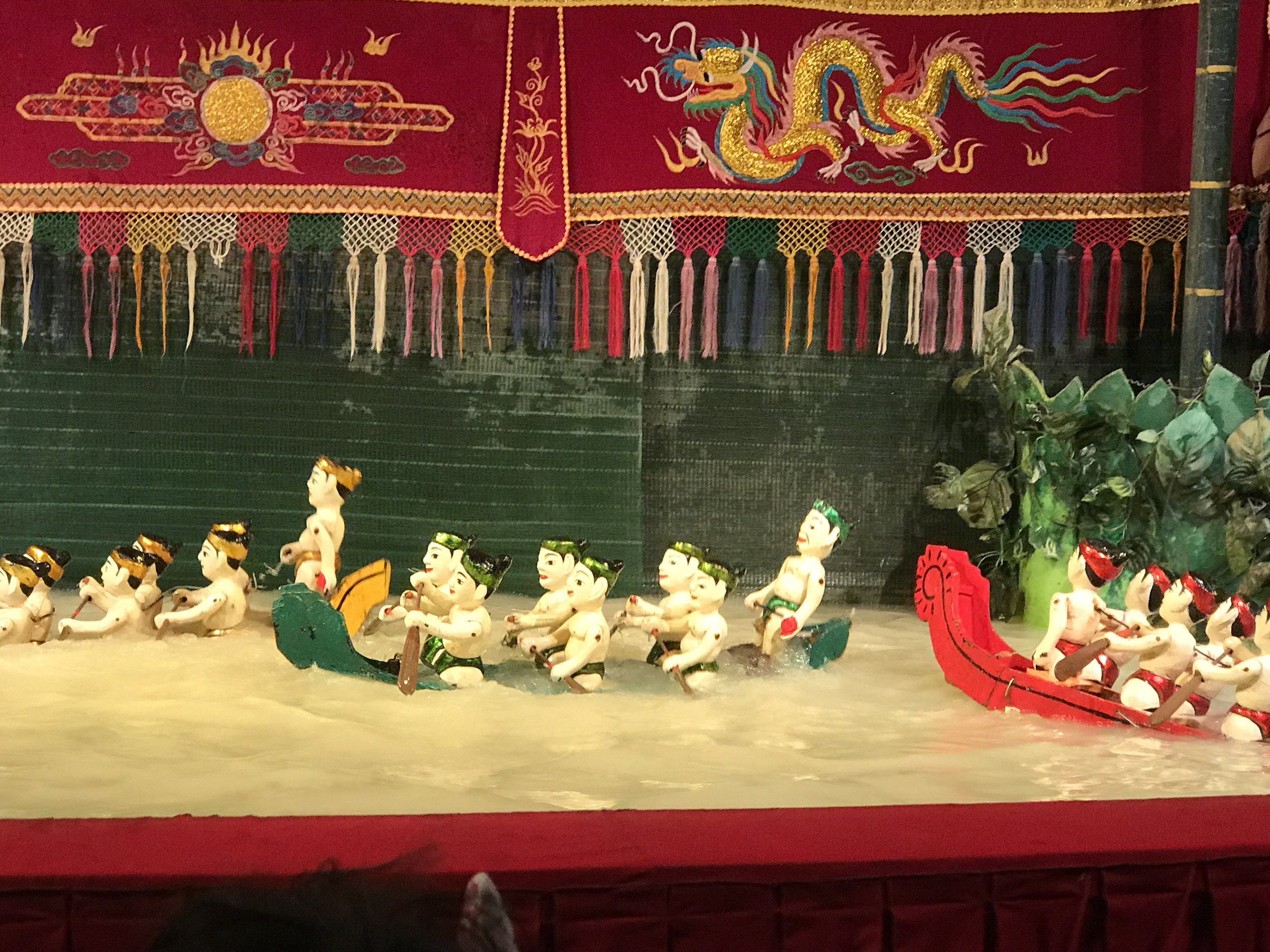
After a nap, we resumed our activities by attending a traditional "Vietnamese Water Puppet Show" that dates back to the 11th century in the Red River Delta area of northern Vietnam. When the rice fields would flood, villagers would entertain each other. I was equally entertained by two young girls directly in front of me who were enjoying the show with their parents. Able to suspend reality, you could see by their actions this felt very real for them.

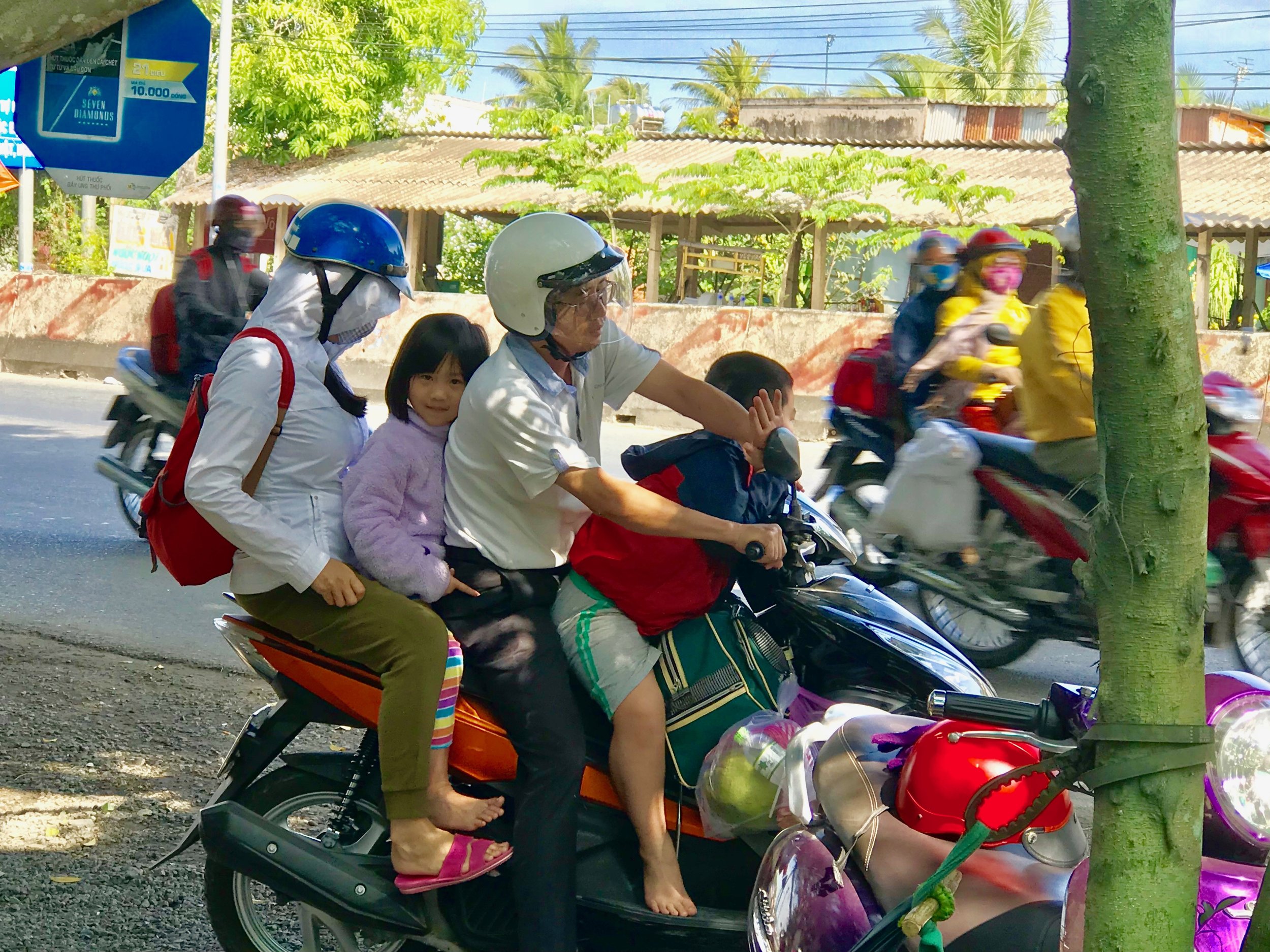
After the show, we rode a rickshaw (called Cyclo) that have essentially been banned (except for tourists) due to traffic jams cramping the city residents. One person was assigned to each cyclo driver. My driver was called Thien and he began by taking a photo of me. I even managed a selfie along the way that he participated in. It is totally mesmerizing to see the motor scooters buzz around the streets just inches apart from one another. There are about 13 million people and a mind boggling 8 million motorbikes.
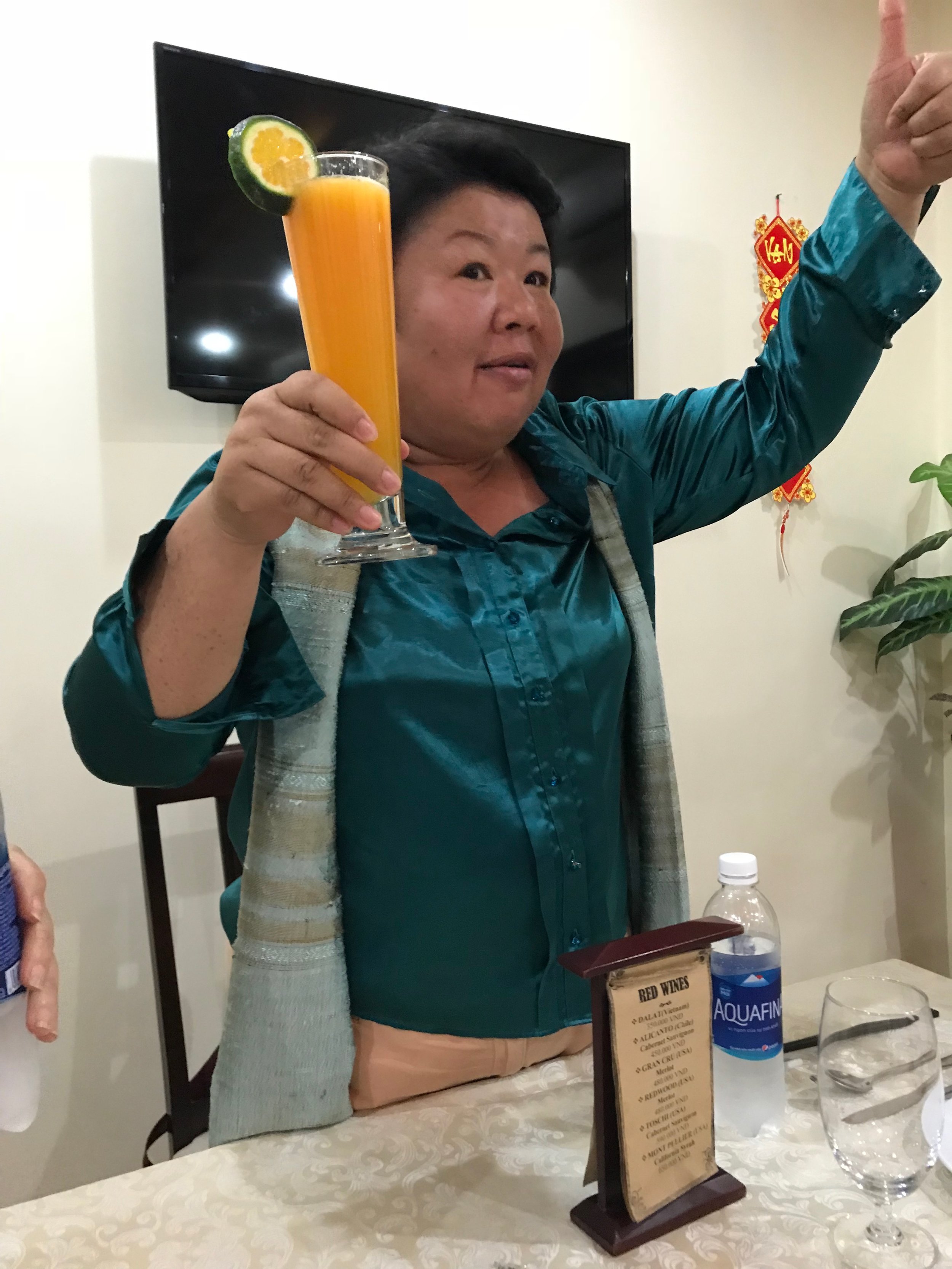
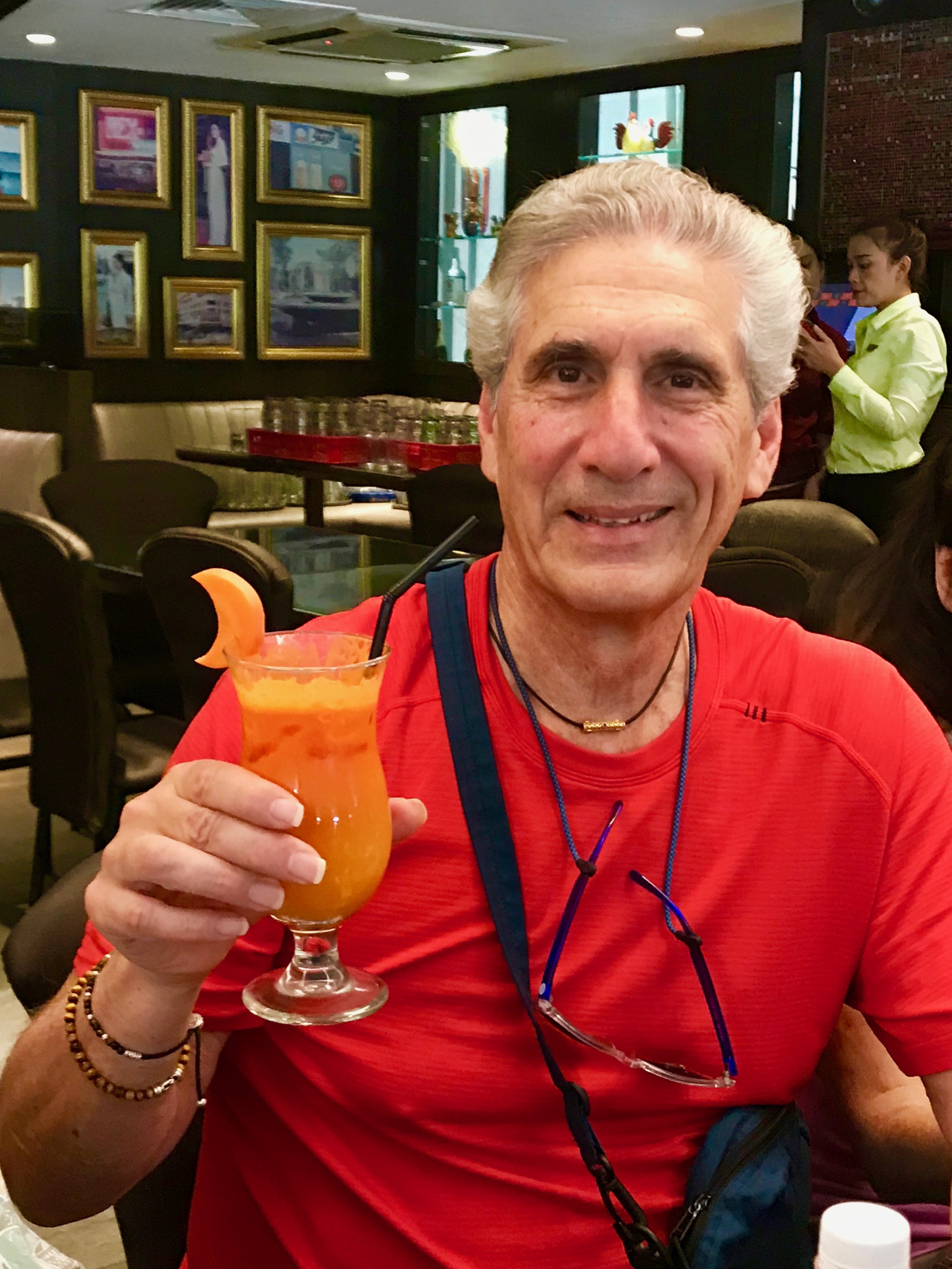
Without question, this was a real highlight for the group. We caravanned around town on the way to happy hour at a local beer club followed by another delightful dinner before calling it a night. The Orange Drink I'm holding up that I had for lunch is called a detox beverage: Fresh orange juice, carrot and ginger.

Enjoying the Explosion of Color in Saigon (Ho Chi Minh City) During the TET Holiday Season

“We travel to open our hearts and eyes and learn more about the world than our newspapers will accommodate.” 
—Pico Iyer

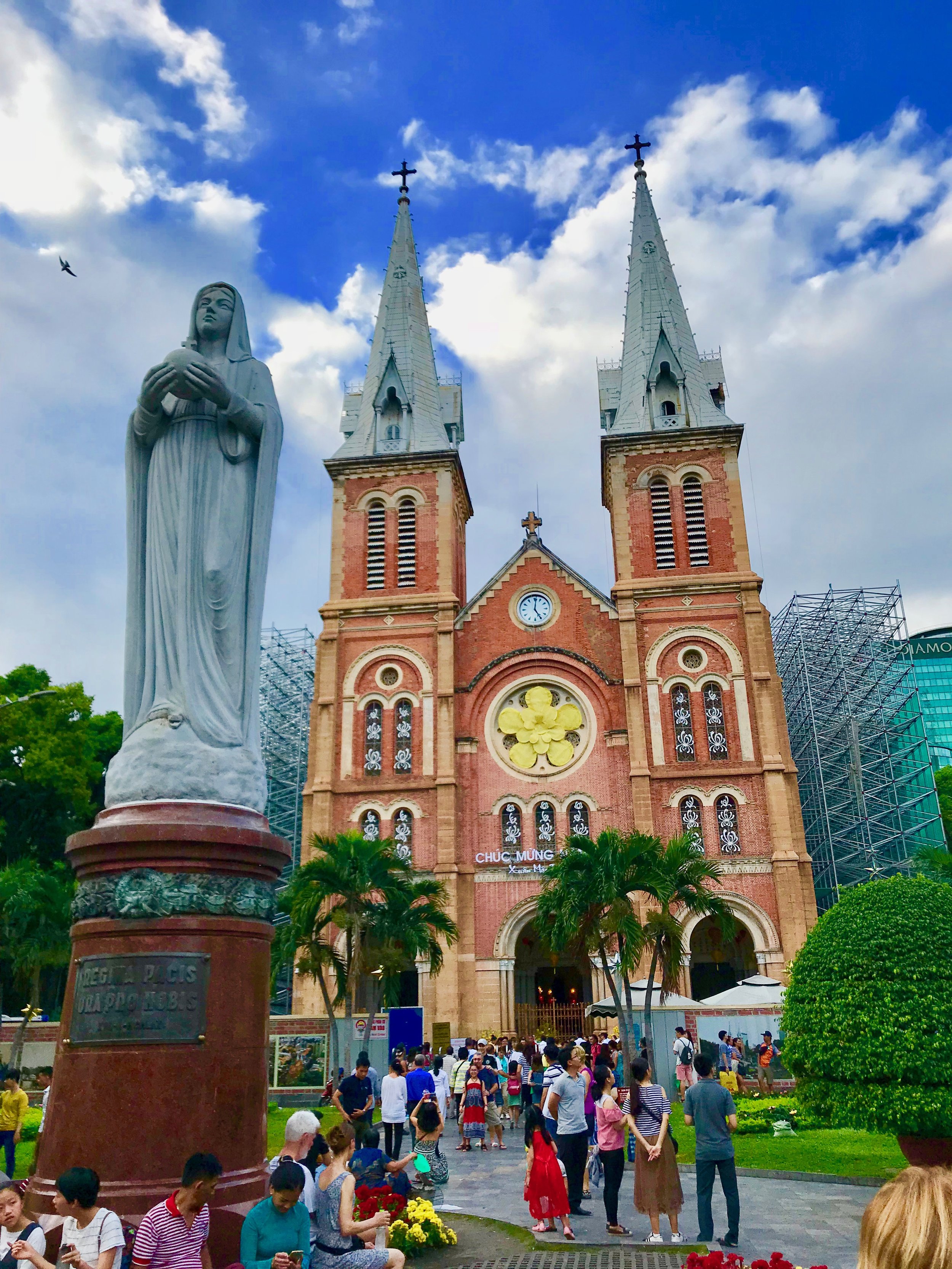
Cecile, myself and the Overseas Adventure Travels (OAT) group landed in Saigon this afternoon. Before checking into the Nahtha 3 Hotel near the center of town, we went to see the Cathedral of Notre Dame which marks the center of the city’s French colonial heritage. Though not as grand as the one in Paris, it is still a beautiful site to visit. It boasts high towers, stained glass windows, wooden pews and classic plaid floor tiles. There is also a towering Virgin Mary in the backdrop. Unlike the other Southeast Asian cities we have visited thus far which are predominately Buddhist, Vietnam is about 55% Buddhist.

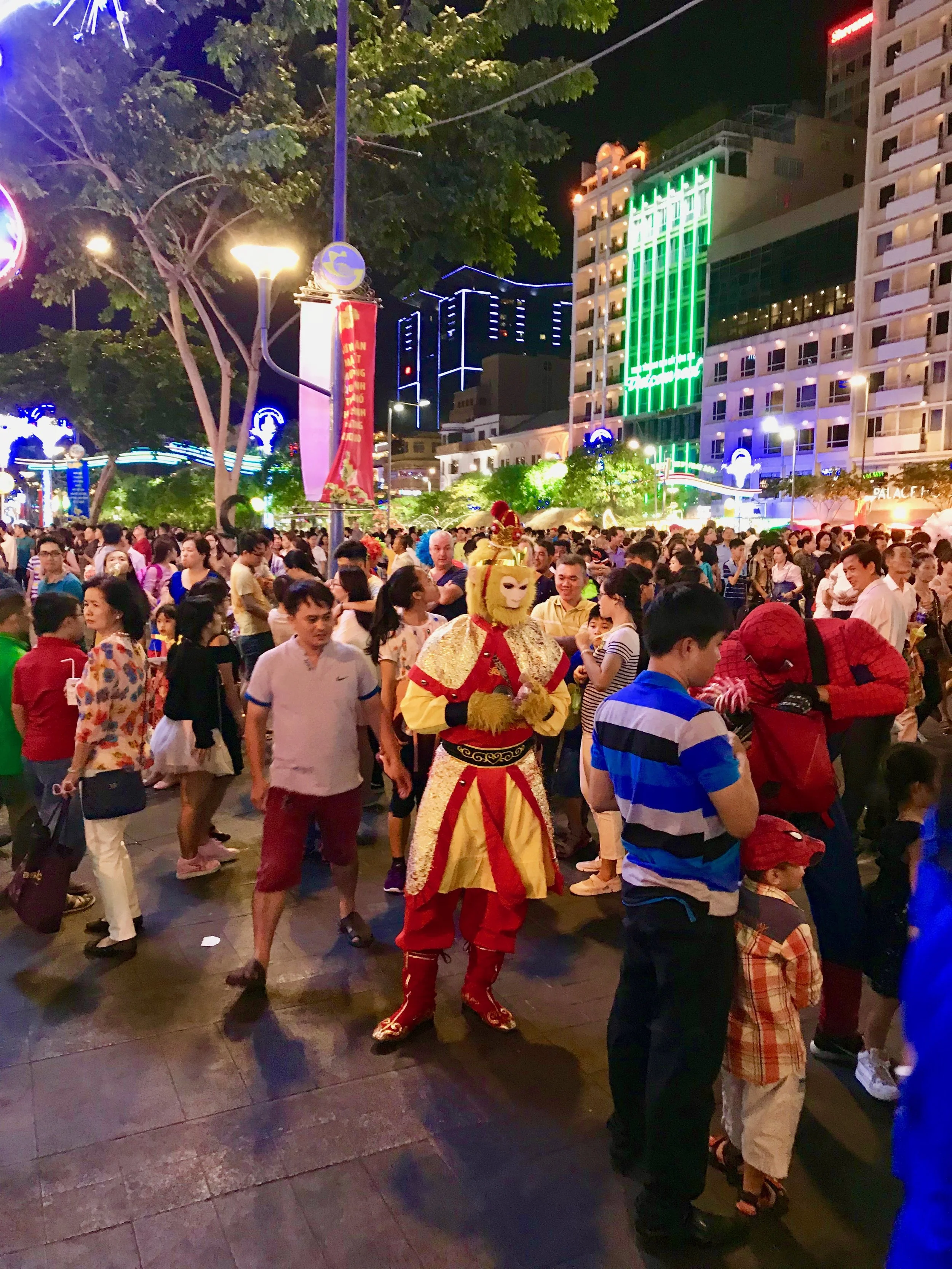
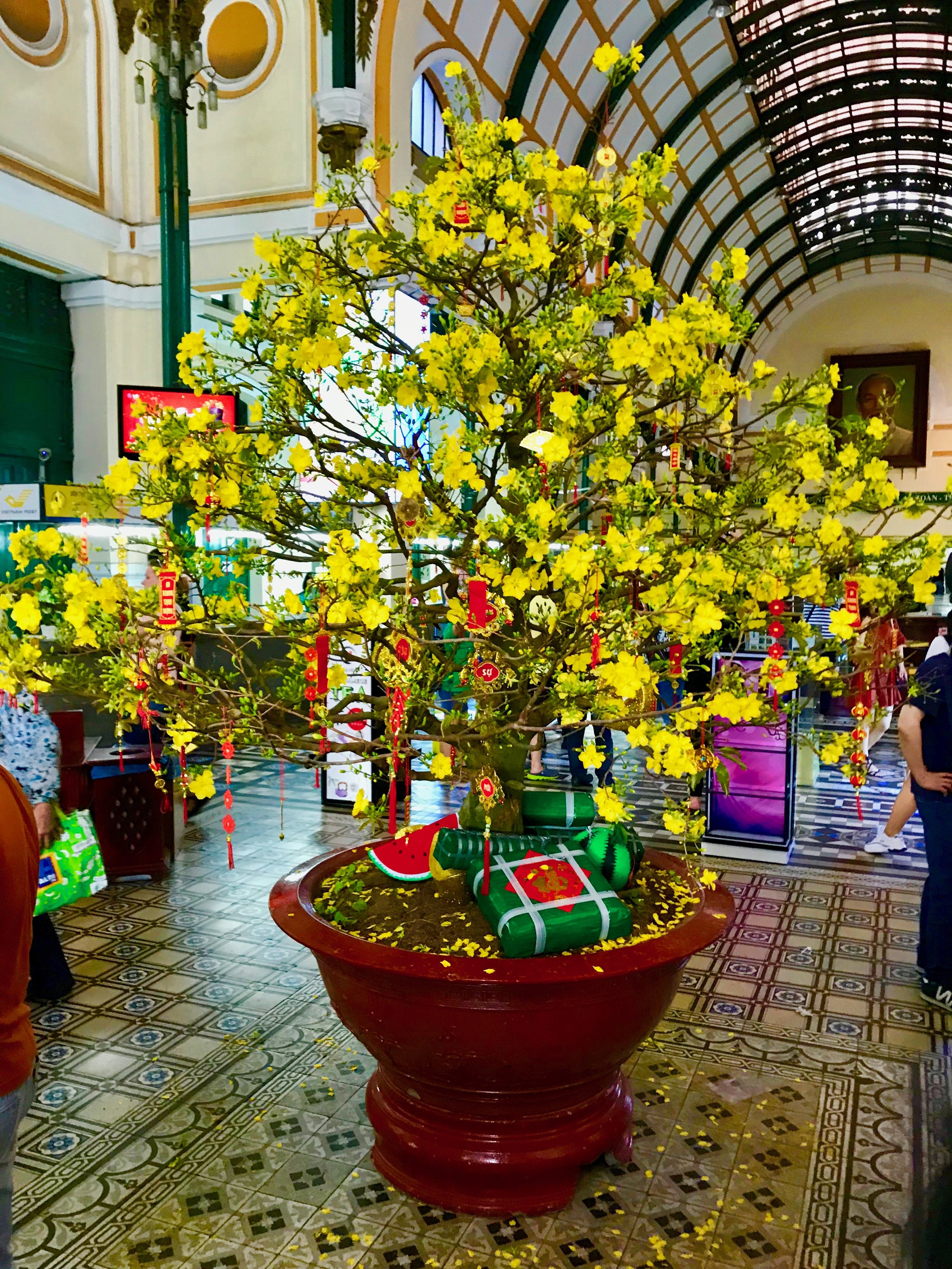
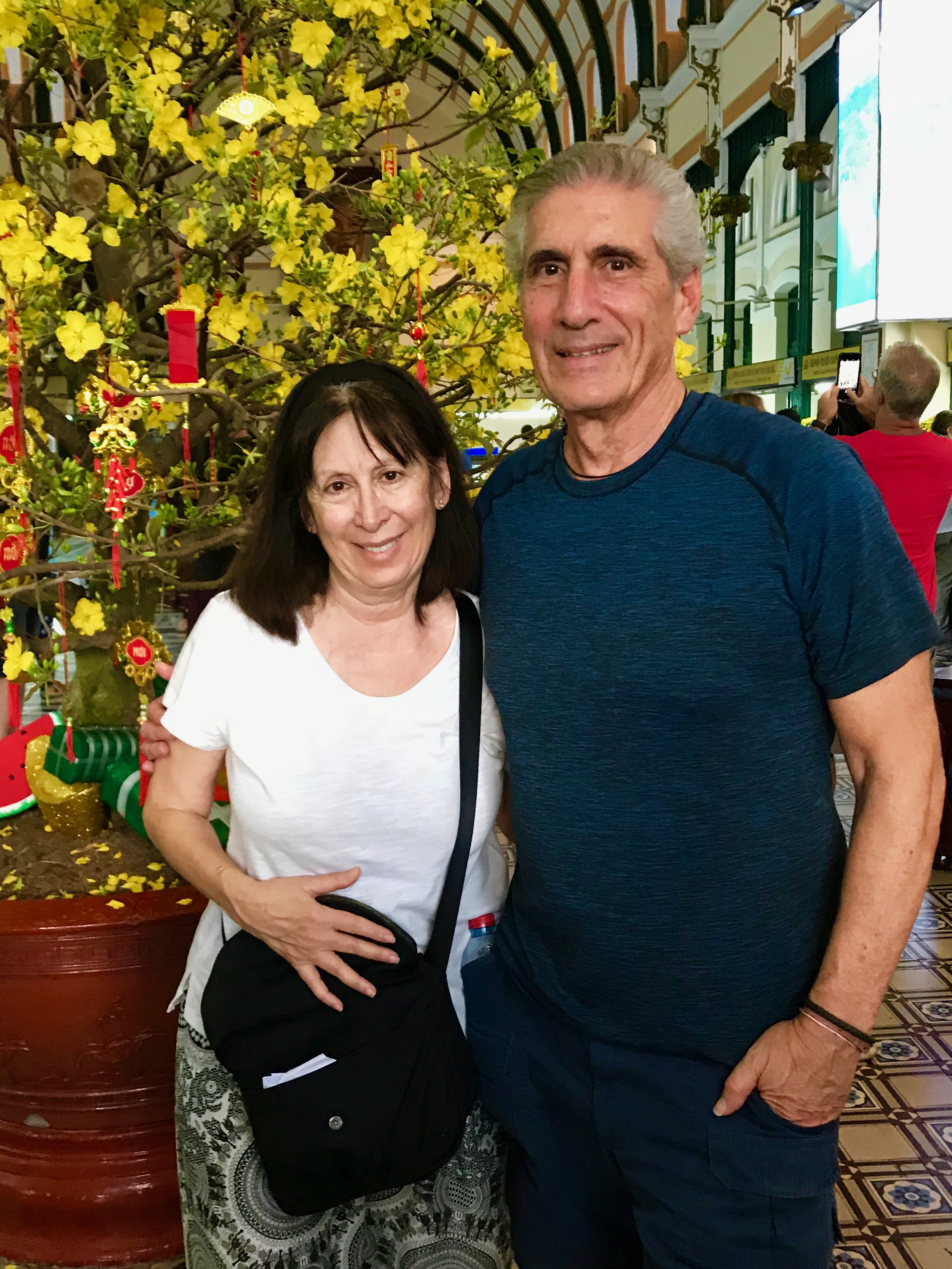
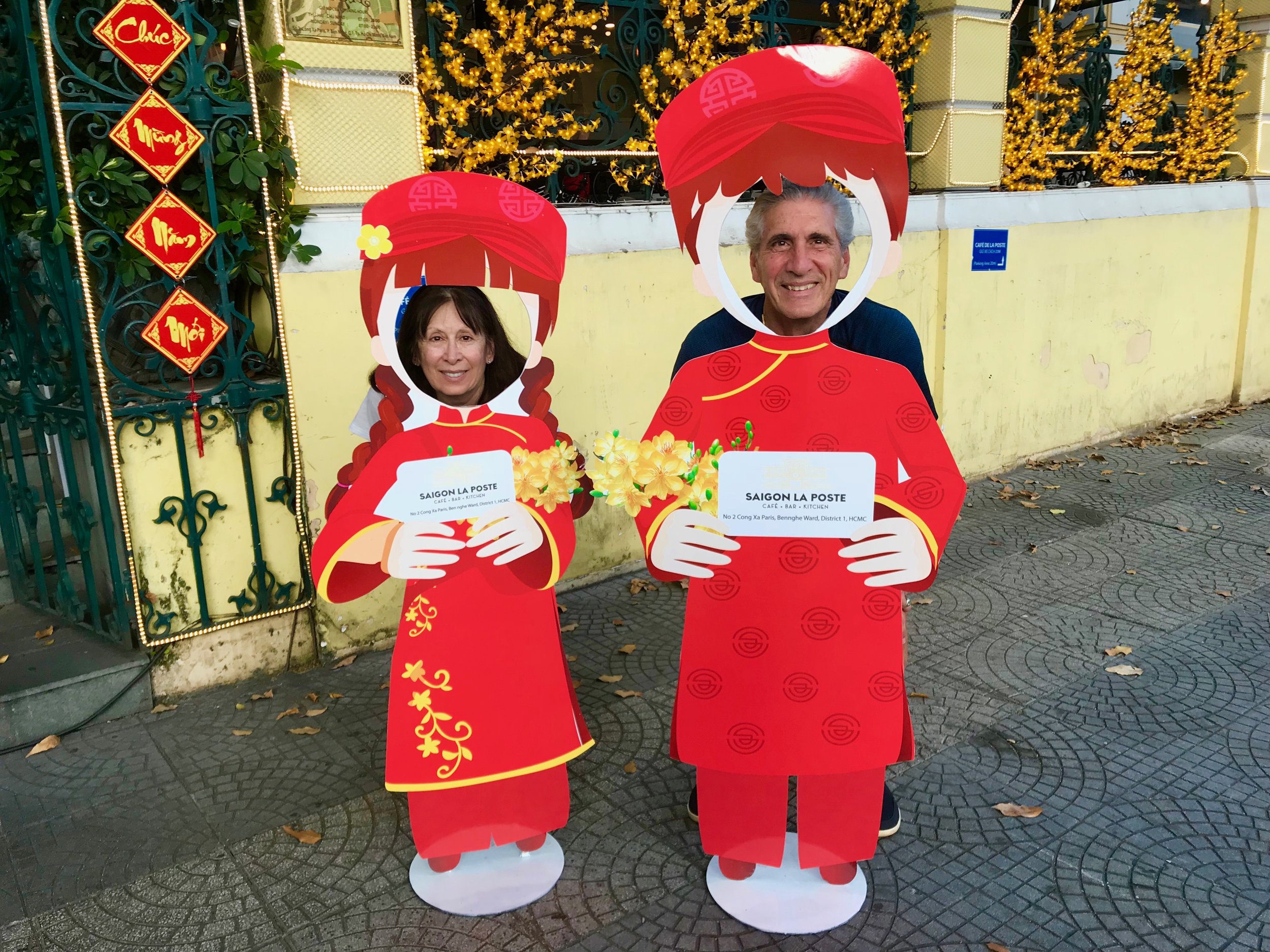
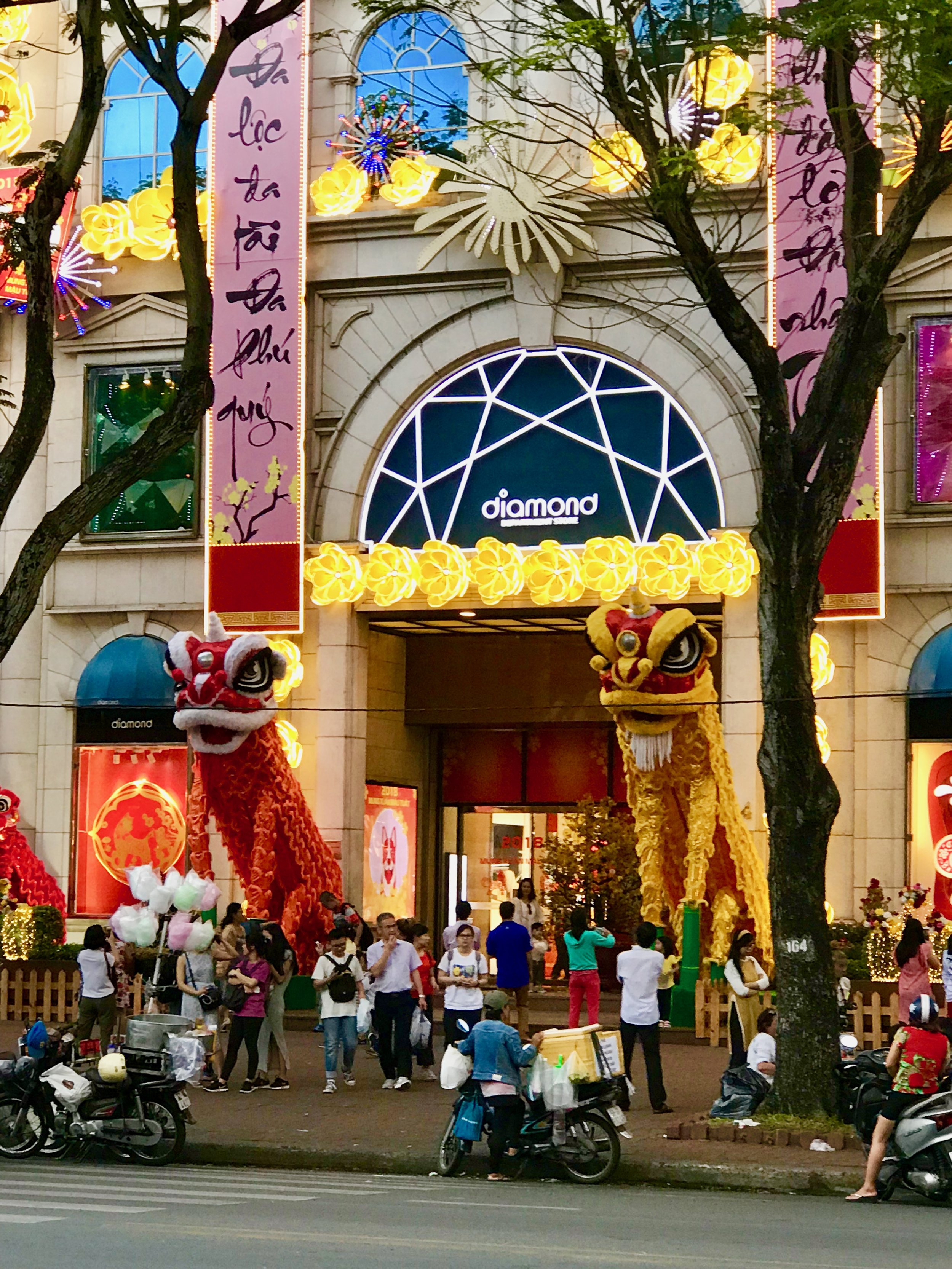
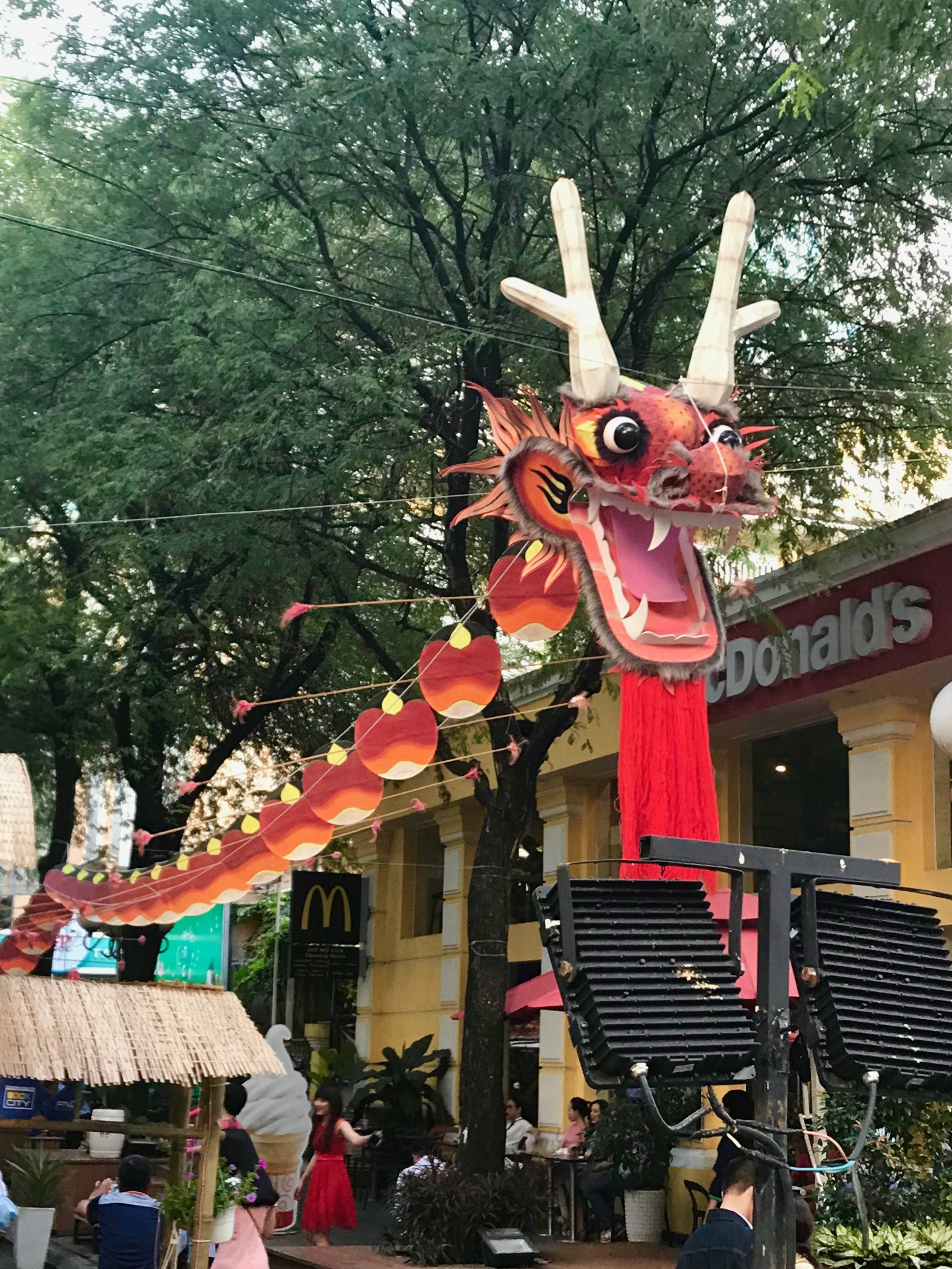
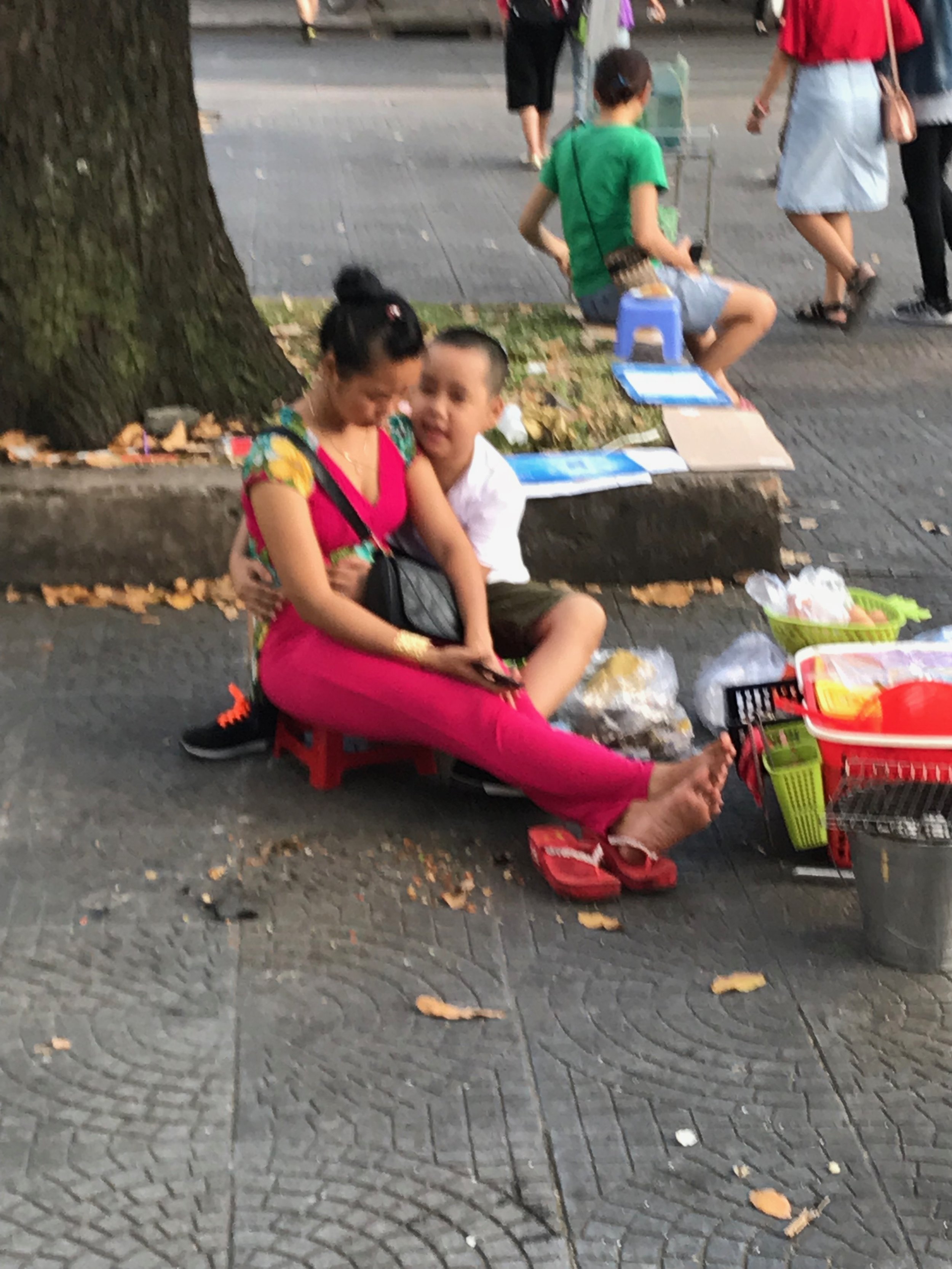
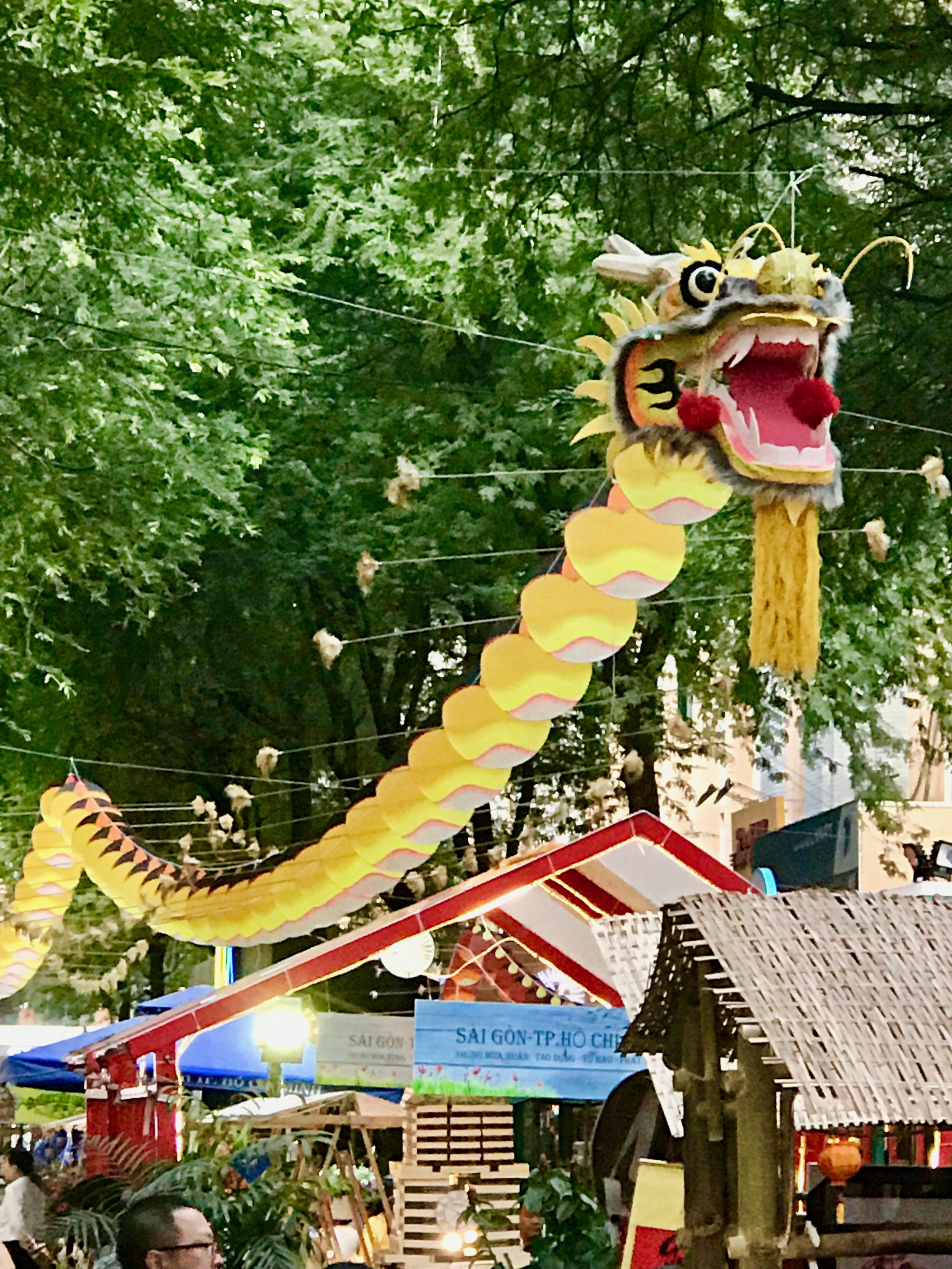
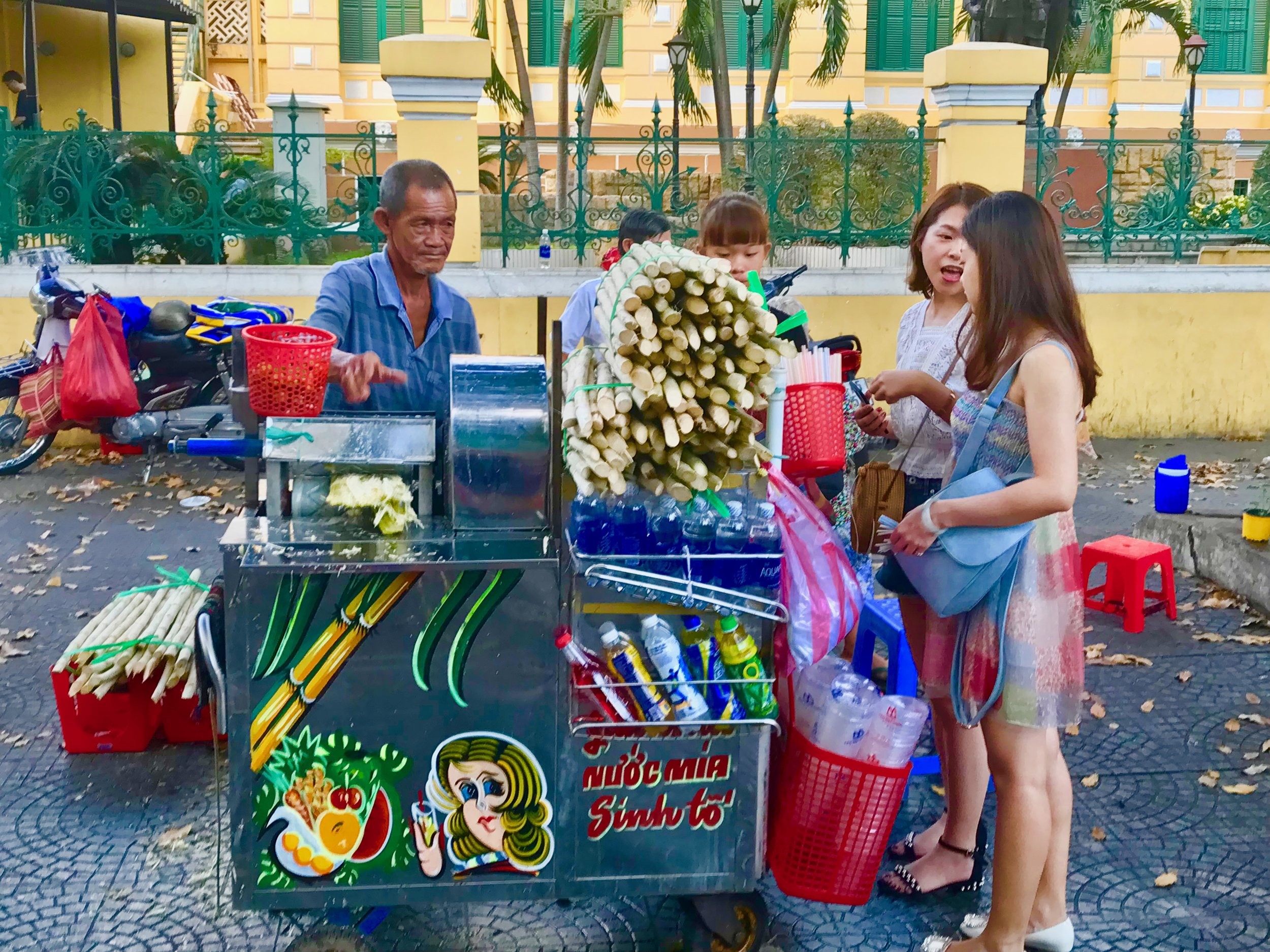
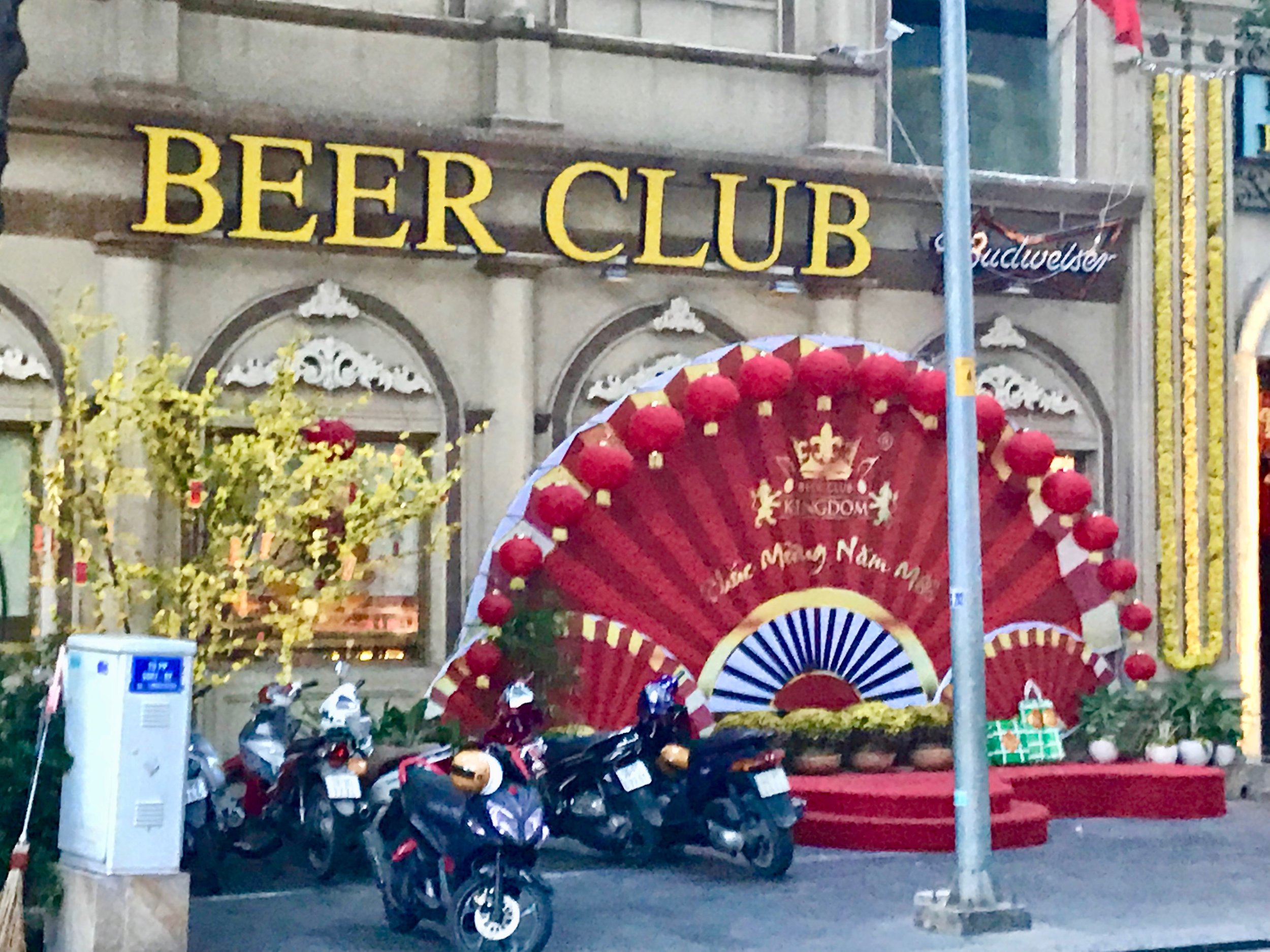
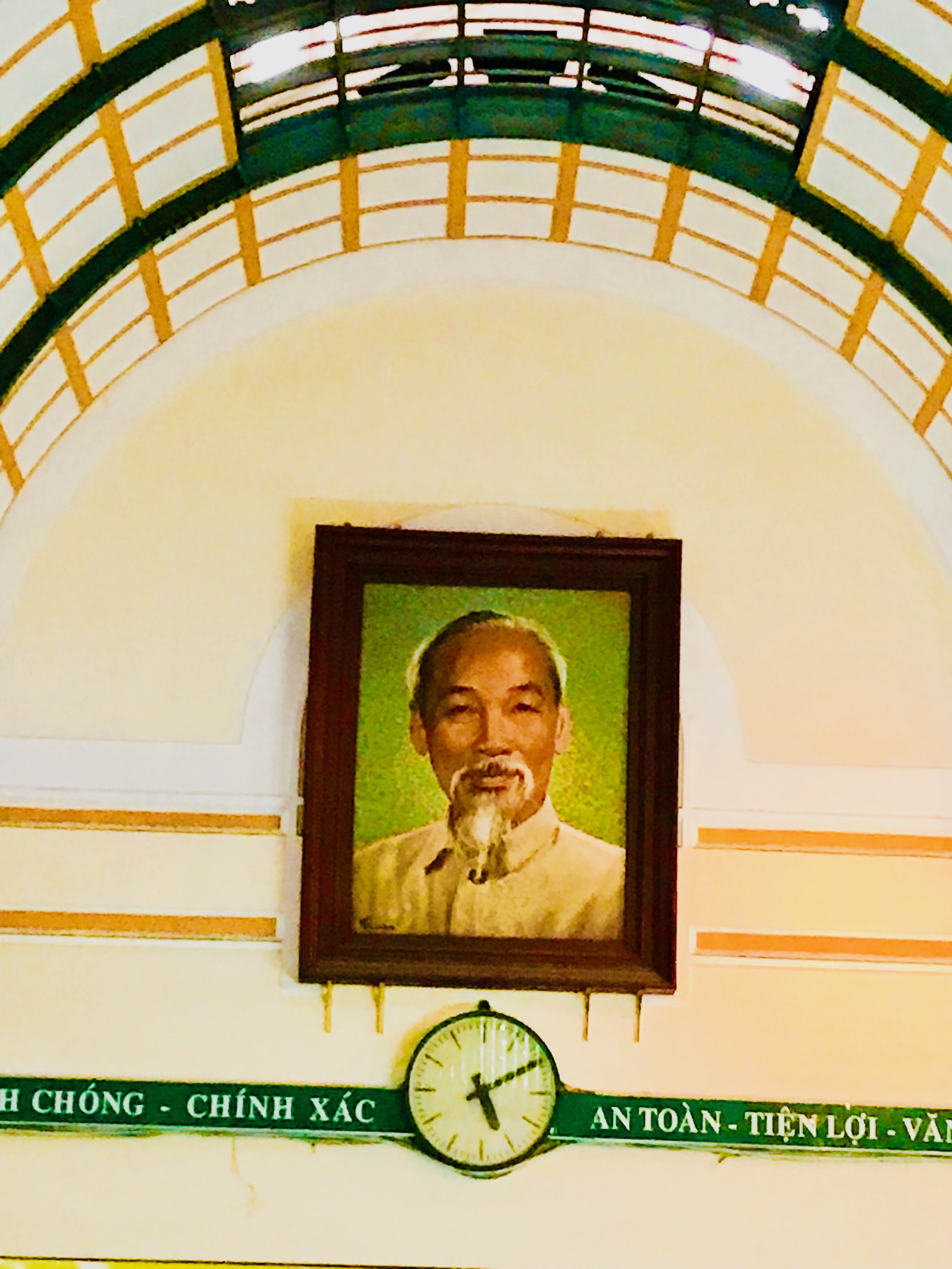
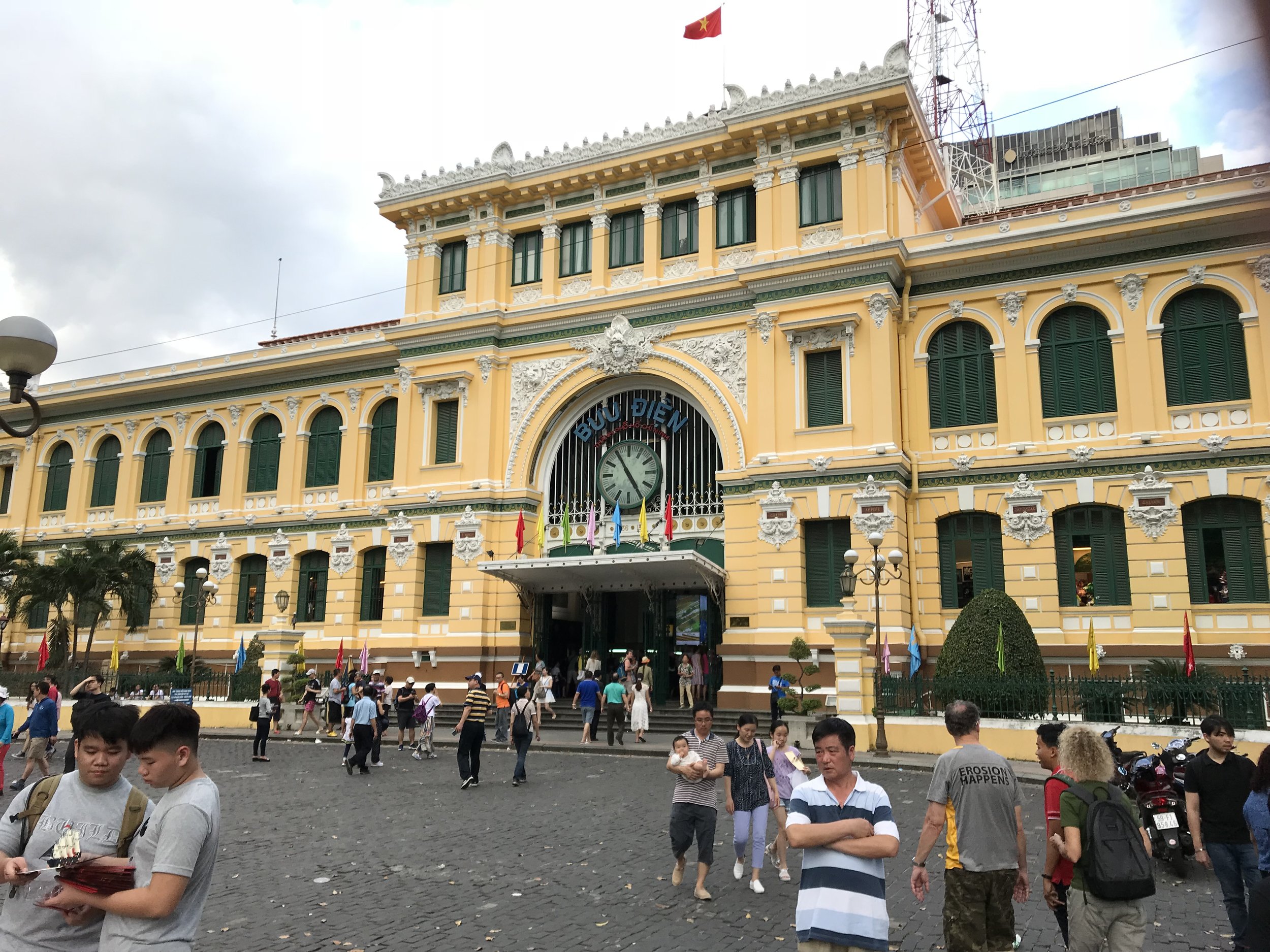
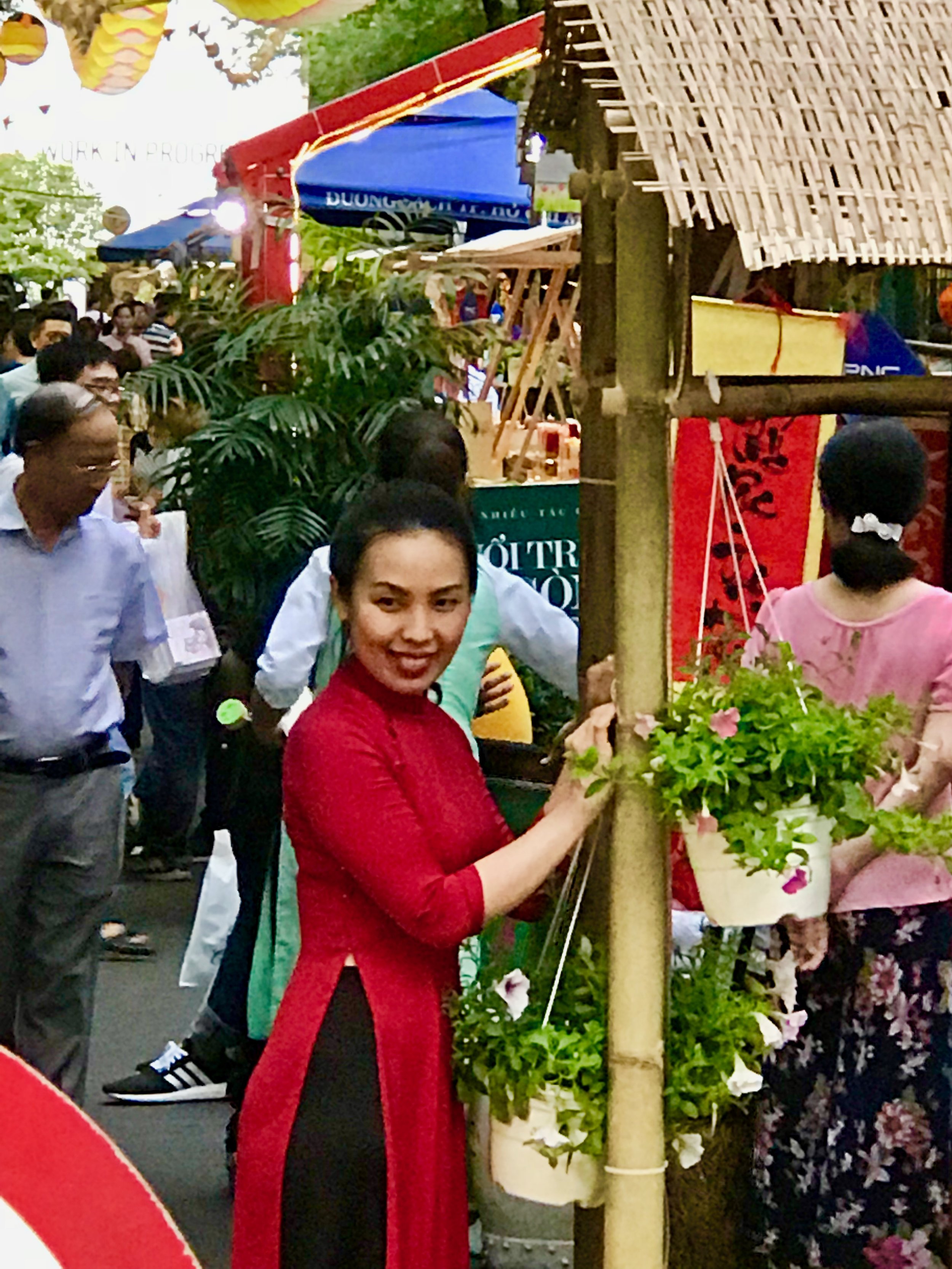
After seeing the Cathedral we then went across the street to see Saigon’s Central Post Office that began construction in 1886. It’s French colonial architecture makes it another renowned standout for the city. It was designed by Gustave Eiffel, the same architect who engineered the Eiffel Tower in Paris. It is fully functional and a top tourist attraction. It also has a portrait of Ho Chi Minh on the back wall. Cecile and I had our photo taken in front of the stunning, yellow flowering apricot tree. We then went to the Saigon La Poste Cafe next door and created a post card of our facial images behind red cardboard cutouts. In addition to the Chinese New Year festivities still going on, the Vietnamese are also celebrating their New Year (TET). Many of the commercial buildings in the center of town, are all lit up. Some of the lights are leftover from the Christmas Holidays. The photographs I have taken here are of colorful red and yellow dragons, merchants like the Beer Club and Diamond Department store decorating their exterior with colorful lights and decorations. I also photographed street vendors that were out in mass, locals and tourists enjoying early evening strolls and a son and his mother having a tender moment while waiting for customers to buy their wares. It is a reminder that all we have are these precious moments to enjoy and savor as life goes by in a flash.

A Pilgrimage to to Angkor Wat: One of the Seven Wonders of the World

A Pilgrimage to to Angkor Wat: One of the Seven Wonders of the World

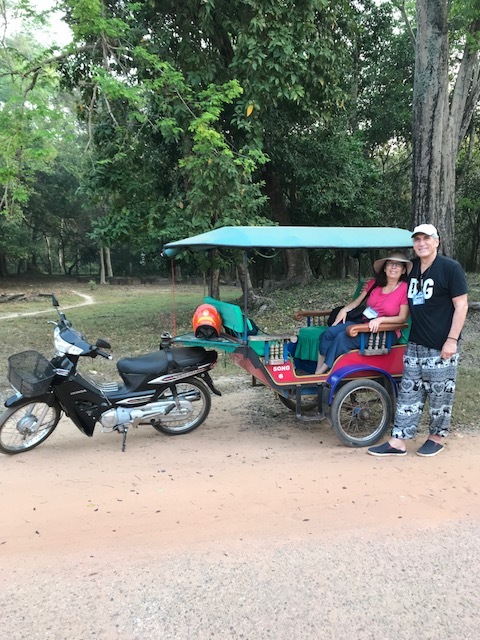
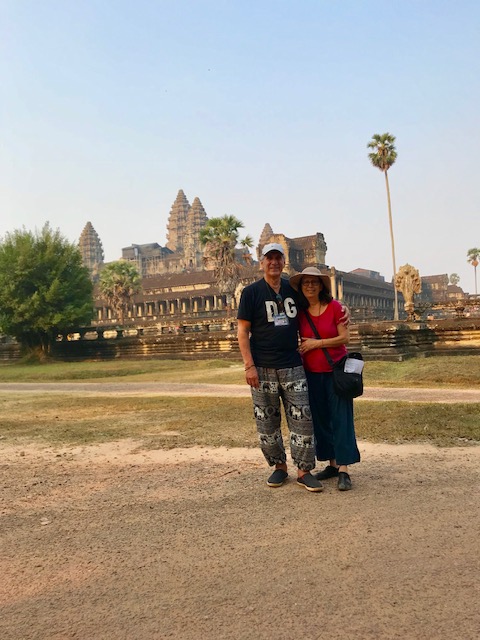
The mystique of Angkor Wat in Siem Reap, Cambodia brings out the adventure in all of us. It was the site where "Tomb Raider" and "Indiana Jones Temple of Doom" were filmed. My son Jason and I first visited Angkor Wat in 2004. I was amazed how he climbed up and down the steep steps like a gazelle. I was more tentative and cautious and with the passage of time I am even more so now.

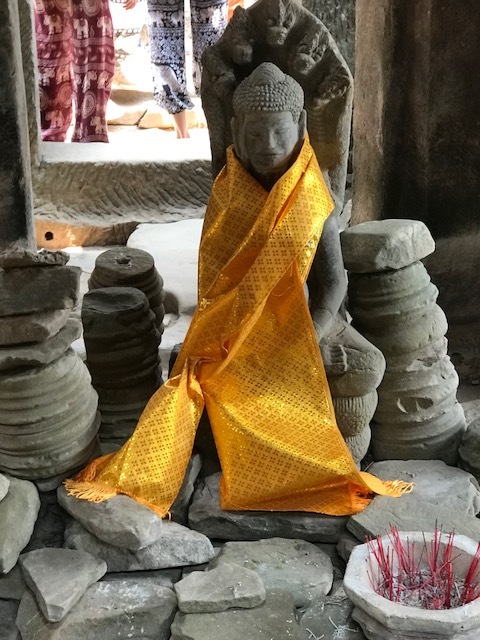
Our group ventured into Angkor Wat, an incredible 500 acre temple city complex. It is considered the largest religious monument in the world that was discovered by Portuguese missionaries around 1580. It was originally a Hindu Temple that was gradually transformed into a Buddhist temple at the end of the 12th century. It was declared a Unesco World Heritage Site in 1992 and is considered one of the Seven Wonders of the World. It has been named the top travel destination by Trip Advisor and Lonely Planet. It is an expression of Khmer architecture genius. The soaring awe inspiring temples and monuments were built between AD 800-1200. They are surrounded by a 570 foot wide moat that is filled with pink lotus flowers. It is the heart and soul of Cambodia and is a source of national pride. During its prime there were as many as 750,000 to one million people were living there.

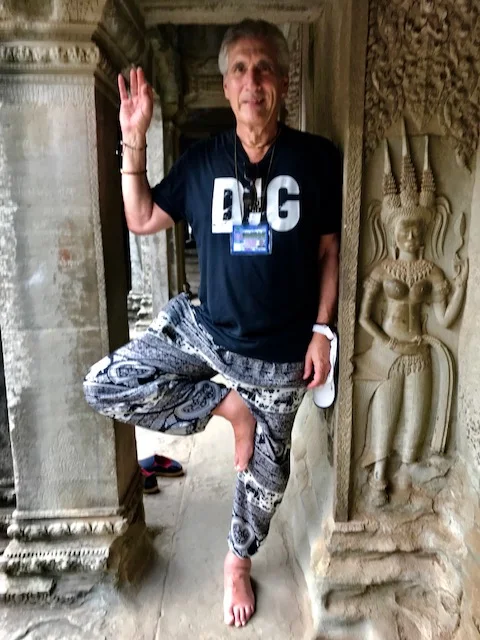
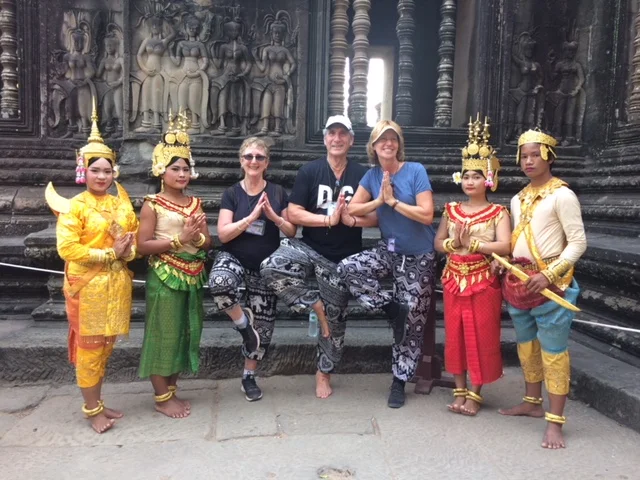
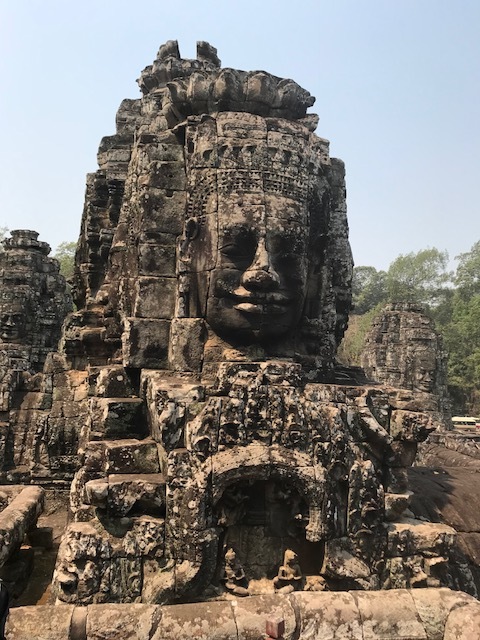
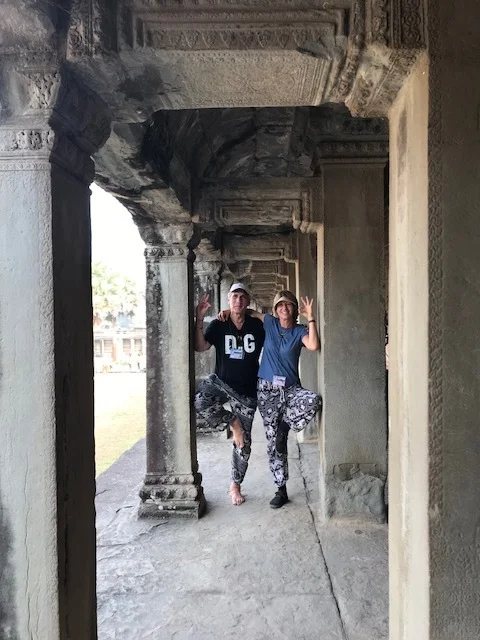
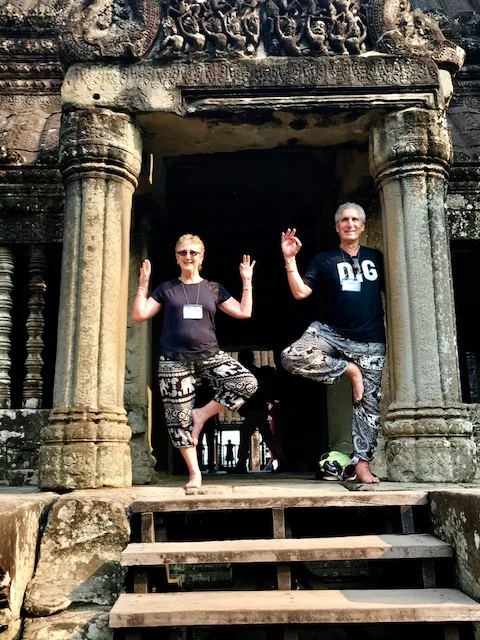
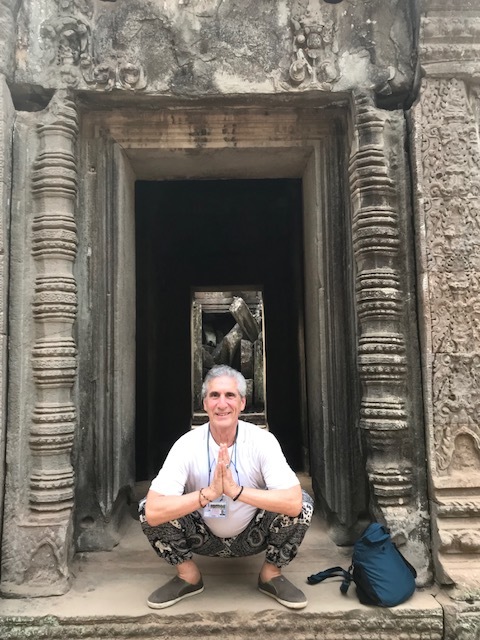
Angkor Wat is famous for its 3000 beguiling heavenly dancing nymphs carved into its walls. In the afternoon we passed through the South Gate of Angkor Thom, the capital city of the ancient Khmer rulers. We concluded with a visit to Ta Prohm, which has been left the way it was found, covered with dense jungle of trees as first discovered by the French in the mid-1800s. Our group had fun taking photos of each other at various strategic points throughout the complex. I suggested some yoga poses that fellow travelers Debbie from D.C., and Ingrid from Laguna Beach, CA seemed to enjoy. One of the most common questions asked by tourists is what do the four mesmerizing faces on all sides of the towering Buddha Statue towers represent? During my meditation studies over the years I learned that they are symbolic of loving-kindness, empathetic joy, compassion and equanimity. Often referred to the four radiant or heavenly abodes or realms, they are the universal expression of an open heart and mind that are the meditative states, thoughts and actions to be cultivated in Buddhist mindfulness practice. 

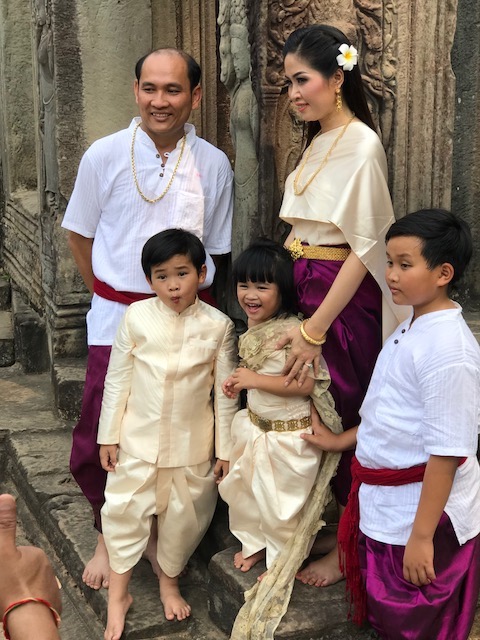
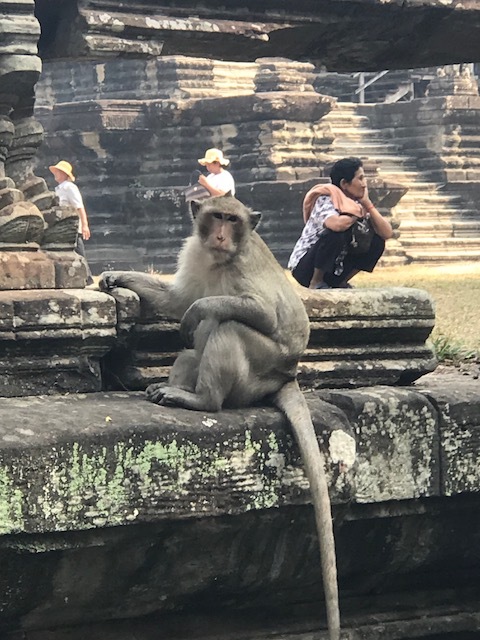
What added whimsy and joy to the day was getting permission to photograph the lovely couple seen here celebrating their wedding anniversary with their children who were more interested in the westerner in his elephant pants taking their photo rather than the photographer their parents hired. Then there were the monkeys making mischief and eating corn. 

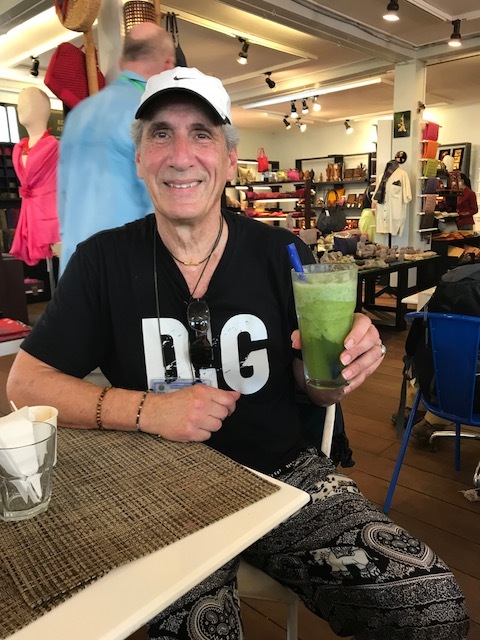
After walking many miles and climbing many steps to heights that can be challenging at times, we rested our bodies and quenched our thirst at the Angkor Cafe. I had enjoyed a cold fresh lime and mint shake and contemplated the magic of what I had once just experienced. It gave new meaning to the famous quote by architect Mies Van Der Rohe who said: “God is in the details.”

Enjoying the Angkor Paradise Hotel, Riding a Buffalo Cart & Visiting the Floating Villages

"By reaching out to and connecting with communities around the world, we learn to appreciate firsthand...our commonality...and the understandings we gain can be life-changing."—Harriet Lewis

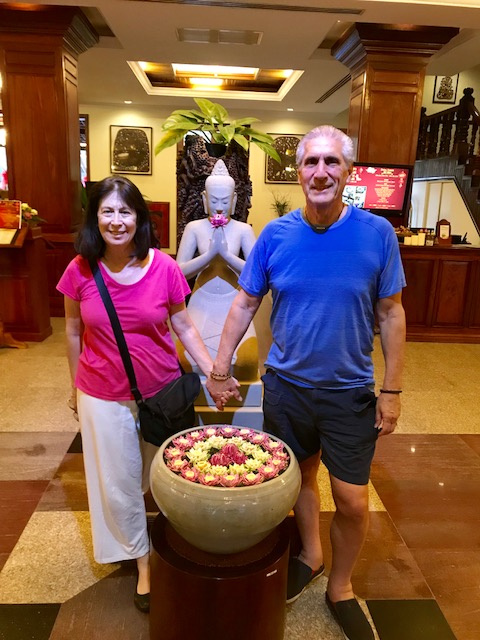
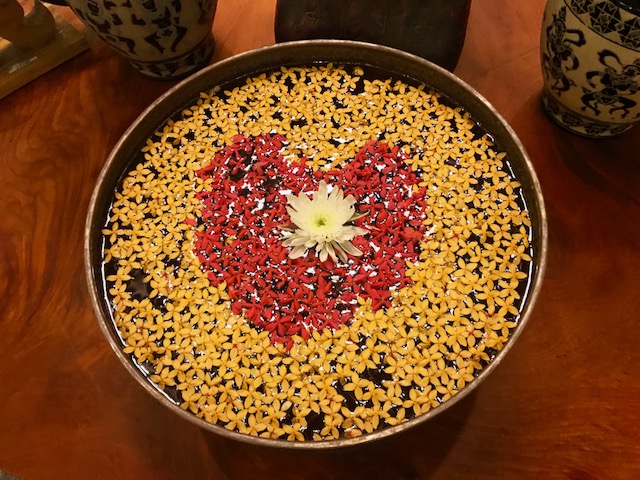
We checked into the Angkor Paradise Hotel yesterday after a four hour bus ride from Phnom Penh, Cambodia. We were greeted by staff with the traditional cold drink a cold towel. Cecile and I were captivated by the large vase of lotus flowers and a Buddha statue with hands in prayer as seen here and a young woman playing soothing local tunes on a decorative wooden xylophone. 
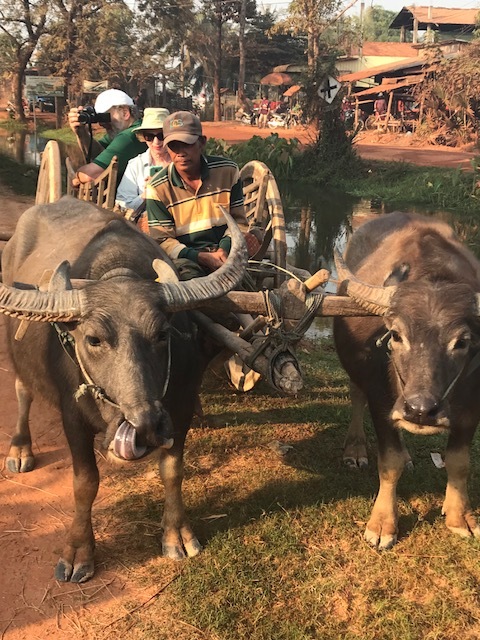
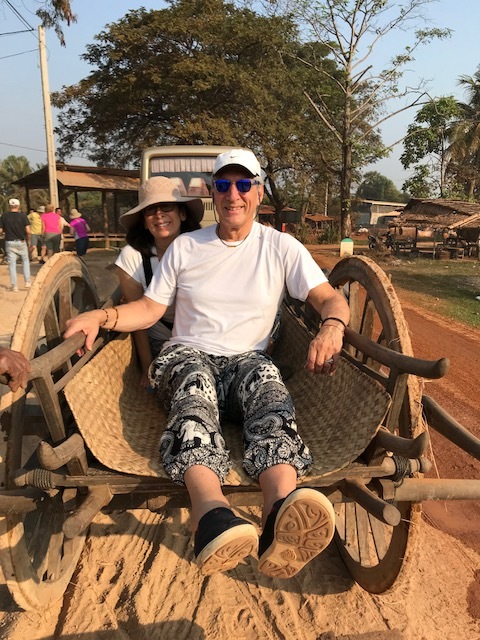
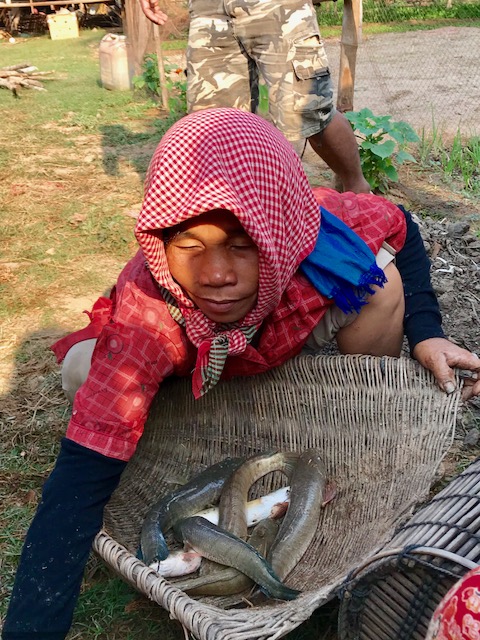
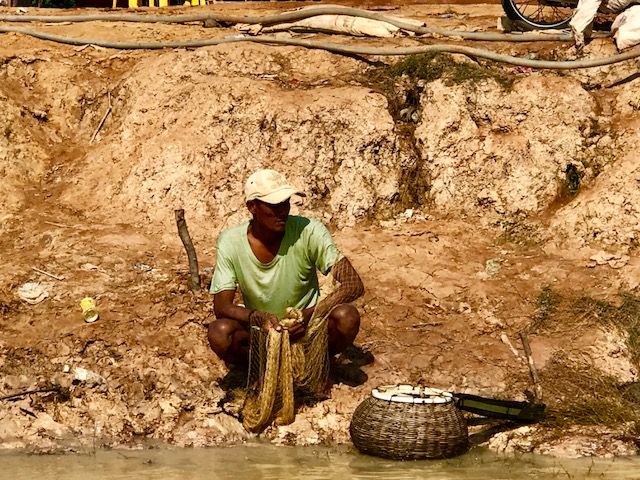
The next day we went to Tonle Sap Lake where we rode on a water buffalo cart for 35 minutes, visiting with rice patty farmers and women who were emptying fish traps of snakefish, a common variety of fish we had for for dinner the night before. Speaking of "buffalo" the delightful couple we were fortunate to meet riding in the cart behind us is Jerry and Eileen from the Buffalo, NY. 

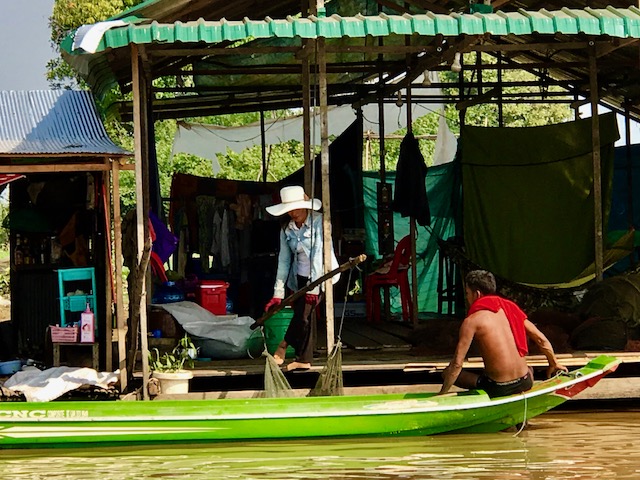
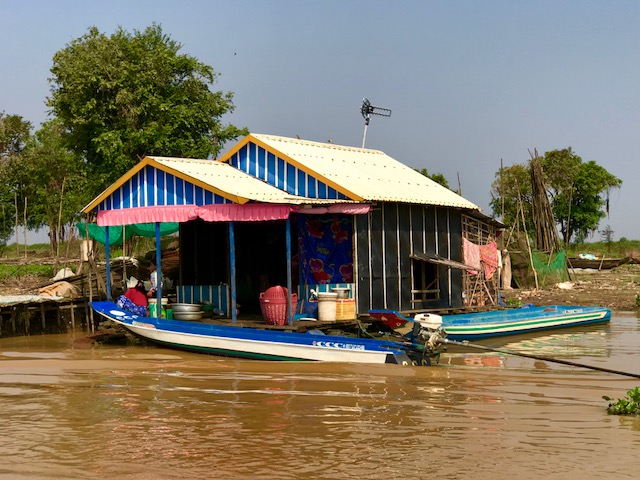
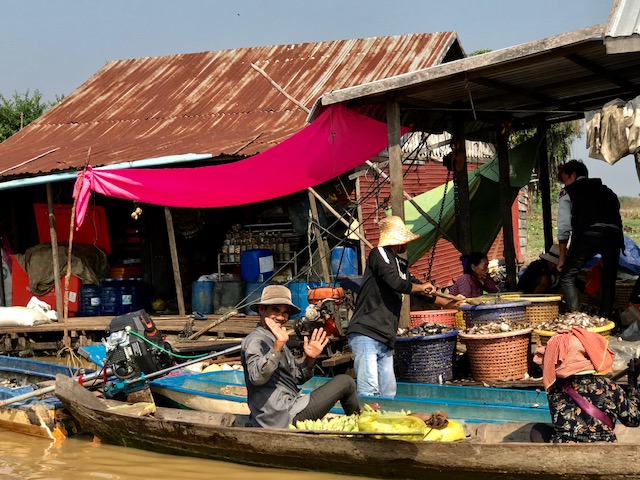
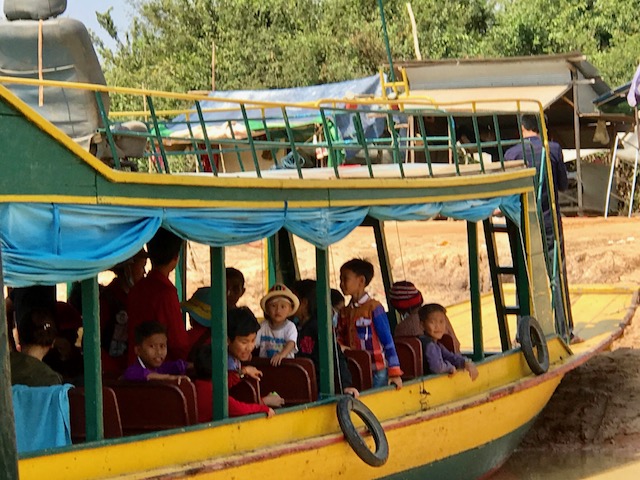
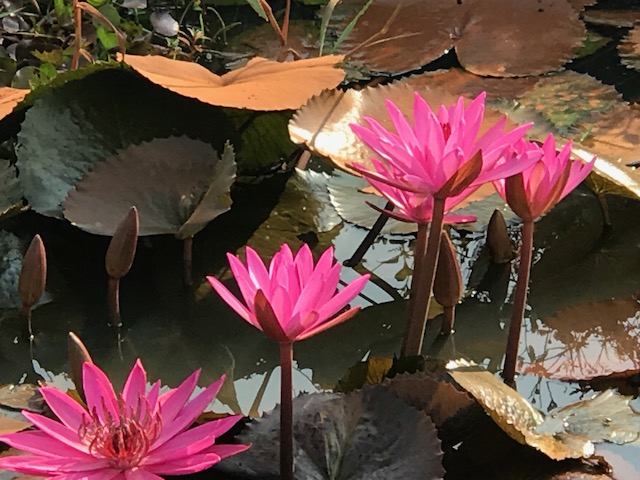
On the way to visiting nearby floating villages by boat, our bus driver stopped so we could photograph the lotus flowers which is always a site to behold. The floating villages were absolutely fascinating. There was a laundry service, a bank, a grocery store and a Catholic Church (a small minority in these neck of the woods of a mostly Buddhist population). Of course there were an infinite variety of floating homes. We made a stop to visit one belonging to a husband and wife of over 40 years. They are essentially retired though the husband, Bou, has a crocodile farm in an under water containment pen in the back of their home that he said is a lucrative past time. his wife Ny, 64 seen here in a purple and white flower print dress with her husband and Jack, our local Siem Reap guide is a midwife. She is an amazing woman. She has successfully delivered over 100 babies in the village and is well respected. She does not charge for delivering babies. She sees it as a community service. She had a little delivery kit and demonstrated how she employs it for the benefit of her patients. She learned to deliver babies from her grandmother and did some additional training at a hospital. She is very passionate about what she does. When it was time to say goodby the husband assisted us in getting back on the boat. This is another example of the Grand Circle Foundation-the philanthropic arm of Overseas Adventure Travels (OAT) providing support to a family and in the process provide travelers to experience a day in a life of people throughout the world. In this case a bathroom facility was provided for the family. After returning to the hotel we enjoyed a little down time at the hotel pool.

Meeting Spider Woman in a Cambodian Village & Eating Fried Tarantulas Just Like Angelina Jolie

As our tour bus with Overseas Adventures Travels (OAT) made it’s way toward Siem Reap, we stopped at a small village in the Kampong Cham Province to visit a widowed mother of four who supplements her income by capturing and selling “Tarantulas.” Fried spider is a regional delicacy in this region. There is even two sculptures of tarantulas erected on the center divider in town that emphasizes this fact. 
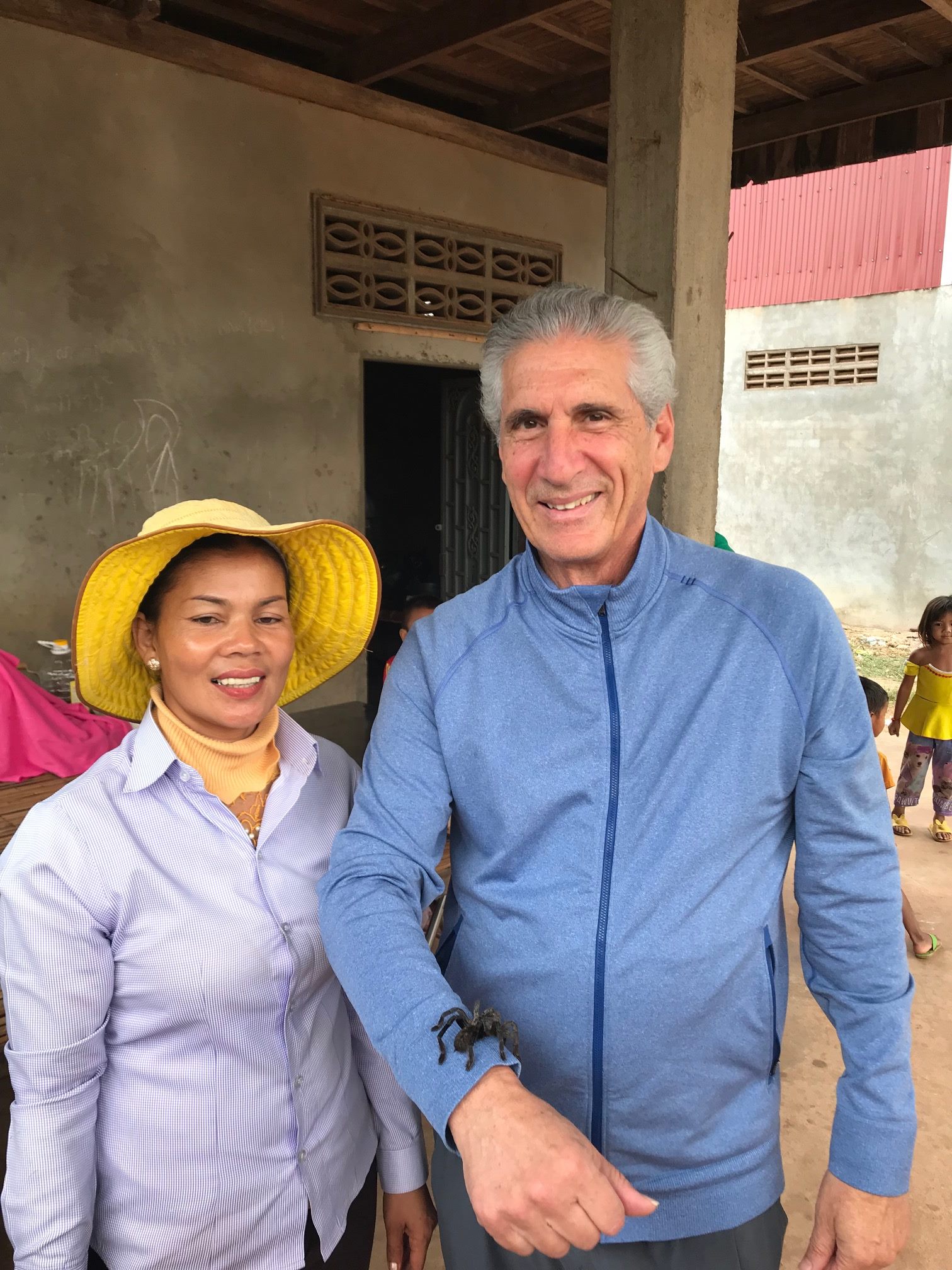
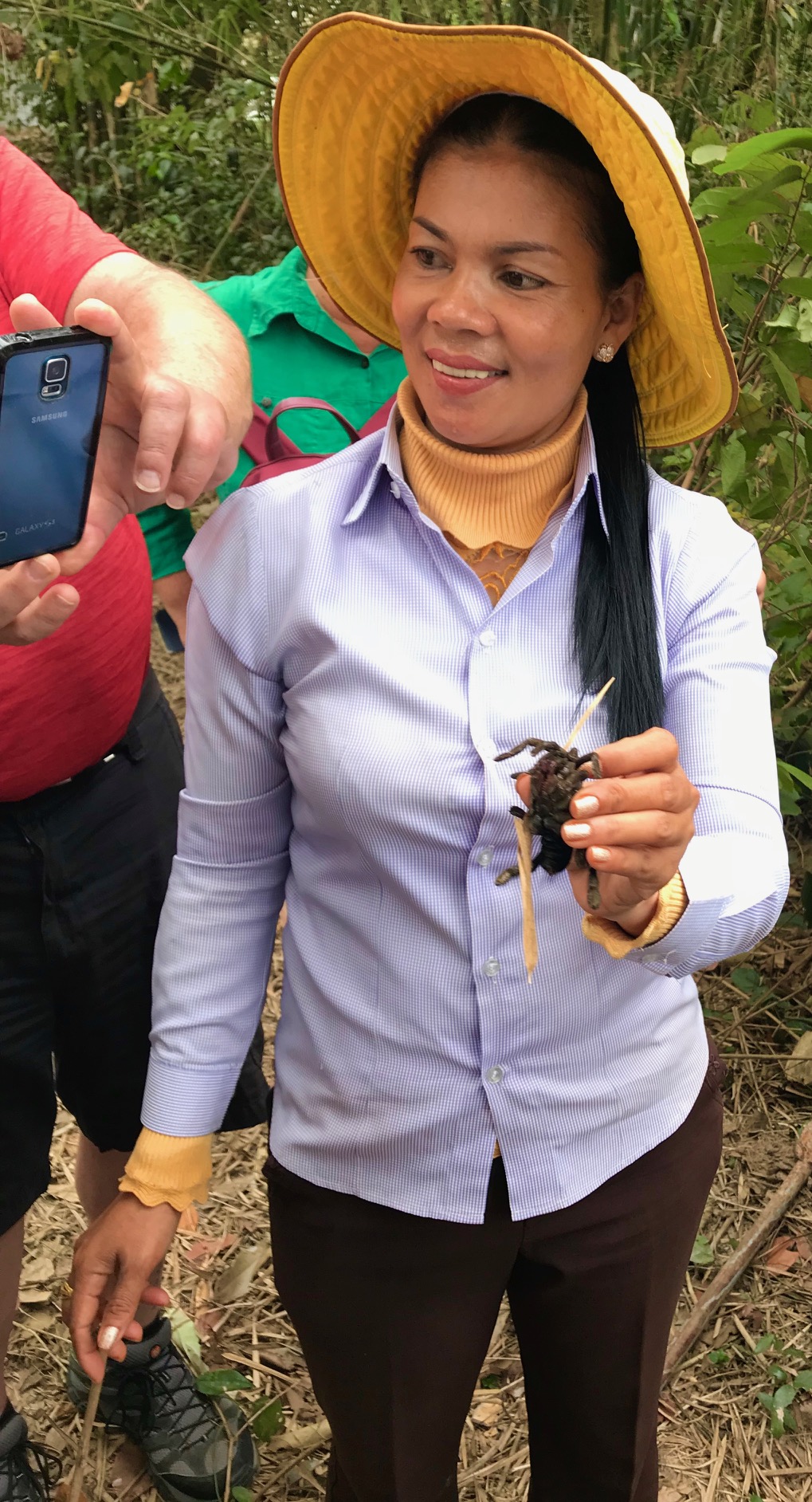
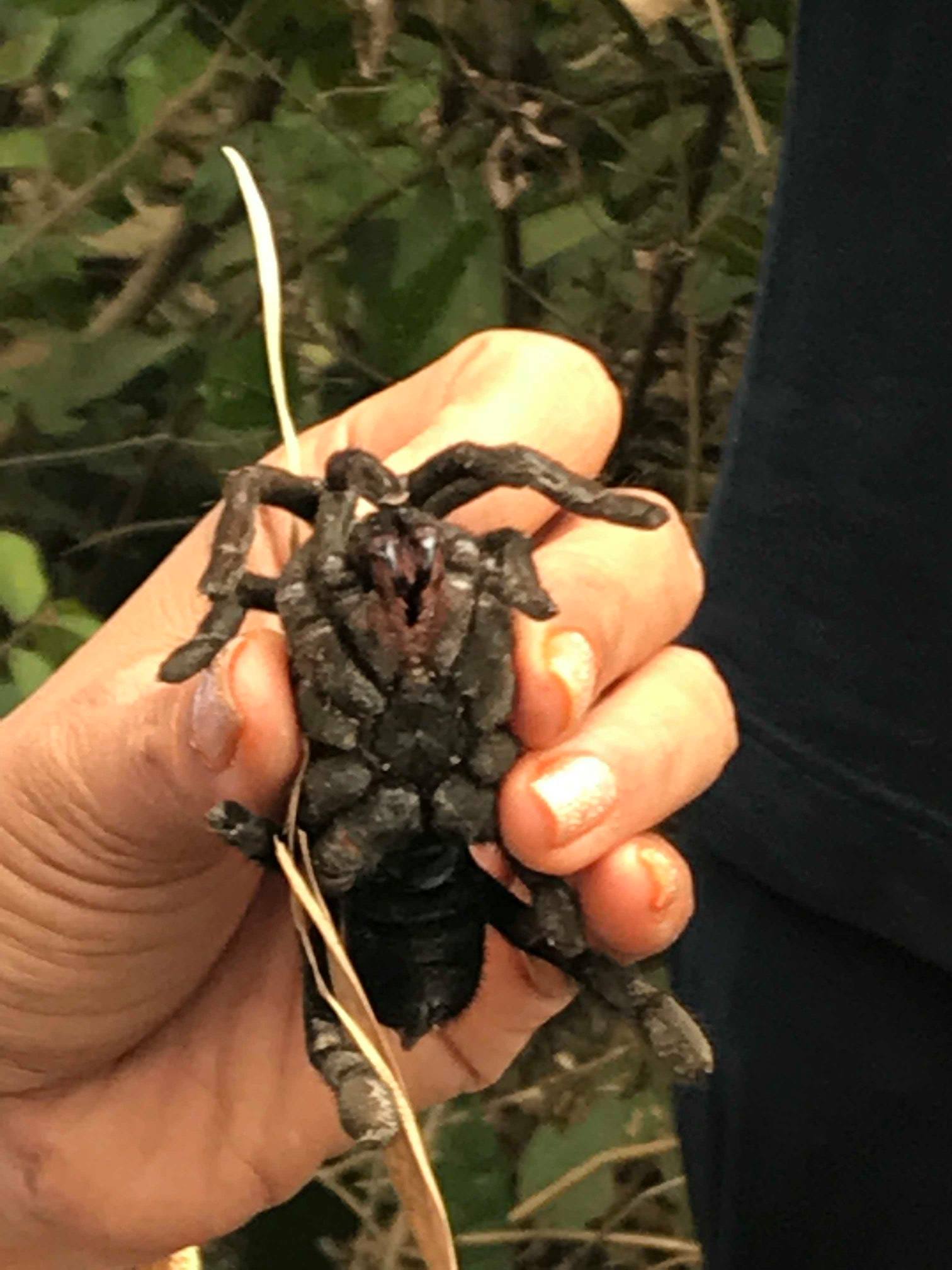
Though generally nocturnal, tarantulas can be found during the day. She showed us where the spiders are bred in holes in the ground behind her home. Once caught, she removes the venomous fangs from the furry creature, to prevent being bitten.

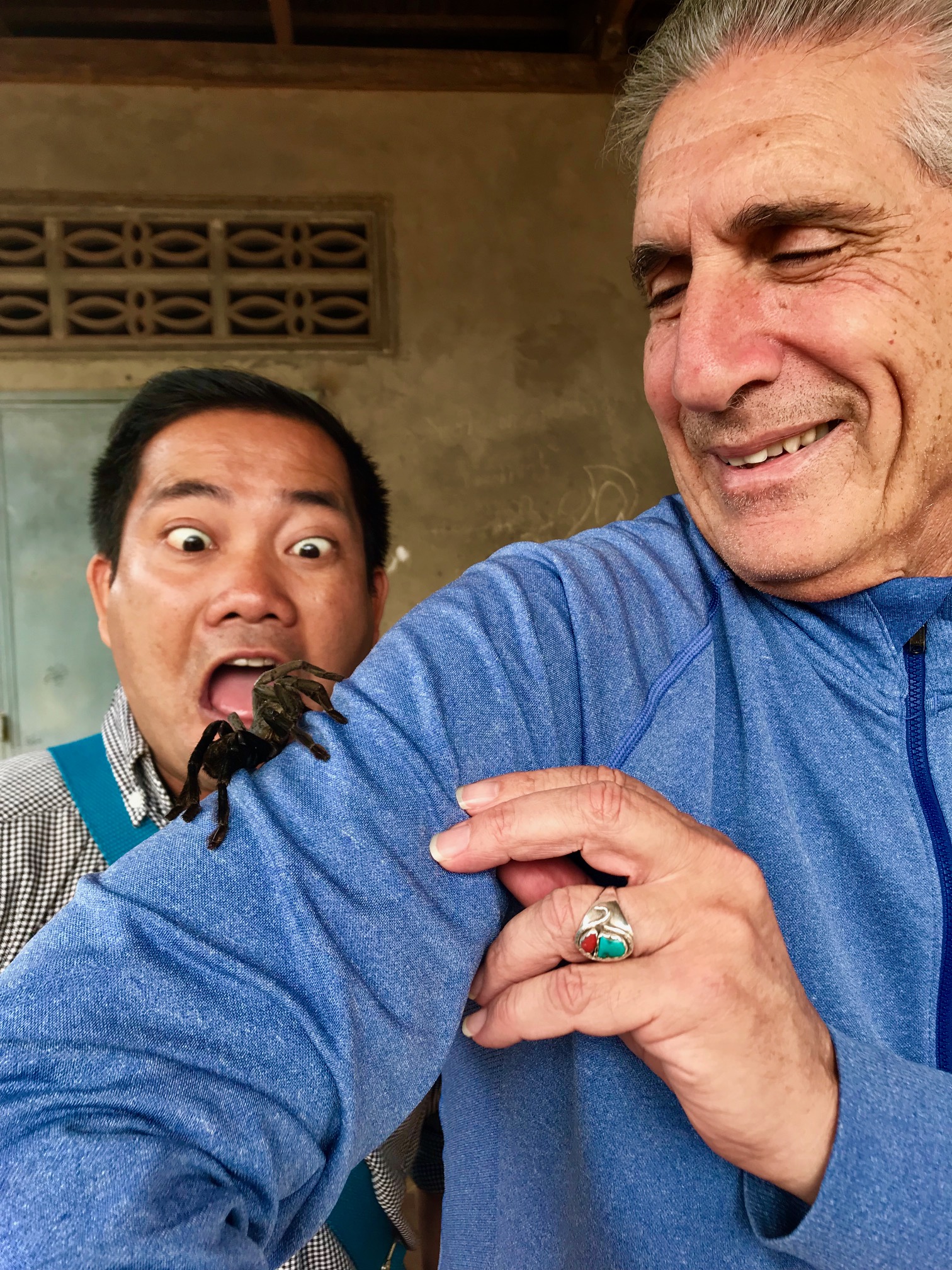
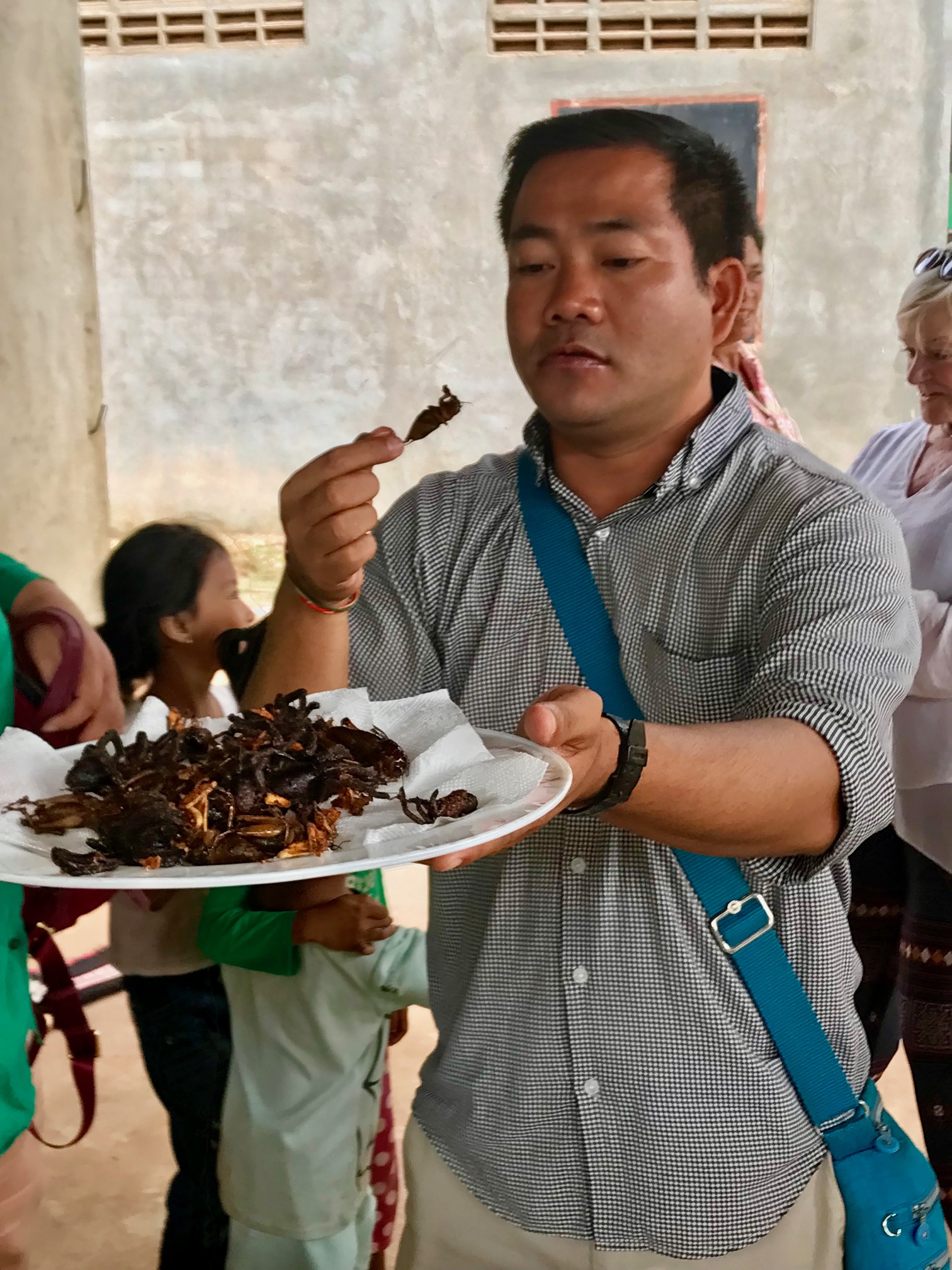
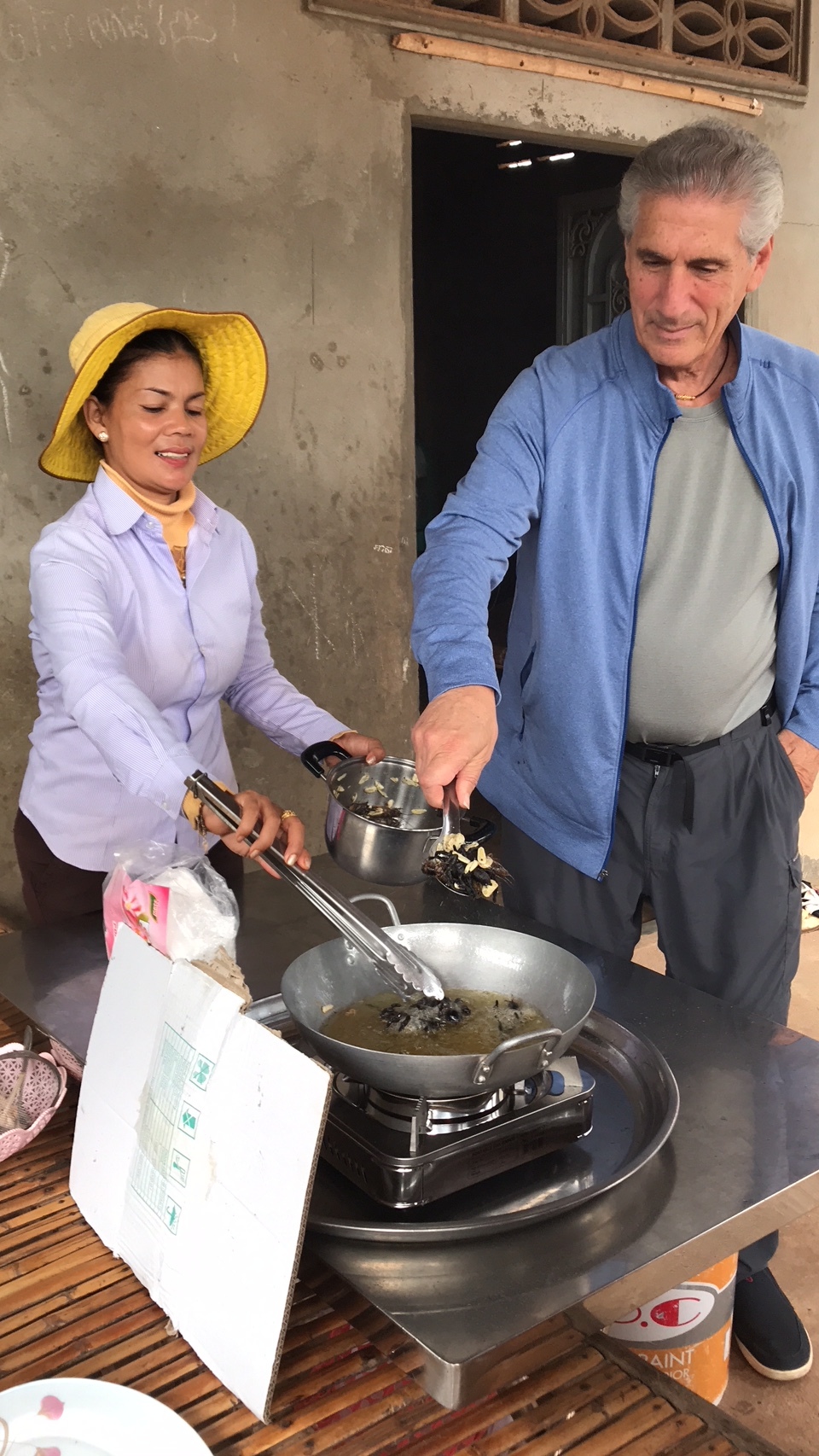
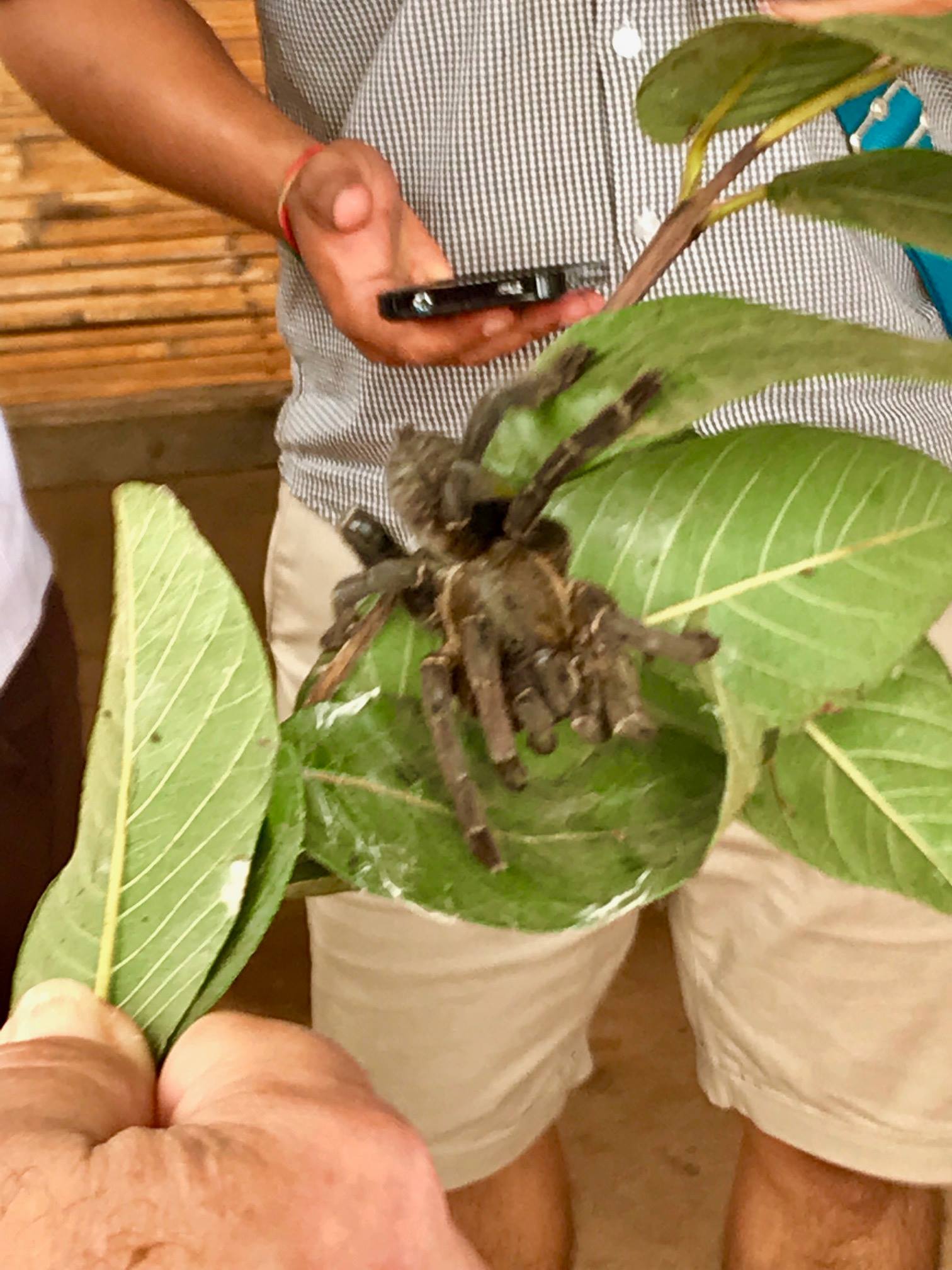
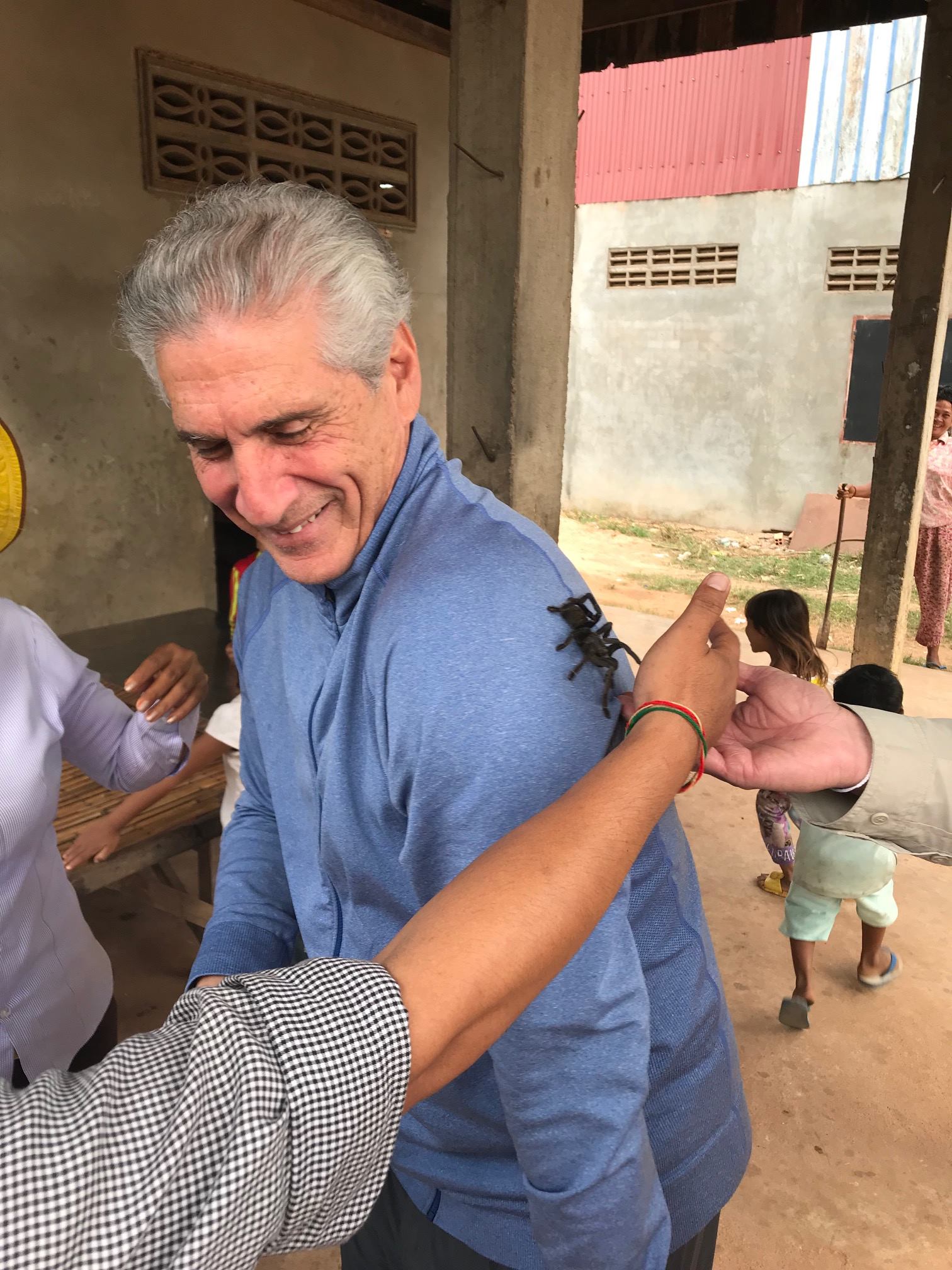
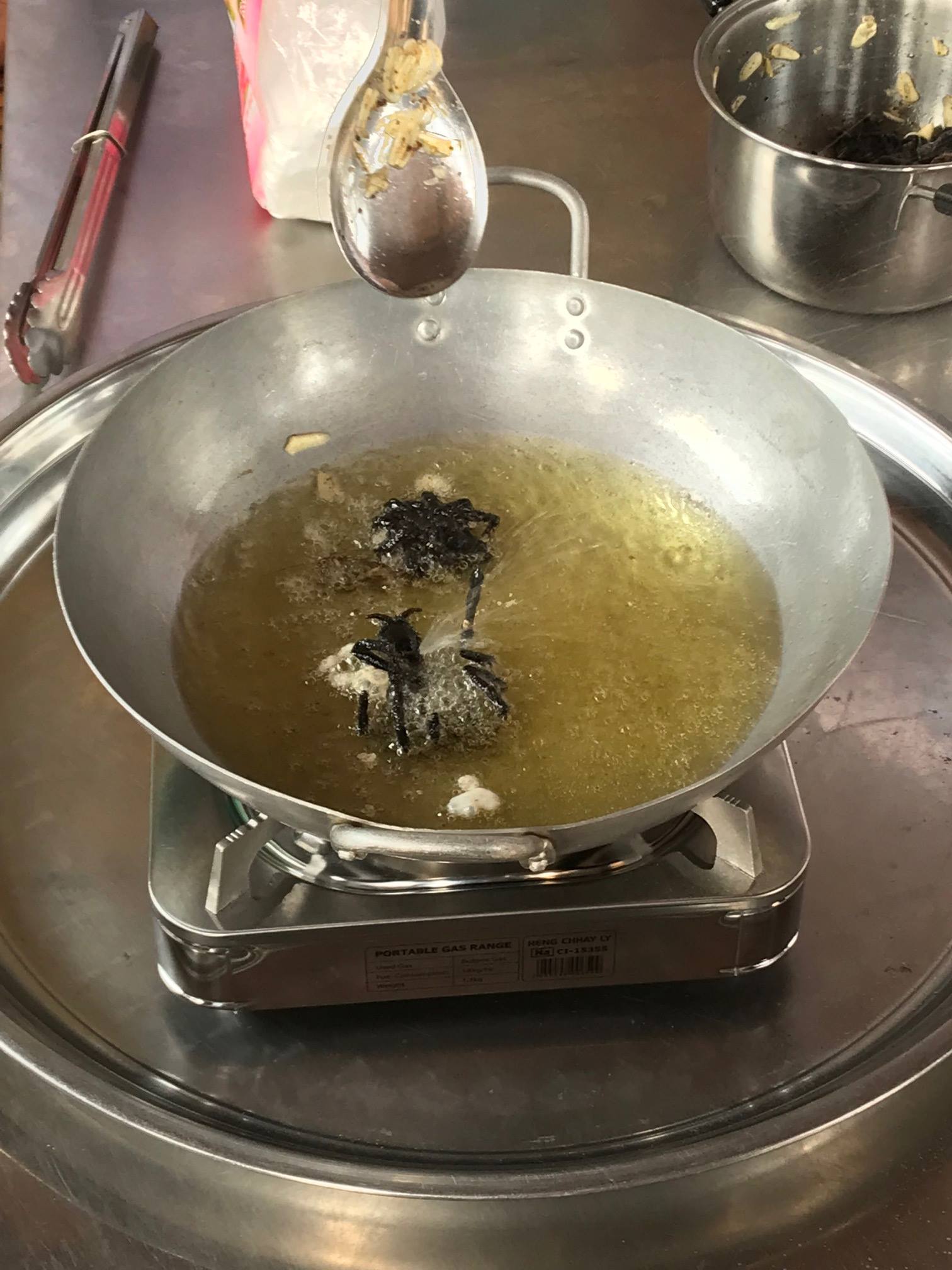
She then walked us toward the front of her house and placed the tarantulas she had caught on a branch of leaves that allowed us to hold the creatures at a distance. Having a mind of their own, they began to crawl on my hand, arms, shoulder and circled around to my back. She then marinated them in sugar, salt, crushed garlic and whiskey and demonstrated how to fry them in oil until fragrant. Some of us took turns frying one until they were completely stiff. The taste has been described as a cross between chicken and cod. It has a crispy exterior to a soft center. 

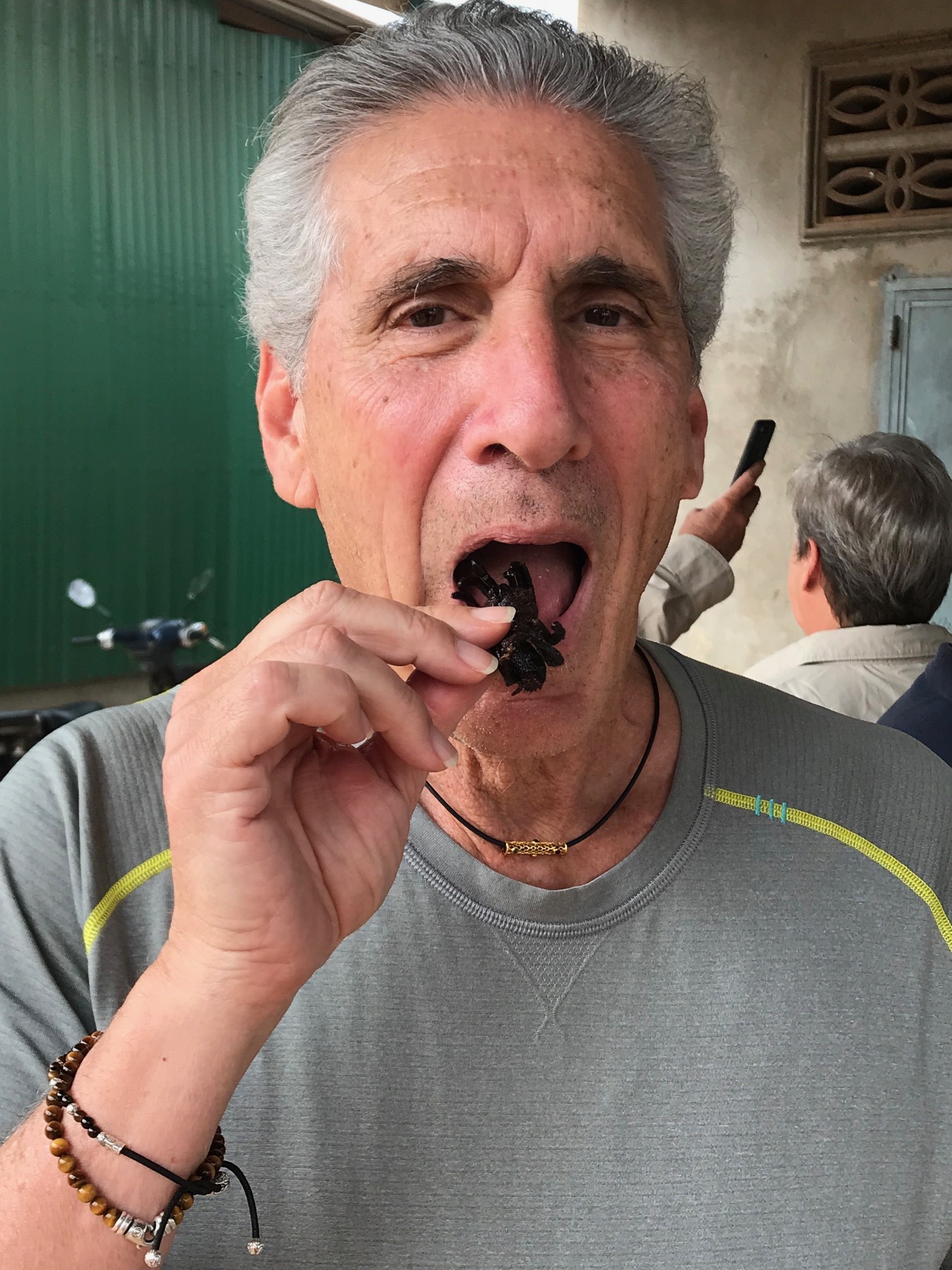
As you travel around the world, you end up trying a lot of cuisine you wouldn’t dare eat at home. However, as adventurous as I am, I never thought in a hundred years I would be eating a spider today. After all, for many of us the Tarantula represents the stuff of nightmares and horror movies. 

Cambodians have long hunted spiders for food and medicine but it wasn’t until the severe food shortages during the genocidal Khmer Rouge regime in the mid-1970s that people turned to them as a food staple. 

Tarantulas, have been rumored to be used as a traditional cure for backaches and breathing disorders. They are also a good source of protein, folic acid and zinc, making them an excellent supplement to one’s diet. They are also known to make women more beautiful as our local guide, Jack told us. He reinforced his claim by rhetorically asking, “Isn’t she beautiful?” Jack is single and is looking for a woman but said “She’s too pretty for me.”

The merchant trade in tarantulas got a big boost from celebrity chef Gordon Ramsay, who captured and cooked them in an episode of Gordon’s Great Escape in 2011.

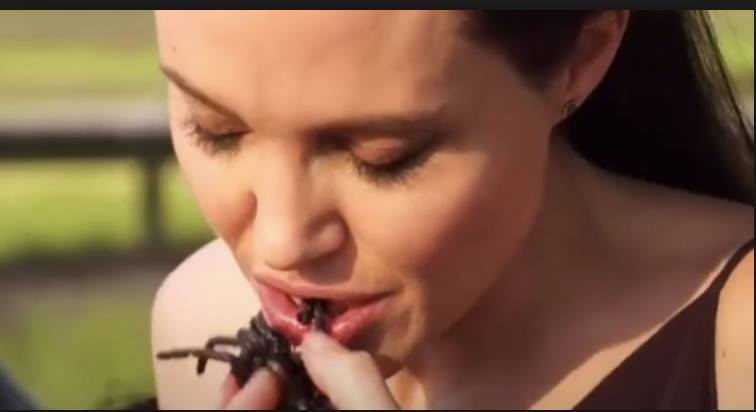
Postscript: Actress Angelina Jolie cooked and ate tarantulas with her kids (see last photo) during an interview with the BBC to promote her movie filmed in Cambodia last year called "First They Killed My Father" about the genocide of the Cambodian people by the Khmer Rouge under Pol Pot.

The Honor of Meeting The Artist Who Survived the Killing Fields of Cambodia

In 1975, when Cecile and I first moved to San Jose, CA to start my podiatry practice, the Cambodian genocide orchestrated by the Khmer Rouge (KR) regime led by Pol Pot was underway. It is estimated that between 1.5 to 3 million Cambodians were killed during the vicious four-year campaign. 

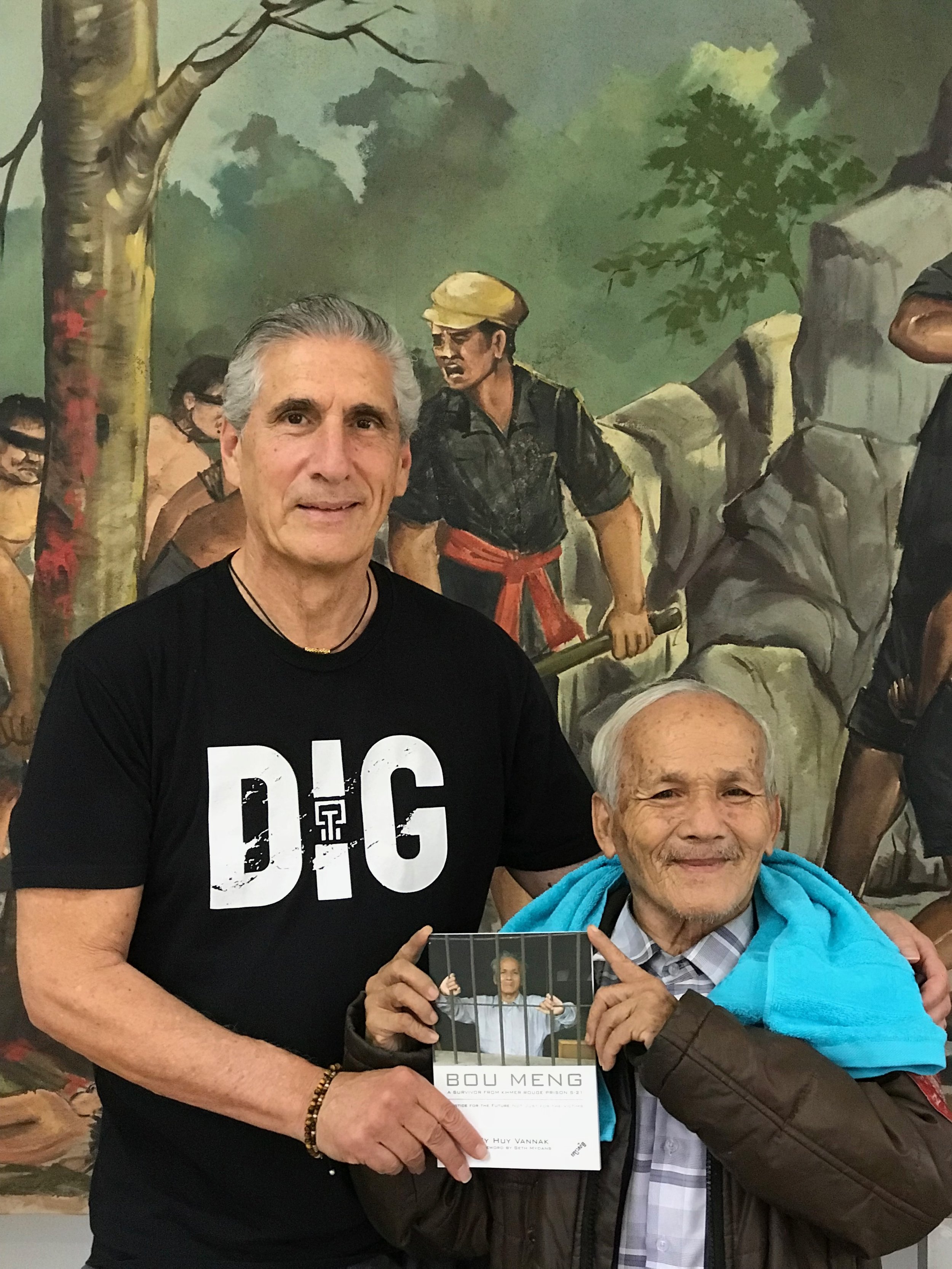
Members of my tour group including myself had the rare opportunity and honor to meet Mr. Bou Meng, one of the survivors of the notorious Tuol Sleng prison in Phnom Penh, Cambodia—the site where it all happened.

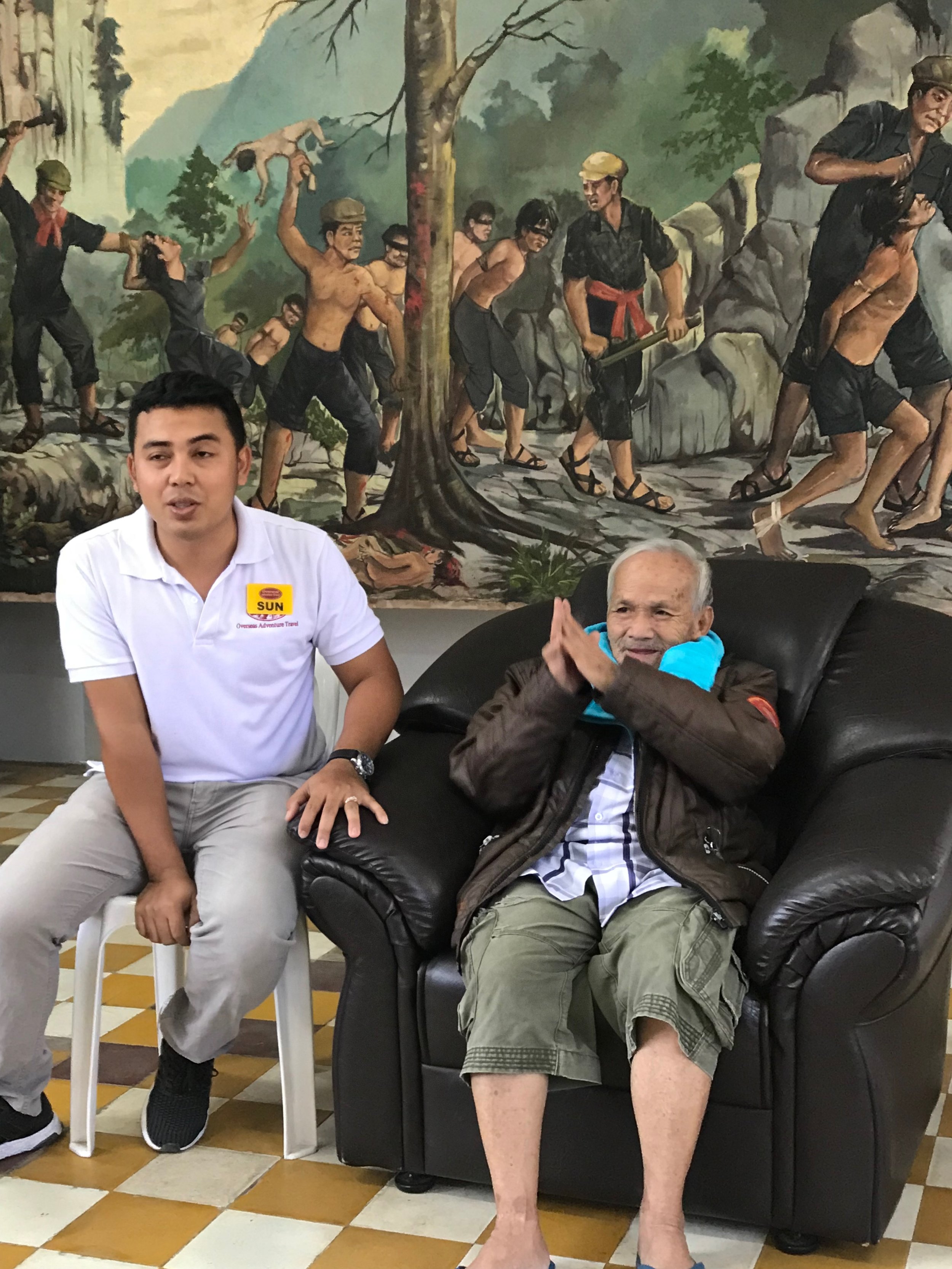
I had been to the Killing Fields and Genocide Museum about 14 years ago with my son Jason during a one month tour of Southeast Asia. I wanted him to know that there were other genocides that have taken place around the world other than the one of his Jewish heritage. No words can describe the incredible sadness one experiences when you see photos of the merciless torture of Cambodians. Amazingly, with all that Meng went through including the loss of his two children to disease during the Pol Pot years, and the loss of his wife, the 73 year old survivor is a delightful, humble and affectionate man. When he walked into the room to greet us, he took each of our hands into his then clasped his hands and bowed toward us. We each told him our name and where we were from. After the introductions we had a Q & A with our local guide, "Sun" doing the translation.

Bou Meng’s said he owes his life to his ability of being a artist. He was first asked to paint pictures of machine parts for a training program for the Khmer Rouge soldiers. Later, he was asked to paint portraits of Pol Pot. If he failed, he would have been executed. Due to his skill and Pol Pot being happy with how he was portrayed he was rewarded with larger portions of food to eat.

“Every night I looked at the moon,” Bou Meng said. “I heard people crying and sighing around the building. I heard people crying out, ‘Mother, help me! Mother help Me!,” he repeated. They were being loaded into trucks and sent to a killing field.” Every night he thought his time would come, but when midnight passed, he realized he would live another day. “ It was during the 2009 war crimes tribunal that Meng learned his wife, Ma Yeoun (Prisoner 331) was arrested, tortured and killed on August 16, 1977.

The ghost of those who died says Meng, call out to him every night pleading to seek justice on their behalf.

Monks Tutor Our Group in Meditation at the Temple of 10,000 Buddhas & Visiting Other Magnificent Sites

"The goal of meditation is not to get rid of thoughts or emotions…it is to become more aware of them and learn how to move through them without getting stuck.”
—Dr. P. Goldin

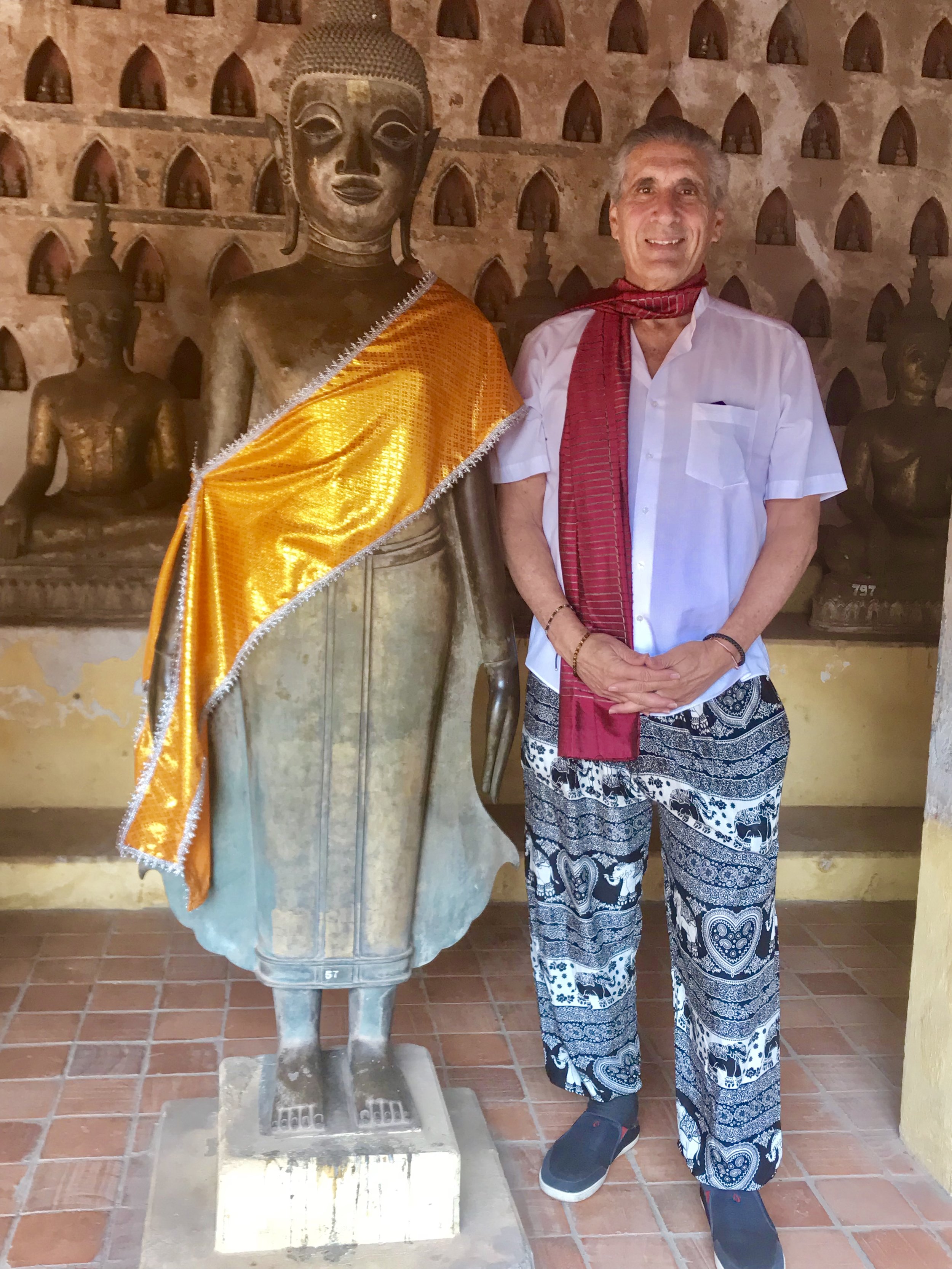
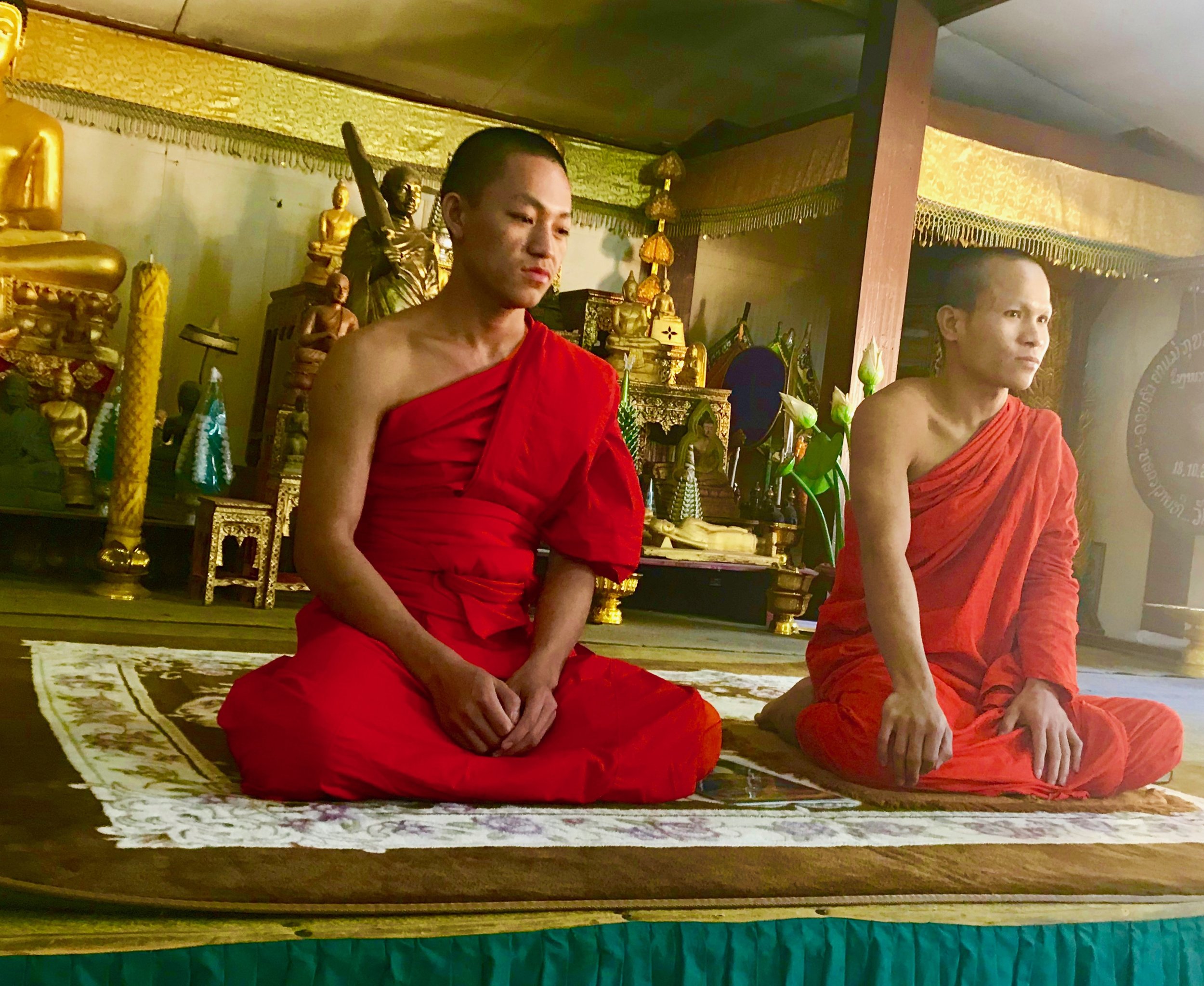
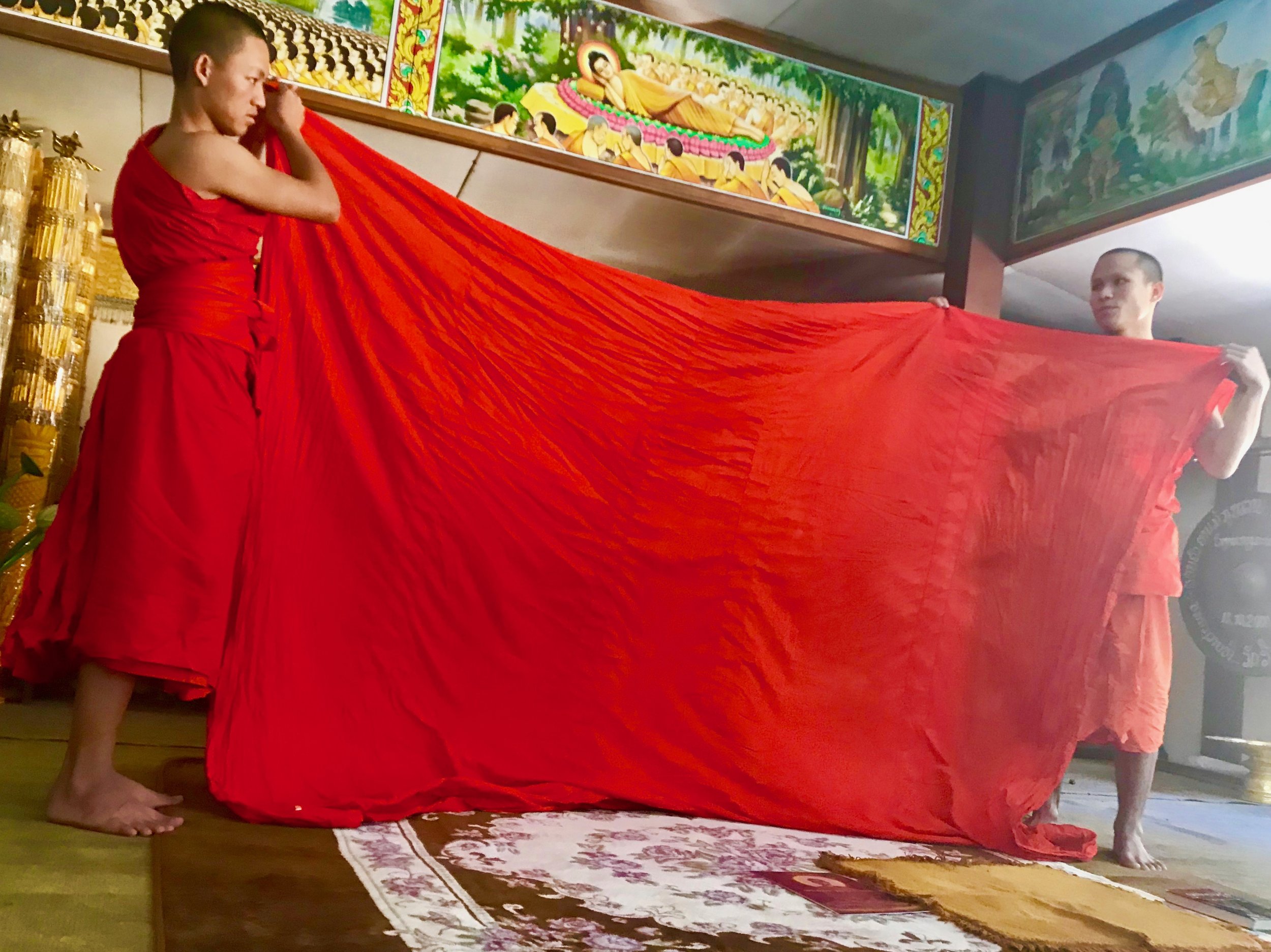
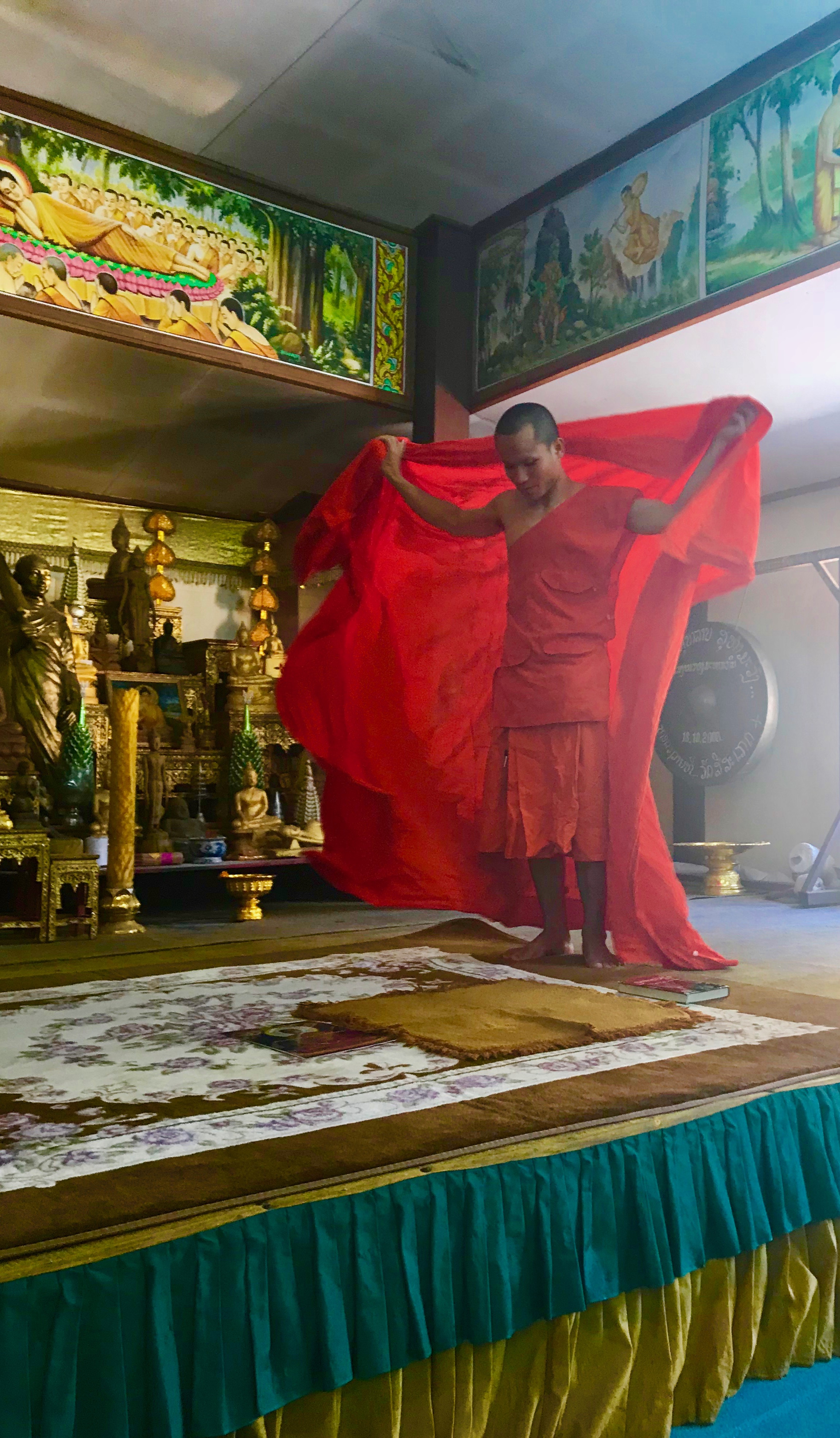
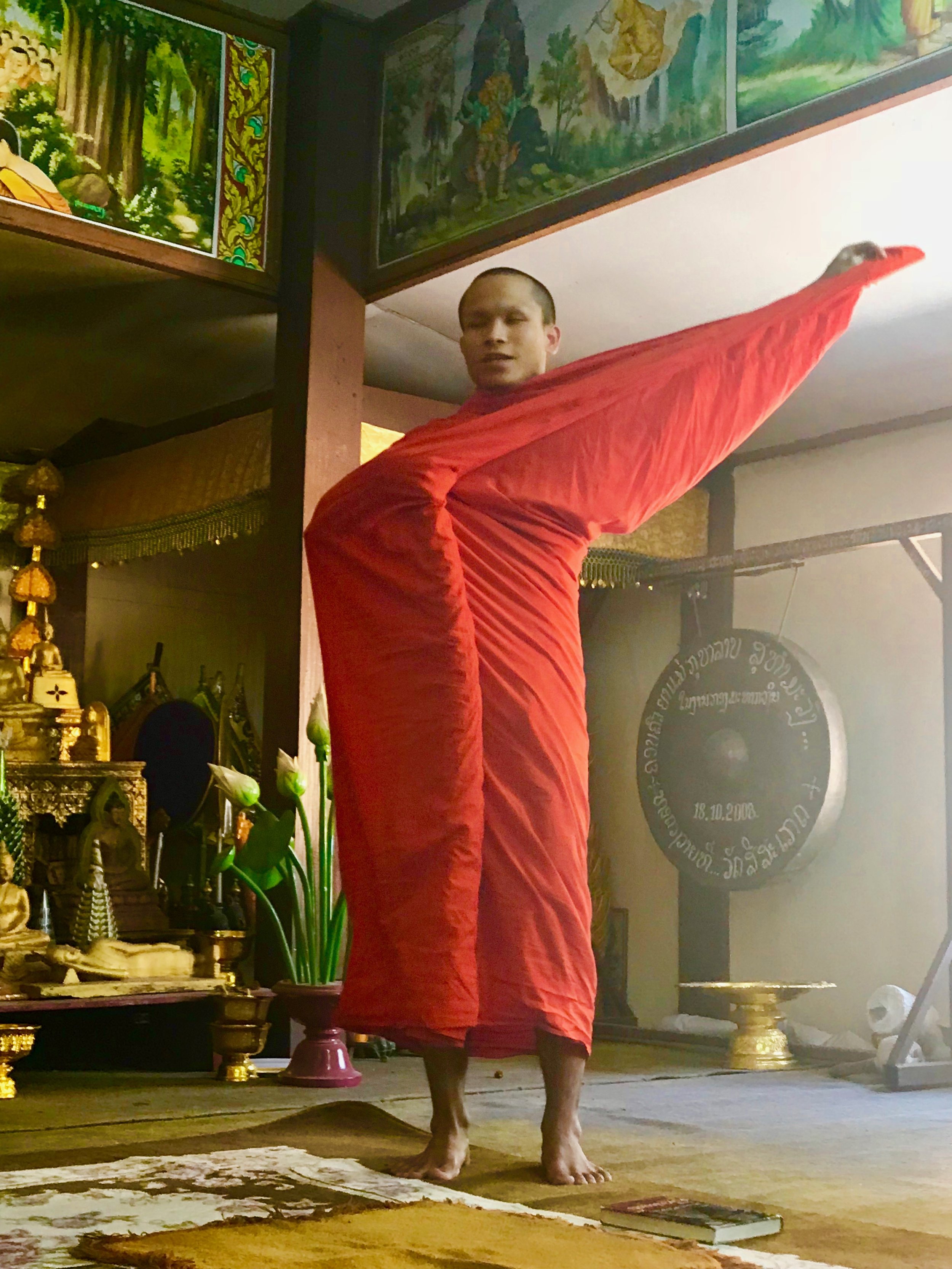
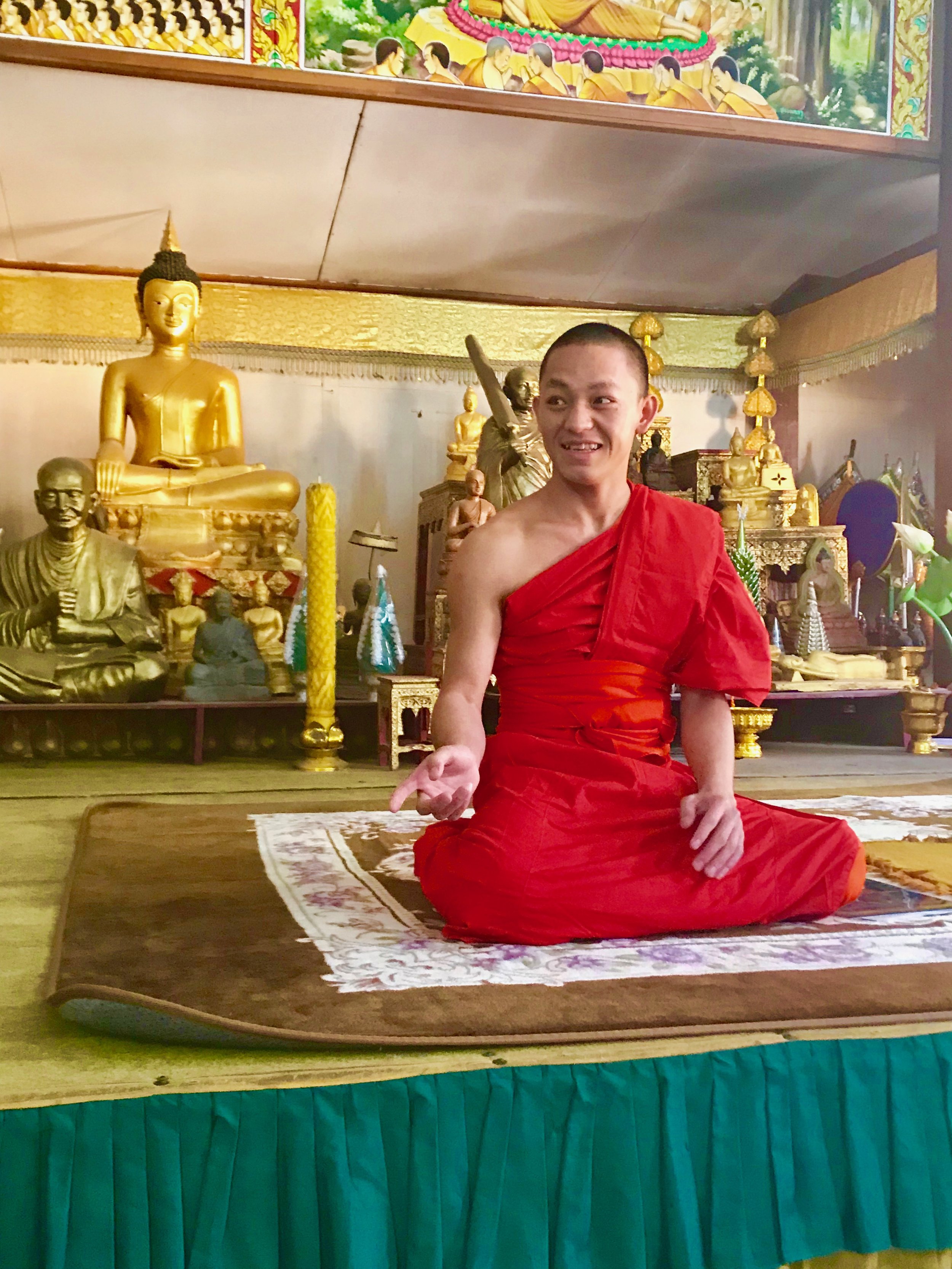
Cecile and I are currently in Vientiane, the capital city of Laos. It is a place of grandeur and laid back at the same time. Our first stop is Wat Sri Saket. There is a joke that Lin, our practicing Buddhist guide tells us. OAT which is short for Overseas Adventure Travels also means: OH, ANOTHER TEMPLE. But she will be the first to tell you that Wat Sri Saket is not just another temple by any means. It is a nineteenth century Buddhist monastery built in 1827 that houses over 10,000 Buddha Images and appears in its original form. Approximately 7000 of these Buddhas are contained in niches within the cloistered walls. The right hand gesture of the larger Principal golden Buddha image in the main hall is touching the ground, “Calling the Earth to Witness,” the “Buddha’s Awakening." After all, the Buddha means the “Awakened One.” It is here where we had the opportunity to ask questions of the novice and senior monk about their daily, routine, witness how they fold and unfold their robes and have them tutor the group in a ten minute meditation exercise. Phet (pronounced Pet) our English-speaking Lao guide, who was an ordained monk for 8 years translated for us. We sat with our spine erect either on chairs or on a mat like I am doing here in the photo. The monk had us concentrate on the moment to moment movement of our breath and the rising and falling of our abdomen while witnessing any thoughts or sensations that arise as simply background noise and nothing to get attached to. The premise is that all mind states, uncomfortable emotions and bodily sensations, come and go and it is our constant identification with them that makes one feel agitated, unsettled or subject to feeling dissatisfied or discontented. It is that constant ruminating about the past or the future that robs us of the present moment.
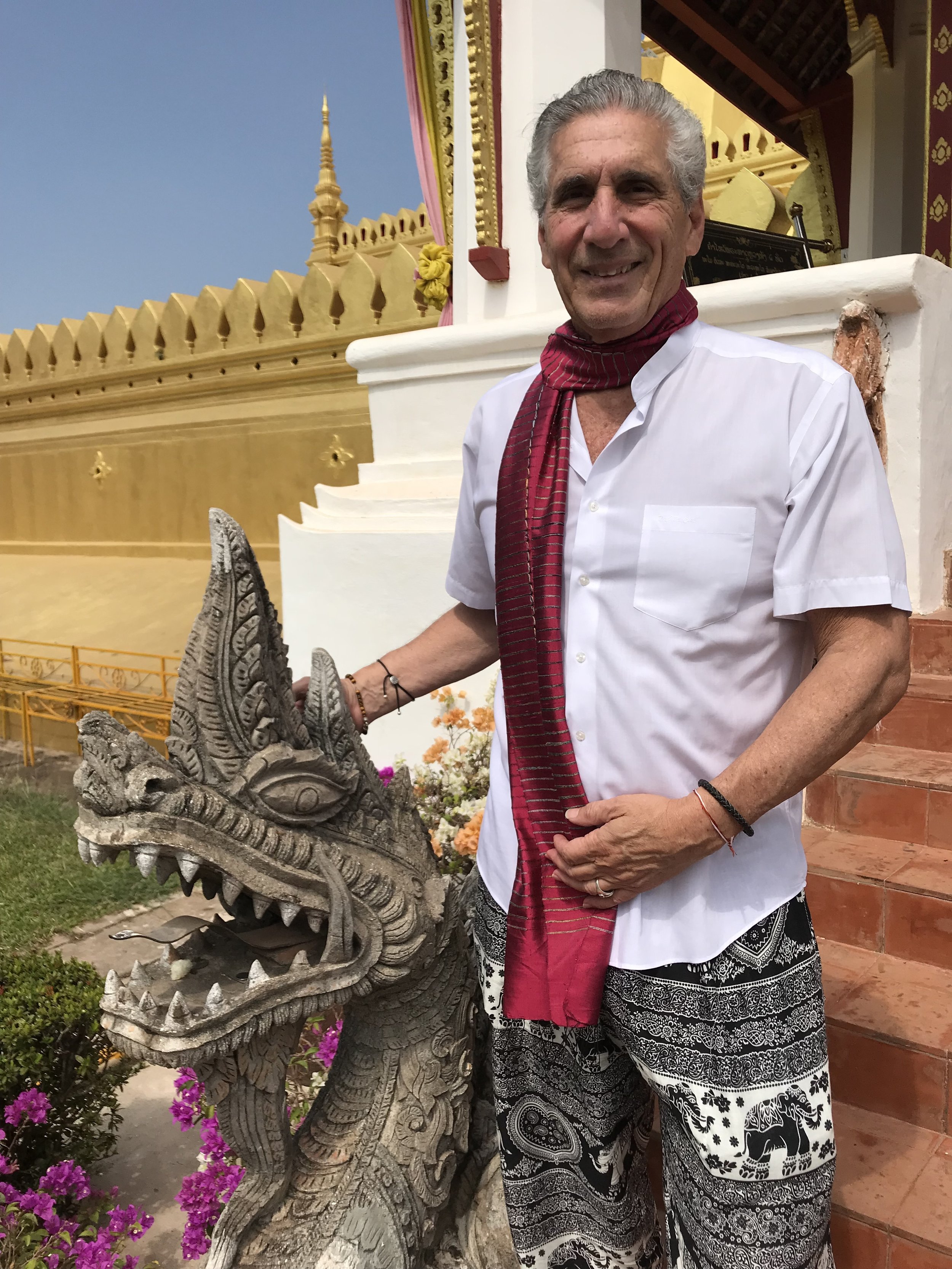
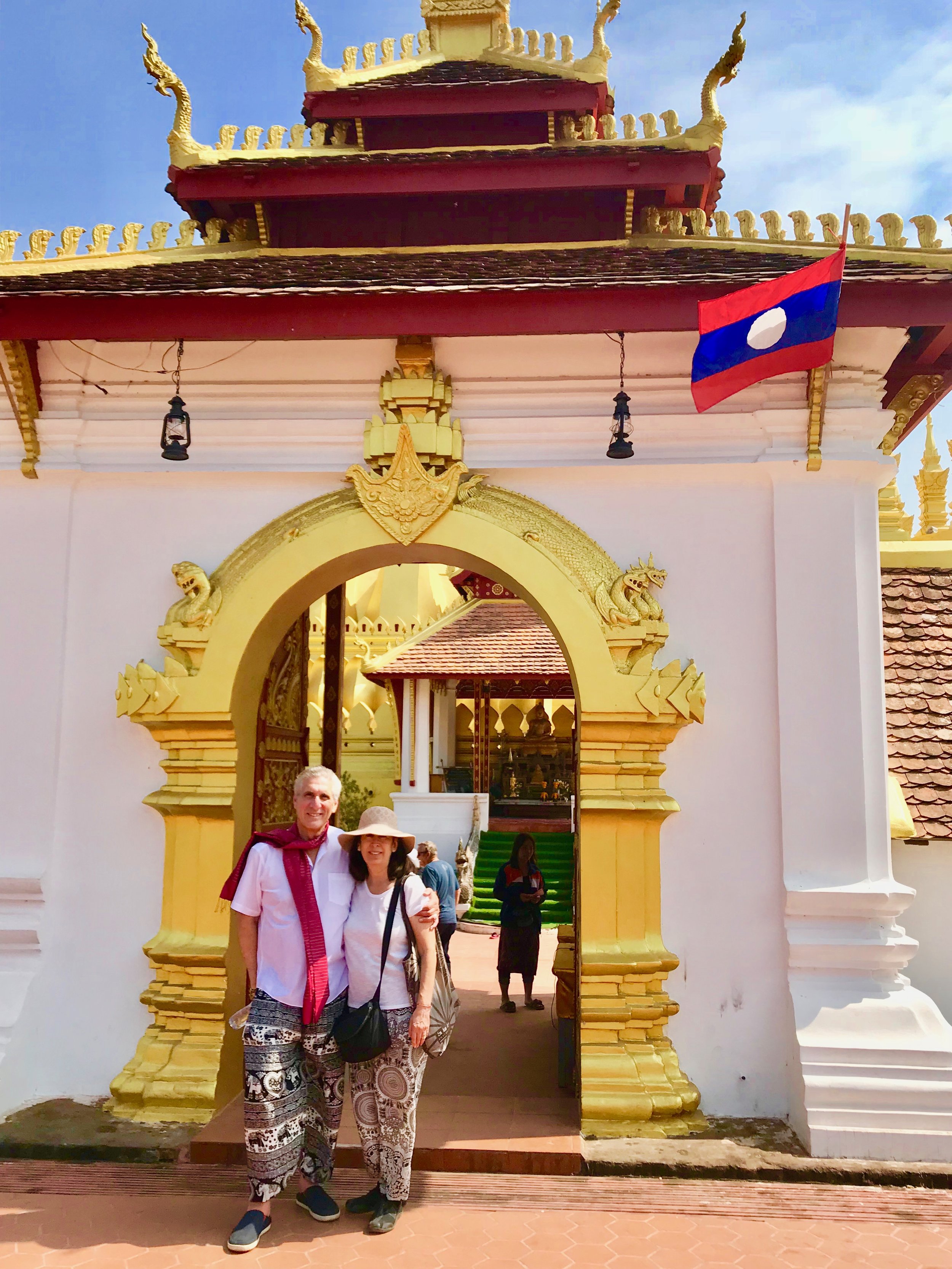
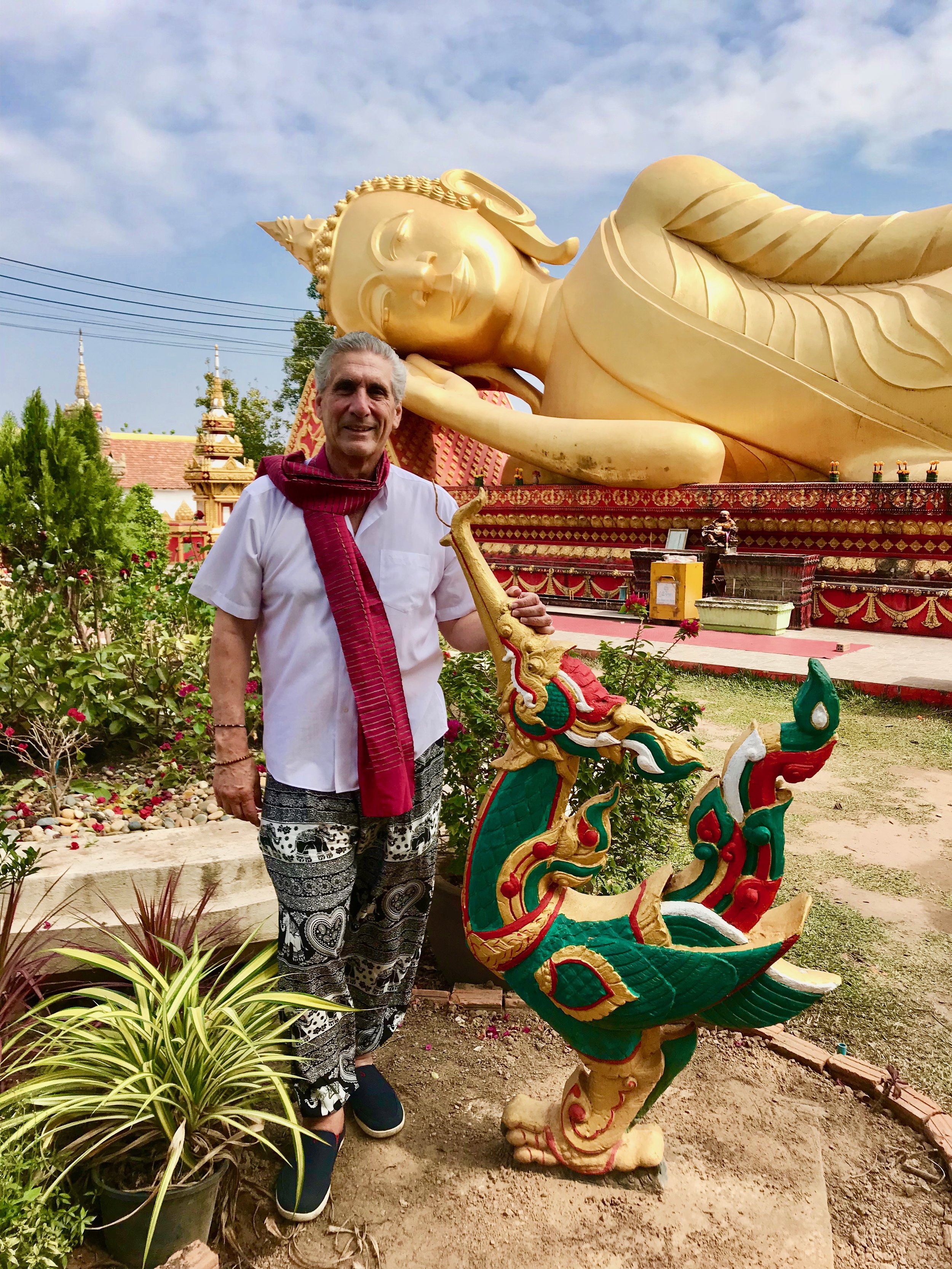
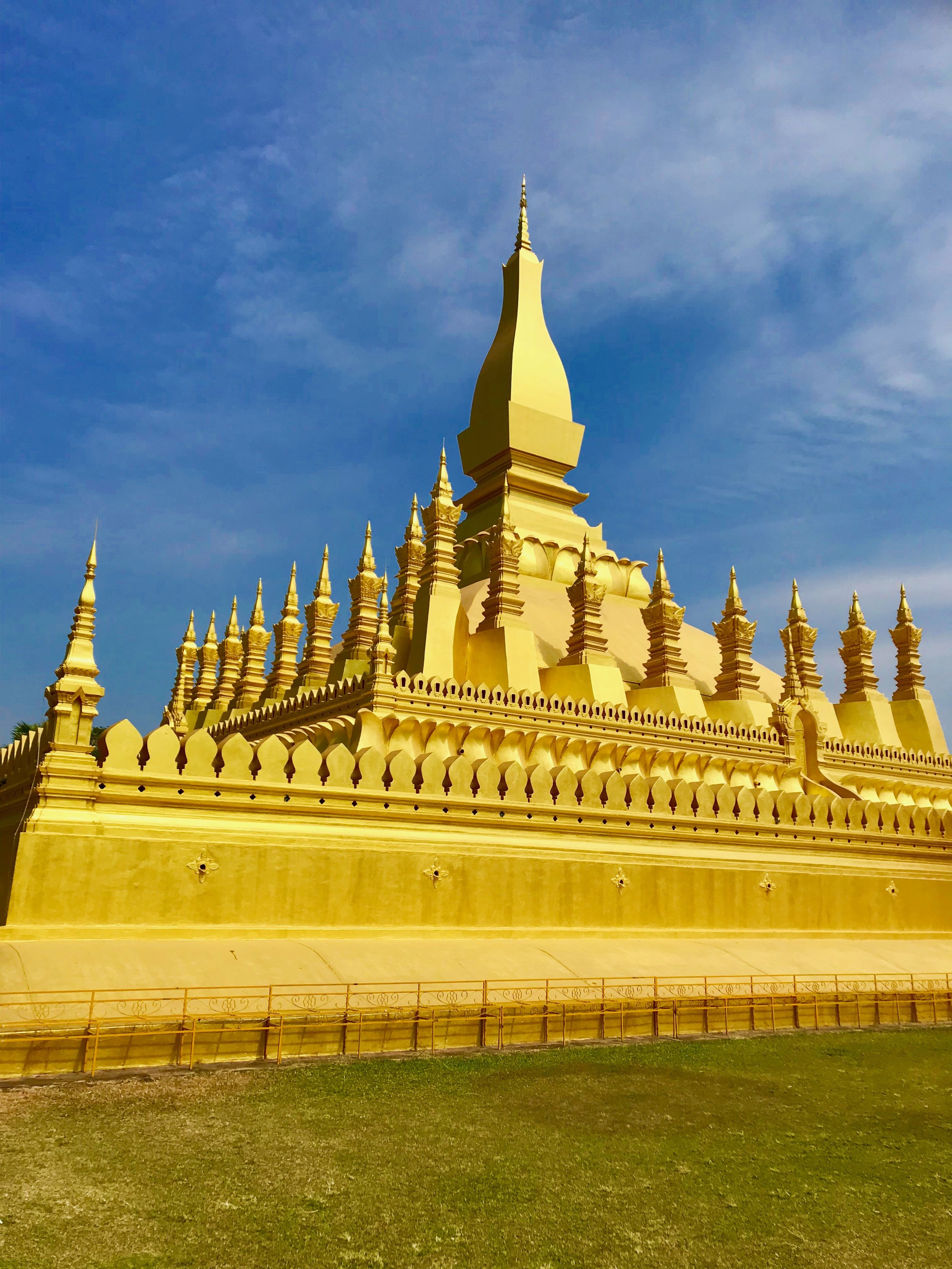
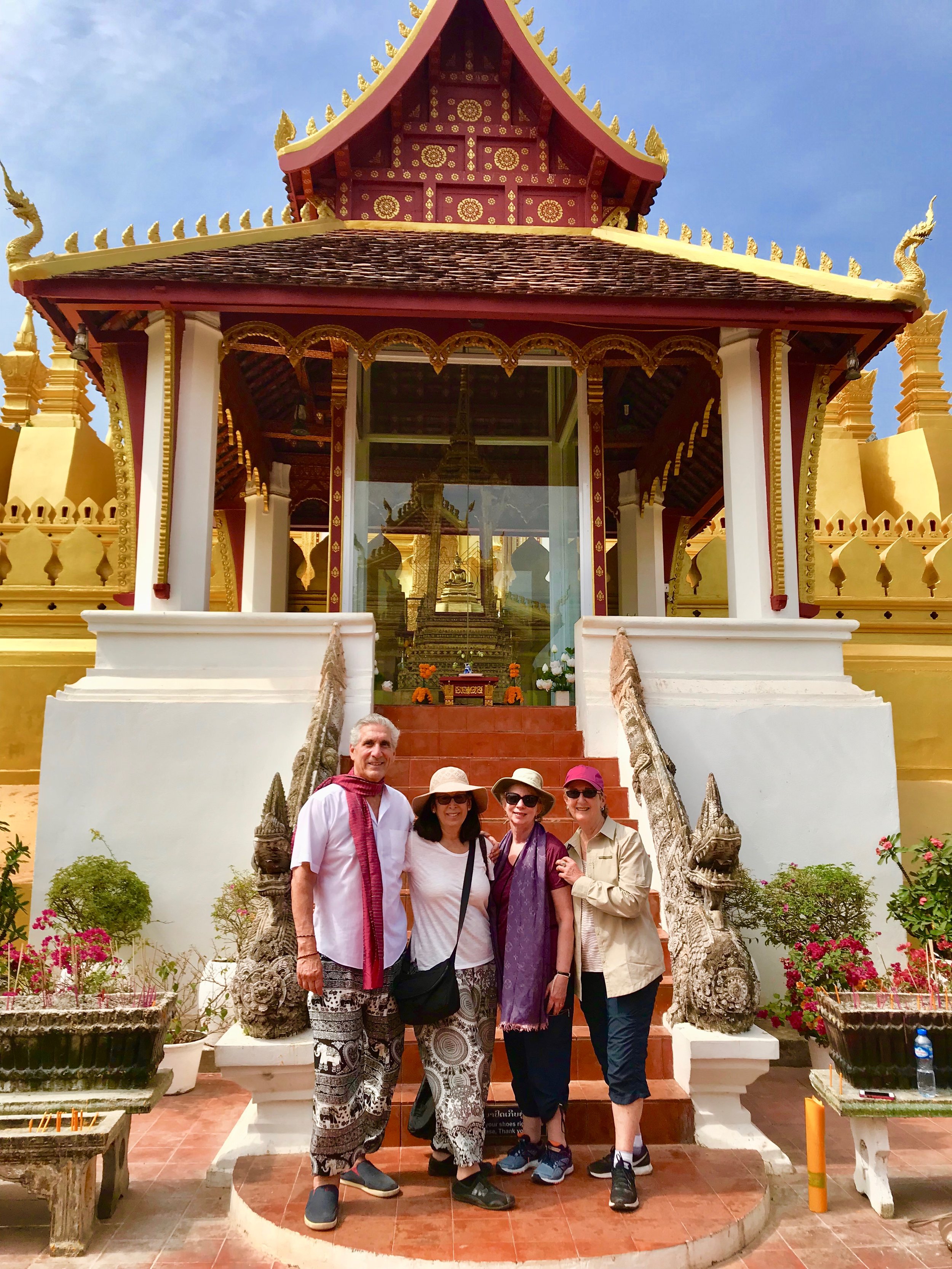
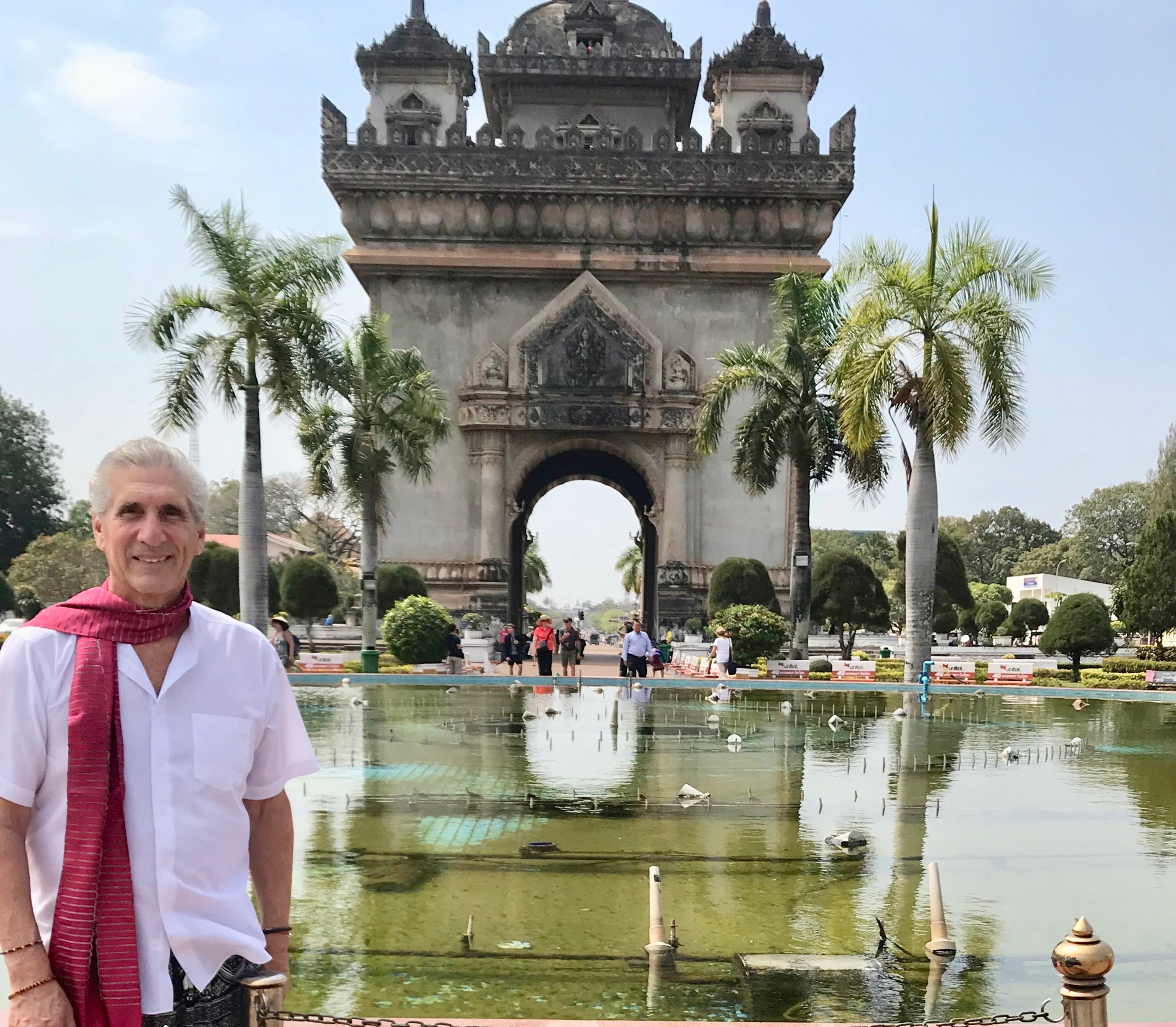
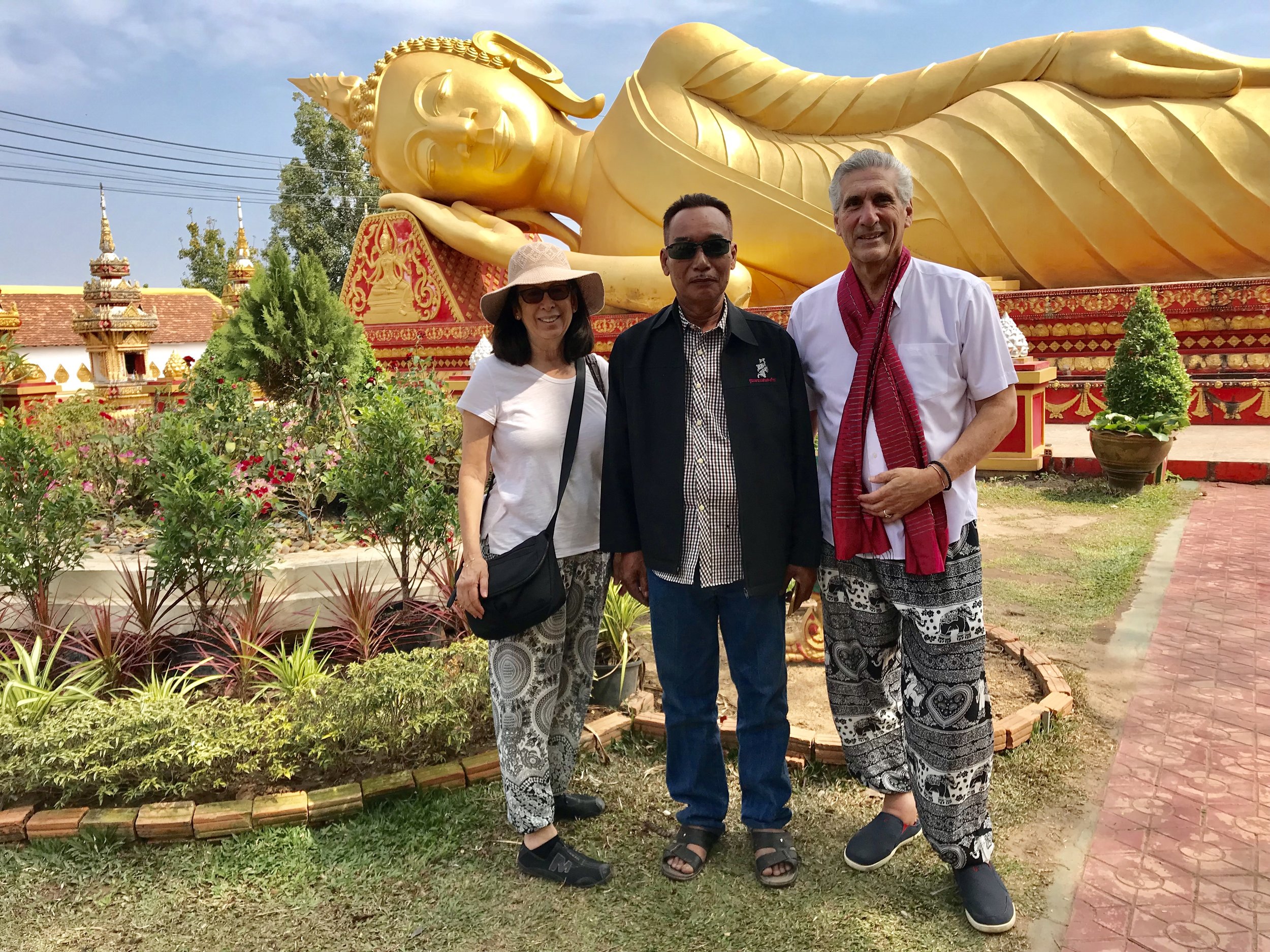
After our visit ended with the monks our bus driver took us to Wat That Luang (The Great Stupa), Laos’s most important monument. The three-layered gilded stupa is a magnificent site to behold at every vantage point, especially on a sunny day when the suns rays make it glisten. Gold is more than just a color to behold, it is a symbol defining the very best of Vientiane. We then went to the Patuxai or the “Victory Gate,” which resembles the “Arc de Triomphe” in Paris. Built between 1957 and 1968, it is a war memorial to remember those who lost their lives during the struggle to gain independence from France. It is a popular site to take temporary refuge from the afternoon sun and mingle with locals. The last photo is of Cecile and I with a Lao man who wanted very much to take a photo with us.

Playing a Shaman's Flute While Dancing & Shooting a Crossbow in a Laos Village During a Cultural Exchange

"Travel is fatal to prejudice, bigotry and narrow-mindedness."—Mark Twain

During a visit to a small Laos village, Cecile and I and our small tour group from Overseas Adventures Travels (OAT) got to experience “A Day in a Life of the Lao People”. We were greeted by the mayor, vice mayor (who is also the shaman) and their wives. The backdrop of the introductions left most of us puzzled. We kept hearing rapid fire gunshots and didn't know whether to duck or run for cover. We found out later that there was a military training camp nearby.

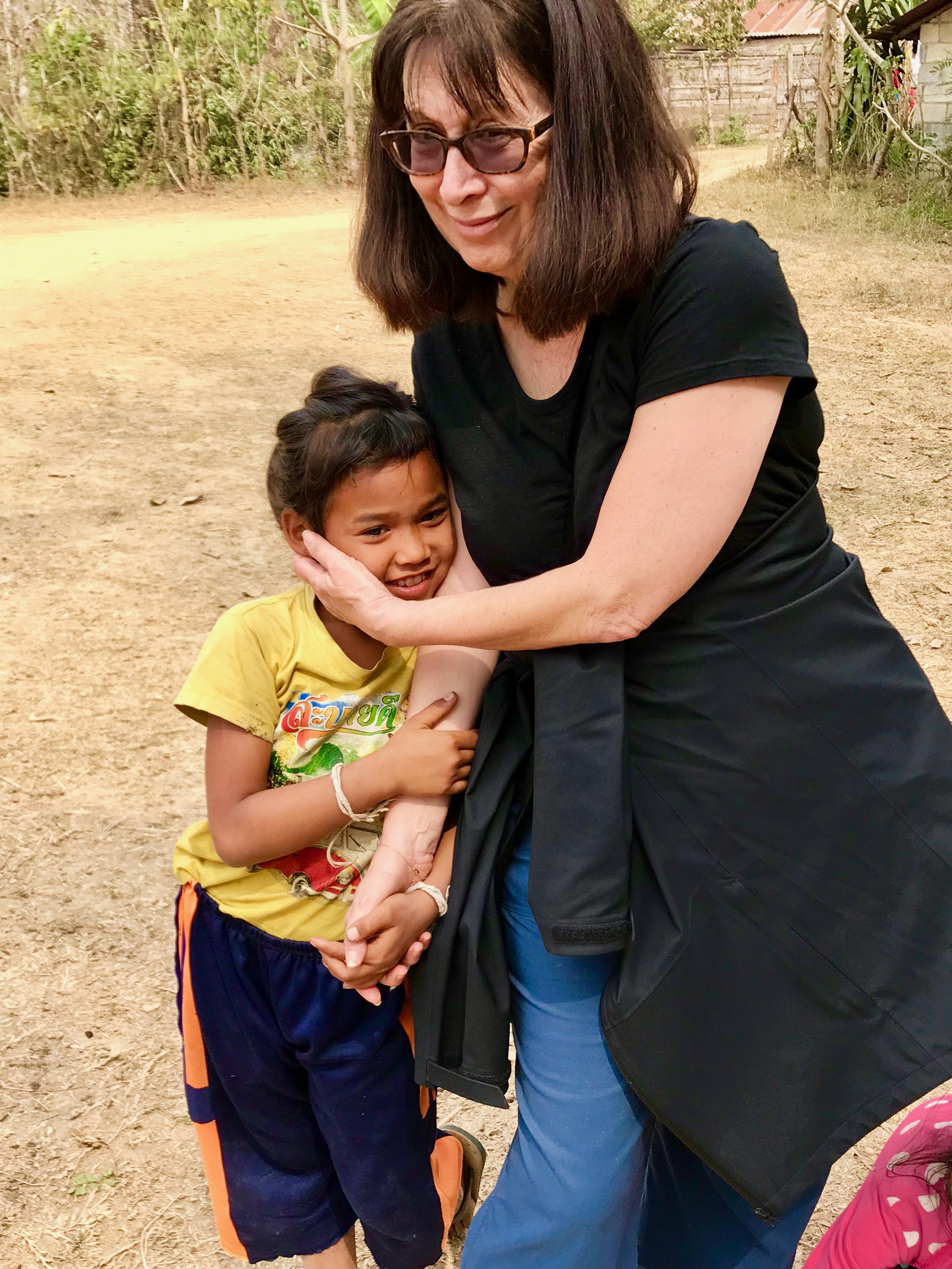
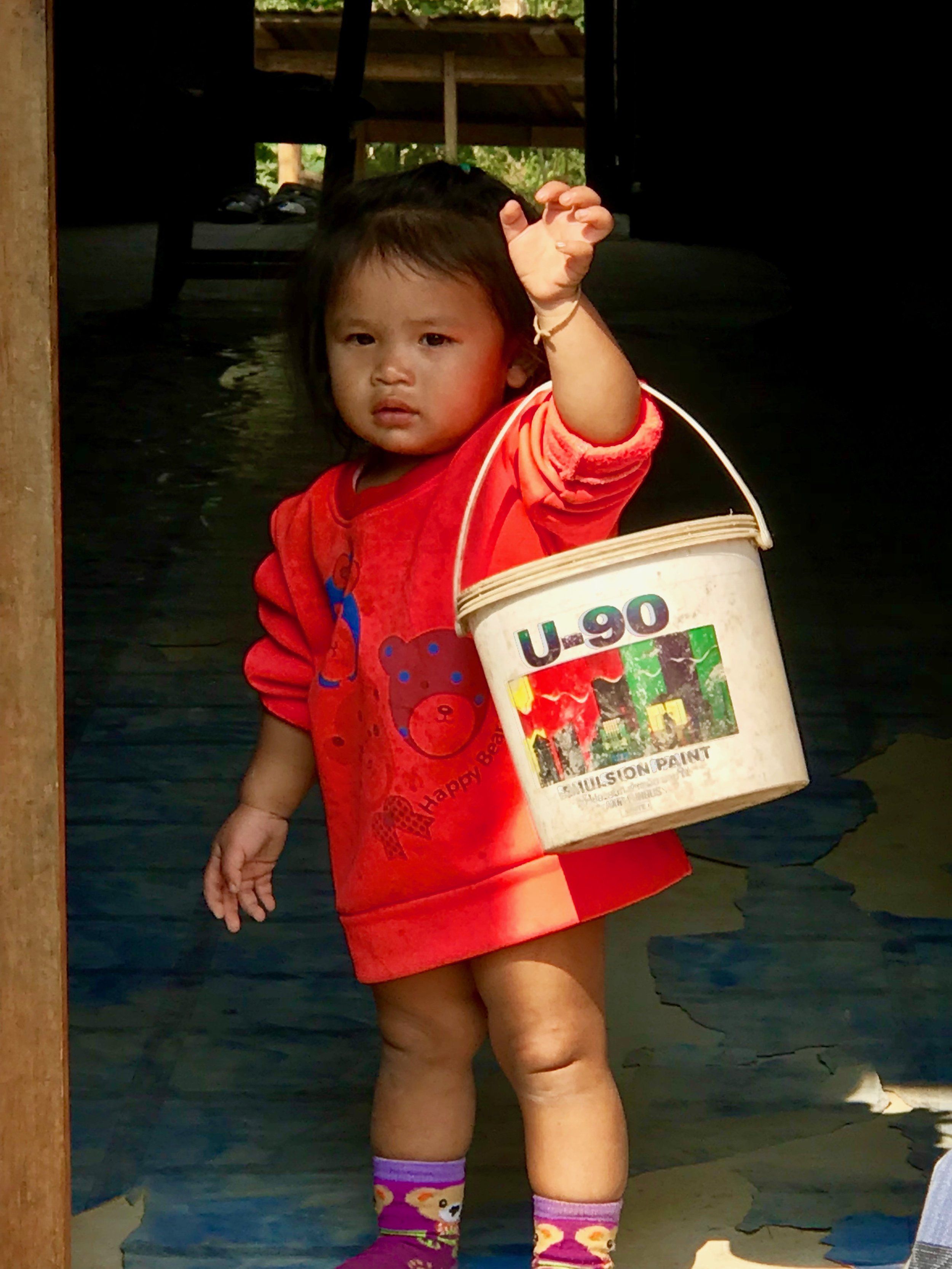
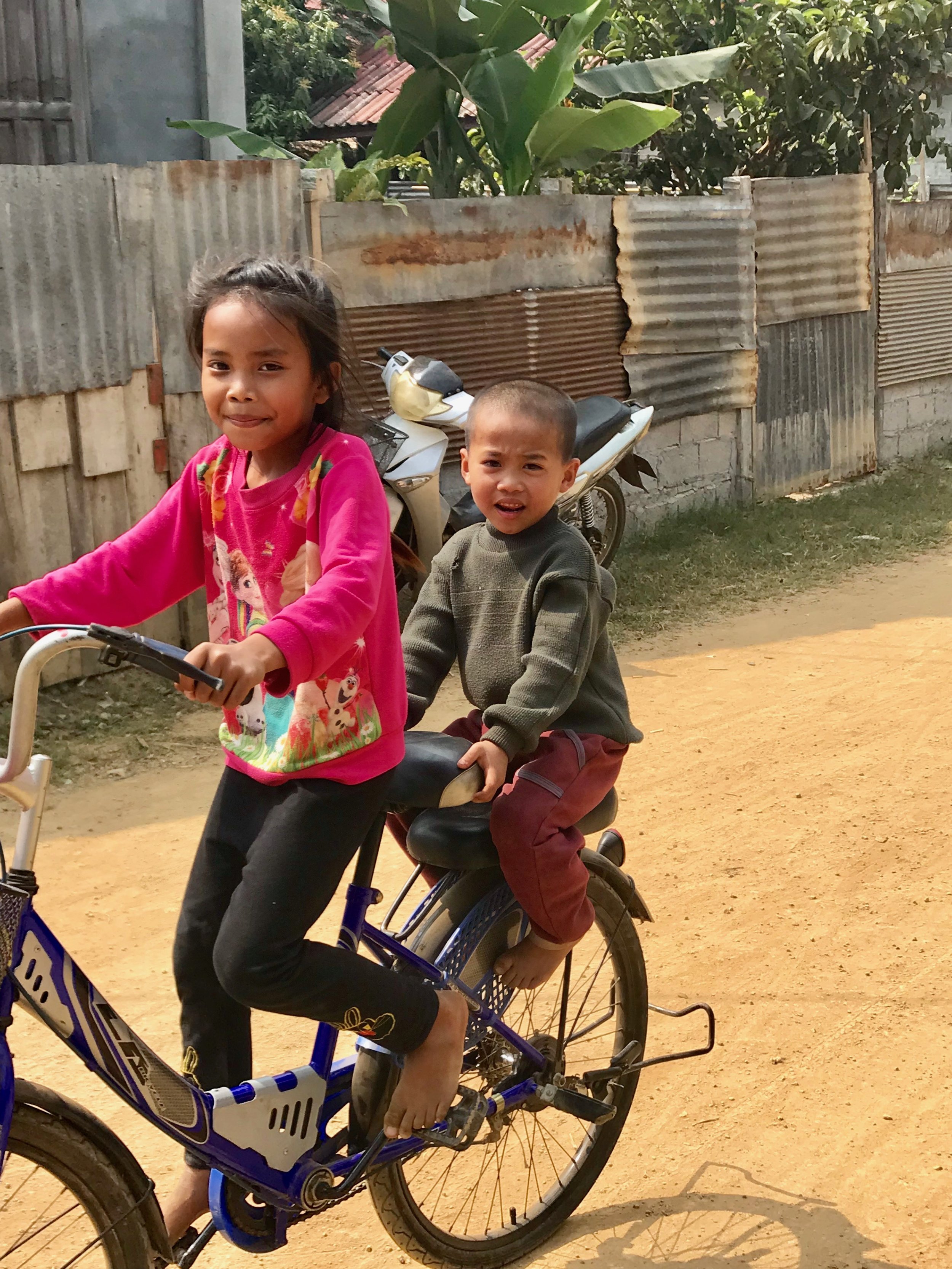
We were given a tour of the village community hall, housing, a small shack of a school and weaving wheels local women use to make scarves and other products. It is a very poor village but they give thanks to the Grand Circle Foundation (the charitable arm of OAT) for assisting them with helping to put in a water tank, and donating two weaving wheels. The school children were excited, cheerful and inquisitive about their visitors. They were also very affectionate. We saw a senior teacher lead a class, we sang American songs like, “Old McDonald’s Had a Farm…and did the "Hokey Pokey" to name a few—after the class was over. Having had been an elementary school teacher, Cecile was very touched by the experience, especially by the young girl who took her hand and showered her with affection.

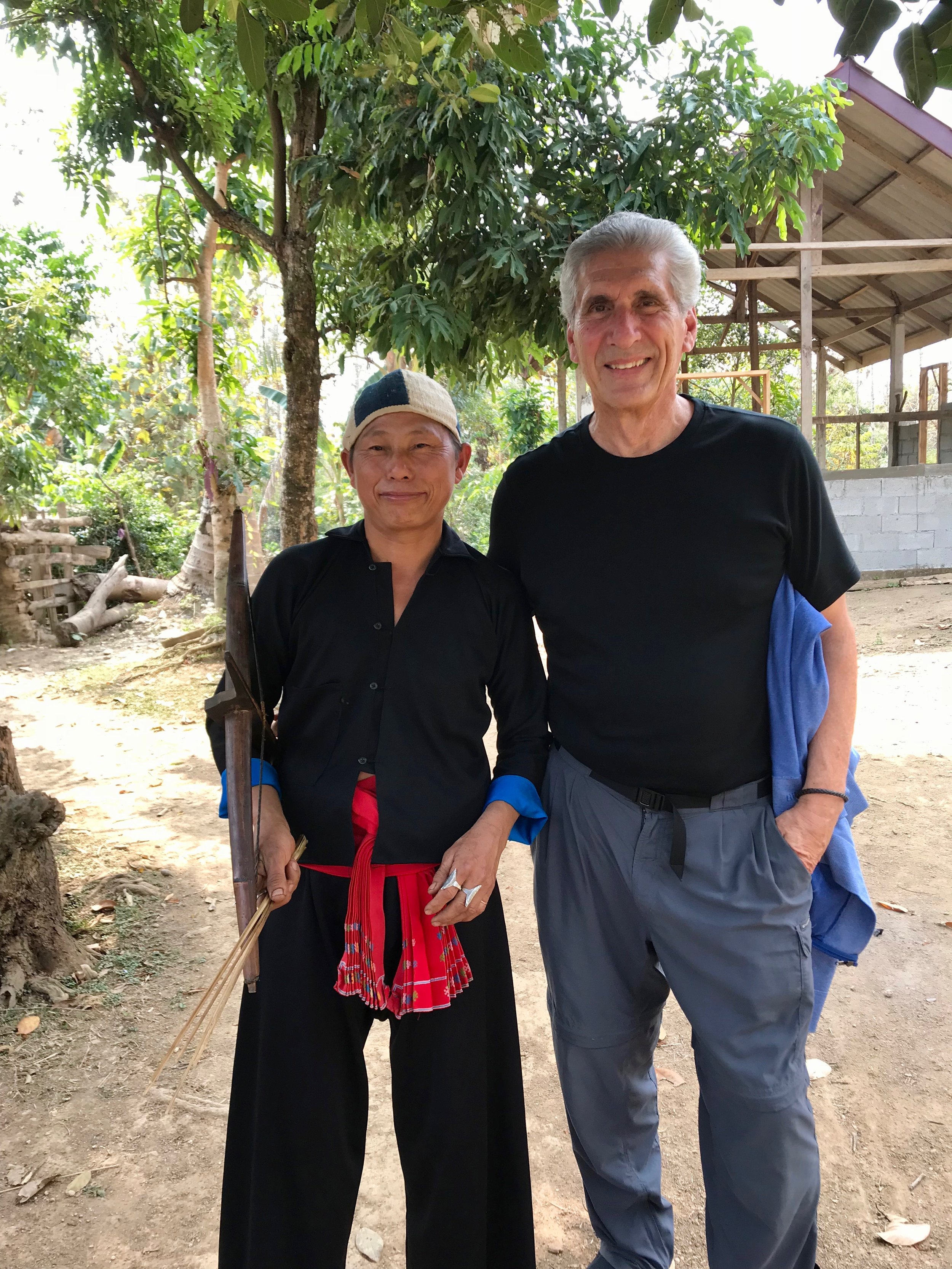
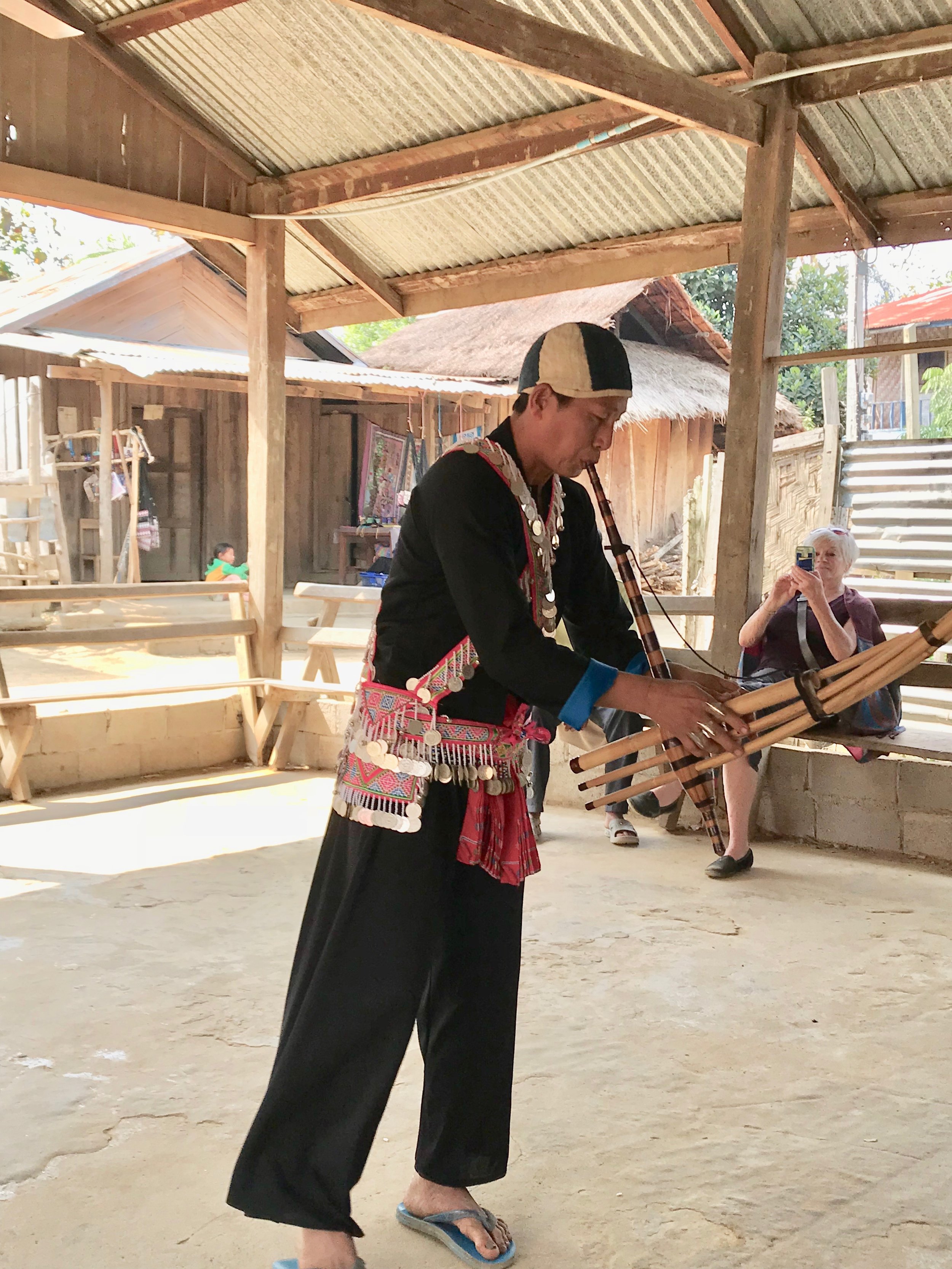
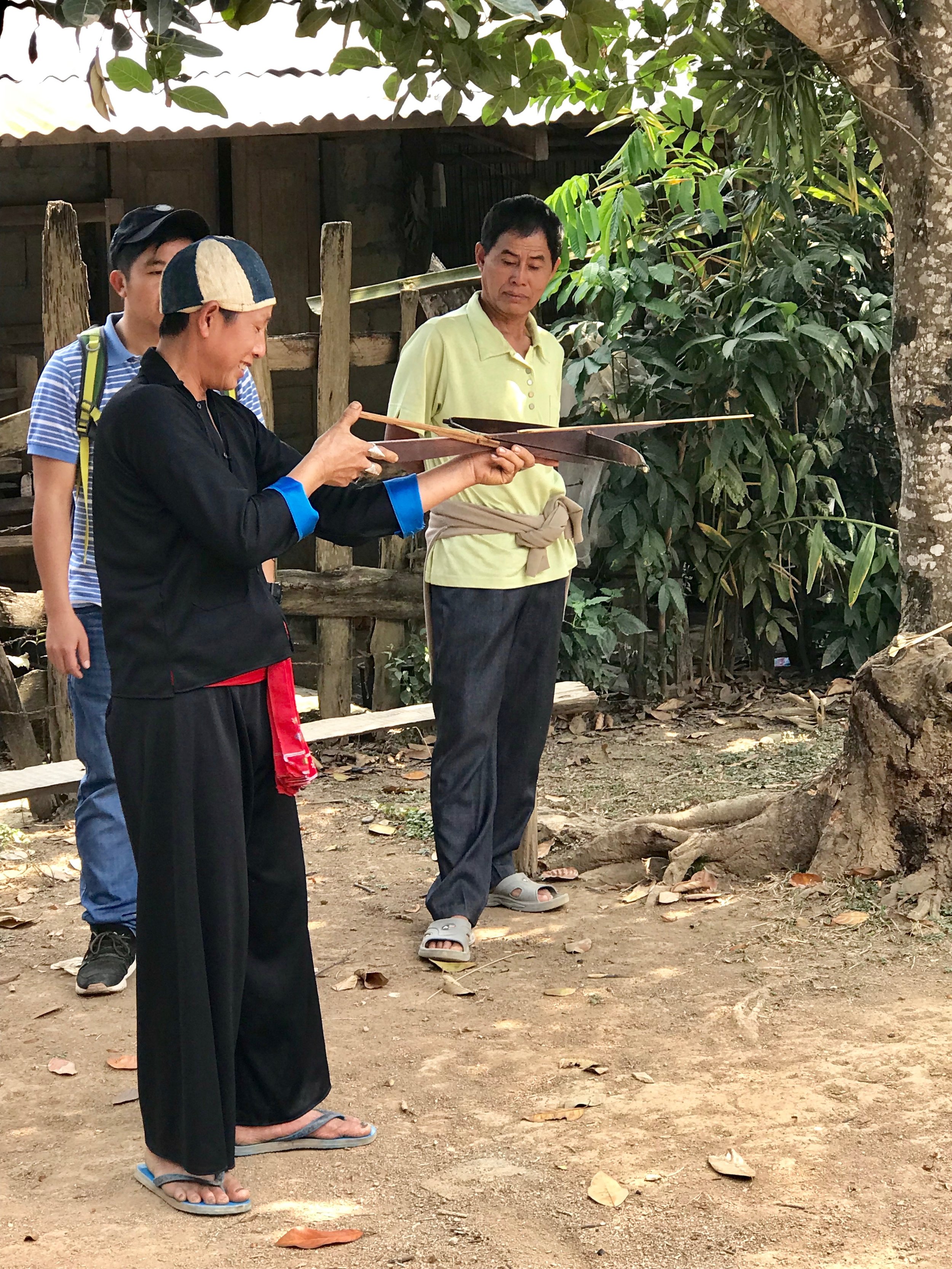
Norseng, the vice-mayor who also doubles as a shaman for the village put on a show for us by dressing up in his native dress and played a flute called a “Khvang” while dancing like a whimsical pied-piper. He, is from the Mon people, one of the earliest settlers to reside in Southeast Asia that resides on the border of Thailand and Burma. He called for volunteers and I was one of them as seen here in the video clip. Norseng also demonstrated how to shoot a crossbow. I was more timid about shooting the crossbow than dancing while making an attempt to play the flute since several of the volunteer’s arrow hit near the center of the target. But, I gave it the “old Yankee try” and to my surprise, rather than hit center mass, I hit what would be considered a forehead shot. 

When asked Siya how he became mayor? He told us he was chosen as a candidate for mayor by the Communist Party and won the election by the majority vote of the villagers. He was embarrassed to say how much he made. It was meager. Then again, there are municipalities in the states where city officials essentially are volunteer positions. 

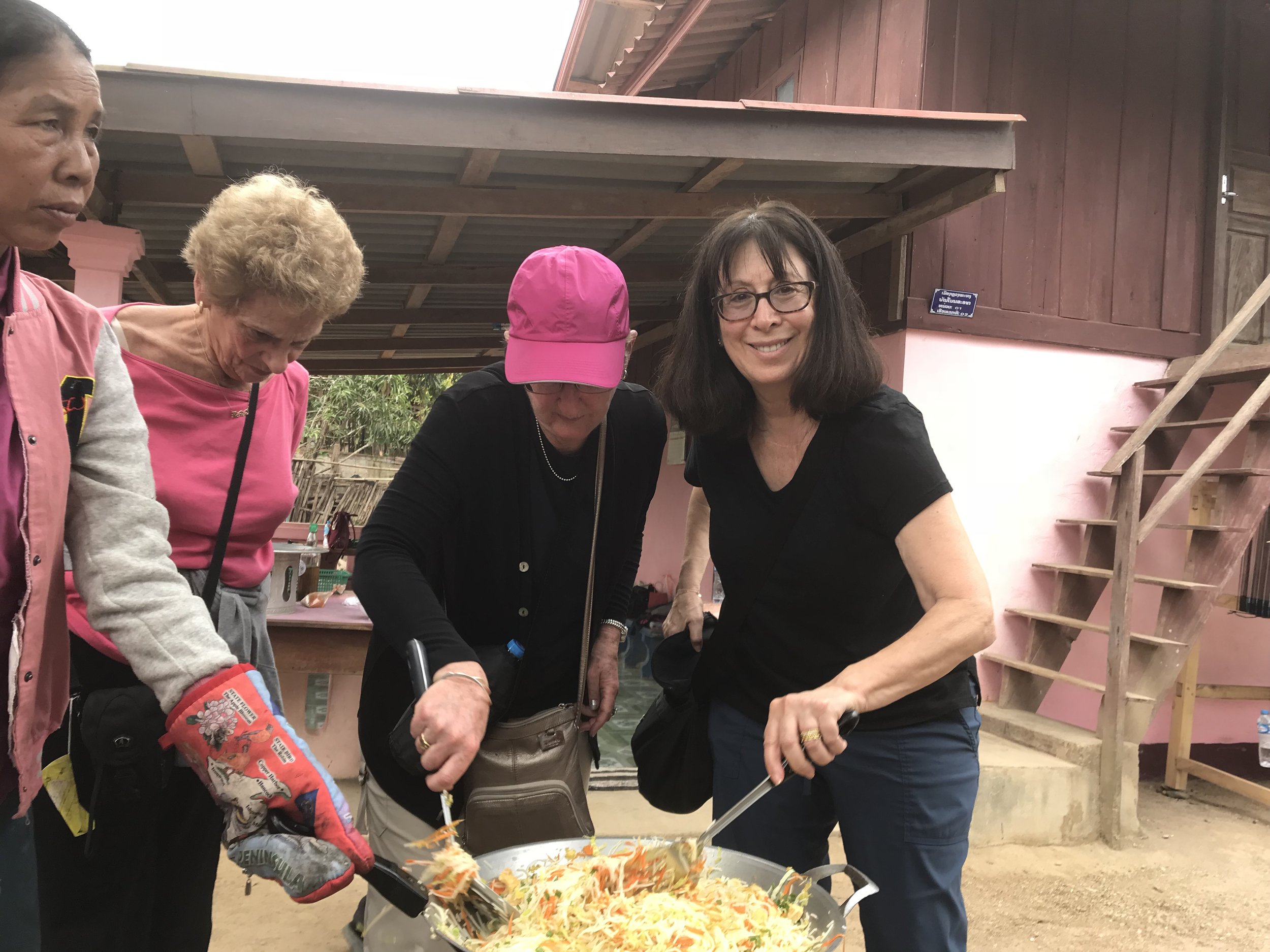
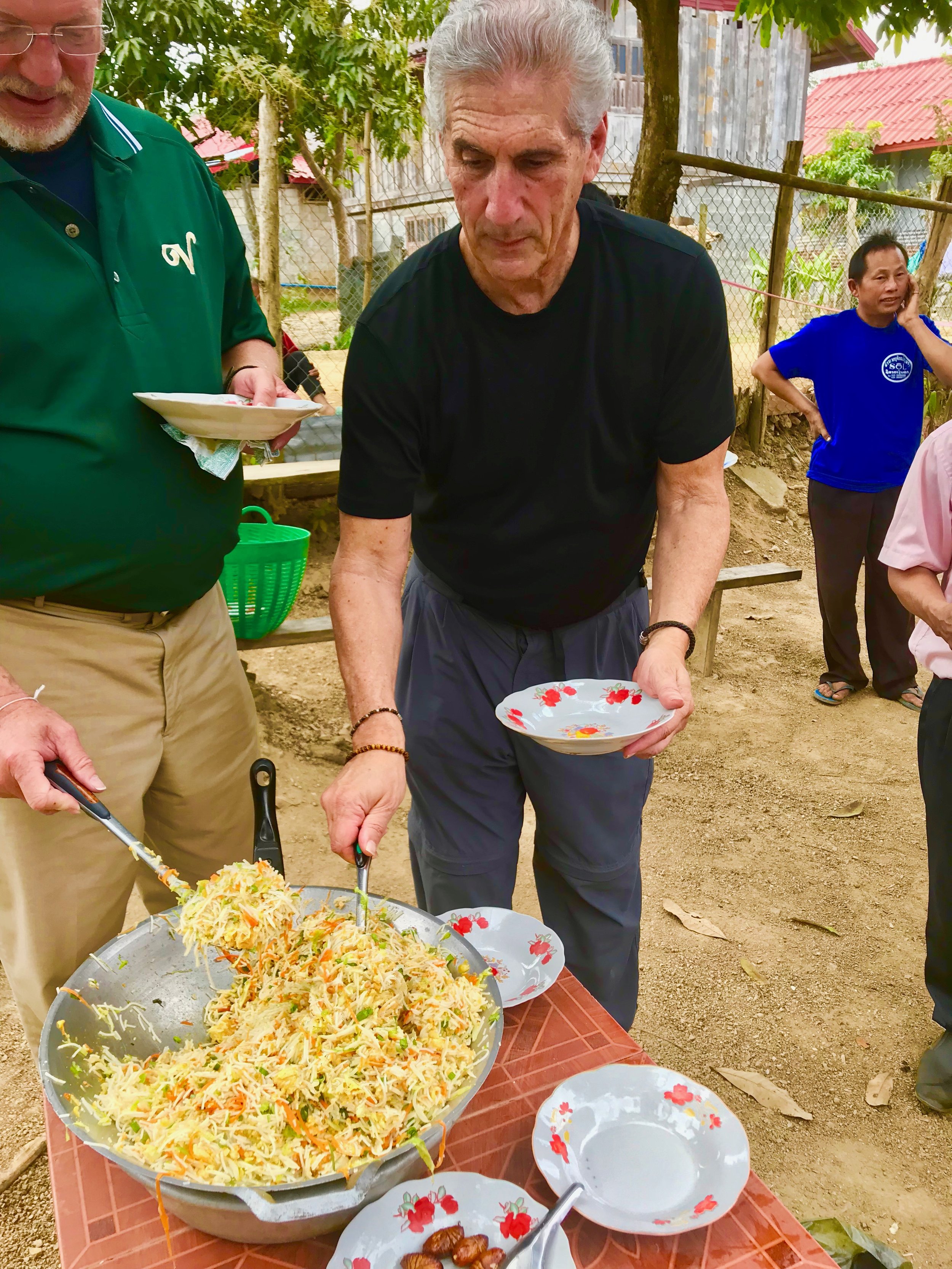
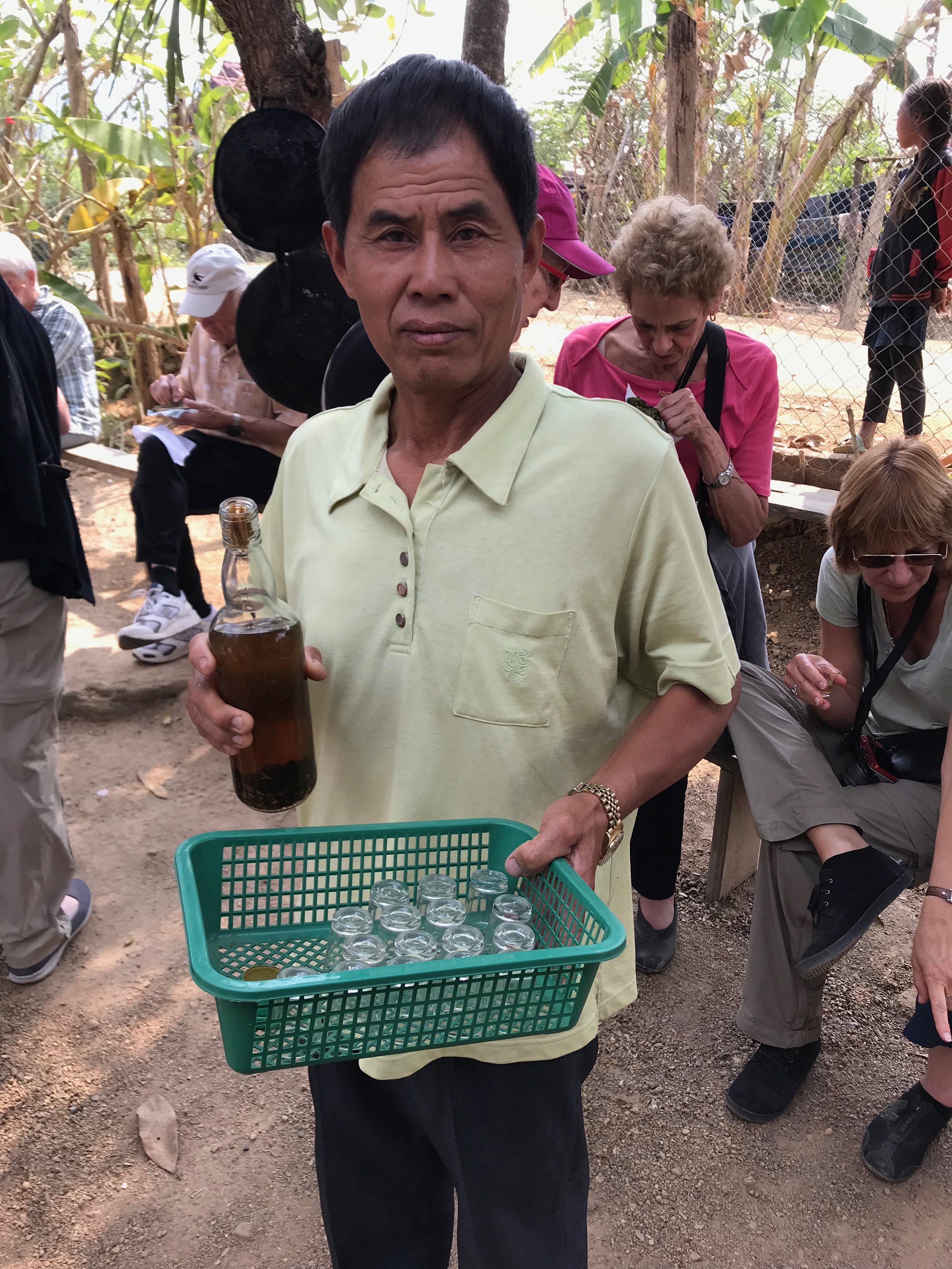
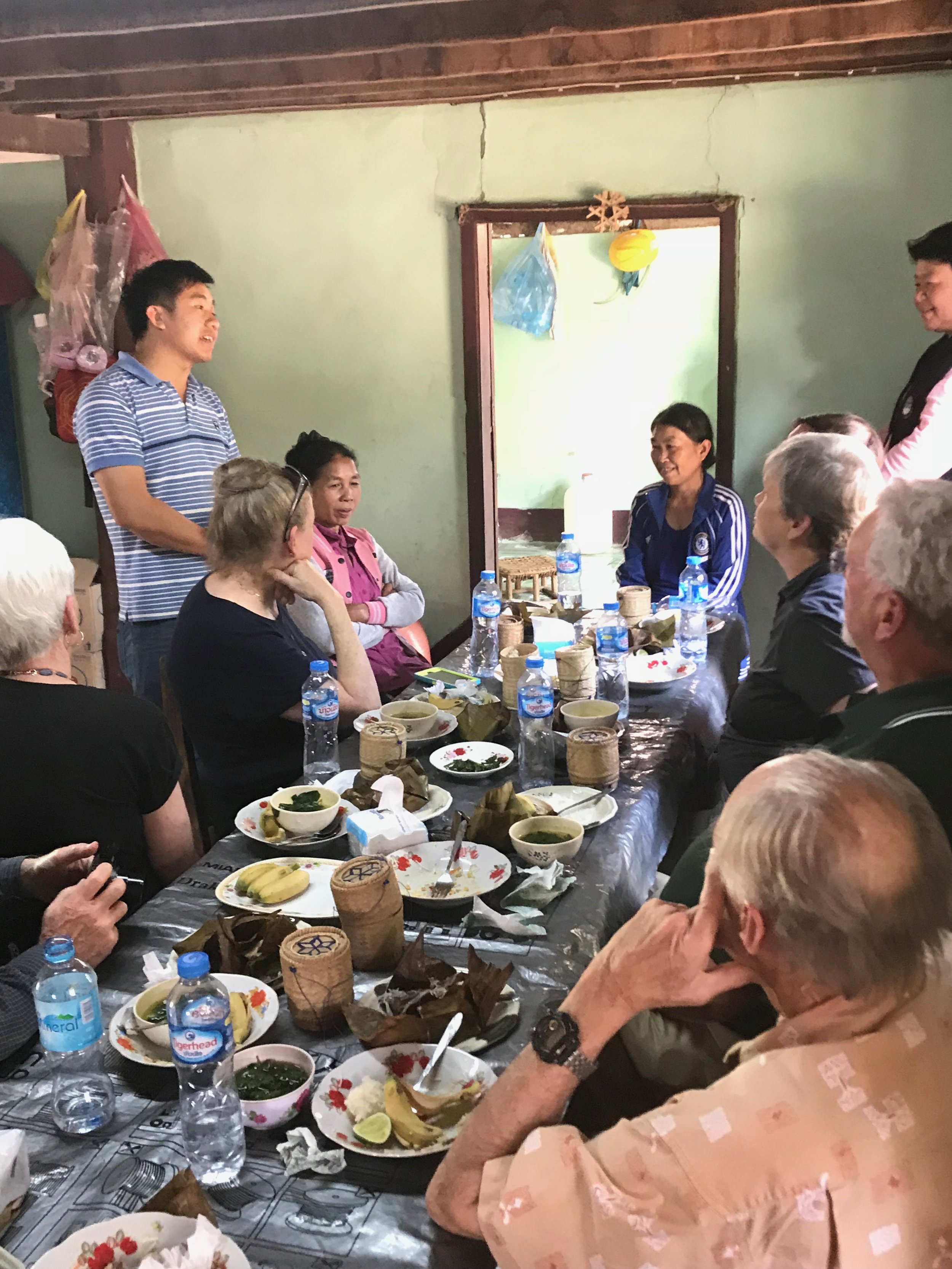
We then assisted our hosts in preparing a very fine Lao meal with some of the ingredients we bought earlier in the day at the street market. The mayor served us shots of whiskey that is made here in Laos and we all shared a meal on his dining room table. The back and side walls were walled with framed certificates of merit by the communist party for his service to the village. When his wife was asked what she liked about her husband being mayor, she responded with "all the people I get to meet."

When we said our goodbyes, Norseng, came on the bus to give us a blessing and thank us for our visit and support and hoped that someday we will visit again. It was a very humbling experience overall and any reservations that the villagers had about hosting us believing they could never satisfy our standards were set aside as we all came together as one.

To view the short audio-video clip of Dennis playing the Shaman's flute while dancing in the village in Laos click on the link below:
https://www.facebook.com/dennis.augustine.18/videos/vb.519921667/10156036910086668/?type=2&theater&notif_t=video_processed&notif_id=1518366868066252

Our Early Morning Alms Giving to the Laotian Monks: A Time Honored Tradition of Mystery & Meditative Calm

"Accepting the miracle of the moment, this breath, this day, this life..."—Terry Patten

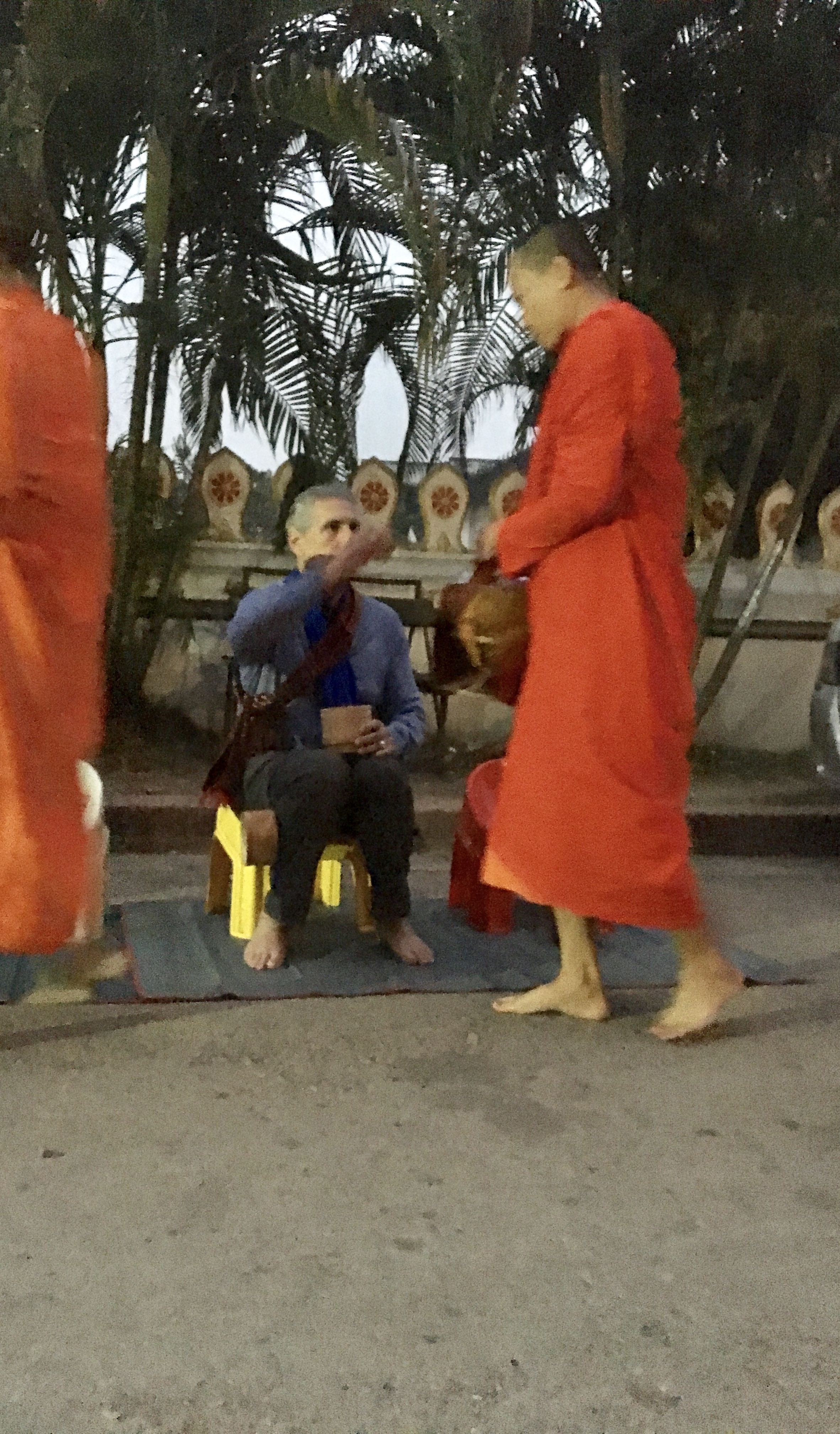
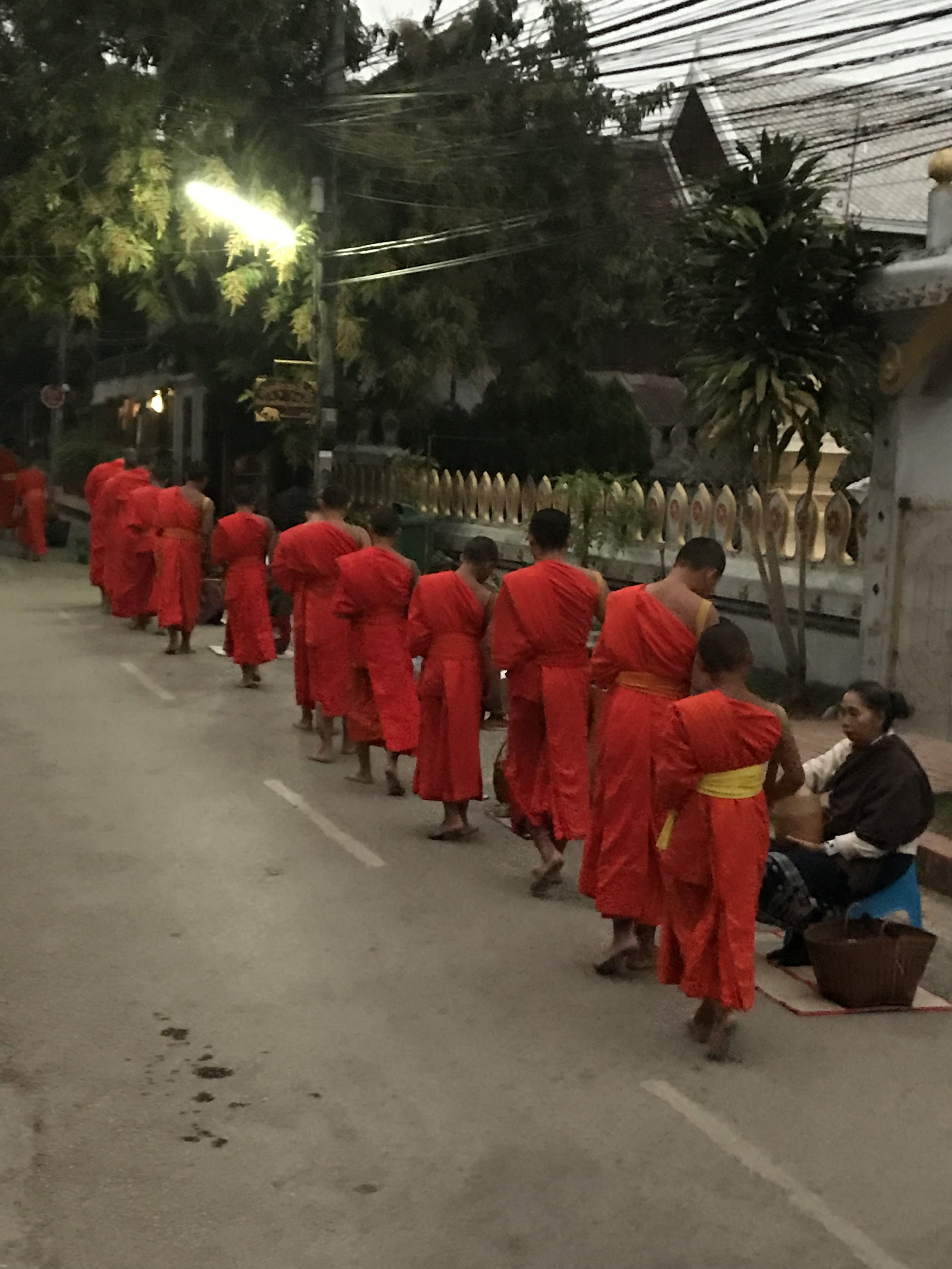
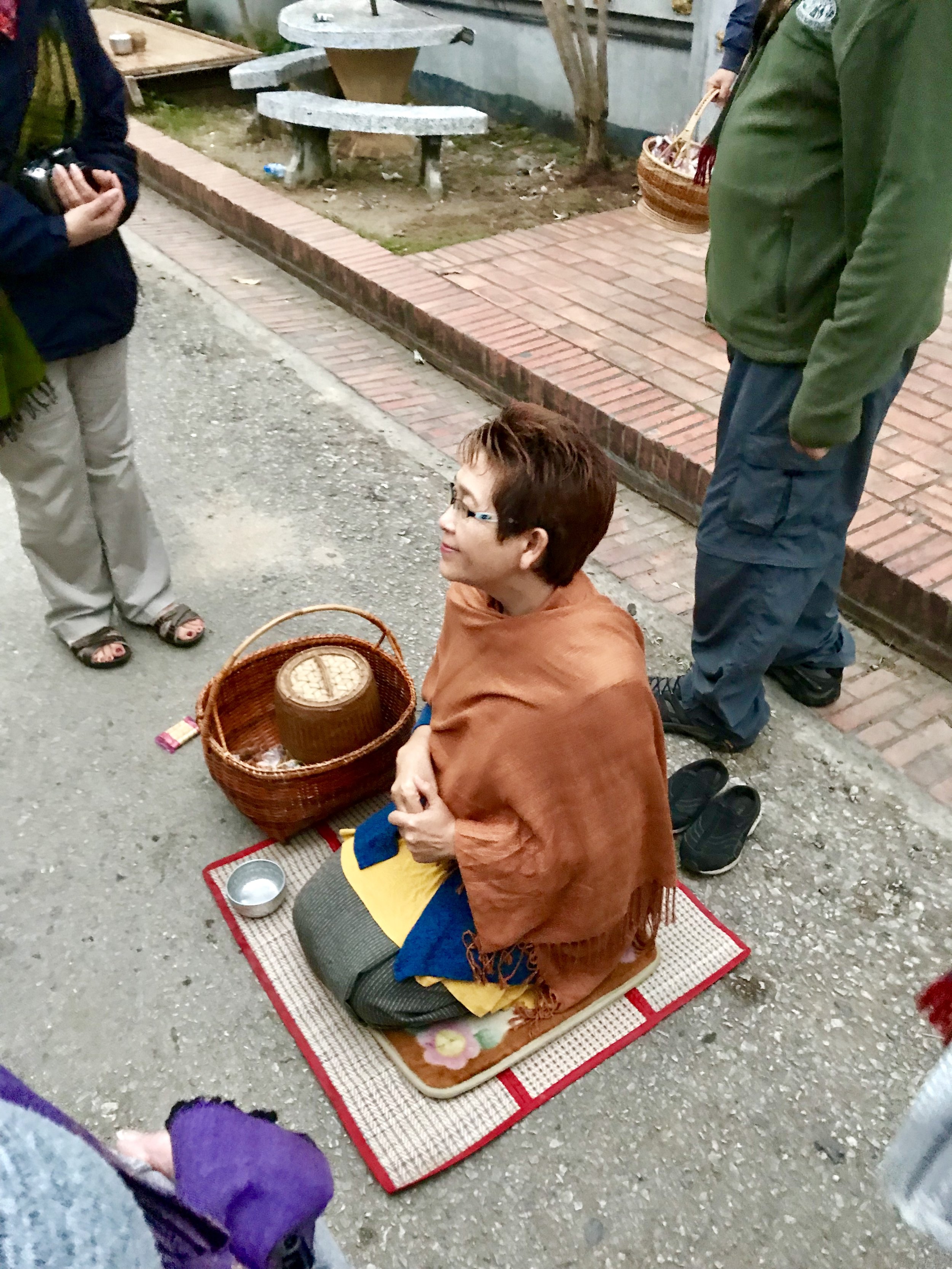
Just before the sun rose in Luang Prabang (Laos), we passed locals waiting for the procession of around 200 monks that were getting ready to make their alms rounds for the day called “tak bat.” It is a time-honored tradition that dates back to the 14th century that is done silently. We ourselves positioned ourselves, along the roadside near a local monastery in town waiting in anticipation for their arrival. It was a rare opportunity to experience this ancient Lao tradition. We each had a small covered weaved basket of sticky rice. As a sea of monks in their orange robes passed us one by one (oldest first) in a meditative state I dropped a small portion in their bowls which are attached to a strap hanging from their shoulders. 

Once we were finished giving out the rice, we were permitted to take photographs from a distance without a flash so as not to disturb the monk’s meditative peace. It is a uniquely, spiritual experience. The daily ritual is a collaborative effort between the monks and the laypeople. It is not charity the way the West interprets it. Rather it is a symbolic connection between the monk who requires daily physical sustenance and the layperson who gets to practice generosity and loving-kindness to a monastic who provides spiritual sustenance to the community.

I had been a recipient of offerings (sticky rice and mango) by locals during my monastery stays in Burma as a gesture of gratitude to us Westerners for coming thousands of miles away to study meditation and Buddhist, mindfulness teachings. However, this was only the second time I made an offering of rice to a monk. The first time was when my son Jason and I travelled to Southeast Asia more than 16 years ago. During the Alms offering we were invited to quietly recite a loving-kindness chant to ourselves for the benefit of "all beings everywhere" ending with "may peace, love, kindness and compassion be revealed in the world and in ourselves.

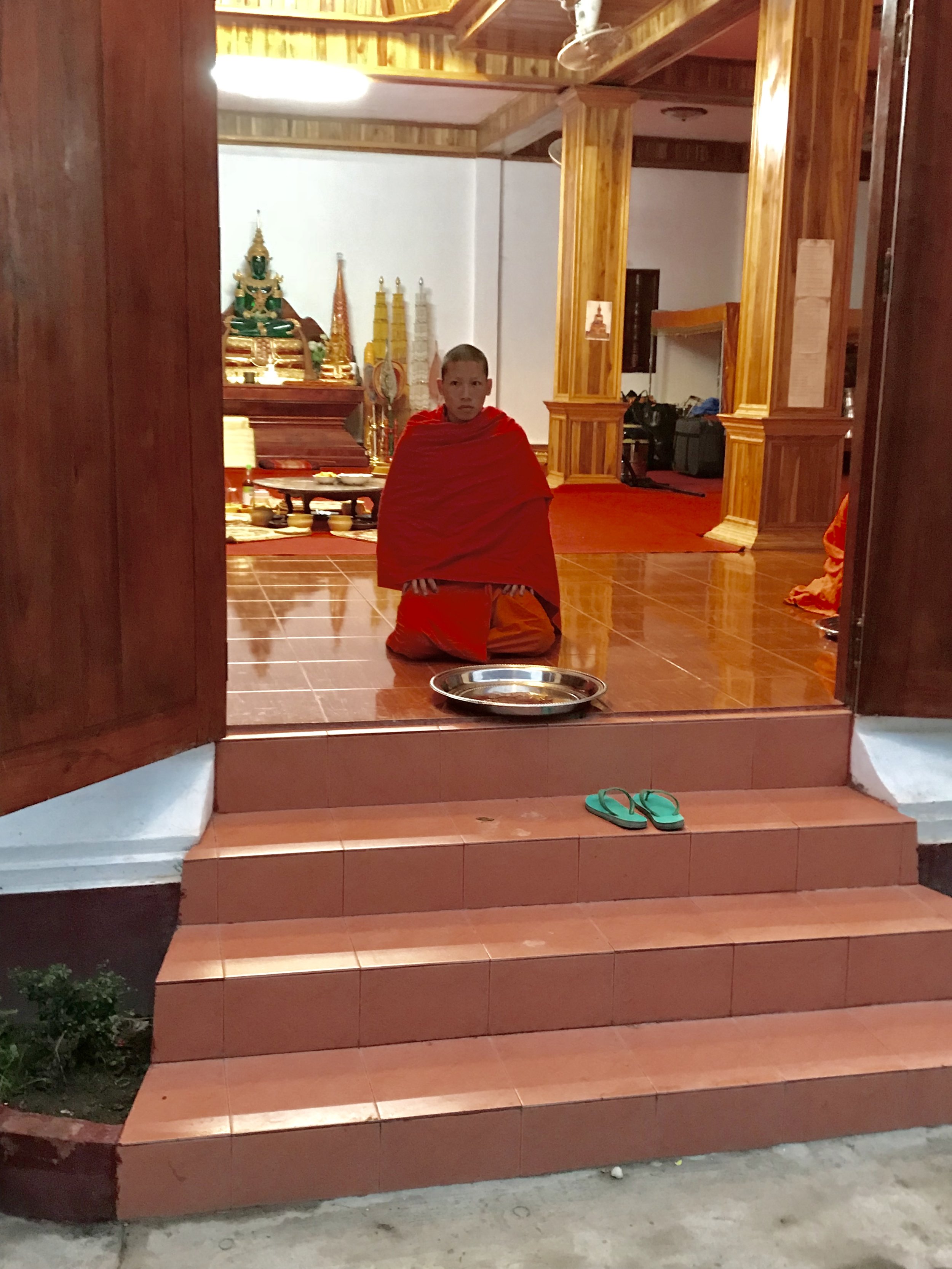
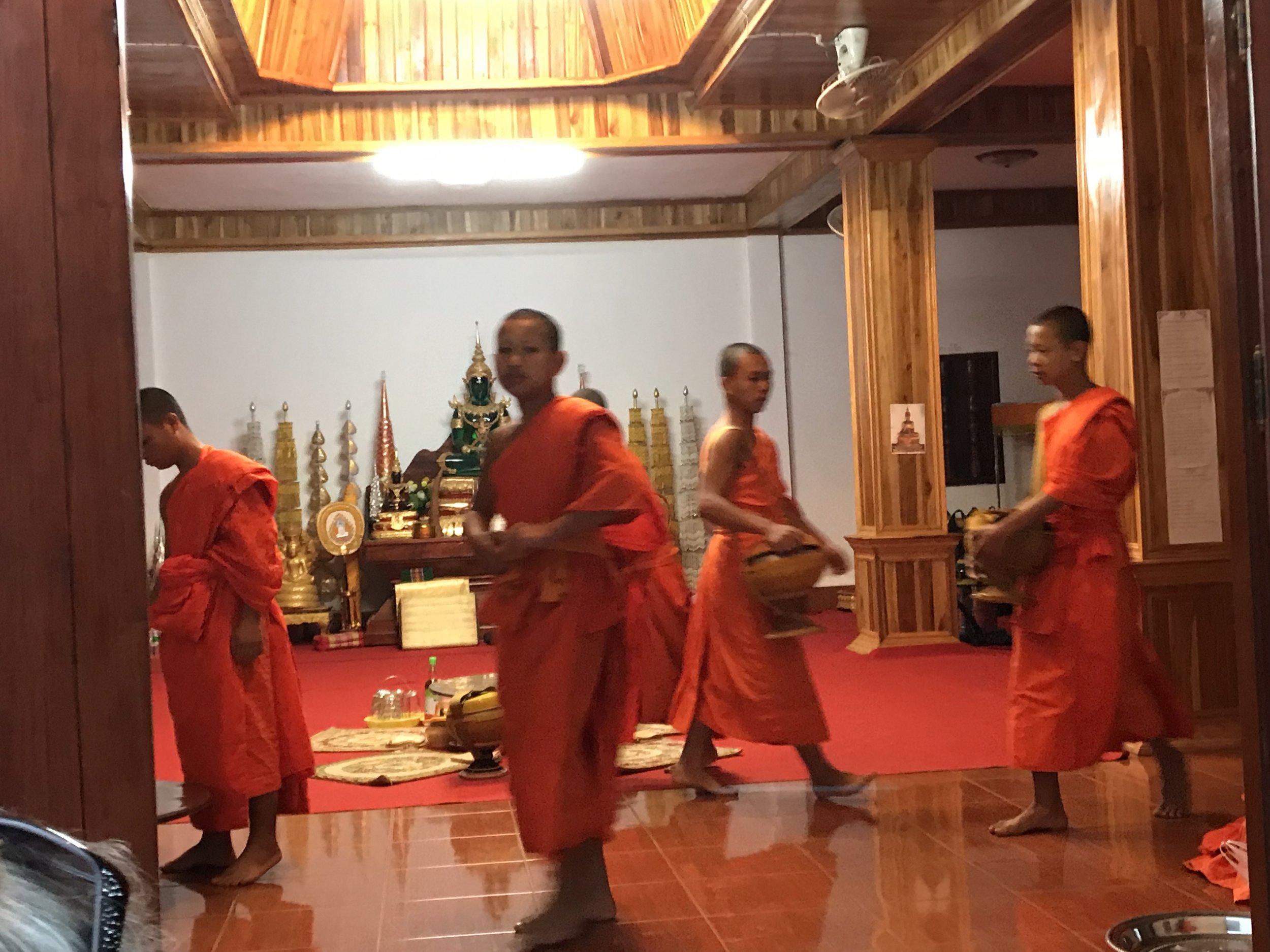
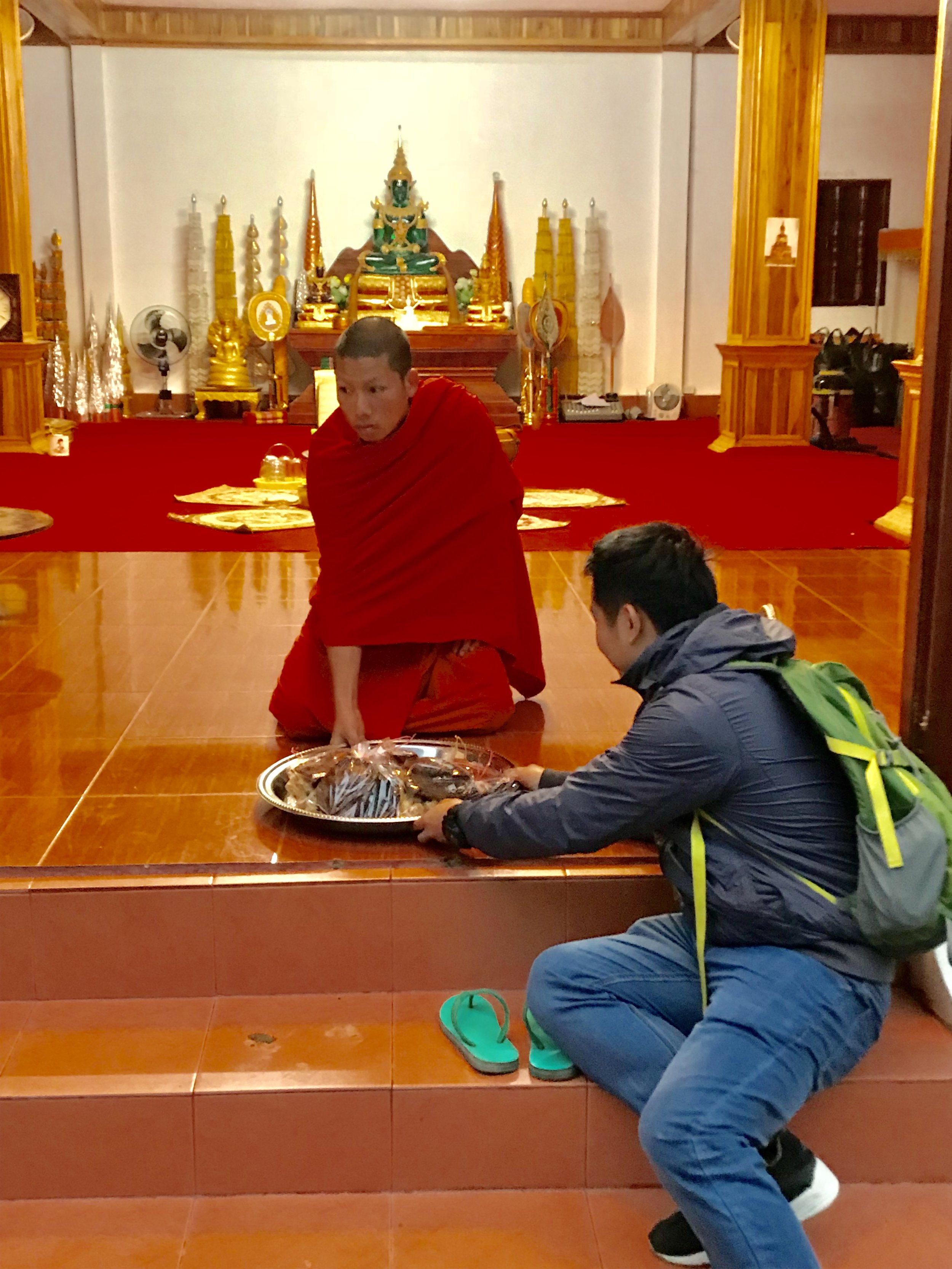
After alms rounds, the monks returned to the monastery and one of them was designated to take a seated cross legged position in front of the entryway with a platter to receive other food goods that we offered to the monks as a group after which he did a closing chant.